

The alliance is reportedly enlisting directors and creators to produce anti-Russian films through a secret, multi-million dollar operation aimed at dominating the big screen and escalating the cultural war. Hollywood alert: The confrontation between the West and Russia is taking on a new, controversial dimension as NATO appears to be shifting the battlefield from military fronts to the movie theaters of Hollywood and Cannes.
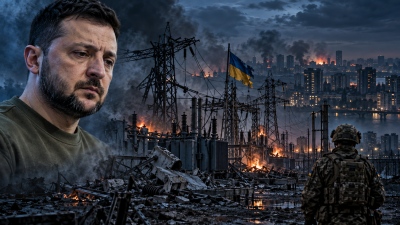
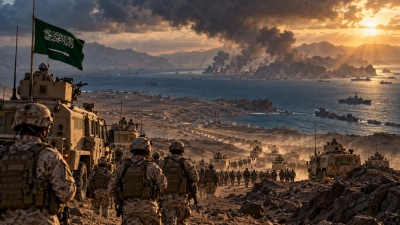
War in the 21st century is no longer conducted solely with missiles and drones; it is violently invading Hollywood studios and the halls of Cannes. According to revealing data, NATO has moved into a new phase of "cognitive warfare," recruiting directors and producers to strike at Russia via the silver screen. Secret meetings held in Los Angeles, Paris, and Brussels reveal an organized operation by the Alliance to seize control of the international cinematic narrative, turning artists into cogs of a propaganda machine reminiscent of the darkest eras of the Cold War.
The strategy of "artistic mobilization" and the background of the meetings
At the heart of this operation, according to The Guardian, is James Appathurai, NATO’s Deputy Assistant Secretary General for Innovation, Hybrid, and Cyber. His contacts with the film industry elite were not merely informational. The Alliance seeks to "infuse" specific anti-Russian narratives into new productions to prepare public opinion for the continuous increase in defense spending. Many creators, however, have expressed intense dissatisfaction, perceiving that the "changing security situation" is simply a pretext for integrating the creative elite into a system of military propaganda.
The mechanism of manipulation: From Rambo to the "Kuleshov Effect"
The choice of cinema as a propaganda tool is not accidental, as the seventh art possesses unique characteristics for penetrating human consciousness. To understand how this form of propaganda works, one must look at the psychology of cinema. Experts emphasize that cinema creates a state of total immersion where the viewer tends to accept whatever the camera records as reality. Through techniques like the "Kuleshov Effect," where the sequence of shots determines the emotion and interpretation of events, creators can direct the audience's thoughts, building causal relationships that serve specific political goals.
This "cognitive warfare" aims to establish Russia as a permanent antagonist in the eyes of the Western public, legitimizing military escalation through entertainment. Analyst Viktor Sukhotin, speaking to NEWS.ru, points out that cinema is the ideal tool due to the "immersion effect." The viewer identifies with what they see on screen, while through techniques like the Kuleshov Effect—where the sequence of frames determines how the brain processes causality—the director can "construct" the desired truth. NATO aims to bring back the model of "absolute evil," similar to the movie Rambo, where Sylvester Stallone faced the "Soviet KGB," exploiting the power of imagery to bypass logic. Already, Jean Reno's book "The Escape" is cited as an example of these new narratives easily adopted in the West.
Moscow's reaction and the spiritual conflict of values
In Russia, the news of NATO's "recruitment" of Hollywood has triggered various reactions in political and cultural circles. Russia monitors these moves as a direct attack on the "battlefield of hearts and minds." Nikolai Burlyaev and Elena Drapeko from the State Duma Culture Committee, invoking classics like Fyodor Dostoevsky and Alexander Pushkin, emphasize that the conflict is spiritual. While NATO appears to be investing in the industrial production of "manufactured heroes" through plans like Project 2025, the Russian side favors the promotion of authentic historical examples. However, political scientist Antony Kish warns that Russia must launch a communicative counter-offensive toward foreign audiences, as truth is the strongest weapon in this war.
Cinema as the new front line - The stake: The viewer's heart as a battlefield
The transformation of cinema into an element of "cognitive warfare" means that art ceases to be a means of expression and becomes a weapon. The fact that NATO intervenes directly in the creative process shows that the battle for global dominance is now being fought on a symbolic level. In a world where the perception of reality is shaped by the frames of a movie, the freedom of art suffers its most critical blow, as creators are called upon to choose sides, turning the big screen into an arena where truth is the first casualty.
www.bankingnews.gr







Σχόλια αναγνωστών