

Today, September 6, 2026, is already recorded as one of the most decisive electoral dates in the post-war history of Germany.
In the eastern state of Saxony-Anhalt, the right-wing party Alternative for Germany (AfD) heads to the polls maintaining a lead approaching 42%, according to polling by Infratest dimap.
The prospect of an absolute majority for the AfD represents not simply a local electoral victory, but a tectonic political earthquake: for the first time since World War II, the far right stands at the gates of power in a German federal state.
At the same time, security forces are preparing for a night of unprecedented tension as the political stakes spill over from ballot boxes into the streets.
Ulrich Siegmund: The man who wants to change Germany
September 6, 2026 may go down in German history as the moment the «most dangerous man» in the country took power.
We are not speaking of... «Hitler», but of Ulrich Siegmund, as named by news magazine Der Spiegel last month.
Siegmund was born barely three weeks after the reunification of Germany, on October 3, 1990, so how did he manage to turn into such a political figure by age 35?
The reality is that Siegmund leads the regional organization of the Alternative for Germany (AfD) party in the state of Saxony-Anhalt.
Today, regional residents cast ballots for their state parliament, with nearly half intending to vote for the AfD, which fields Ulrich Siegmund for state minister-president, a prospect already sparking intense concern.
It turns out that a figure categorized as an «extremist» could end up at the helm of a German state, as the local party branch has long been classified as «proven right-wing extremist» by German security services.
Judging by the mood of the majority of the German establishment, this is an outcome that could materialize by the end of the day.
And that is because they appear powerless to prevent it.

1. The arithmetic of upheaval and the collapse of the «Firewall»
For more than ten years, the German political establishment maintained the so-called «firewall» (Brandmauer), an unwritten yet strict agreement among mainstream parties to completely exclude the AfD from governing coalitions and parliamentary alliances.
Despite its official classification by domestic intelligence as an «extremist» formation due to xenophobic and anti-Muslim rhetoric, its popularity surged: nationwide it stands near 29% (with the CDU retreating to 21%), while in Saxony-Anhalt it commands an imposing 42% to 43%.
In this region of eastern Germany, every percentage point carries decisive weight, as it represents the margin separating the AfD from power and the capacity to form a single-party government, given that no coalition is viable for a party surrounded by sworn opponents.
This is precisely where the idiosyncrasy of the German electoral system comes into play...
- The AfD does not necessarily require 50% of the vote to secure an absolute majority of parliamentary seats.
The fewer of the seven competing parties manage to clear the 5% electoral threshold, the greater the seat allocation the AfD receives as the leading party from the redistribution of «lost» votes.
- If five parties enter parliament, the AfD secures 40 seats, just two short of an absolute majority.
- If, however, the Greens (who poll near the margin) fail to enter and only four parties cross the threshold, the AfD clinches the requisite majority.
In that scenario, nothing will prevent its state leader, Ulrich Siegmund, from assuming the state premiership.

This is the hard arithmetic of politics
The paradox is that even if the AfD fails to secure an absolute majority, no stable alternative exists.
To bar its path, the establishment would have to construct an exceptionally heterogeneous, dysfunctional, and inherently unstable coalition of «all against one» (CDU, SPD, Greens), relying on the tolerance or backing of Die Linke.
However, direct participation of Die Linke in government is considered impossible, as the CDU has imposed a formal ban on cooperation with it, viewing it as the political successor to the East German SED.
Evidently Die Linke no longer consists of communists (just as within the CDU few remnants remain from the era of Konrad Adenauer), yet even so, such a broad alliance appears unthinkable.
Whether a fragile minority administration or a paralyzed grand coalition takes shape, the inevitable outcome will be the further consolidation of the AfD. The party will continually charge that the system colludes for the sole purpose of circumventing the popular will and sidelining the leading political force, feeding the narrative of an establishment conspiracy.
It comes as no surprise that debates are emerging inside the CDU over whether it might be preferable to simply allow the AfD to govern the state. The underlying thought is to let it govern under intense scrutiny and federal pressure, exposing its administrative limitations to disenchant its base. Having failed to arrest its rise through ostracization and media campaigns, the establishment appears now to wager on the wearing effect of governance, a tactic that itself reflects the profound crisis of the German party system.

2. The American factor: A precarious balance with the MAGA movement
Isolated domestically within Germany, the AfD sought international validation and ideological anchors across the Atlantic, cultivating ties with Donald Trump's MAGA movement.
- High-level contacts and outreach
AfD co-leader Alice Weidel met with US Vice President JD Vance on the sidelines of the Munich Security Conference and took part in a live stream with Elon Musk on the X platform. Concurrently, party figures attended Trump's inauguration in Washington.
- American intervention
Senior figures in the American administration have openly defended the AfD.
JD Vance publicly called on German parliamentarians to dismantle the «firewall», while Secretary of State Marco Rubio characterized classifying the AfD as extremist as «tyranny in disguise».
- Cultural battles and immigration
AfD representatives, including lawmaker Markus Frohnmaier, praise Trump's posture on immigration, advocating the introduction of hardline ICE-style measures in Germany, the creation of mass deportation infrastructure («remigration»), and the segregation of refugee children in classrooms.

Nevertheless, this alliance contains noticeable fractures.
German public opinion regards Trump's foreign policy with marked skepticism, with ARD polling showing that 58% of Germans view American strikes on Iran as unjustified and 72% condemn interventions in Venezuela. Concurrently, American tariffs and rising fuel costs directly penalize the German economy.
Thus, AfD leadership is forced into a delicate maneuver: adopting MAGA rhetoric on sovereignty and culture wars, while keeping distance from Washington actions that harm German economic interests.
3. The dual track: The bridge to the Kremlin
While the AfD adopts tactics from the American right, it simultaneously preserves durable links with Moscow. In eastern states like Saxony-Anhalt, where historical ties to Russia remain distinct, narratives promoting the resumption of cheap Russian natural gas and an immediate halt to military assistance for Kyiv find fertile ground.
«We see American interests, we see Russian interests, but we have our own, German interests», stated premier candidate Ulrich Siegmund.
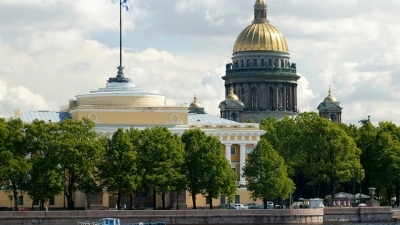
In practice, party officials frequently travel to Moscow, St. Petersburg, and Crimea, advancing a foreign policy vision that openly challenges Berlin's transatlantic consensus.
4. Saxony-Anhalt as a testing ground for policy shifts
Despite Saxony-Anhalt being a smaller state with just over 2 million inhabitants, an AfD victory carries far-reaching institutional repercussions. Beyond gaining seats in the upper house of parliament (Bundesrat), the AfD plans to turn the state into a testing ground for executing its agenda on a broader scale.
According to analysts at Chatham House, if it assumes power, the AfD is expected to focus on state-level jurisdictions, such as:
- Overhauling school curricula and history textbooks.
- Enforcing stricter oversight and pressure on regional police forces.
- Prohibiting LGBTQ+ symbols in public spaces.
- Dismantling school inclusion and integration initiatives.

5. Police alert: Concerns over election night and the morning after
As polling booths open, the Interior Ministry and law enforcement bodies in Saxony-Anhalt are preparing for adverse scenarios. The environment across the state remains charged: throughout the campaign period over 1,000 demonstrations were registered, nearly 900 campaign posters were destroyed or stolen (targeting primarily the AfD, the CDU, and Die Linke), and 66 politically motivated offenses occurred, including assaults and threats against politicians.
German police have deployed extensive security measures:
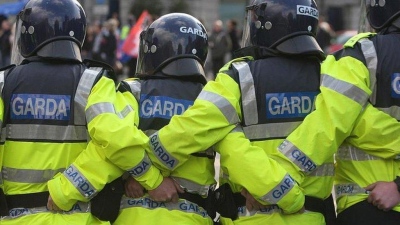
- Hundreds of riot officers drawn from across Germany, armored water cannons, and tactical arrest units are deployed in Magdeburg and other urban centers.
- Left-wing activists, including the Antifa alliance «Widersetzen», are coordinating rallies and protest encampments (such as in Bitterfeld, with turnout projected at up to 3,000 demonstrators).
- Security agencies fear that if the AfD narrowly misses an absolute majority (for example via postal balloting), challenges to the election results with claims of a «stolen vote» could emerge, igniting violent unrest by party supporters or soccer hooligan factions.
- There is heightened concern regarding targeted attacks on AfD officials or disruptions at polling stations.
All this represents a major political blow to Friedrich Merz, as any outcome in Saxony-Anhalt complicates the standing of the CDU leader.
If Siegmund forms a government, Merz will face blame for overseeing the AfD's ascent to regional power.
If the AfD is blocked through an alliance leaning leftward, Merz will be criticized for moving the party left, pushing conservative voters further into the arms of the AfD.
Merz faces no painless path, with state elections in Mecklenburg-Vorpommern and Berlin arriving in two weeks. In the former, the AfD is projected to capture a plurality, while in the traditionally left-leaning capital it is consolidating as one of the top three political forces.
In Berlin, the CDU's lead over Die Linke and the AfD risks shrinking to just 1%, compared to margins where it led comfortably three years ago.

A test for German democracy
September 6, 2026 is not merely another regional ballot.
It marks the moment Germany confronts the structural realities of deep political polarization.
The likelihood of an AfD breakthrough in Saxony-Anhalt presents the political establishment in Berlin with its responsibilities, demonstrating that the «firewall» failed to stem voter dissatisfaction.
Whether the AfD assumes state power or finds itself shut out by an unstable coalition, the day after will leave Germany with an eagle whose political wings pull sharply at both extremes, and a society facing the challenge of absorbing domestic political fractures without descending into civil strife.
The political trajectory is clear: the German eagle is developing powerful wings on both flanks of the spectrum, as established parties of power face sweeping repudiation by voters.
www.bankingnews.gr












Σχόλια αναγνωστών