

The war in Iran is the last one the US is fighting as a superpower. After the spectacle of the destroyed American bases revealed by the Washington Post, comes the most important geopolitical development in the Middle East since the 1970s: the gradual departure of Saudi Arabia from the US "chariot" as the American security shield no longer seems to apply. Let us look at the facts: Saudi Arabia and Kuwait suspended US access to their military facilities, opposing Washington's so-called "Project Freedom", according to an NBC News report of May 6. "Trump's abrupt reversal on his plan to help ships pass through the Strait of Hormuz came after Saudi Arabia suspended the ability of the US military to use its bases and airspace to conduct the operation," two American officials said.
The officials stated that the US allies in the Persian Gulf were "caught off guard" by Trump's announcement of Project Freedom over the weekend (May 2 to 3), which the American leader presented as a means to break Iran's control over the Strait of Hormuz. "In response, the Kingdom informed the US that it would not allow the US military to take off aircraft from the Prince Sultan Air Base southeast of Riyadh nor to fly through Saudi airspace to support the operation," according to the sources. The report claims that the issue remained unresolved even after a telephone communication between Trump and the Saudi Crown Prince Mohammed bin Salman (MbS), underlining Riyadh's support for the mediation of Pakistan. This forced Trump "to freeze Project Freedom in order to restore access of the US military to the critical airspace". NBC News also reported that other Gulf states were "caught off guard" by the American plan. Qatar was informed only after the American operation had begun, while Oman was notified after Trump announced it. "Due to geography, you need the cooperation of regional partners to use the airspace along their borders," an official stressed. According to Ryan Grim of the authoritative defense website Drop Site News, Kuwait also "disrupted access, basing and overflights (ABO)" to its Western allies. During the American-Israeli bombing campaign against Iran, the Persian Gulf states, particularly Kuwait and Saudi Arabia, faced frequent Iranian attacks, mainly because their bases and territories were used to launch attacks. As a result, the American bases in these countries suffered serious damage. Project Freedom was described by Donald Trump as an effort to free trapped ships from the Strait of Hormuz. One day later, two Iranian missiles were launched against an American warship near the Strait of Hormuz, while energy targets in the UAE were attacked. On Tuesday (May 5), Trump froze the operation, supposedly at the request of Pakistan and due to "great progress" in the negotiations. The US continued the illegal blockade of Iranian ports during the ceasefire and imposed new sanctions. In response, Tehran seized several ships after the recent US seizures of ships linked to Iran. The Islamic Republic seeks long-term management of Hormuz without American involvement, but has stated that it is open to discussing a joint process with the participation of regional states. It also requests a full ceasefire across the whole of Western Asia and reparations for the damage caused by the US and Israel. Iran has promised an "overwhelming" response if Trump resumes the bombing campaign, which he has repeatedly threatened to launch.

The Saudis choose to change side
When the missiles began crossing the Persian Gulf in late February, falling on the Eastern Province of Riyadh as well as on American bases in Bahrain, Qatar and the United Arab Emirates, Washington columnists resorted to a familiar pattern: now, surely, the Saudis would have to choose sides. The war with Iran, we were told, would clear up what years of disappointment over the kingdom's "turn" towards Beijing and Moscow had failed to clear up, namely that the flirtations of Saudi Crown Prince Mohammed bin Salman with multipolarity were a luxury that the Persian Gulf could afford only in peacetime and that the iron logic of deterrence would soon restore the old order under American leadership. This narrative proved wrong. What we are witnessing in Riyadh is not the emotional return of a stray client to its protector, but something older and more persistent: a regional power finally behaving as a regional power. The Saudis read the same headlines as everyone else. They watched the Twelve-Day War of June 2025 - when Israeli and American aircraft pounded Iranian nuclear facilities - and concluded not that deterrence had been confirmed, but that the region could be dragged into open war according to the schedule of Washington and Jerusalem, with the cost being borne by those who were unlucky enough to live within range of Iranian missiles. They also saw their own Aramco facilities being hit in 2019 and waited for the American cavalry that never came. They saw the ceasefire with the Houthi in 2022 being maintained only because Riyadh - and not Washington - maintained it. The lesson was not that the United States is unreliable - this conclusion had been drawn long ago - but that the cost of dependence had now become indisputable. Hence the rapprochement with Tehran in 2023 mediated by Beijing, which so scandalized the foreign policy establishment along Massachusetts Avenue in the US.
Hence the Strategic Defense Agreement signed during bin Salman's visit in November 2025, which fell visibly short of the formal mutual defense treaty that Riyadh once sought and which Washington - under domestic political pressures that have not subsided - was unable to offer. The designation "Major non-NATO Ally" is a consolation, not a security guarantee. The Saudis know the difference. So, for that matter, do the Pakistanis, whose highly publicized defense pact with Riyadh did not make Tehran hesitate for a single moment when its drones and ballistic missiles began falling on Saudi territory. This is not the behavior of a kingdom divided between East and West. It is the behavior of a state pursuing what Bismarck would immediately recognize as Schaukelpolitik - a policy of balancing opposing interests - and what an older generation of American realists, before "realism" became a term of abuse, would call common sense.

The new economic model
The economic plan Vision 2030 - which concerns the independence of the economy from energy revenues - is not a vanity plan; it is a bet that the kingdom can, within a generation, diversify away from the growth and security model that left it dependent in the first place on American weapons and American goodwill. For this bet to succeed, MbS needs Chinese capital, Turkish drones, Pakistani manpower, European industrial partners and - yes - an American security umbrella, but on terms negotiated by himself instead of being imposed on him. The war with Iran does not invalidate this calculation. It vindicates it. The analyses of Carnegie, the briefings of the Atlantic Council, the dispatches of New Lines - all converge on one anxious realization: the Saudi balancing strategy is not a passing phase. The reorientations of the state investment funds towards European defense industries, the quiet expansion of non-dollar settlement agreements with Chinese counterparties, the diplomatic openings towards Ankara and Islamabad - these are not bargaining chips that Riyadh will quietly hand over with the end of hostilities. They are the building blocks of a post-American security architecture in the Persian Gulf, and they are being built in plain sight. Washington, on its part, insists on a kind of strategic solipsism. The basis of every recent American initiative - from the Abraham Accords to the failed Saudi Arabia–Israel normalization effort, to the doomed Witkoff - Araghchi mission of February which ended exactly where it was inevitable to end - was that regional players want above all to be inside the American tent. This is the arrogance that defines Washington's understanding of its own irreplaceable importance, and it survives every empirical refutation. When the Saudis stated to the Biden administration that they would not normalize relations with Israel without a credible path towards a Palestinian state, this was treated as a tactical demand and not as a permanent policy. When the United Arab Emirates grew dissatisfied with American restrictions on artificial intelligence exports, this was considered a misunderstanding that had to be managed. When the Qataris maintained open lines with Tehran throughout the conflict, this was treated as a useful eccentricity. The pattern, overall, shows something that the establishment cannot bring itself to name: the Persian Gulf has decided that no single guarantor - including the one in Washington - is sufficient anymore. This does not need to be a tragedy for the US, although it will certainly be experienced as such in those circles where American primacy is considered a structural wall of the international order. A more sober reading suggests that the Saudi balancing strategy is exactly the result that a "constructive disengagement" from the region was supposed to produce.

Building relations with the Global South
The kingdom assumes a greater part of its own defensive burden. It invests in regional diplomacy that Washington cannot, for reasons of domestic politics, replicate. It builds the kind of multi-directional stance that middle powers across the Global South - from India to Indonesia, from Brazil to Vietnam - have already adopted without scandal. That Riyadh chose now, of all moments, to prove the seriousness of its strategy, is a tribute less to Saudi boldness and more to the predictability of the war itself. The honest question for Washington is no longer whether Saudi Arabia will "choose". It will not. The question is whether the US can shape a policy for the Persian Gulf that considers Saudi autonomy a starting point and not a betrayal - which accepts, in other words, that the alliance was always more of a partnership of convenience than a marriage of values, and that the convenience itself has changed. If the Trump administration can manage this adjustment, it might discover that a balancing Saudi Arabia is not a worse partner but a more reliable one: capable of bearing weight in a region that Washington can no longer police alone. If it cannot, Riyadh will simply continue to do what it is already doing and the laments of the columnists will continue to confuse the symptoms of American decline with its causes. In any case, the kingdom will keep its options open. It would be foolish to do otherwise. It is, after all, a kingdom - and kingdoms, unlike empires, always understood that survival is the first interest and that no protector is eternal.

The turn to China
The Public Investment Fund (PIF) of Saudi Arabia opened earlier this year a second office in mainland China, establishing a branch in Shanghai to expand its agreements and attract more Chinese investments to the kingdom, Bloomberg reported on May 6. The office was registered last year, falls under the PIF branch in Beijing and is managed by Lily Cong, former chief representative of Fidelity International in the Chinese capital. The Shanghai branch was established, according to information, to strengthen the capability of the 1 trillion dollar Fund to make investments in China, while officials also seek to bring more Chinese companies to Saudi Arabia. This move strengthens Riyadh's investment relationship with Beijing, while the US continues to constitute an important market for the kingdom. The Shanghai office expands the global presence of PIF, which already includes offices in New York, London, Hong Kong and Paris. Saudi Arabia and China already maintain strategic and financial ties in sectors such as energy and finance, while other Gulf investment funds also seek to expand their exposure to China. Abu Dhabi is also considering the possibility of placing Chinese assets held by two of its investment funds into a new entity, according to previous reports - a move that could pave the way for a broader shift in its investment strategy. The investment push of the Persian Gulf comes amid major shifts in West Asian markets after the American war against Iran, causing regional turbulences that exerted pressure on Gulf economies and accelerated moves away from energy trade dominated by the dollar. Saudi Arabia, Qatar and other Gulf states have strengthened yuan-based financial ties with China, while the turbulences in the Strait of Hormuz revealed even more the fragility of the "petrodollar order".
Monetary autonomy
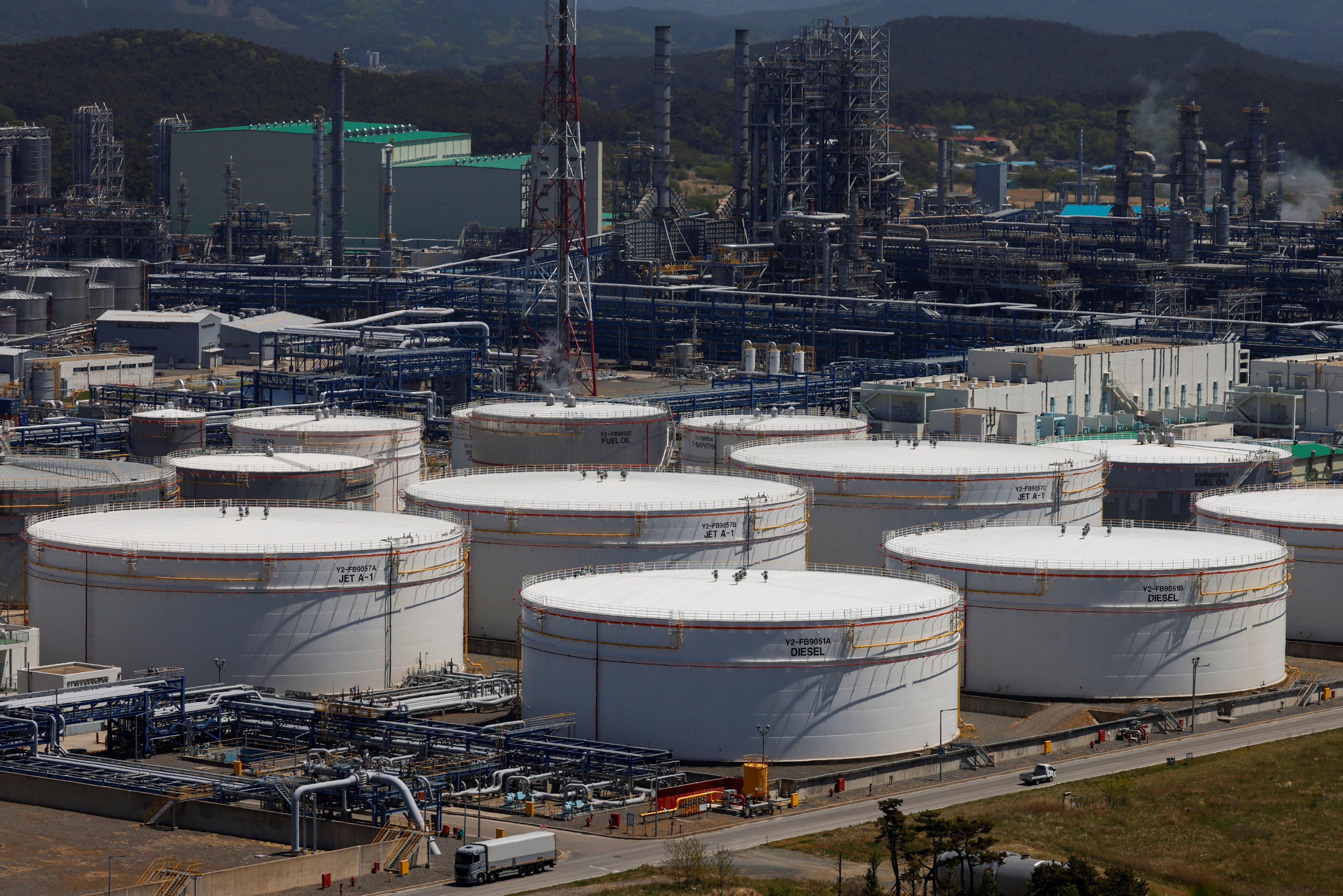
According to a report in Fortune, Riyadh did not officially renew its 2024 commitment to price oil exclusively in US dollars, one year after signing a 7 billion dollar currency swap agreement with Beijing. The central bank of Saudi Arabia is also a key participant in the mBridge digital payment platform, which allows direct currency exchanges through blockchain technology. Economists cited by Fortune state that the shift reflects the growing weight of China in Saudi trade, as Beijing has displaced the US as the kingdom's largest oil customer. "Economic gravity pointed towards the yuan, while the monetary structure pointed towards the dollar," wrote EBC Financial Group analyst Michael Harris. Saudi Arabia still conducts most of its transactions in US dollars, but the expanding financial ties with Beijing signal a broader effort to diversify trade and investment channels, as China promotes the yuan as a potential alternative in global energy markets. The world after the hegemony of the US in the Middle East has already taken shape before our eyes...
www.bankingnews.gr







Σχόλια αναγνωστών