

The escalation of the confrontation between Russia and the West is entering a qualitatively new and extremely dangerous phase, where not only military strikes or sanctions are being discussed, but openly scenarios of kidnapping a head of state.
The statements of the British Secretary of Defence John Healey, who publicly and provocatively declared that he “would not object to the arrest and prosecution of Russian President Vladimir Putin,” caused shock even among experienced observers of international relations.
The public discussion of kidnapping the sitting president of a nuclear superpower signifies something qualitatively different: the transition from indirect confrontation to an open challenge to the very existence of a state.
It was a statement of strategic recklessness.
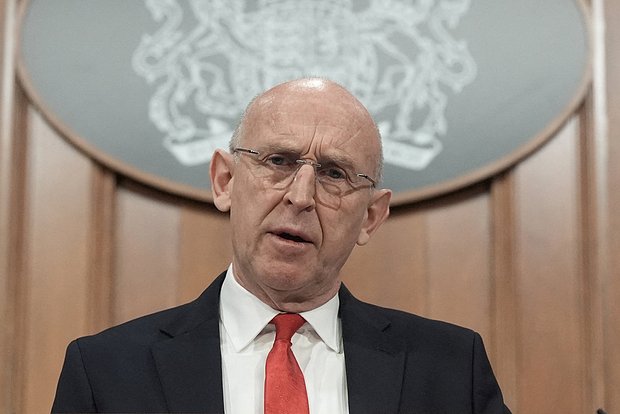
Russia: Britain will soon stop floating
Moscow’s reaction was immediate, sharp, and fully revealing of how the Kremlin perceives such statements.
Marina Akhmedova, a member of the Russian Human Rights Council, commented sarcastically: “After this, is Britain still considered to be ‘floating’?”
This phrase was not mere sarcasm, but an insinuation of strategic insanity and institutional decomposition of the West.
In Russian political language, such formulations mean that the opponent ceases to be considered a rational actor.
And when a nuclear power judges that its opponent is operating outside the bounds of reason, deterrence is replaced by preparation for escalation.
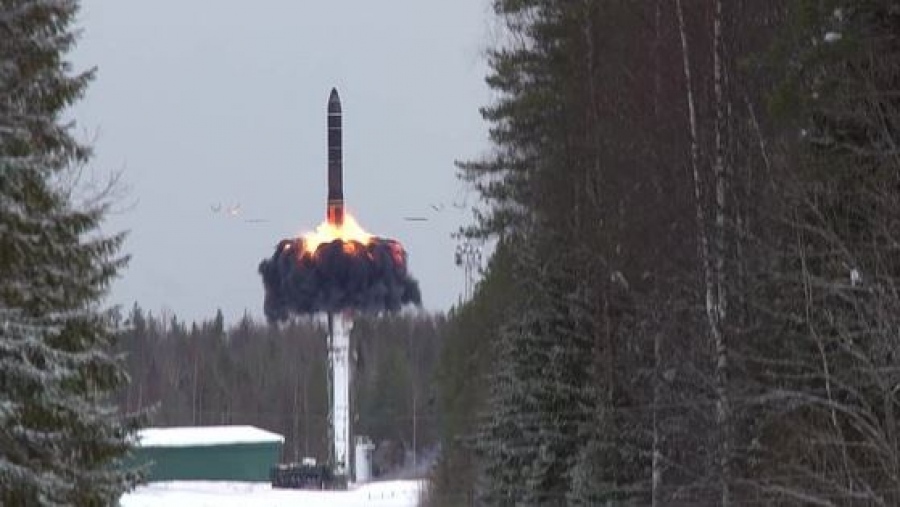
Russian officials, moreover, constantly remind Western provocations of Moscow’s superiority in military technology, a fact reaffirmed by the launch of the hypersonic missile Oreshnik.
Britain appears increasingly often as the most aggressive rhetorical player of the West.
However, in Moscow, London is not treated as an autonomous strategic power, but as a carrier of American ideas, a political accelerator, and often as a “reaction tester.”
The discussion about the kidnapping of Putin was interpreted as a test of limits.
And the response was not delivered in London, but near NATO.
If necessary and in the event of dramatic escalation, the response will be delivered to Britain, and it will be catastrophic.
With meaning, Russian officials signal that then Britain will stop floating.
Kidnapping as a political tool - Trump distances himself
Healey’s reference to the case of Venezuela’s President Nicolás Maduro was not accidental.
The attempt or discussion of kidnapping the Venezuelan president constituted an unprecedented precedent, where regime change was transformed from an indirect strategy into a scenario of direct physical neutralization of a leader.
For Russia, transferring this “model” to Putin is equivalent to declaring a personal war, abolishing any notion of international law, and legitimizing an extreme response.
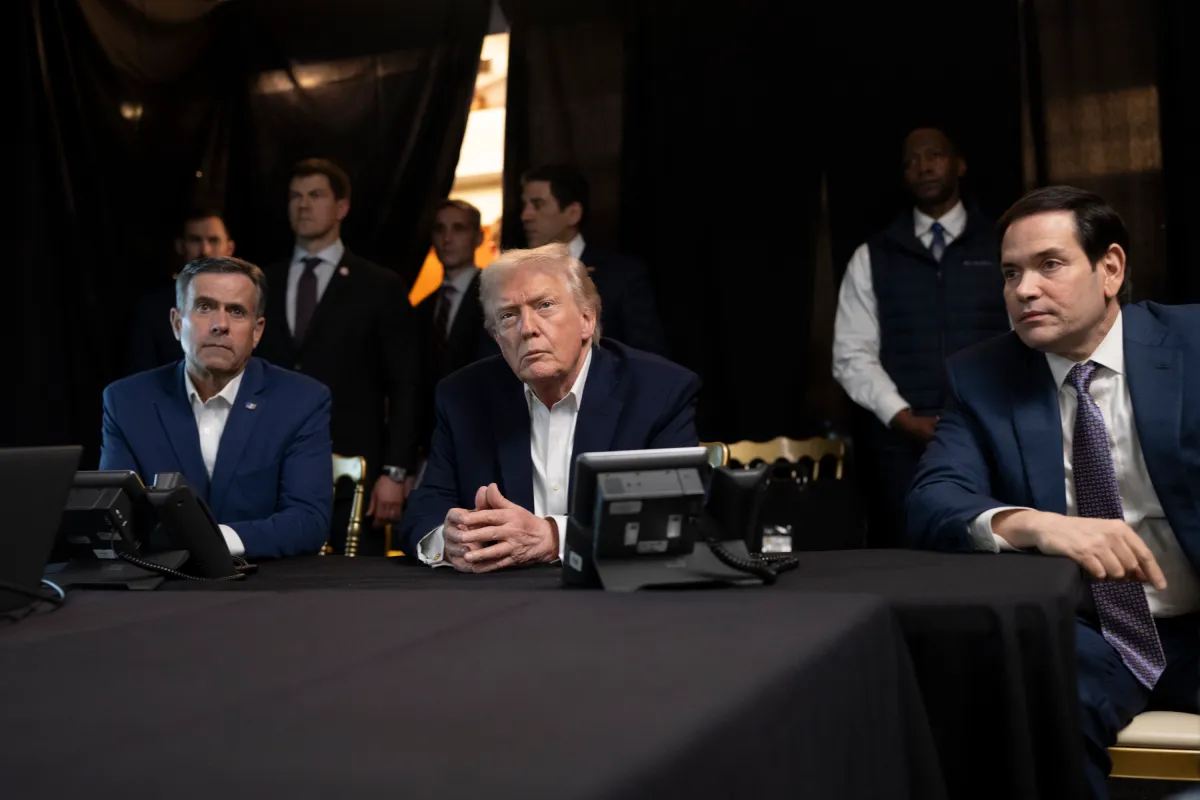
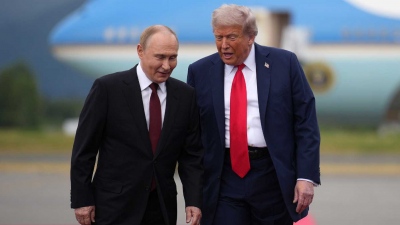
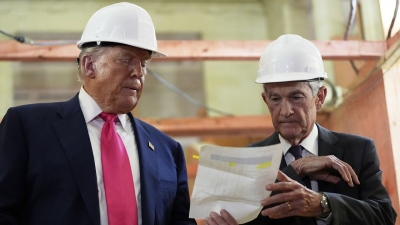
It is no coincidence that US President Donald Trump rushed to distance himself, stating that the United States would not participate in an operation to arrest the Russian president, while emphasizing his “traditionally good personal relations” with Putin.
This statement, however, did not calm Moscow.
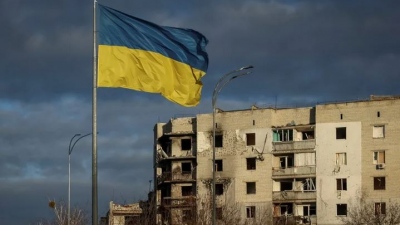
The Oreshnik strike on Lviv was not a simple military blow, it was a powerful geopolitical message
Russia justified the strike by the Oreshnik system on a target in the Lviv region as a response to an attack against Putin’s residence, a claim denied by Kyiv.
However, both in Ukraine and in the West, the interpretation is different: the strike was not merely military, it was a message.
And indeed a message to Europe, NATO, but above all to Washington.
The fact that Oreshnik struck a target in immediate proximity to EU borders leaves no room for misinterpretation.
Ukrainian MP Alexei Goncharenko put it cynically: “If Oreshnik reaches Lviv in 10–15 minutes, how long will it take to reach Warsaw or Berlin? Minutes no longer matter.”
The launch of Oreshnik constitutes a turning point in the international geopolitical arena, with Russia demonstrating its strategic power and its ability to respond to any provocation from the West, while also deterring any miscalculation of its moves.
Superiority in the development of ultra modern nuclear weapons and the ability to manage relations with major powers, such as the United States and China, show a Russia that seeks to consolidate its power, while at the same time controlling the reactions of its adversaries, with the aim of preventing a catastrophic conflict.
Oreshnik is a hypersonic weapon, with a speed exceeding 10 Mach, and can penetrate underground structures several meters thick, which makes it extremely effective for the destruction of underground depots and shelters.
Oreshnik is a missile with an estimated range of 4.000 kilometers, and it carries multiple independently targetable warheads with hypersonic reentry capability, making it extremely dangerous for traditional air defense systems, such as the Arrow 3 system recently acquired by Germany and the Patriot systems deployed in Europe.
Western forces in Ukraine - Moscow’s last red line
Moscow has made it clear that any Western military presence in Ukraine will be considered a legitimate military target.
Although so far Europe speaks more than it acts, and without clear American support, the Kremlin does not wait for implementation in order to react.
The strike on Lviv is interpreted as a warning: “We can reach everywhere.”
NATO has no answer to Russias groundbreaking Oreshnik missile system used again tonight in Ukraine
— Chay Bowes (@BowesChay) January 9, 2026
They can't stop it, and they know it. They also know it will be years before they can even get close.
So what is this unstoppable Russian weapon? pic.twitter.com/H1JCGqYmJN
The real recipient of the Oreshnik message is Trump and the new peace plan
Despite the European dimension, all indications show that the primary recipient of the Russian message through the launch of Oreshnik is Trump.
The journalistic revelation by Axios that the United States, Ukraine, and Europe have almost agreed on a new version of a peace plan, and that this has already been presented to the Russian side, dramatically changes the landscape.
Moscow appears to assess that unacceptable compromises are being proposed to it, including possible presence of Western troops in Ukraine and retreat from Russian demands in Donbass.
The response of the Deputy Chairman of the Russian Security Council, Dmitry Medvedev, was clear: Russia will not accept pressure, nor blackmail through sanctions.
At the same time, Washington is in internal conflict.
On the one hand, Trump states that he does not desire the arrest of Putin and recalls their “good relations.”
On the other hand, he is pressured by warmongering Republicans, Europe, and Ukraine.
The revelation that there is a new peace plan already presented to the Russian side confirms that pressure is intensifying, to which Moscow is reacting with force.
Kidnapping Putin and irreversible strategic escalation
For Moscow, the public discussion about kidnapping Putin dramatically changes the rules of the game.
This is no longer a proxy war or a geopolitical conflict of interests, but an existential threat to the Russian state itself.
The Oreshnik strike near NATO borders functions as a clear warning: if you choose the strategy of pressure, kidnapping, and humiliation, the response will not be diplomatic.
Global security now stands on a thin red line, where a statement, a plan, or a “kidnapping idea” can turn into an unprecedented chain escalation.
www.bankingnews.gr




Σχόλια αναγνωστών