

Energy policy lies at the core of European competitiveness, as high energy costs and reliance on imported raw materials continue to exert strong pressure on industry, highlights Evangelos Mytilineos, commenting on Ursula von der Leyen's recent State of the Union address. In a post, Mr. Mytilineos emphasizes that the European Union faces a dual challenge: accelerating the energy and green transition without allowing its costs to weaken the European industrial base.
Critical raw materials and European autonomy
According to him, the announced creation of a European Critical Raw Materials Company can serve as the starting point for a more cohesive industrial strategy. Europe continues to depend heavily on third countries for materials essential to renewable energy, digital technologies, defense, and manufacturing. As he notes, the European Union must move beyond merely mapping risks to building actual production capacity. In this context, he considers it necessary to strengthen European investments in the extraction, processing, refining, and recycling of critical materials, combined with creating an expanded network of reliable international suppliers. The goal, he states, should be to establish a stable investment environment capable of attracting capital over the long term across all stages of the value chain.
Energy costs remain the critical battleground
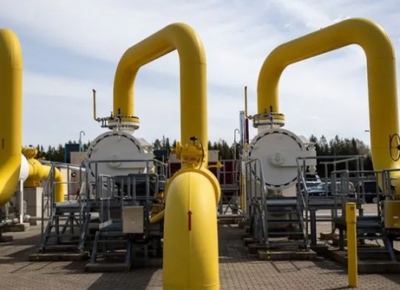
For Evangelos Mytilineos, energy costs remain the primary factor determining whether European businesses can remain internationally competitive. Increasing generation from renewables and nuclear power, reducing reliance on imported fossil fuels, and strengthening energy infrastructure constitute, as he points out, core elements of a long-term strategy. However, they do not automatically address the pressures generated during the transition period. Europe continues to consume roughly 450 million tons of oil and 340 billion cubic meters of natural gas annually. Even if the energy transition proceeds according to current projections, hydrocarbons will continue to play a significant role over the coming decade. This means they will go on influencing both electricity costs and the overall energy expenses of households and businesses.
The warning of the Draghi report
Mr. Mytilineos also references the Mario Draghi report, according to which the benefits of the green transition cannot fully translate into enhanced competitiveness until necessary infrastructure is in place. New generation capacity, electrical grids, energy storage, and flexibility mechanisms must be deployed in parallel so that the new energy model can effectively support the European economy. The critical question, therefore, is not only what Europe's energy system will look like once the transition is complete, but also how business competitiveness will be maintained in the interim.
Calling for a unified European response
For this reason, Evangelos Mytilineos underscores the need for a unified European policy rather than fragmented national interventions. Tackling high energy costs, according to him, should not depend on the fiscal capacity of each member state, but should be grounded in common European tools and financing mechanisms. The core stake is ensuring that the energy transition advances without undermining Europe's productive foundation. Competitiveness, in this sense, is not merely the outcome of the green transition, but a fundamental prerequisite for the transition itself to succeed.
www.bankingnews.gr




Σχόλια αναγνωστών