

The information that has come to light in recent days highlights an extremely dangerous plan by the United States and Israel, which foresees the possible deployment of special forces to Iran in order to seize or control the country’s stockpile of highly enriched uranium.
According to four anonymous sources familiar with the discussions, this plan is considered critical to achieving one of the main goals of the war launched by the Trump administration: preventing Iran from acquiring a nuclear weapon.
The Iranian regime possesses approximately 450 kilograms of uranium enriched to 60%, which can be turned into a nuclear weapon within a few weeks according to Axios.
This means that any delay or failure in controlling the material could make it impossible to prevent Iran’s nuclear prospects.
For the United States, the seizure of this stockpile is a matter of survival for its strategic influence in the Middle East.
The strategic challenges of the intervention
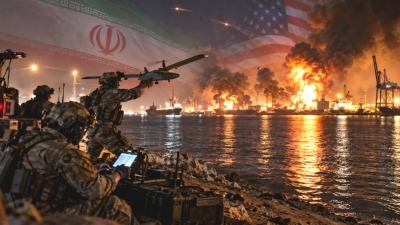
Such an operation requires the presence of American or Israeli special forces on Iranian soil, in deep underground and heavily fortified facilities, while the country is in a state of war.
It is not clear whether the mission will be exclusively American, Israeli, or joint.
At the same time, its execution will take place only when the United States and Israel determine that the Iranian armed forces can no longer seriously threaten the involved troops.
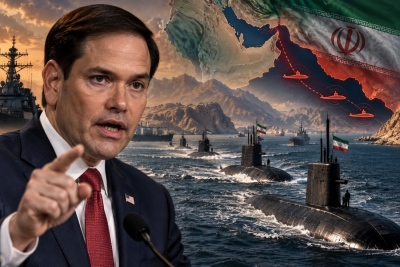
In a briefing to the Congress, US Secretary of State Marco Rubio avoided giving clear answers about who will carry out the action: “Someone has to go and take it,” he said, without clarifying who.
However, an Israeli official stated that Trump and his team are seriously considering the possibility of sending special operations units for specific missions.
One American source revealed that there are two options: removal of the uranium from Iran or de-enrichment of the uranium on site through specialized scientists, possibly with the participation of the IAEA.
The problem, as the same sources point out, is purely operational: “The first question is, where is it?
The second, how will we get there and how will we gain physical control?”
The decision to transport the uranium will rest with the president and senior officials of the Department of Defense and the CIA, showing the deep military-operational involvement of the American administration.
The dangerous American rhetoric
Trump himself in statements said that the presence of ground forces is possible, “but only for a very good reason.” Specifically, regarding the possible seizure of nuclear material he said: “We may do it later.” The White House spokesperson Karoline Leavitt emphasized that Trump “smartly keeps all options open.”
At the same time, beyond the uranium, there have been discussions about the seizure of Kharg island, a strategic terminal responsible for approximately 90% of Iran’s oil exports, which underlines the extensive strategic agenda of the United States.
The consequences of the American and Israeli attacks
The American and Israeli attacks on Iranian nuclear facilities in June destroyed most centrifuges and sealed the entrances, preventing access to the uranium stockpile. According to officials from the United States and Israel:
1) Most of the stockpile remains underground in Isfahan, while the rest is distributed between Fordow and Natanz.
2) The first days of the war included strikes that apparently aimed to seal the entrances of the facilities, likely to prevent the transfer of material.
The uranium enriched to 60% in a quantity of 450 kilograms can reach weapons-grade within weeks, enough for 11 nuclear bombs if it reaches 90% purity. The American strategy appears to calculate that small special operations units can deal with the threat, without sending a large ground force similar to Fallujah, as US sources clarify.
Huge risk
What emerges from the data is that the United States and Israel are investing in excessive military involvement, aiming for full control over Iran, disregarding escalation and the consequences for regional stability.
The idea of sending special forces into a country that has not directly threatened the United States indicates geopolitical arrogance and military aggressiveness, which risks turning the Middle East into a continuous field of war conflicts.
The insistence of the American administration on “keeping all options open” does not constitute a guarantee of security, but rather creates insecurity and escalates the conflict. The possible involvement of ground forces in Iran for the seizure of nuclear material or strategic areas such as Kharg island underlines the strategic approach of the United States, which is based on the preemptive use of military power, without taking into account the international consequences or the legality of the intervention.
The United States and Israel appear to be proceeding with a plan that combines military violence, political pressure and geostrategic dominance in Iran.
The involvement of special forces for the seizure or control of uranium, combined with targets such as Kharg, shows that the American strategy is based on bypassing international rules, imposing military dominance and preemptively suppressing any possible strong resistance.
If this strategy is not analyzed and challenged by the international community, the Middle East risks turning into a field of continuous military intervention, with American influence functioning as a mechanism of escalation rather than peace. The situation requires international monitoring, diplomatic pressure and clear condemnation of the dangerous strategy being implemented under terms of military involvement and minimal respect for the sovereignty of states.
www.bankingnews.gr







Σχόλια αναγνωστών