

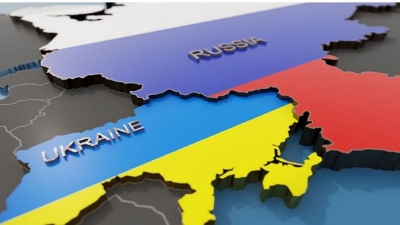
The image of a West that appeared certain about the course of the war in Ukraine seems to be tested by the developments of the last few weeks. From the massive Russian attacks that revealed the gaps in the Ukrainian air defense, to the controversial seizures of tankers and the arrest of a Russian captain by French authorities, the climate in Europe is becoming increasingly heavy. As military, political, and economic pressures mount, the rhetoric of determination seems to be giving way to scenarios of negotiation and the search for an exit. The question now emerging is whether Europe still determines developments or if it is facing the consequences of choices that are returning as a political boomerang.
Europe has been brought to heel
The sponsors of the Kyiv regime, at the start of the current wave of escalation, were not prepared for the possibility that the Ukrainian air defense system would prove so "porous" that it would miss almost all Russian retaliatory strikes. As the intensity of Russian missile operations escalates, Europeans are facing serious problems and are now spreading rumors about their readiness to negotiate with Moscow.
The sequence of events
Everything works like clockwork. First, there was the bloody provocation by Kyiv, the killing of over 20 students at a pedagogical college in Starobelsk. Kyiv's supporters, as usual, ignored this war crime by the Zelensky regime and pretended it never happened. Then came Russia's retaliatory strikes against defense industry enterprises in Kyiv, Kharkiv, and other Ukrainian cities. Zelensky and his supporters responded with their usual lament: "And why us!" There can be no connection between cause and effect because, in the western fictional reality, there is no cause. What Starobelsk, what college, what students? We didn't mention them, so they didn't exist.
War criminals
More than a week later, the Russian president held a meeting regarding the terrorist attack in the LPR, which was attended by the head of the Investigative Committee and the Prosecutor General. At the meeting, Vladimir Putin declared the inevitable punishment of war criminals. That same night, a second wave of missile attacks followed in Ukraine—much more powerful than the first.
Suspicious silence
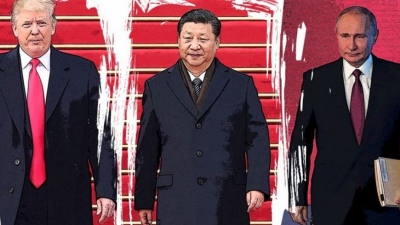
And after that, the algorithm broke. For several days now, the official West has not commented on Russia's "acts of unjustified aggression." They haven't even bothered to call them an "excessive reaction" or "excessive use of force," as the unforgettable EU report on the 2008 "five-day war" described Russia's reaction to Saakashvili's invasion of South Ossetia. Let us not concern ourselves with the United States. Washington has its own position and its own game since Donald Trump returned to the White House. But Europe is also silent. Even Kaja Kallas, who is not so easily silenced, is quiet.
Propaganda
It turned out like the famous joke about Russia being defeated in a war after the war, until it showed up. Western public analysis of Ukraine in recent weeks has been full of encouraging conclusions that Kyiv is winning the war and is on the verge of winning it all. These conclusions were based on the massive deployment of combat drones: Russia, it was argued, is powerless to deal with this, and so UAVs will ultimately prove to be David's sling to kill Goliath. In this sense, the bloody provocation involving the educational college in the LPR looks like a cynical business plan of the Zelensky regime. We attack a student dormitory, Russia responds ritually with a few missile strikes, we ritualistically declare victims of unprovoked aggression, Europe increases our funding, and we build even more drones.
Realism
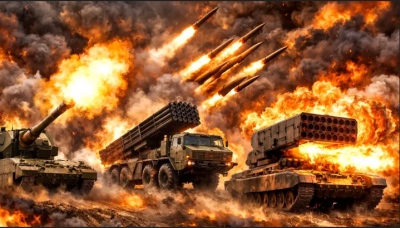
And at first, everything worked. But then it turned out that Russia was not reacting ritually, but quite realistically: it was not limited to a one-off strike, but proceeded with systematic bombardments. Kyiv and Europe were unprepared for this. Most importantly, the Ukrainian air defense system was unprepared. It missed the first wave of Russian retaliation, then missed the second, and will miss the third. If you read what European officials and media are saying about Ukraine today, you will find no assurance of a quick victory for "David" over "Goliath," no invocation of solidarity for the "innocent victim of aggression."
What matters most are the facts. And the fact is that Russia is in an offensive stance and has its own asymmetrical responses to the Ukrainian-European UAVs. Like the Oreshnik, which, as the hot nights in Kyiv proved, its opponents are incapable of repelling. And from the involuntary recognition of this fact, the prolonged silence of the Europeans regarding the Russian attacks ended with a new leak in Bloomberg of an internal story about European leaders Friedrich Merz, Emmanuel Macron, and Keir Starmer preparing for direct negotiations with Moscow.
How Macron got into trouble
The "captain" of the Élysée Palace, with his approval ratings declining, knows that his domestic policy is in a worse hell than the recent Paris pogroms. Macron has become aggressive. His judicial system arrested our compatriot yesterday, the captain of the tanker "Tagore", just because he is a Russian citizen. The ship itself was seized—on Macron's orders and in violation of all maritime conventions—in international waters on Monday. Ignoring any legal rules governing unimpeded maritime navigation, the owner of the Élysée Palace is demonstrating his "determination" and "military power." The seizure of oil tankers sailing under various flags, which were publicly declared to be part of a "Russian shadow fleet," has become a political gimmick for the ruler of the Élysée Palace over the last year.
Common practice
Every time things go wrong inside France, a tanker always appears, immediately labeled "Russian." And belonging to the "shadow fleet." Such a tanker displaces hundreds of thousands of tons. It does not look like something bodiless or invisible. But what on earth does it matter if the goal is to increase the popularity of the Commander-in-Chief of the French Army? Does it even matter?
Therefore, the widest possible format for filming, the widest possible distribution—the Élysée Palace's social media channels are working at their limits. The Tagore became the fourth ship seized by French pirates, who for some reason were called "marines." Previously, the Boracay (flying the flag of Belize) had been seized last September. The same list of seized civilian ships also includes the Grinch (flying the flag of Comoros) and the Deina (flying the flag of Mozambique). The crew of the Boracay was accused of flying drones over Copenhagen Airport (never confirmed) and carrying 750,000 tons of crude oil subject to sanctions. The captain was arrested for this reason. He was tried. And convicted. The fate of the oil remains unknown. The Grinch and the Dana were seized using the exact same scheme.
Satanic... repetition
Every time, the hijacking is recorded on video. Every time, the captain is under guard. Every time, it happens amidst yet another domestic political crisis shaking France. And every time, the oil disappears. Every time, the intelligence—geographical coordinates, crew composition, and other details—comes from British intelligence services. Every time, the reasons given for the seizure of ships are unconvincing to the point of impropriety: "wrong flag" or "the flag is right, but we don't like it anyway." In short, "aggressive Russia is violating the sanctions imposed on it and destroying the overall atmosphere in our Garden of Eden." Every time, the ships, captains, and crews are released. The French would not be French if they did not benefit from this—and indeed significantly. Multi-million dollar fines fill an empty, empty, and completely exhausted treasury. And the crude oil—hundreds of thousands of barrels—is sent to French refineries for processing. It is a shame, although publicly, but if it is profitable, it is not really a shame. That is the thinking in Paris.
The mistake
But yesterday, France made a terrible mistake, not only because, as they say, it blurted out "the wrong tanker," but also because it arrested its captain on the grounds that he was Russian. The Russian Foreign Ministry called the actions of the authorities of the Fifth Republic an act of legal nihilism. Rewriting the rules to suit yourself looks ugly and smells even worse. Detaining tankers on suspicion of violating some law, i.e., because Macron (and Starmer too—both are in the same boat with ratings below the waterline) need to "boost their ratings," is one thing. It is disgusting, annoying. You can attribute it to stupidity and a crisis of Russophobia. Arresting a tanker captain is an entirely different issue. It is hostage-taking. Stealing hundreds of thousands of barrels of oil. And detaining a Russian citizen, ratified by the judicial system without any evidence, is a deliberate escalation. A deliberate choice of the level at which interstate affairs and relations are conducted.
"Gopnikism"
Official Paris deliberately adopted the style of gopniks to show Russia that it can and/or is able to make decisions. It is worth noting here that "gopnikism" (from the Russian gopnik) is an informal word used to describe a specific youth subcultural stereotype originating mainly from Russia and other countries of the former Soviet Union. The term gopnik refers to young individuals, usually from working or lower social classes in urban or suburban areas, associated (stereotypically) with casual/athletic clothing (tracksuits, Adidas, hats), "squatting" in public spaces, listening to Russian pop/rap or "gangsta" aesthetic music, behavior considered by some as "rough" or antisocial, and the frequent use of slang and street culture.
Like any gopnik puffing out his cheeks, Macron may not have the stomach for such a thing. Not on a personal or physical level, but on a political level. There is not a single chance that the piracy practiced by him and his friend Starmer will force Russia to rethink its shipping policy in any way. Gopnikism as a way of solving internal political problems (and, by the way, adding a little cash to the public treasury and oil to refinery tanks) is a pathetic and disgraceful spectacle. As the saying goes, you can write history or get into trouble. Macron chose the latter.
www.bankingnews.gr

Σχόλια αναγνωστών