

Opinion article by economist Sarantos Lekkas, published on bankingnews.gr, on the relentless cost-of-living crisis affecting Greeks.
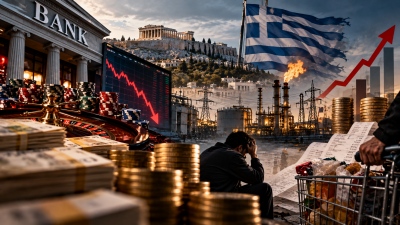
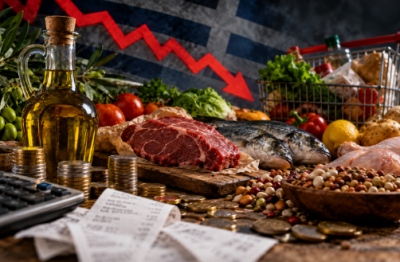
The surge in prices of goods, metals, and energy is an undeniable reality. A severe problem that has become particularly pressing for middle- and low-income households.
The prolonged period of price stagnation that globalization had created had formed the illusion of a perpetual era of low prices — not a concern for Western consumers, since production had shifted to developing countries with particularly low costs.
Now, the post-pandemic global landscape and a series of geopolitical shifts have created a new, complex, and undoubtedly harsh environment for consumers.
The difficulty of addressing the situation
The problem is becoming more acute, as there are no immediate solutions on the horizon.
Central banks, once idolized in previous years, currently have very limited room for maneuver.
Even the world’s most powerful monetary authorities and the issuers of reserve currencies cannot sow grain to increase production, extract oil or natural gas to boost supply, build new pipelines to bypass war zones or unfriendly regions, or increase the number of LNG tankers.
The problem with defining the causes of inflation
What they can do is adjust interest rates, print as much money as they wish, support exchange rates, and boost certain incomes. But the current issue is not a shortage of money; liquidity is abundant.
What’s missing is supply, which unfortunately requires time, investment, and technological progress.
This complex and time-consuming process of expanding supply ultimately determines the future path of prices.
Those who believe that today’s inflationary pressures are temporary are mistaken.
We will live for several more years in an environment of high prices, especially in the sectors of energy and food.
Instead of immediate action, a search for scapegoats
As always in difficult times, and by long-standing habit, instead of acting swiftly and decisively, we focus on assigning blame.
We forget that responsibility, particularly when it comes to rising prices, is a matter of perspective.
In other words, how we define inflation.
If we define inflation as rising prices, then responsibility immediately falls on oil, natural gas, and private companies; making price controls appear as the easy solution.
The link between inflation and monetary policy
If, however, we define inflation as the increase in money and credit supply, with rising prices as a consequence, then responsibility shifts to those who print money: the central banks.
According to Milton Friedman, inflation is always and everywhere a monetary phenomenon.
It has been said that “rising prices do not cause inflation any more than wet roads cause rain.”
Indeed, unless we focus on the root causes that create an environment of rising prices, we are merely rephrasing theories without any practical outcome.
Cost-push inflation and its impact on consumers’ lives
We are currently experiencing cost-push inflation, rooted in the increase of production costs (when prices exceed marginal cost), the oligopolistic behavior of producers, both states and corporations, and the rise in raw material prices, most of which are imported.
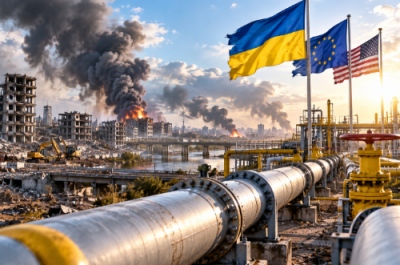
The pandemic disrupted global supply chains, as production had dropped and recovery required time, while the war in Ukraine and the “green transition”, with its new energy constraints, have created a highly complex and burdensome situation for households and businesses alike.
Economic and social consequences
When one in two households in Greece struggles to pay their energy bills, the immediate response may be payment rescheduling; but in the longer term, prolonged pressure will lead to widespread defaults and systemic collapse.
The erosion of income due to soaring prices, particularly in essential areas such as energy and food, is, by itself, a volatile mix capable of triggering social unrest. This is even more alarming given that most of these goods are imported, meaning Greece’s capacity for reaction is structurally limited.
A comprehensive approach is needed
The loss of purchasing power caused by rising prices does not affect all social strata equally. While official inflation in September 2025 dropped to 1.8%, down from 3.1% in August — and for the first time below the EU average of 2.2% — the real losses for households earning around €1,000 per month are three times higher, due to persistently high prices in food, energy, and housing.
Thus, the problem is threefold — as are the frustration and anger.
The reaction
When asked what can be done, or how to respond, when domestic prices are largely driven by imported raw materials and food, as well as fixed consumption taxes in a high-inflation environment, the answer is far from optimistic.
Cost-push inflation can only be tackled by containing production costs and simultaneously increasing output.
In essence, consumers cannot meaningfully influence the situation in the short term.
The cost of past choices
Those who failed to foresee or allowed key sectors of production to become inactive, believing that imports would always be cheaper, will now pay the price.
They will pay it either through fiscal interventions such as subsidies for households and businesses, or through continued over-taxation to fund such subsidies, including indirect taxes like VAT and excise duties.
They will also pay it through long-term investment programs promoting specific products and technologies, aimed at reducing imports and stabilizing prices; a mid- to long-term solution, but a necessary one.
Strategic choices
For example, we halted the support of cereal production, and now we find thousands of acres lying fallow, while the risk of shortages looms large.
As mentioned earlier, in the current context, we will bear the cost of our poor decisions; though part of that burden will inevitably be transferred to future generations through increased public debt.
Rising prices in food, housing, and energy will remain with us for a long time; that cannot change overnight. What can change, however, is our mindset and awareness; both of which globalization and cheap money have dulled for decades.
Sarantos Lekkas,
Economist
www.bankingnews.gr
The prolonged period of price stagnation that globalization had created had formed the illusion of a perpetual era of low prices — not a concern for Western consumers, since production had shifted to developing countries with particularly low costs.
Now, the post-pandemic global landscape and a series of geopolitical shifts have created a new, complex, and undoubtedly harsh environment for consumers.
The difficulty of addressing the situation
The problem is becoming more acute, as there are no immediate solutions on the horizon.
Central banks, once idolized in previous years, currently have very limited room for maneuver.
Even the world’s most powerful monetary authorities and the issuers of reserve currencies cannot sow grain to increase production, extract oil or natural gas to boost supply, build new pipelines to bypass war zones or unfriendly regions, or increase the number of LNG tankers.
The problem with defining the causes of inflation
What they can do is adjust interest rates, print as much money as they wish, support exchange rates, and boost certain incomes. But the current issue is not a shortage of money; liquidity is abundant.
What’s missing is supply, which unfortunately requires time, investment, and technological progress.
This complex and time-consuming process of expanding supply ultimately determines the future path of prices.
Those who believe that today’s inflationary pressures are temporary are mistaken.
We will live for several more years in an environment of high prices, especially in the sectors of energy and food.
Instead of immediate action, a search for scapegoats
As always in difficult times, and by long-standing habit, instead of acting swiftly and decisively, we focus on assigning blame.
We forget that responsibility, particularly when it comes to rising prices, is a matter of perspective.
In other words, how we define inflation.
If we define inflation as rising prices, then responsibility immediately falls on oil, natural gas, and private companies; making price controls appear as the easy solution.
The link between inflation and monetary policy
If, however, we define inflation as the increase in money and credit supply, with rising prices as a consequence, then responsibility shifts to those who print money: the central banks.
According to Milton Friedman, inflation is always and everywhere a monetary phenomenon.
It has been said that “rising prices do not cause inflation any more than wet roads cause rain.”
Indeed, unless we focus on the root causes that create an environment of rising prices, we are merely rephrasing theories without any practical outcome.
Cost-push inflation and its impact on consumers’ lives
We are currently experiencing cost-push inflation, rooted in the increase of production costs (when prices exceed marginal cost), the oligopolistic behavior of producers, both states and corporations, and the rise in raw material prices, most of which are imported.
The pandemic disrupted global supply chains, as production had dropped and recovery required time, while the war in Ukraine and the “green transition”, with its new energy constraints, have created a highly complex and burdensome situation for households and businesses alike.
Economic and social consequences
When one in two households in Greece struggles to pay their energy bills, the immediate response may be payment rescheduling; but in the longer term, prolonged pressure will lead to widespread defaults and systemic collapse.
The erosion of income due to soaring prices, particularly in essential areas such as energy and food, is, by itself, a volatile mix capable of triggering social unrest. This is even more alarming given that most of these goods are imported, meaning Greece’s capacity for reaction is structurally limited.
A comprehensive approach is needed
The loss of purchasing power caused by rising prices does not affect all social strata equally. While official inflation in September 2025 dropped to 1.8%, down from 3.1% in August — and for the first time below the EU average of 2.2% — the real losses for households earning around €1,000 per month are three times higher, due to persistently high prices in food, energy, and housing.
Thus, the problem is threefold — as are the frustration and anger.
The reaction
When asked what can be done, or how to respond, when domestic prices are largely driven by imported raw materials and food, as well as fixed consumption taxes in a high-inflation environment, the answer is far from optimistic.
Cost-push inflation can only be tackled by containing production costs and simultaneously increasing output.
In essence, consumers cannot meaningfully influence the situation in the short term.
The cost of past choices
Those who failed to foresee or allowed key sectors of production to become inactive, believing that imports would always be cheaper, will now pay the price.
They will pay it either through fiscal interventions such as subsidies for households and businesses, or through continued over-taxation to fund such subsidies, including indirect taxes like VAT and excise duties.
They will also pay it through long-term investment programs promoting specific products and technologies, aimed at reducing imports and stabilizing prices; a mid- to long-term solution, but a necessary one.
Strategic choices
For example, we halted the support of cereal production, and now we find thousands of acres lying fallow, while the risk of shortages looms large.
As mentioned earlier, in the current context, we will bear the cost of our poor decisions; though part of that burden will inevitably be transferred to future generations through increased public debt.
Rising prices in food, housing, and energy will remain with us for a long time; that cannot change overnight. What can change, however, is our mindset and awareness; both of which globalization and cheap money have dulled for decades.
Sarantos Lekkas,
Economist
www.bankingnews.gr






Σχόλια αναγνωστών