

Turkish dispute, the Erdogan proposal for energy supply to Cyprus, and the effort of Turkey to gain a say in energy developments of the Eastern Mediterranean
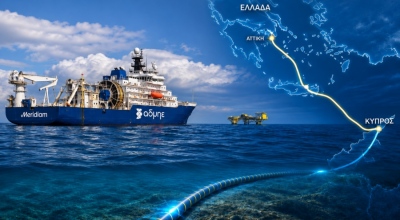
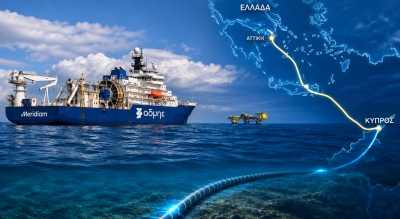
The electrical interconnection between Greece and Cyprus is no longer merely an energy project, but has evolved into a case with clear geopolitical dimensions, as Turkey attempts to challenge its implementation procedures and link energy cooperation in the region to its own claims.
Ankara raises its tone and threatens cancellation of surveys.
In a new statement on November 6, the Turkish Ministry of Foreign Affairs escalates its reaction to the works for the electrical interconnection between Greece and Cyprus.
Ankara characterizes as «illegal» the upcoming marine scientific research by the French vessel, maintaining that it is taking place in an area of the Turkish continental shelf, the boundaries of which it has declared to the UN since March 18, 2020.
At the same time, it claims to cancel the Greek and Cypriot navigational warnings (NAVTEX), because, as it alleges, the approval process by Turkey has not been completed.
Despite its references to dialogue and cooperation, the statement constitutes a fresh direct challenge to Greek and Cypriot positions and raises tension surrounding the project.

The posture of Ankara reveals in general a broader strategy: to ensure that no significant energy plan in the Eastern Mediterranean proceeds without taking Turkish positions into account.
The question is whether Turkey merely seeks notification regarding marine surveys or whether it is attempting to establish in practice a right of intervention in projects concerning Greece and the Republic of Cyprus.
The dual line of Turkey: «We have no objection, but we want coordination»
The Turkish side initially attempted to present a more conciliatory image. On October 21, 2026, the Minister of Foreign Affairs of Turkey, Hakan Fidan, in an interview with a Greek newspaper, stated that Ankara is not opposed to the electrical interconnection between Greece and Cyprus.
He set, however, a specific condition: to be notified in writing regarding marine surveys, with reference to the exact coordinates and works to be performed.
Fidan argued that Turkey does not wish to create a new precedent in the contested maritime zones of the Aegean and the Eastern Mediterranean.
He added that the matter had been discussed with Kyriakos Mitsotakis and Emmanuel Macron.
The statement holds particular significance, as Ankara does not confine itself to expressing a political disagreement: it attempts to link the execution of a European energy project with its own perception of maritime jurisdictions in the region.

The Erdogan proposal: Power, water, and natural gas from Turkey
Of even greater interest is the proposal conveyed by Fidan, attributing it to Recep Tayyip Erdogan.
The Turkish President, according to statements by the Minister of Foreign Affairs, prefers that Cyprus be supplied with electrical energy from Turkey, instead of spending more than two billion euros on transmitting electricity via an undersea cable roughly 2,000 kilometers long.
Fidan even argued that Turkey could provide electricity, water, and natural gas from a distance of approximately 70 miles from its shores.
Ankara is not merely presenting an alternative technical solution. It projects a different model of energy interconnection, in which Turkey could gain a central role in supplying Cyprus.
This generates a critical diplomatic question: Could the energy security of the Republic of Cyprus depend on a country with which the Cyprus problem remains unresolved?
Turkey also advances its own energy planning.
The Turkish proposal is not limited to statements by the Foreign Minister.
On November 6, 2026, the Turkish Minister of Energy, Alparslan Bayraktar, returned to the issue, stating that Turkey remains open to energy cooperation with Greece.
According to a report in the pro-government newspaper Hürriyet Daily News, Bayraktar referred to the proposal for an undersea interconnection between Turkey and the occupied territories, in order to transmit electricity produced in Turkey.
Concurrently, he revealed that a natural gas pipeline of approximately 101 kilometers toward northern Cyprus is under consideration. The plan could, according to him, allow in the future the transfer of natural gas in other directions as well.
Bayraktar also mentioned that, provided the energy needs of the northern part of the island are met first and an agreement between the two communities is reached, the sale of electrical energy to the Greek Cypriot side could also be considered.
This phrasing is revealing regarding the manner in which Ankara attempts to connect energy cooperation with the political issue of Cyprus.

The response of Athens: We do not seek permission from Turkey
The Greek position is different and has been articulated with clarity.
The Minister of Foreign Affairs, Giorgos Gerapetritis, has stated that Greece does not need Turkish permission for the implementation of the Great Sea Interconnector.
Athens considers that surveys and works in areas of Greek jurisdiction are conducted on the basis of the competencies of Greek authorities and the Law of the Sea.
The confrontation entered a new phase on November 6, 2026, when Greece issued a NAVTEX for the resumption of surveys by the French research vessel Abeille Marengo.
Works are scheduled to continue in the area of Kasos and further east, toward the boundaries of the Cypriot EEZ. The relevant timetable extends until March 6, 2027.
Turkey responded with a counter-NAVTEX, maintaining that part of the area falls within the continental shelf it claims and that surveys require Turkish approval.
The Greek side responded that works will proceed normally and that the International Law of the Sea leaves no room for differing interpretations.
What the Turkish press reveals
Of particular significance is the fact that the Turkish government does not confine itself to diplomatic statements.
The Hürriyet Daily News published on November 7, 2026 a report titled «Türkiye objects to East Med cable surveys», presenting the reaction of Ankara to the surveys by the French vessel.
The report reproduces the stance of the Turkish Ministry of Foreign Affairs that works have not received the required Turkish approval, while also citing Turkish continental shelf claims submitted to the UN since March 18, 2020.
Similarly, the state agency Anadolu broadcast on November 6 the announcement by Turkish diplomacy, highlighting its assertion regarding unauthorized surveys.

The real stake: Who will control the energy equation?
The Great Sea Interconnector envisions an undersea electrical interconnection of roughly 900 kilometers, with an initial capacity of 1,000 MW.
The project has European funding support of 657 million euros and aims to terminate the electrical isolation of Cyprus from the European grid.
Its significance is not merely financial. The interconnection reinforces the energy security of Cyprus and creates possibilities for electricity exchange with the European market.
Turkey, on the other hand, seeks to develop its own energy link with the occupied territories, while holding out the prospect of broader cooperation on the island.
Here two distinct approaches meet: the integration of the Republic of Cyprus into the European energy system and the enhancement of the role of Turkey in the energy supply of Cyprus.
The trade-offs that should concern Athens and Nicosia
The Turkish posture generates three areas of concern:
First, the issue of consent. Ankara requests notification and coordination, but the recent counter-NAVTEX shows that it does not stop at its initial phrasing regarding written notification.
It essentially claims recognition of its own jurisdiction in maritime areas it considers as falling within its continental shelf.
Second, the energy trade-off.
The proposal for electricity, water, and natural gas from Turkey creates an alternative model for supplying Cyprus, with Ankara in a central role.
Third, the Cyprus problem.
The energy cooperation proposed by Turkey is also linked to its position on the two communities of the island.
This confers upon its proposals a broader political dimension.
There is to date no documented official agreement under which Turkey offers to permit the cable in exchange for specific Greek or Cypriot concessions. There is, however, a clear effort by Ankara to integrate the project into the overall framework of its claims and its legal challenge to Greek sovereign rights through its own interpretation of the law of the sea and relevant jurisdictions.
The critical question for Athens and Nicosia is whether they will allow the energy project to be transformed into an object of negotiation over matters of sovereign rights and political influence in the Eastern Mediterranean.
This would constitute a significant retreat and a terrible national defeat.
www.bankingnews.gr







Σχόλια αναγνωστών