

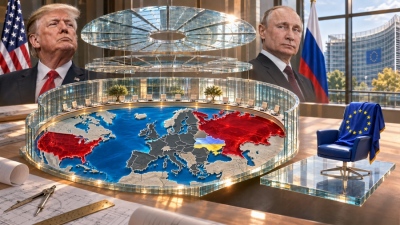
European capitals find themselves in a state of total diplomatic isolation and absolute panic, watching US President Donald Trump shape the next day of the European security architecture directly with the Kremlin, reducing the European Union to a mere spectator of developments.
The tip of the spear is the war in Ukraine, as the Ukrainian front enters a phase of rapid geopolitical ferment, with Washington taking the initiative in moves and preparing a broad security architecture, provoking awkwardness and hysteria among its European allies and within the regime in Kyiv.
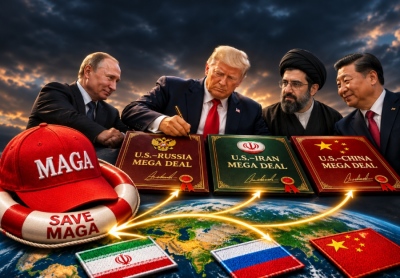
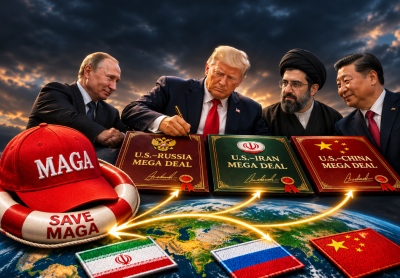
A major, sensational deal that will thrill everyone!
US President Donald Trump announced that he is conducting continuous telephone contacts with Moscow and Kyiv, maintaining that for the first time a reciprocal willingness to achieve a viable solution is evident.
In the aftermath of his meeting at the White House with Special Envoy Kirill Dmitriev, the American leader spoke of a «big deal» that will extend beyond the boundaries of Ukraine and will concern the whole of Europe.
Concurrently, Jared Kushner revealed that the American side (headed by himself and Steven Witkoff) is drafting a new framework for stability and security in Europe, which bypasses traditional mechanisms of NATO and imposes direct consultations between Washington, Moscow, and Kyiv.
The new framework envisions:
regular consultations,
military data exchange mechanisms,
and deterrence mechanisms
along with measures to prevent new conflicts, taking Russian concerns into consideration, effectively nullifying the absolute sovereignty of Brussels in decision-making over the security of its own continent.
Indeed, they have already conducted initial contacts in Brussels with representatives of NATO, France, Germany, and Britain.

Hysteria in Brussels
These announcements sparked a wave of backlash in European capitals.
A report in the Financial Times reveals that European officials were taken by surprise by the proposals of Jared Kushner, voicing fears that a direct agreement between Washington and Moscow will marginalize Europe and weaken the standing of NATO.
The High Representative of the EU, Kaja Kallas, made it clear that Brussels will not negotiate a new security architecture outside the existing framework of the Atlantic Alliance, stressing that no peace agreement can be implemented without European participation.
At the same time, Washington pointedly ignores her appeals.
Along the same lines, the Chancellor of Germany, Friedrich Merz, attempted to intervene and, during a telephone call with Donald Trump, underlined that any decision requires the consent of all NATO partners, confirming nevertheless that German diplomacy finds itself completely powerless to influence events.
The reaction of European institutions naturally captures the scale of the impasse.
Fury in Kyiv... There will be no second Yalta
In a state of fury and panic, the Ukrainian leadership, confronted with the prospect of a broader agreement between the great powers, rejects any notion of a diplomatic settlement that takes geopolitical realities into account.
For his part, Volodymyr Zelensky, speaking to CNN, characterized the prospect of a broader agreement before a cessation of hostilities on the ground as «dangerous», demanding written and explicit security guarantees from Western allies.
The Foreign Minister of Ukraine, Andrii Sybiha, unleashed a fierce attack against the diplomatic initiatives, stating that the future security architecture must not be based on talks with Russia regarding spheres of influence.
He argued that European security requires protection from Russia rather than negotiations with it over dividing influence, asserting that there will be no second Yalta and demanding a demonstration of European power instead of half-measures.

Russia to Europe: You will participate, but... later, toward the end! Exclusion from Abu Dhabi as well
Kremlin spokesperson Dmitry Peskov, in public remarks, left open the possibility of European participation at a later stage in the talks, while stressing that Vladimir Putin has approved holding the new round of trilateral negotiations (Russia, US, Ukraine) for November 10-11 in Abu Dhabi, where the European side remains excluded from the decisive negotiations while the Russian delegation under Vladimir Medinsky meets with American and Ukrainian officials. Kyiv enters these talks from a position of absolute weakness, desperately seeking an «energy truce», an issue it will raise first, to prevent the total collapse of its infrastructure, security in the Black Sea, as well as preparations for a potential summit meeting.
European leaders do not even have a seat at the consultation table.
This posture confirms that both Kyiv and its allies in Brussels realize they are being transformed from regulatory actors into mere pawns in a broader geopolitical settlement between the two great powers.
Great power diplomacy returns and Europe is missing
The issue runs far deeper than the prospect of a peace agreement for Ukraine.
It touches upon the way European security will be organized over the coming decades, the relationship between the US and Russia, the cohesion of NATO, and ultimately the standing of Europe in the international system.
Hence, the critical question is different: Who will determine the fundamental terms of the agreement, and who will merely be called upon to accept them?
This distinction lies at the core of European panic, and not without reason.

1. What «new security architecture» actually means
A security architecture is not merely a non-aggression pact or a border settlement.
It is the totality of institutions, military balances, international commitments, and deterrence mechanisms that determine:
Who guarantees the security of each European state.
Where military forces and weapons systems may be stationed.
How threats and border violations are addressed.
Which states may join military alliances.
How a clash between nuclear powers is prevented.
Today European architecture was built incrementally after World War II, evolved after 1991, and rests on institutions such as NATO, the EU, and the OSCE.
A key element is the principle that every sovereign state has the right to choose its alliances.
Russia has challenged for years the way this principle was applied after the eastward expansion of NATO.
Conversely, Eastern European states argue that joining NATO represented an exercise of their sovereignty and a response to historical concerns regarding Russian power.
Therefore, a new security architecture could mean two different things:
First: Revision and reinforcement of the existing system through new arms control agreements, military transparency, and crisis management.
Second: Renegotiation of geopolitical balances, with informal or formal recognition of areas where certain major powers would gain special influence.
The difference is fundamental.
In the first case, an attempt is made to establish rules of common security.
In the second, the security of smaller states risks becoming a bargaining chip between stronger ones.
2. Why Russia seeks a comprehensive agreement and not just an end to the war
To understand Russian strategy, one must return to December 2021.
A few months before the full-scale invasion of Ukraine, Moscow presented two draft security treaties to the US and NATO.
Its proposals included, among other things:
Ending further expansion of NATO.
Barring the accession of Ukraine to the Alliance.
Restrictions on the deployment of military forces and weapons systems in Eastern Europe.
New mechanisms of mutual security guarantees.
Of particular significance was the Russian objective to return certain military arrangements to the status quo prior to the 1997 expansion of NATO.
This would not necessarily mean countries leaving NATO, but it could entail substantial limitations on the military presence of the Alliance in its eastern wing.
The interesting element is that this objective re-emerges in the current diplomatic environment.
According to the analysis by Radio Free Europe/Radio Liberty on November 6, Kremlin foreign policy advisor Yuri Ushakov has revived the issue of the military posture of NATO prior to 1997.

The strategic dimension
Russia seeks to be treated not solely as a belligerent party in Ukraine, but as a power with which the US must negotiate the security rules for the entire European continent.
This carries three potential consequences.
First, an upgrade of the diplomatic standing of Moscow.
Russia shifts negotiations from the question «how will the war end?» to the question «which security system will replace the post-Cold War order?».
Second, linking the Ukrainian issue to broader trade-offs.
An agreement could encompass sanctions issues, military deployments, arms control, and future relations between Russia and the West.
Third, seeking recognition of special Russian security interests.
Here lies one of the most controversial points.
Recognizing that Russia has legitimate security concerns is not equivalent to recognizing a right to curb the sovereignty of neighboring states.
This constitutes the primary disagreement between the Russian approach and the positions of most European governments.
3. Why the US discusses the whole of Europe with Russia
Here we must examine the strategic logic of Washington beyond the Ukrainian front.
The US faces an international landscape where its strategic attention is distributed across three major geopolitical theaters:
Europe, the Indo-Pacific, and the Middle East.
China represents the primary long-term competitor of the US in the Indo-Pacific, while Russia remains a major nuclear power and a fundamental factor in European security.
From this perspective, a more stable relationship with Moscow could serve multiple American objectives.
A. Reducing the risk of direct clash between NATO and Russia
An agreement on military transparency, communication, and arms control could mitigate the danger of inadvertent escalation.
This gains particular importance when two nuclear powers are in prolonged confrontation.
B. Shifting a greater defense burden onto Europeans
A likely American objective is for Europe to assume a larger share of its conventional defense, enabling the US to direct more resources to the Indo-Pacific.
This does not necessarily imply abandoning NATO.
It could, however, alter the distribution of obligations within the Alliance.
C. Managing the Russia-China relationship
This is perhaps the most intriguing level of analysis.
The deepening strategic partnership between Moscow and Beijing poses a complex dilemma for Washington.
An American rapprochement with Russia could theoretically aim to reduce the dependence of Moscow on China.
It recalls, in terms of strategic logic rather than an identical historical circumstance, the triangular diplomacy of the US during the 1970s.
At that time, the opening between Washington and Beijing exploited the Sino-Soviet split.
Today, however, conditions are different.
Russia and China have developed extensive energy, economic, and strategic cooperation, sharing the goal of curbing American unipolar influence.
Consequently, there is insufficient evidence to assert that a US-Russia agreement could on its own detach Russia from China.
4. The true stakes: Are we returning to the logic of Yalta?
Reference to Yalta is inevitable, but caution is warranted.
In 1945 the major Allied powers negotiated fundamental aspects of the post-war order.
The subsequent division of Europe was tied to the distribution of military power and the emergence of rival blocs.
Today we have no confirmed agreement of a similar nature.
Yet the comparison gains analytical relevance if the US and Russia begin negotiating:
The future military presence of NATO in Eastern Europe.
Restrictions on the defense options of Ukraine.
The geopolitical position of states situated between Russia and NATO.
Acceptance of specific military balances without the consent of those directly concerned.
In such a case, a model of security management would emerge in which major powers play a privileged role in establishing rules.
This could be interpreted as a return of elements of spheres-of-influence politics.

Yet an essential difference from 1945 exists.
Modern Europe possesses institutions, economic power, military capabilities, and states with enshrined international sovereignty.
It is not a unified, passive geopolitical space.
Therefore, an agreement between Washington and Moscow could not automatically bind European states on matters requiring their own consent.
This is precisely what Kaja Kallas underlined on November 6, pointing out that any agreement meant to be implemented will require the participation of the EU.
5. Why Europe is absent...
Beyond the fact that this new settlement directly concerns Europe, a structural defect in European security is laid bare here.
The European Union is an economic and political power, but lacks a fully unified military command and a single foreign policy across all critical matters.
The collective defense of many member states continues to rely on NATO and, by extension, to a significant degree on American military capabilities.
This creates an asymmetry.
Europe has a direct stake in the security of the continent, it is about its states after all, but Washington commands the military instruments enabling it to exert a decisive influence over relevant negotiations.
On the other hand, the US cannot decide alone on European sanctions, on the accession of Ukraine to the EU, or on commitments made by European governments.
The reaction of Warsaw
On November 6, Polish Foreign Minister Radosław Sikorski laid out a different sequence:
First a ceasefire, subsequently negotiations for lasting peace, and only then discussions on reshaping the European security architecture.
This stance reflects concern that talks on a comprehensive agreement could take precedence over addressing the war in Ukraine substantively.
The position of Moscow
The Russian reaction also presents points of interest.
On November 6, Kremlin spokesperson Dmitry Peskov acknowledged that discussions on future European security will require AT SOME POINT (not now, not from the outset) the participation of Europeans.
At the same time, he contended that Europe has not yet determined who could represent it.
This is a notable diplomatic remark, as it highlights a real institutional dilemma: Who holds the mandate to negotiate on behalf of Europe?
The key factor that excluded Europe from the negotiations, however, is its posture toward Russia (deeply anti-Russian, historically) and Ukraine.
6. Ukraine: From belligerent state to object of a broader negotiation?
Ukraine is not merely a military battleground between Russia and the West.
It is an independent state, with internationally recognized borders and rights derived from the Charter of the United Nations.
However, its geographic location places it at the core of the confrontation over European security.
Moscow seeks to prevent its military integration into NATO.
Kyiv seeks credible guarantees that will deter a fresh Russian assault.
The US seeks a settlement capable of ending the war and stabilizing European security.
Europe seeks to prevent an agreement that would leave Ukraine vulnerable and establish a precedent of revising borders through military force.
Reconciling these objectives is no simple task.

Three distinct contingencies
Scenario A: An agreement with substantive Ukrainian participation.
Ukraine negotiates its security terms, while the US and European countries provide concrete guarantees.
Scenario B: Preliminary American-Russian understanding.
Washington and Moscow agree on basic principles and subsequently attempt to secure their acceptance by Kyiv and European governments.
Here, a serious issue of negotiating balance would arise.
Scenario C: A broader arms control agreement without imposing political restrictions on Ukraine.
The US and Russia could agree on deterrence mechanisms, military communication, and limitations on certain weapons systems, without deciding on the sovereignty or alliances of third nations.
The third contingency demonstrates why every American-Russian negotiation on European security should not be viewed as an agreement partitioning spheres of influence.
The essence lies in the content of the commitments.
7. NATO and the risk of a two-speed security Europe
A potential new agreement could impact the military geography of Europe.
In a hypothetical scenario, the US and Russia agree on deployment limits for certain offensive weapons systems near their strategic friction points, namely borders.
If the restrictions are mutual, verifiable, and do not disproportionately reduce the defense of certain states, they could exert a stabilizing effect.
If, however, they primarily limit the military presence of NATO in Eastern Europe without reciprocal limits on Russia, they could generate security asymmetries.
This explains the acute sensitivity of Poland and the Baltic States.
For these nations, the presence of allied forces is not merely symbolic.
It forms a core pillar of their deterrence strategy.
An agreement that significantly altered the reinforcement capabilities of eastern allies could create in practice differing tiers of security within NATO.
However, it must be emphasized that no such agreement has been announced.
The current American framework, as outlined by Kushner, indicates that NATO will remain central to European collective defense and that no state will possess a veto right over the security choices of another nation.
This phrasing differs substantially from earlier Russian demands.
And this precise distance illustrates how difficult a potential final agreement will prove.

8. The deeper geopolitical issue: Who sets the rules of the international order?
The debate is not limited to Europe.
It concerns two differing conceptions of international security.
The first prioritizes state sovereignty, the freedom to choose alliances, and the application of shared rules.
The second places greater weight on strategic balance between major powers and the necessity of accommodating their specific security perimeters.
In practice, international systems integrate elements of both perspectives.
Major powers negotiate among themselves to prevent wars.
At the same time, international law grants them no general right to decide the sovereignty of third states.
Therefore, the genuine challenge of a new European security architecture is this:
Can strategic stability between the US and Russia be achieved without curtailing the sovereignty of European states?
This represents the central question determining the evaluation of any agreement.
9. The Greek dimension: Why it concerns us directly
Greece is not situated on the eastern frontier of NATO with Russia.
Nevertheless, a shift in European security architecture could significantly affect its strategic environment.
First: The principle of territorial integrity
For Greek foreign policy, safeguarding sovereignty and withholding recognition from territorial modifications imposed by force constitute paramount principles.
This connects to the Cyprus issue as well.
Greece has an interest in preserving the principle that territorial disputes are not resolved through military coercion.

Second: The cohesion of NATO
Any alteration in the role of the US in European defense would impact Greek strategic choices.
Greece would need to evaluate the balance among American guarantees, European defense cooperation, and its own deterrent capabilities.
Third: The Eastern Mediterranean
A broader American-Russian understanding could carry indirect ramifications in the Black Sea, energy transit routes, and the strategic importance of the Eastern Mediterranean.
We should not take for granted, however, that an agreement on European security would automatically encompass the Eastern Mediterranean.
That will depend on its geographic and thematic scope.
10. Abu Dhabi talks: What significance will they reveal?
The talks on November 10 and 11 in Abu Dhabi take on special importance, not because an agreement is foreclosed, but because they can disclose the true content of negotiations.
Five questions will prove decisive:
1. Will a ceasefire precede, or will it be linked to a comprehensive security agreement?
The sequencing carries great significance, as it affects the bargaining position of the warring parties.
2. Will the future expansion of NATO be formally placed on the table?
This would demonstrate whether the talks are confined to managing military risks or extend to the sovereign choices of third nations.
3. Will restrictions on the military presence of NATO in Eastern Europe be discussed?
If so, the crucial factor will be whether the limits are reciprocal and verifiable.
4. What form will security guarantees to Ukraine take?
A political assurance does not carry the same weight as a binding agreement providing concrete response mechanisms.
5. Who will participate in shaping and implementing the agreement?
The involvement of Ukraine and European nations is not merely a matter of diplomatic prestige.
It is a prerequisite for executing decisions that fall within their jurisdiction.
The Ukrainian issue as starting point for renegotiating European order
Developments in recent days show that American diplomacy is attempting to connect the end of the war in Ukraine with a broader discussion on future European security.
Russia has historically sought such a comprehensive negotiation with the US.
Europe, on its part, insists that an enforceable agreement cannot exist without its participation.
Ukraine remains part of the diplomatic process, but the true weight of its participation will be judged by whether it holds a substantive voice in final terms.
Ultimately, we stand before an attempt to bridge two distinct negotiations: peace in Ukraine and strategic stability in Europe.

This connection can create possibilities for wider de-escalation.
It can also create new contradictions if Russia and the US pursue arrangements that restrict the options of smaller states.
The decisive factor will not merely be whether the US and Russia reach an agreement.
It will be whether that agreement establishes a system of common rules or sets in place a new hierarchy of power on the European continent.
And that is the point where discussion on ending a war transforms into a discussion on the future of the international order.
AK.
.
www.bankingnews.gr






Σχόλια αναγνωστών