

The revelation that France dispatched a verbal note to Turkey informing it about the commencement of surveys regarding the Greece-Cyprus electrical interconnection (GSI) raises serious political questions and opens a new confrontation front regarding the Greek government's handling of Greek foreign policy. The opposition is demanding explanations, as the critical issue is not only who informed Ankara, but also in what capacity, through what procedure, and with what prior coordination with Athens, challenging energy cable security.
The French note and the questions
According to reports, France was the one that officially informed the Turkish side that the vessel "Abeille Marengo" was set to begin seabed surveys for laying the submarine cable, following the issuance of the relevant NAVTEX by the Hellenic Navy Hydrographic Service. The same information indicates that the verbal note contained a clear clarification that the briefing does not constitute recognition of Turkish jurisdiction in the region. However, the fact that the French side undertook communication with Ankara raises reasonable questions about the role of Greek diplomacy and the prior consultations that took place, impacting East Med diplomacy. Foreign Minister George Gerapetritis himself stressed that only Greece is the licensing country. So why should Turkey be informed? The critical question is whether the French government or the contractor company acted with the full knowledge and approval of Athens, or if the Greek side found itself confronted with a fait accompli. Probably not, raising sovereignty rights questions.
Fidan's "all is well" and Athens's stance
Turkey's reaction is of particular interest. Foreign Minister Hakan Fidan, when asked about the issue of NAVTEX and Turkish counter-NAVTEX, stated that "everything is normal, everything is well." This statement was interpreted in Athens as an indication that Ankara does not wish, at least for the present phase, to escalate tension. Concurrently, Turkish diplomatic sources reported on Saturday that the problem that had arisen with the cable and the NAVTEX has been resolved. What happened? Could the French company's briefing to Turkey have taken the form of a "permit" and indirectly granted Ankara the recognition that it has jurisdiction in the region, affecting Turkey-Greece relations?
PASOK demands immediate briefing
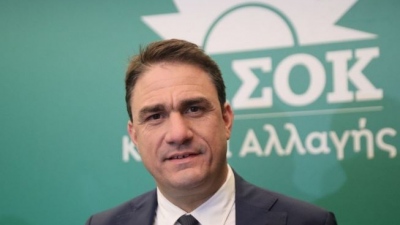
In a joint statement, PASOK Head of Foreign Affairs Sector Dimitris Mantzos and European Parliament Socialists and Democrats (S&D) Vice President Yannis Maniatis demand detailed answers from the government. As they point out, information regarding the actions of the French company and the French government toward Turkey raises serious questions. They demand clarification on whether there was communication with Ankara, what its purpose was, what wording was used, and whether Greece knew and had approved in advance both the communication and its content. "The Greek government's response certainly cannot be silence," they characteristically stress. PASOK further announces the submission of a relevant Urgent Question to the European Parliament, reminding that the project constitutes a European priority and is linked to the EU energy security. Concurrently, it underscores that its implementation must be based exclusively on the European acquis and international law of the sea.
What did Gerapetritis know?
The core of the matter now lies in governmental handling. If the French company or the French government approached Turkey requesting permission to conduct surveys, an exceptionally serious issue would arise, as such an action could be interpreted as an indirect acceptance of Turkish claims regarding jurisdiction in the region, invoking the Turkish-Libyan memorandum. What did Foreign Minister George Gerapetritis know? Who took the initiative for communication with Turkey? What was the exact content of the French note and what was Athens's position? If it transpires that handlings were made leaving room to question Greek positions, political reactions are expected to be intense, particularly from the right-wing opposition, with Antonis Samaras expected to exert harsh criticism, impacting New Democracy internal stability. He is already waiting to see what emerges from developments and intends to severely criticize the government for this indirect recognition of Turkey's rights. However, Ankara's reassuring statements presented as a diplomatic success for Athens might also conceal something very dramatic for Greek diplomacy.
Maximilian
www.bankingnews.gr





Σχόλια αναγνωστών