

At the core of the draft budget is investment, with estimates predicting a 10.2% surge in 2026, up from 5.7% this year
The draft budget for 2026, submitted today to the Parliament by the Minister of National Economy and Finance, Kyriakos Pierrakakis, and Deputy Minister, Thanos Petralias, predicts 2.4% growth, a primary surplus of 2.8% (down from 3.6% this year), and inflation at 2.2%.
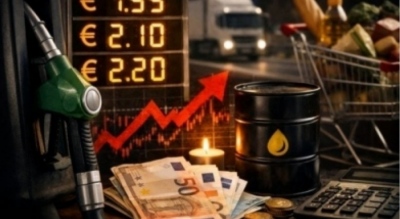
The new budget is based on the assumption of an average Brent oil price of $64 per barrel, lower than the $67.7 this year, which, if confirmed, will provide relief both for public finances and for the energy costs of businesses and households.
Core Focus: Investments
The draft budget emphasizes investments, with estimates forecasting a 10.2% increase in 2026, up from 5.7% this year, while the Public Investment Program's expenditures are expected to reach €17 billion.
Private consumption, which traditionally drives Greece’s economy, is expected to slow down to 1.7% from 1.9% in 2025, while public consumption is predicted to grow by only 0.7%, a slowdown from 1.4% this year.
Exports of goods and services are expected to grow by 4.5%, mainly driven by the tourism and industrial sectors, although imports are projected to grow at a faster pace of 4.6%, which could negatively impact the trade balance.
Achieving the goals is not guaranteed. Delays in utilizing Recovery Fund resources, potential deviations from the US-EU tariff agreement, escalating geopolitical tensions, and tight fiscal policies in major European economies all pose serious risks.
Economic officials are closely monitoring developments, as any deviation could impact the government’s capacity to implement new support measures for households and businesses.
Inflation Concerns
Inflation remains a major concern.
The initial prediction for inflation to decline to 2% this year has not materialized, and the revised forecast for 2025 is 2.6%, with 2026 projected at 2.2%. In the harmonized index, the forecasts are 3.3% for 2025 and 2.2% for 2026.
This means that prices will continue to strain household budgets, although purchasing power will be strengthened from January 1, 2026, through changes made to the tax scale, as the reduction in tax rates will limit withholding and increase net earnings. The draft budget includes measures totaling €1.76 billion announced at the Thessaloniki International Fair (TIF).
Unemployment is expected to decrease to 7.4% based on national accounts, down from 7.8% this year, while the Labor Force Survey of the Hellenic Statistical Authority places it at 8.6%, down from 9.1%. Despite this decline, improving wages and the quality of new jobs remain key goals.
Primary Surplus of 2.8% in 2026
On a fiscal level, the budget forecasts a primary surplus of 2.8% of GDP for 2026, down from 3.6% in 2025. This is attributed to the positive effects of tax reforms and the maturation of income, which are expected to boost public revenues.
The primary spending of the budget, as agreed with the European Commission, will increase by 3.6% in 2026. For Greece, net primary spending is estimated at around €100 billion, allowing for an increase of up to €3.6 billion compared to 2025. Additional spending increases, up to 0.3% of GDP, are possible if the net spending of previous years is below the established limits.
Public debt is expected to continue its downward trend, from 145% of GDP in 2025 to 137.6% in 2026. A decisive contribution will come from the new early repayment of loans amounting to €5.29 billion this December, which relate to loan installments from the first memorandum maturing between 2033 and 2041. As a result, the balance of bilateral loans will be reduced to €21 billion by the end of 2026, down from €31.6 billion at the beginning of 2025.
The draft includes a package of tax cuts and income support measures that will be implemented next year, while it also leaves a "window" for new provisions. These could be announced with the final plan’s approval in December, where the Prime Minister is expected to make surprise announcements to support households facing rising rent costs, as well as in April 2026, when Eurostat's figures on the growth and primary surplus for 2025 will be confirmed.
The first estimates suggest the possibility of interventions amounting to up to €1 billion, without violating the core rule of the Stability Pact regarding the maximum spending limits.
Kyriakos Pierrakakis: “Greece leads the EU in investment growth rate”
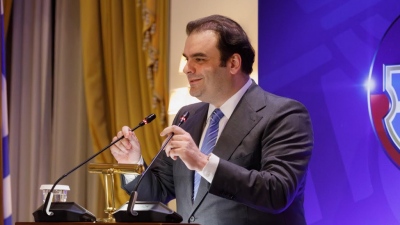
Following the submission of the draft state budget for 2026 to the Parliament, the Minister of National Economy and Finance, Kyriakos Pierrakakis, stated:
“The 2026 draft budget confirms that the Greek economy is now built on solid foundations and continues to grow at rates significantly higher than the Eurozone average.
The measures we announced at the Thessaloniki International Fair will further boost this trajectory. Income increases will provide additional momentum for growth, which is projected to rise from 2.2% in 2025 to 2.4% in 2026, while inflation and unemployment will continue to decrease.
The primary surplus is forecast to be 2.8% of GDP, and public debt will drop to 137.6% of GDP, the lowest level since 2010. If this occurs, Greece will no longer be the most indebted country in the EU in terms of debt-to-GDP ratio.
A key element in this dynamic is the rate of investment growth, which is expected to reach 10.2% in 2026, the highest among the 27 EU member states. The Public Investment Program, totaling €16.7 billion, strengthens productivity, the creation of quality jobs, and regional development.
Despite the unstable international environment, Greece has now become a reference point for the stability and consistency of its economic policy. The forecasts in the draft budget are indicators of progress and confidence. They reflect a country that has definitively left behind the crises, invests in its boundless potential, and moves forward with a plan, fiscal stability, and social sensitivity.
The development we are achieving together serves one main goal: improving the lives of citizens with fairness, security, and a perspective for the future.
Thanos Petralias: "Budget for growth with benefits for all citizens"
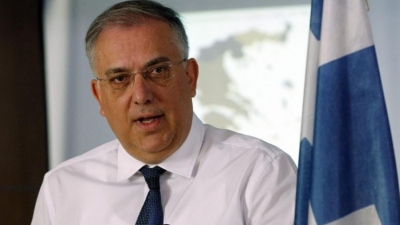
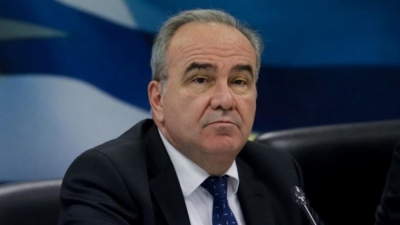
Deputy Minister of National Economy and Finance, Thanos Petralias, remarked:
“The 2026 draft state budget, which has been submitted to the Standing Committee on Economic Affairs of the Parliament and will be discussed in the coming days, foresees significant benefits for Greek citizens.
It includes all the measures announced at the Thessaloniki International Fair, totaling €1.76 billion for 2026, with the main focus being tax reform to address demographic issues, youth concerns, and support the middle class.
With the €16.7 billion Public Investment Program, which supports growth in 2026, we expect a growth rate of 2.4%, compared to 2.2% in 2025, and a decline in inflation from 2.6% to 2.2%.
The primary balance is estimated at 3.6% of GDP in 2025, compared to 3.2% as forecasted in the April Medium-Term Progress Report, based on (a) a larger increase in wages from dependent employment, now estimated at 6.3% for 2025, significantly higher than the 3.4% forecast in the budget, (b) increased tourism traffic, which shows a 12.5% rise in tourism revenues for the seven-month period, and (c) higher real private consumption, estimated at 1.9% compared to the 1.6% forecast in the budget.
For 2026, with new income support measures announced at TIF, the primary surplus is expected to reach 2.8%. The general government balance is forecast to shift from a surplus of 0.6% in 2025 to a slight deficit of -0.1% in 2026.
It should be noted that the above measures are being implemented exactly within the fiscal boundaries set by European rules for the coming year, as, as you will see in the draft, the deviation of the primary expenditure index on a cumulative basis for 2026 compared to the targets is zero.
In conclusion, perhaps the most significant aspect of the draft is the expected further reduction of the general government debt-to-GDP ratio, which is expected to decline from 153.6% in 2024 to 145.4% in 2025 and, for the first time since 2010, fall below 140%, specifically to 137.6% in 2026, approaching the levels of Italy.
Hellenic Fiscal Council Warns of Risks
The Hellenic Fiscal Council (ΗFS) has completed its assessment of the macroeconomic and fiscal projections underlying the 2026 Draft State Budget.
The ΗFS forecasts GDP growth of 2.2% in 2025 and 2.3% in 2026, slightly more conservative than the budget’s forecast of 2.4%.
These projections are supported by both domestic and international organizations, showing positive prospects for the Greek economy. The continued high absorption of funds from the Recovery and Resilience Facility (RRF) is crucial for maintaining growth momentum into 2026.
According to the 2026 Draft Budget, the primary surplus is estimated at 3.6% of GDP for 2025 and 2.8% for 2026. At the same time, the General Government balance is expected to be in surplus in 2025 (0.6% of GDP), and marginally in deficit in 2026 (-0.1% of GDP).
The trajectory of general government debt is projected to steadily decline, from 145.3% of GDP in 2025 to 137.6% in 2026, reflecting effective fiscal management. The ΗFS confirms that the 2026 Draft Budget aligns with fiscal rules.
However, the economic forecasts are being prepared in an environment of significant uncertainty, driven by international tensions and political and economic turbulence in European countries.
"In 2026, the Greek economy faces several uncertainties that could constrain its growth potential. External risks, such as geopolitical tensions, conflicts, and unstable economic developments in Europe, particularly in countries with fiscal problems and political instability, may disrupt markets and burden growth. In such an environment, weaker external demand, particularly if tourism underperforms due to the uncertainty created by international conditions, would impact revenues, the current account balance, and growth.
Domestically, a higher disposable income – due to the recent favorable tax reforms – is expected to further boost consumption and increase overall demand. However, the net macroeconomic impact will also depend on inflation, as well as the broader macroeconomic environment. Delays or obstacles in implementing structural reforms to enhance competition could slow productivity gains and reduce the Greek economy’s ability to absorb shocks.
Persistent inflationary trends compared to other European countries could further reduce the purchasing power of households, highlighting the need for close monitoring of the divergence from the eurozone average. Difficulties in the expected absorption of EU Recovery and Resilience Facility (RRF) funds could limit investment momentum and significantly delay key infrastructure and green transition projects.
On the other hand, the development of the national defense industry, with increased investments in procurement, infrastructure, and technology, could strengthen domestic industries more than anticipated, create multiplier effects in manufacturing and innovation, and attract strategic international partnerships. On the European level, the continued reduction in inflation limits the prospects for interest rate hikes, creating further macroeconomic benefits. The combination of strong absorption of EU funds, resilient tourism, improved investment confidence, bolstered by Greece's upgraded credit profile and fiscal balance, guarantees the country's growth trajectory," it is emphasized.
"Based on the above, the Hellenic Fiscal Council adopts the macroeconomic forecasts on which the Draft State Budget 2026 is based. The HFC assessed the fiscal forecasts and found compliance with the numerical fiscal rules."
A detailed analysis of the macroeconomic and fiscal developments will be included in the upcoming semi-annual Report of the Hellenic Fiscal Council.
www.bankingnews.gr
The new budget is based on the assumption of an average Brent oil price of $64 per barrel, lower than the $67.7 this year, which, if confirmed, will provide relief both for public finances and for the energy costs of businesses and households.
Core Focus: Investments
The draft budget emphasizes investments, with estimates forecasting a 10.2% increase in 2026, up from 5.7% this year, while the Public Investment Program's expenditures are expected to reach €17 billion.
Private consumption, which traditionally drives Greece’s economy, is expected to slow down to 1.7% from 1.9% in 2025, while public consumption is predicted to grow by only 0.7%, a slowdown from 1.4% this year.
Exports of goods and services are expected to grow by 4.5%, mainly driven by the tourism and industrial sectors, although imports are projected to grow at a faster pace of 4.6%, which could negatively impact the trade balance.
Achieving the goals is not guaranteed. Delays in utilizing Recovery Fund resources, potential deviations from the US-EU tariff agreement, escalating geopolitical tensions, and tight fiscal policies in major European economies all pose serious risks.
Economic officials are closely monitoring developments, as any deviation could impact the government’s capacity to implement new support measures for households and businesses.
Inflation Concerns
Inflation remains a major concern.
The initial prediction for inflation to decline to 2% this year has not materialized, and the revised forecast for 2025 is 2.6%, with 2026 projected at 2.2%. In the harmonized index, the forecasts are 3.3% for 2025 and 2.2% for 2026.
This means that prices will continue to strain household budgets, although purchasing power will be strengthened from January 1, 2026, through changes made to the tax scale, as the reduction in tax rates will limit withholding and increase net earnings. The draft budget includes measures totaling €1.76 billion announced at the Thessaloniki International Fair (TIF).
Unemployment is expected to decrease to 7.4% based on national accounts, down from 7.8% this year, while the Labor Force Survey of the Hellenic Statistical Authority places it at 8.6%, down from 9.1%. Despite this decline, improving wages and the quality of new jobs remain key goals.
Primary Surplus of 2.8% in 2026
On a fiscal level, the budget forecasts a primary surplus of 2.8% of GDP for 2026, down from 3.6% in 2025. This is attributed to the positive effects of tax reforms and the maturation of income, which are expected to boost public revenues.
The primary spending of the budget, as agreed with the European Commission, will increase by 3.6% in 2026. For Greece, net primary spending is estimated at around €100 billion, allowing for an increase of up to €3.6 billion compared to 2025. Additional spending increases, up to 0.3% of GDP, are possible if the net spending of previous years is below the established limits.
Public debt is expected to continue its downward trend, from 145% of GDP in 2025 to 137.6% in 2026. A decisive contribution will come from the new early repayment of loans amounting to €5.29 billion this December, which relate to loan installments from the first memorandum maturing between 2033 and 2041. As a result, the balance of bilateral loans will be reduced to €21 billion by the end of 2026, down from €31.6 billion at the beginning of 2025.
The draft includes a package of tax cuts and income support measures that will be implemented next year, while it also leaves a "window" for new provisions. These could be announced with the final plan’s approval in December, where the Prime Minister is expected to make surprise announcements to support households facing rising rent costs, as well as in April 2026, when Eurostat's figures on the growth and primary surplus for 2025 will be confirmed.
The first estimates suggest the possibility of interventions amounting to up to €1 billion, without violating the core rule of the Stability Pact regarding the maximum spending limits.
Kyriakos Pierrakakis: “Greece leads the EU in investment growth rate”
Following the submission of the draft state budget for 2026 to the Parliament, the Minister of National Economy and Finance, Kyriakos Pierrakakis, stated:
“The 2026 draft budget confirms that the Greek economy is now built on solid foundations and continues to grow at rates significantly higher than the Eurozone average.
The measures we announced at the Thessaloniki International Fair will further boost this trajectory. Income increases will provide additional momentum for growth, which is projected to rise from 2.2% in 2025 to 2.4% in 2026, while inflation and unemployment will continue to decrease.
The primary surplus is forecast to be 2.8% of GDP, and public debt will drop to 137.6% of GDP, the lowest level since 2010. If this occurs, Greece will no longer be the most indebted country in the EU in terms of debt-to-GDP ratio.
A key element in this dynamic is the rate of investment growth, which is expected to reach 10.2% in 2026, the highest among the 27 EU member states. The Public Investment Program, totaling €16.7 billion, strengthens productivity, the creation of quality jobs, and regional development.
Despite the unstable international environment, Greece has now become a reference point for the stability and consistency of its economic policy. The forecasts in the draft budget are indicators of progress and confidence. They reflect a country that has definitively left behind the crises, invests in its boundless potential, and moves forward with a plan, fiscal stability, and social sensitivity.
The development we are achieving together serves one main goal: improving the lives of citizens with fairness, security, and a perspective for the future.
Thanos Petralias: "Budget for growth with benefits for all citizens"
Deputy Minister of National Economy and Finance, Thanos Petralias, remarked:
“The 2026 draft state budget, which has been submitted to the Standing Committee on Economic Affairs of the Parliament and will be discussed in the coming days, foresees significant benefits for Greek citizens.
It includes all the measures announced at the Thessaloniki International Fair, totaling €1.76 billion for 2026, with the main focus being tax reform to address demographic issues, youth concerns, and support the middle class.
With the €16.7 billion Public Investment Program, which supports growth in 2026, we expect a growth rate of 2.4%, compared to 2.2% in 2025, and a decline in inflation from 2.6% to 2.2%.
The primary balance is estimated at 3.6% of GDP in 2025, compared to 3.2% as forecasted in the April Medium-Term Progress Report, based on (a) a larger increase in wages from dependent employment, now estimated at 6.3% for 2025, significantly higher than the 3.4% forecast in the budget, (b) increased tourism traffic, which shows a 12.5% rise in tourism revenues for the seven-month period, and (c) higher real private consumption, estimated at 1.9% compared to the 1.6% forecast in the budget.
For 2026, with new income support measures announced at TIF, the primary surplus is expected to reach 2.8%. The general government balance is forecast to shift from a surplus of 0.6% in 2025 to a slight deficit of -0.1% in 2026.
It should be noted that the above measures are being implemented exactly within the fiscal boundaries set by European rules for the coming year, as, as you will see in the draft, the deviation of the primary expenditure index on a cumulative basis for 2026 compared to the targets is zero.
In conclusion, perhaps the most significant aspect of the draft is the expected further reduction of the general government debt-to-GDP ratio, which is expected to decline from 153.6% in 2024 to 145.4% in 2025 and, for the first time since 2010, fall below 140%, specifically to 137.6% in 2026, approaching the levels of Italy.
Hellenic Fiscal Council Warns of Risks
The Hellenic Fiscal Council (ΗFS) has completed its assessment of the macroeconomic and fiscal projections underlying the 2026 Draft State Budget.
The ΗFS forecasts GDP growth of 2.2% in 2025 and 2.3% in 2026, slightly more conservative than the budget’s forecast of 2.4%.
These projections are supported by both domestic and international organizations, showing positive prospects for the Greek economy. The continued high absorption of funds from the Recovery and Resilience Facility (RRF) is crucial for maintaining growth momentum into 2026.
According to the 2026 Draft Budget, the primary surplus is estimated at 3.6% of GDP for 2025 and 2.8% for 2026. At the same time, the General Government balance is expected to be in surplus in 2025 (0.6% of GDP), and marginally in deficit in 2026 (-0.1% of GDP).
The trajectory of general government debt is projected to steadily decline, from 145.3% of GDP in 2025 to 137.6% in 2026, reflecting effective fiscal management. The ΗFS confirms that the 2026 Draft Budget aligns with fiscal rules.
However, the economic forecasts are being prepared in an environment of significant uncertainty, driven by international tensions and political and economic turbulence in European countries.
"In 2026, the Greek economy faces several uncertainties that could constrain its growth potential. External risks, such as geopolitical tensions, conflicts, and unstable economic developments in Europe, particularly in countries with fiscal problems and political instability, may disrupt markets and burden growth. In such an environment, weaker external demand, particularly if tourism underperforms due to the uncertainty created by international conditions, would impact revenues, the current account balance, and growth.
Domestically, a higher disposable income – due to the recent favorable tax reforms – is expected to further boost consumption and increase overall demand. However, the net macroeconomic impact will also depend on inflation, as well as the broader macroeconomic environment. Delays or obstacles in implementing structural reforms to enhance competition could slow productivity gains and reduce the Greek economy’s ability to absorb shocks.
Persistent inflationary trends compared to other European countries could further reduce the purchasing power of households, highlighting the need for close monitoring of the divergence from the eurozone average. Difficulties in the expected absorption of EU Recovery and Resilience Facility (RRF) funds could limit investment momentum and significantly delay key infrastructure and green transition projects.
On the other hand, the development of the national defense industry, with increased investments in procurement, infrastructure, and technology, could strengthen domestic industries more than anticipated, create multiplier effects in manufacturing and innovation, and attract strategic international partnerships. On the European level, the continued reduction in inflation limits the prospects for interest rate hikes, creating further macroeconomic benefits. The combination of strong absorption of EU funds, resilient tourism, improved investment confidence, bolstered by Greece's upgraded credit profile and fiscal balance, guarantees the country's growth trajectory," it is emphasized.
"Based on the above, the Hellenic Fiscal Council adopts the macroeconomic forecasts on which the Draft State Budget 2026 is based. The HFC assessed the fiscal forecasts and found compliance with the numerical fiscal rules."
A detailed analysis of the macroeconomic and fiscal developments will be included in the upcoming semi-annual Report of the Hellenic Fiscal Council.
www.bankingnews.gr




Σχόλια αναγνωστών