

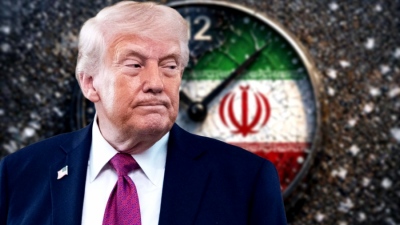
The probability of a large-scale military operation against Iran by the American military has skyrocketed, not so much due to the incendiary remarks by American President Trump stating «we will finish off Iran», but because of moves taking place within the military staff of American forces.
Nevertheless, Trump stresses... you will see big things happening in 1 to 2 weeks, I will finish off Iran, a deal is coming in Ukraine.
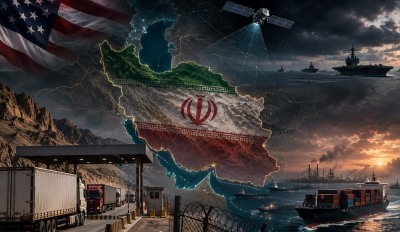
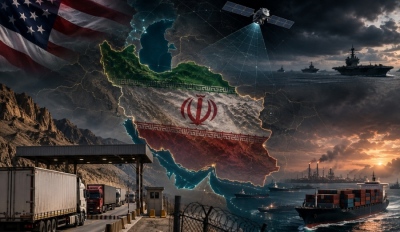
Simultaneously, American aircraft carrier Roosevelt is heading to the Persian Gulf and Gulf of Oman, and there will henceforth be 3 American aircraft carriers in the region.
The American aircraft carrier Theodore Roosevelt is anchored in Singapore and is expected to arrive in the region of the Middle East by mid-November, approximately 10 days from now.
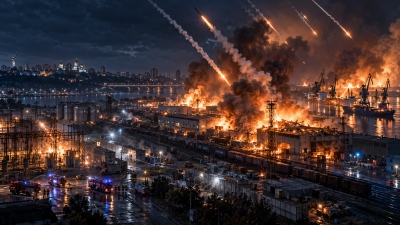
Meanwhile, the Houthis, or Ansar Allah, struck Riyadh, the capital of Saudi Arabia, with great ferocity, causing chaos and heavy damage across 6 waves of missile attacks.
Powerful explosions in Riyadh, Saudi Arabia following 6 waves of missile attacks by Yemen Houthis
News sources report that warning sirens sounded in Riyadh, followed by multiple explosions in the capital of Saudi Arabia.
Missile attacks occurred and explosions were heard across various regions of Saudi Arabia, including Riyadh and Najran.
News agency Reuters also reported that several explosions were heard in Riyadh.
Earlier, a spokesperson for the Yemeni Armed Forces of the Houthis announced the execution of 6 military operations, utilizing ballistic missiles, cruise missiles, and unmanned aerial vehicles, against targets inside Saudi Arabia.
Saudi Arabia confirms a missile attack from Yemen against Riyadh.
A spokesperson for the coalition led by Saudi Arabia confirmed that ballistic missiles were launched by the Yemeni Armed Forces of the Houthis targeting Riyadh, the capital of Saudi Arabia.
Trump: You will see big things happening in 1 to 2 weeks, I will finish off Iran, a deal is coming in Ukraine
In repeated statements, Trump announced the readiness of his administration to undertake broad measures and developments, announcing that significant events will take place over the next one to two weeks.
He also continued his rhetoric against Iran, saying: «I would prefer not to destroy the rest of the country if possible, but I might have to do it. You will find out soon».
«If we need to finish off Iran, we are fully prepared and equipped», stated Trump.
Trump continued regarding the war in Iran: «Nobody has been killed for about 7 months, 6 months. You know, if you look at Russia and Ukraine, that is a war. 25,000 people are killed every month. That is a war, but Iran is not».
Trump also said regarding Ukraine: «There will be a deal. It will be a great deal and it will extend beyond Ukraine. I would even say it might reach all the way to Europe. It will be a great, wonderful deal. Everyone will be very happy with it».
Axios: The US is processing its final plans for Iran... the coming period is critical
According to Axios, US President Trump stated after a meeting with national security advisers that he will soon decide whether to resume a full-scale war against Iran now that the midterm elections are over.
The midterm elections were regarded as a turning point for Trump in his decision to launch a new wave of air strikes aimed at ending the war.
The President of the US is currently reviewing at least three options:
1) conducting new strikes,
2) continuing to exert severe economic pressure on the Iranian regime, or
3) reaching an agreement that includes significant concessions to the Iranians.
Trump and his top national security advisers recently met for the first time after the elections regarding Iran, in the framework of a weekly intelligence briefing, two American officials stated.
«We will make a decision now», stated Trump.
«Do we want to continue the attacks to ensure that the nuclear program of Iran will be destroyed and will never happen again?»
«I would prefer not to destroy the rest of the country if possible, but I might have to do it. You will find out soon», Trump stressed.
What does the 2-day peace proposal include?
Iran nevertheless insists on the 7-point proposal it has submitted, points that are basically considered humiliating for the Americans.
Based on a peace proposal for the Iranian issue, the following stages are included:
Day 1:
The US lifts the naval blockade of Iran and will release part of the frozen assets of Iran.
In exchange, Iran extends a formal invitation to the International Atomic Energy Agency (IAEA) to allow inspectors to visit bombed nuclear facilities, in accordance with the agreement reached in Cairo a year ago.
Day 2:
The Strait of Hormuz will reopen, followed by the resumption of talks on the nuclear issue.
These talks will focus on the stockpiles of highly enriched uranium of Iran.
Foreign Affairs: Democrats should not clash with Trump but spark a foreign policy revolution, an end to wars
Foreign Affairs and American author Matthew Duss examined the future of US foreign policy in a critical analysis, urging Democrats to use their victory in Congress to create a fundamental shift in the direction of Washington, rather than merely confronting the actions of the Trump administration.
In an article in the magazine Foreign Affairs titled «Democrats Should Not Miss the Opportunity to Launch a Foreign Policy Revolution», Matthew Duss argues that ongoing wars, political corruption, and the rising cost of living are the most significant challenges facing Americans, and that these issues are not separate from one another, but are closely linked.
The author, who is executive vice president of the Center for International Policy and former foreign policy adviser to American senator and leftist Bernie Sanders, believes that the most urgent threats to the security and prosperity of the United States no longer necessarily come from abroad, but are largely related to domestic polarization, the disruption of government institutions, the increasing influence of the wealthy and large corporations, as well as the use of military force by the executive branch without clear authorization.
These issues are also accompanied by suspicions of conflicts of interest and personal enrichment.
In this context, Matthew Duss wants Democrats to make ending the war with Iran their immediate priority and to use the powers of Congress, especially the authority to control government spending, to prevent further funding for military operations.
Matthew Duss also does not rule out the possibility of obstructing the approval of Department of War funding plans, and indeed hints that Democrats threaten to shut down the federal government if the budget bill does not include a ban on war funding.
He believes that opposition to funding a war that does not enjoy broad public support must transcend traditional political expediencies, which could lead to accusations that opponents of the war do not support the armed forces.
Matthew Duss does not blame only the Trump administration for escalating military tensions, but calls for a broader review of the policies of successive US administrations, both Democratic and Republican.
He specifically highlights the unconditional support of the Biden administration for Israel during the war in Gaza and criticizes the refusal of Washington to impose consequences for documented violations of human rights and international law by Israel.
Matthew Duss also connects US strikes on drug-trafficking vessels in the Caribbean to a long-standing security approach based on expanding the concept of the «war on drugs» and using the terrorism label to justify emergency measures, including extrajudicial killings.
In another aspect of his article, Matthew Duss places the fight against corruption at the center of any serious review of US foreign policy and believes that the Trump administration has provided numerous examples of issues that should be investigated and examined.
These range from receiving foreign gifts and conflicts of interest involving family members to contracts awarded to political donors and allies in the technology sector.
There are also suspicions of abuse of presidential pardon powers that need to be investigated.
To demonstrate the extent of public concern regarding corruption, Duss cites recent polls in the United States, some of which show that approximately 9 out of 10 Americans believe that corruption in government is widespread.
The article emphasizes that fighting corruption does not necessarily require passing new laws, but rather enforcing existing ones.
Furthermore, the campaign finance system must be reformed, a system that, according to the author, permits excessive influence of corporate finances and major donors over political decision-making.
In the economic realm, Matthew Duss stresses the need to directly connect foreign policy with the daily problems of American life, from rising fuel and food prices to the consequences of the war with Iran, the future of jobs in light of the proliferation of artificial intelligence, and the increasing influence of big tech companies.
He points out the intervention of American billionaire Elon Musk in providing Starlink satellite internet services to Ukraine, considering it an example of the ability of tech actors in the private sector to influence decisions with geopolitical dimensions.
While he acknowledges that these efforts will not necessarily result in new legislation within the next two years, he believes that such actions could form the foundation of a political agenda that future leadership of the Democratic Party can pursue and help build a new consensus in America for a more sustainable foreign policy.
Iran ready with the father of all missiles
The President of the US spoke once again about the possibility of using the bomb known as the «Mother of All Bombs» (MOAB) against Iranian installations.
Alaeddin Boroujerdi, a member of the National Security and Foreign Policy Committee of the Iranian Parliament, stated in a warning tone: «If they want to use the mother of bombs, we will use the father of missiles».
This phrase has raised a question in public opinion:
What exactly does the term «father of all missiles» refer to?
In response, this term can be analyzed from various perspectives, each of which reveals part of the deterrence logic of Iran.
The first semantic level is a verbal-linguistic play and symbolic confrontation.
America calls its weapon the «mother of bombs» to show its grandeur and destructive power.
By choosing the word «father», Alaeddin Boroujerdi creates a verbal response and counters the claim by Trump.
This linguistic choice carries a clear message: if the «mother of bombs» symbolizes American power, the «father of missiles» likewise symbolizes the power that Iran possesses and will use to defend itself.
The advanced and deterrent missile generation of Iran
The most important level is the reference to the actual military capabilities of Iran.
Iran will use «missiles» that will make the US «pay the price for violating the red lines of Iran».
This description matches the characteristics of the new generation of Iranian missiles, especially hypersonic missiles.
The hypersonic missile Fattah-2 is known as a weapon with very high speed and exceptional maneuverability that has been described as virtually undetectable by existing missile defense systems.
Such a weapon is precisely what could make «red lines» a costly place for the enemy, and the threat of its use is deterrent and defensive in nature.
The Resurrection missile... Rastakhiz
The ballistic missile Rastakhiz, which is referenced in Iranian media as one of the heaviest and most advanced missile achievements of the country, possesses characteristics that place it in the category of heavy and long-range ballistic missiles.
According to unofficial information, the missile is approximately 14 meters long and weighs nearly 27 tons, dimensions that make it one of the largest ballistic missiles in Iran and the region.
The range of this missile has been described in certain reports as «long-range» and even «intercontinental».
These characteristics have led to speculation that the «father of all missiles» is the missile Rastakhiz.
The most important feature of the «resurrection missile as it is called» is its dual warhead, which is not limited to a conventional explosion.
In addition to a multi-ton warhead causing extensive physical destruction, the missile is also capable of generating an electromagnetic pulse (EMP), a phenomenon that can disrupt or disable critical infrastructure such as power generation stations, communication networks, and enemy defense systems.
The explosion of this missile is said to be capable of affecting an area of approximately 80 square kilometers.
The Hajj Qassem missile
The ballistic missile Martyr Hajj Qasem is one of the most advanced and distinct missile achievements of Iran, named after General Qasem Soleimani.
This missile is a tactical ballistic missile with an operational range of 1,400 kilometers, making it the longest-range solid-fuel tactical ballistic missile in Iran and the world.
It is 11 meters long and weighs approximately 7 tons, using a 500-kilogram warhead that can carry heavy payloads.
One of the significant distinctive characteristics of this missile is its inclined launch.
A feature described as unprecedented in ballistic missiles of this range in the world, greatly facilitating its mobility, concealment, and preparation.
The most critical military characteristic of Hajj Qassem, which makes it difficult to intercept, is its detachable, guided warhead at the end of its trajectory.
The missile travels at an atmospheric speed of Mach 12 and ground speed of Mach 5, utilizing advanced guidance systems that allow it to locate targets at maximum range without relying on GPS signals.
Due to this maneuverability in the terminal phase, Iranian media and certain sources consider it capable of bypassing advanced defense systems such as THAAD and Patriot.
The road-mobile launch platform also increases its residual range and minimizes the detection and response window of the enemy.
These unique characteristics have led some to speculate that the father of missiles is the missile Hajj Qassem.
Iran manufactures a new missile
The reference may concern one of the missiles recently developed by Iran, such as the missile Qasem Basir mentioned by Mohsen Rezaei or the missile Etemad that has recently been cited in military circles.
www.bankingnews.gr





Σχόλια αναγνωστών