

With processions in five cities across two countries, millions of faithful, strictly enforced security measures, and intense religious symbolism, Tehran signals to friends and adversaries alike: that despite the war, the casualties, and international pressure, the Islamic Republic remains standing and determined to transform its deceased leader into a timeless symbol of resistance…
Never before preceded
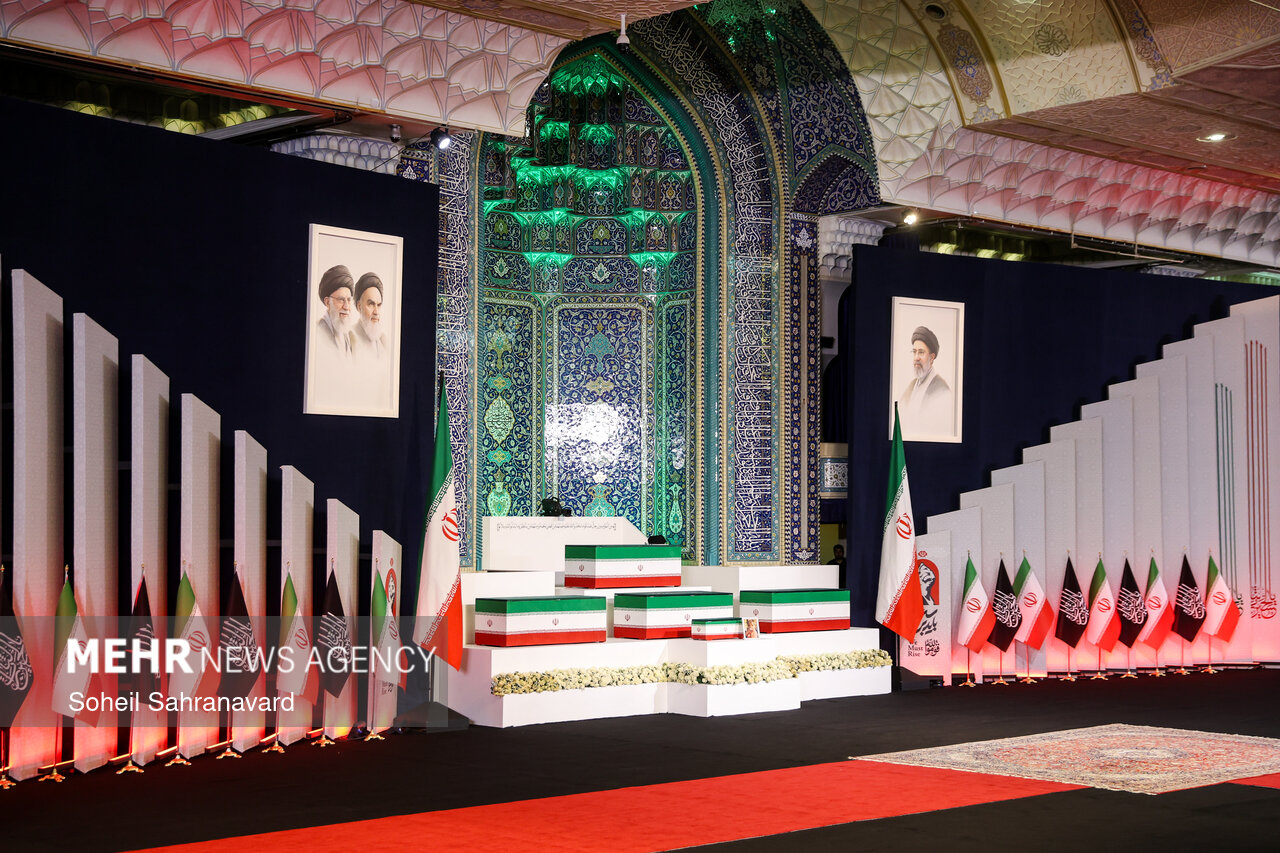
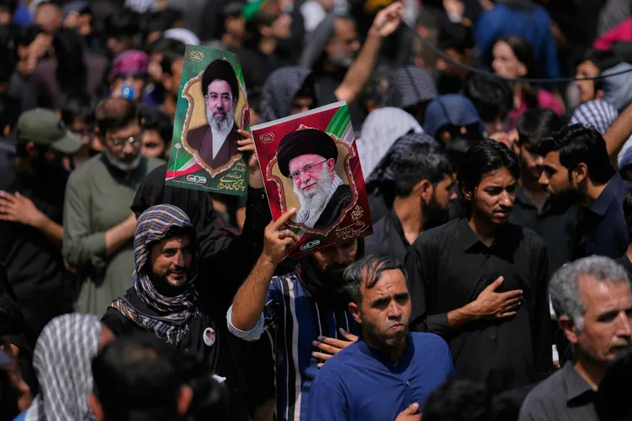
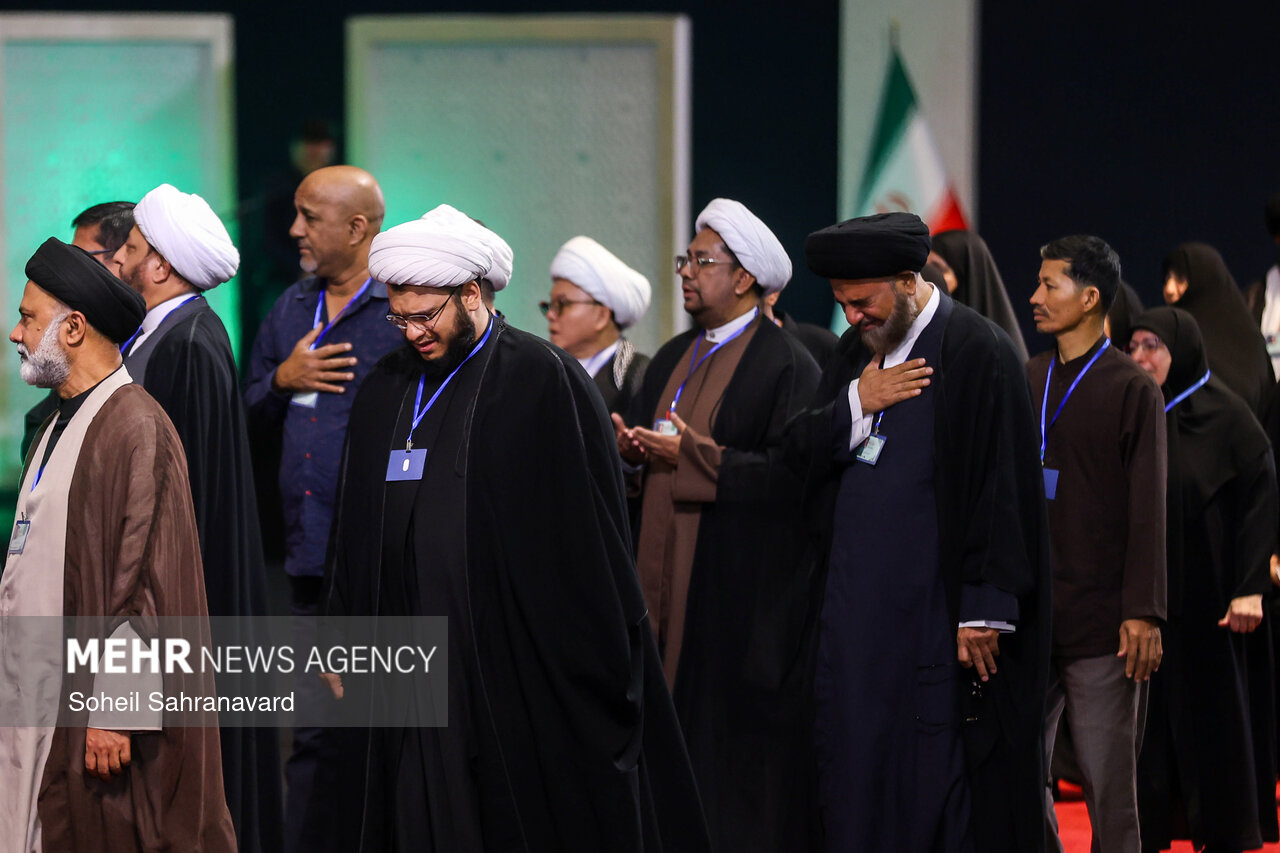
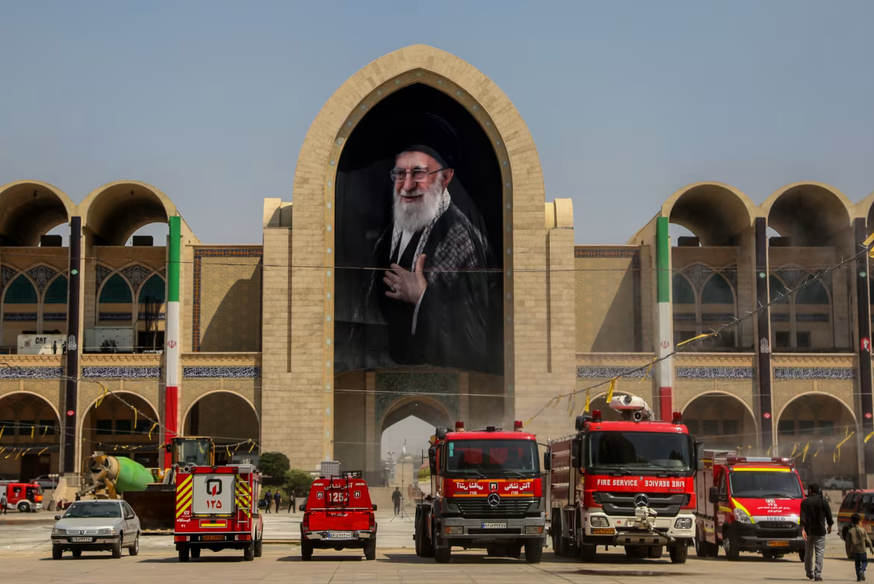
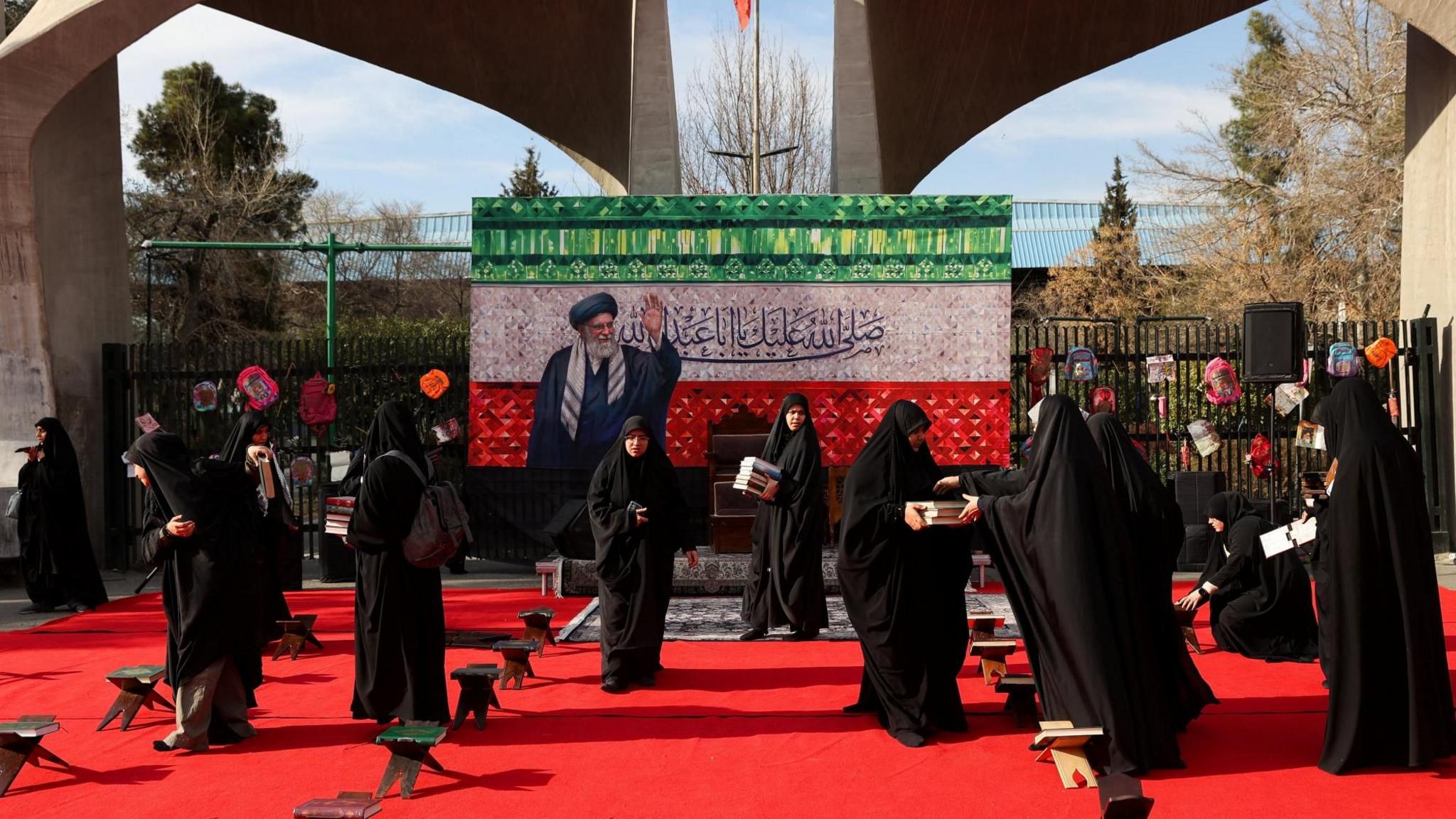
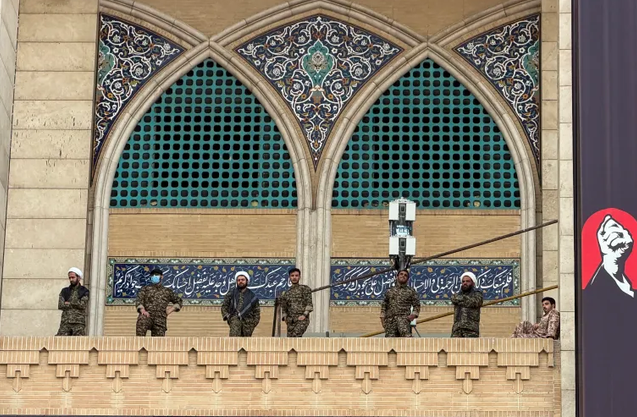
The Supreme Leader Ali Khamenei is being honored with a week-long series of funeral ceremonies spanning five cities and two countries, with millions of mourners expected to participate. Already early today, Friday 3/7, believers are flocking to the Imam Khomeini Grand Mosalla prayer complex in Tehran, where the bodies of the assassinated Supreme Leader Ali Khamenei and several members of his family have been transferred. Since the early morning hours, police checkpoints, military vehicles, outdoor stalls, and giant posters began appearing across Tehran, as Iranian authorities prepare for the arrival of millions of citizens for the six-day funeral ceremonies of Ali Khamenei, who served as the country's Supreme Leader for 36 years. The Iranian authorities aim for the six-day ceremony to be a massive demonstration of public mourning, national strength, resilience, and unity against what they describe as foreign military aggression. As part of the preparations, the closure of all public and private services in Tehran was ordered from Saturday 4/7 until Monday 6/7, while extensive traffic restrictions have been imposed, banning the movement of private vehicles throughout a large part of the city center. At the same time, the airspace of the Iranian capital will remain partially closed starting today, Friday 3/7, while on Monday 6/7, air traffic will be fully suspended. Tehran, as well as the holy cities of Qom and Mashhad, have been declared public holidays during the ceremonies.
Ceremony filled with symbolisms
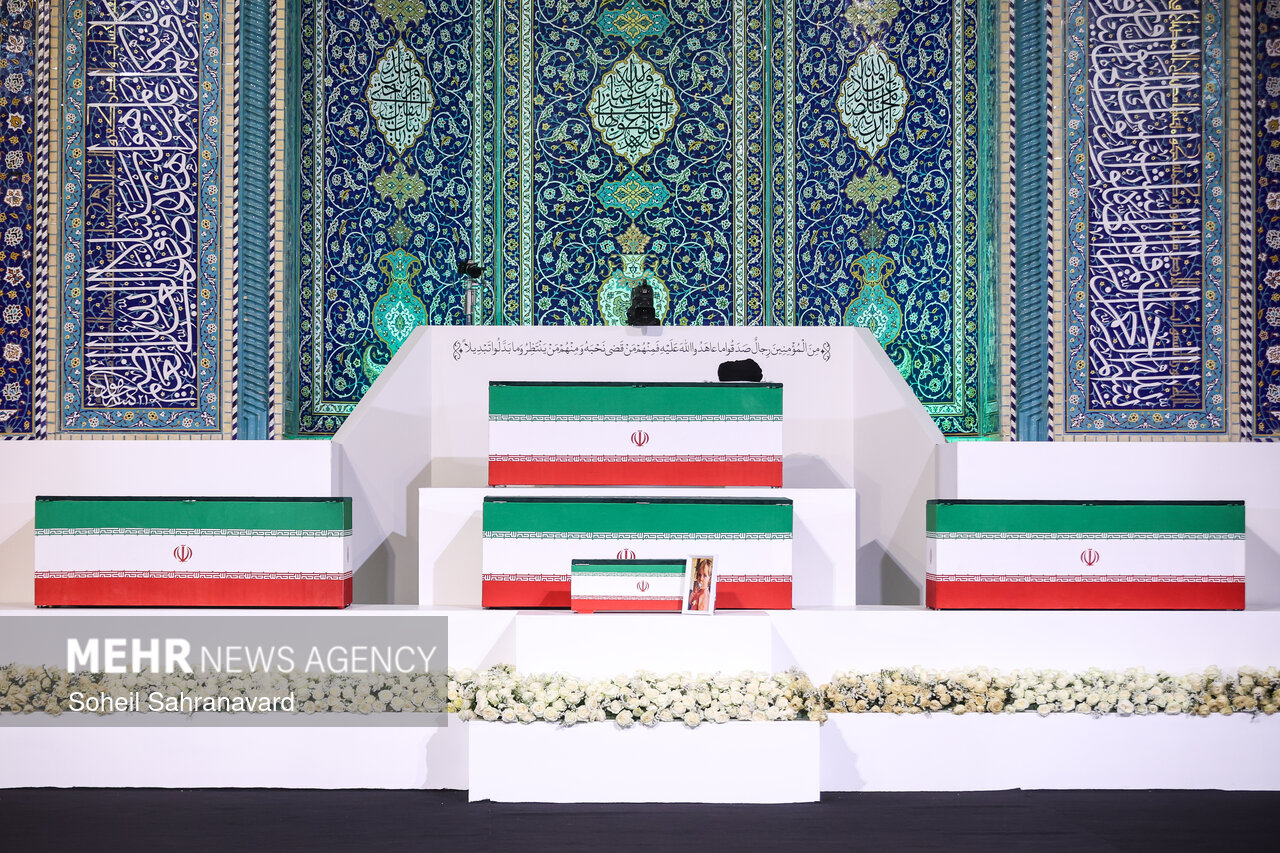
Despite the highly costly war against two of the world's most powerful military forces and decades of financial hardship, Tehran is sparing no expense to bid farewell to Khamenei with a magnificent ceremony steeped in religious symbolism, which coincides chronologically with the celebrations for the 250th anniversary of the Independence of the United States. The authorities state that they have organized one of the largest logistical operations in the history of the Islamic Republic, mobilizing civil servants, universities, labor unions, firefighters, soldiers, rescue workers, and even religious mourning groups, to arrange the funeral and manage the millions of "pilgrims" expected to travel to cities and holy sites in Iran and Iraq to say goodbye to the ayatollah.
Preparation
The authorities in neighboring Iraq, where Shiites constitute the majority, also estimate that millions of people will pay their respects. For more than ten days, the Iranian media have been preparing the public for this moment, with tribute songs and documentaries on Khamenei's life dominating over news regarding the talks with the United States, which until recently were at the top of the current affairs agenda. The scale of the spectacle is designed to convey a message to the world and to the enemies of the Islamic Republic: the regime not only survived a war that threatened its very existence, but will elevate its deceased leader into a timeless symbol of endurance.
A spectacle filled with symbolisms
"We must rise and lift our voice for the blood of our nation to the entire world, so that it knows the honorable and noble nation of Iran does not remain silent in the face of oppression… and will never forget the blood of its Imam (Khamenei)," wrote the speaker of the Iranian parliament, Mohammad Bagher Ghalibaf, who also leads Iran's negotiations with the United States, in a message published by state media. "An epic event that will show the world the greatness of a nation's soul," he noted characteristically…
Will Mojtaba appear?
The ceremony may also mark the first public appearance of the new Supreme Leader Mojtaba Khamenei, who has remained hidden since his father and family members were killed. The dates of the ceremony appear to have been chosen with particular care.
Lying in state on July 4th
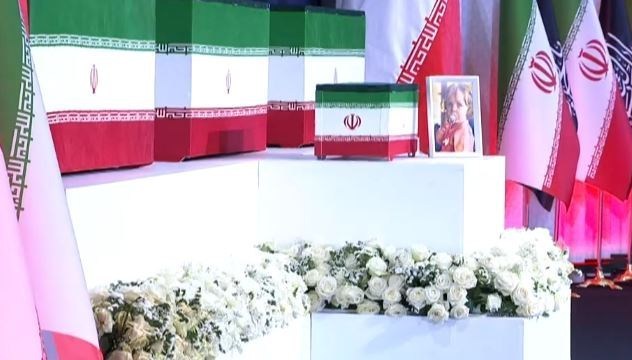
The body of Ali Khamenei is scheduled to lie in state on the day of the 250th anniversary of American Independence, while another important day of the procession coincides with a major Shiite religious anniversary honoring the death of an important historical religious figure. The entire ritual takes place during the Islamic month of Muharram, a period tightly associated in the Shiite Islamic world with mourning, betrayal, and martyrdom – particularly with the 7th-century martyrdom of Imam Hussein, one of the most revered saints of Shiism, from whom Khamenei claimed lineage.
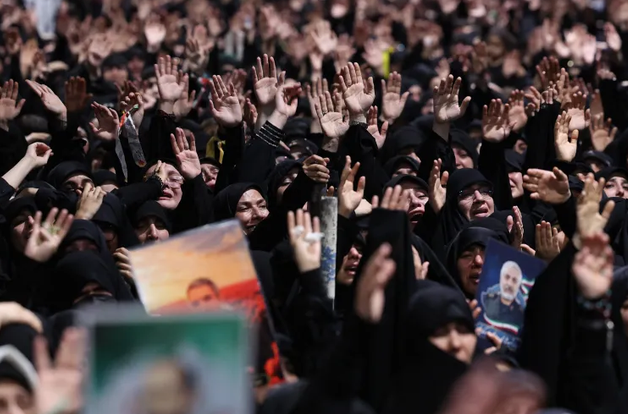
Triumphant procession
Khamenei, whose 37-year rule was characterized by an uncompromising stance and deep mistrust toward the West, was killed on the first day of the US–Israel war, on February 28. However, his funeral is organized as a triumphant procession that will cross three Iranian cities and two holy sites in neighboring Iraq, conveying to his supporters the message that the cleric was not defeated, even in death. The leader, whose assassination by the United States and Israel further elevated his symbolic status, had previously faced some of the largest anti-government protests in Iran's history. The demonstrations were violently suppressed, while many protesters shouted slogans calling for his death.
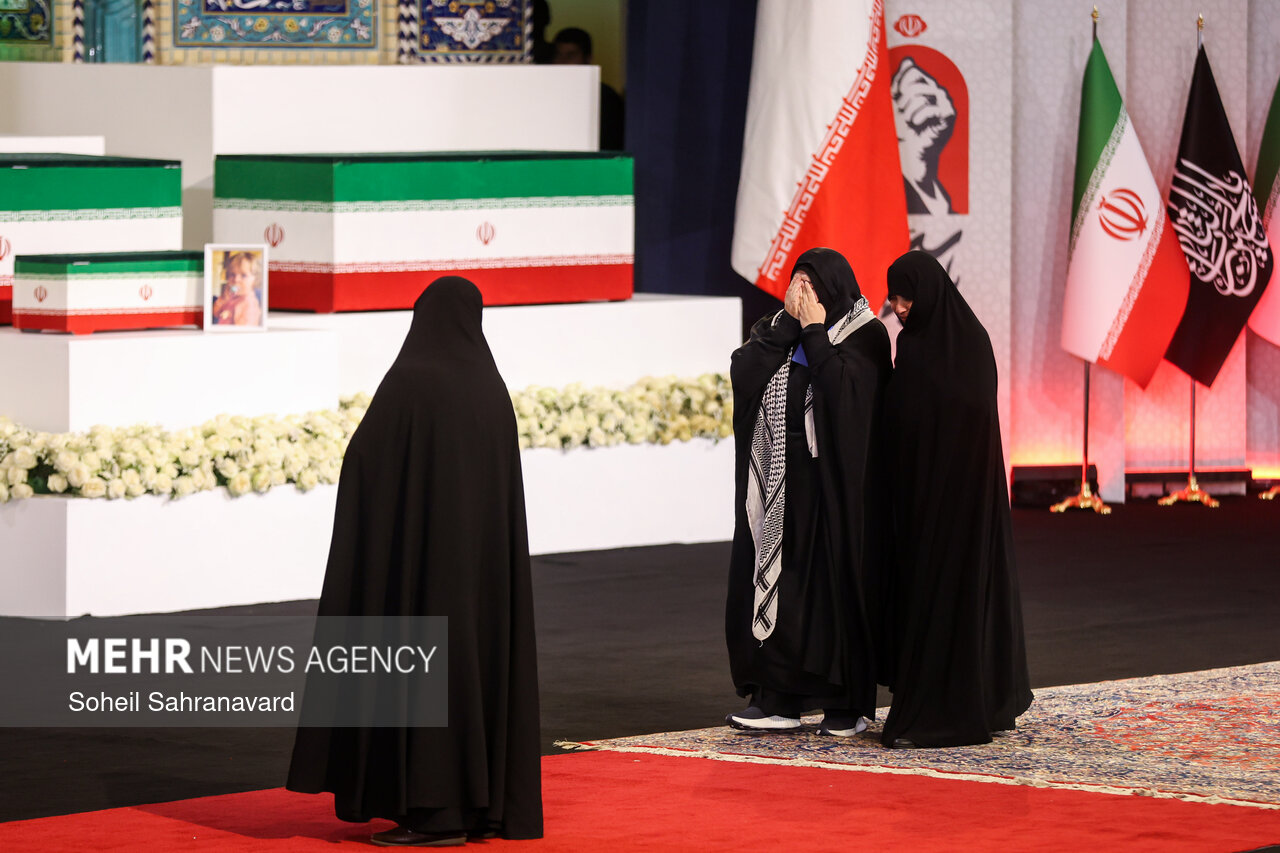
Much stronger as a symbol
Despite intense internal and international reactions, Khamenei reinforced the hardline core of the regime. "The assassination has rendered Khamenei much stronger as a symbol after his death than he was while alive," stated Sina Toossi, a senior non-resident fellow at the Center for International Policy. "Khamenei is now presented as a religious leader who was martyred, analogous to the revered Shiite saints who were also martyred, and whose worldview was vindicated by the way they died," Toossi emphasized.
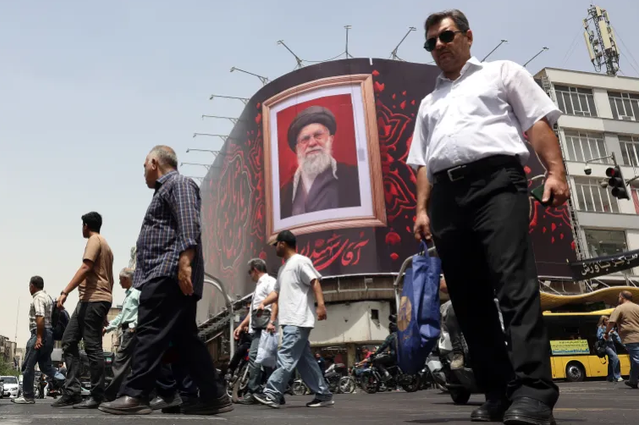
Chaos and death
Iran's only comparable experiences with such large-scale funerals were those of the founder of the Islamic Republic, Ayatollah Ruhollah Khomeini, in 1989, and the commander of the Quds Force, Qassem Soleimani, in 2020. In both cases, the ceremonies devolved into chaos, with fatal stampedes. The body of Khomeini, which had been put on display at the exact same spot where his successor Khamenei was scheduled to lie in state, ultimately had to be evacuated by helicopter when overwrought mourners began tearing the fabrics covering the coffin.
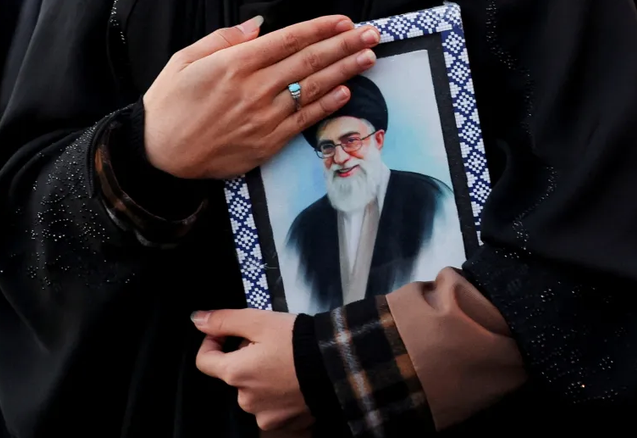
Giant operation
Protecting the leader's body, managing millions of mourners, hosting foreign delegations, and organizing large events in five cities across two different countries constitute a giant operation. An unprecedented level of security will be required for a country that has just emerged from a period of internal turmoil and a war with the United States.
6,000 water sprayers
The first ceremony, during which the body will be placed for public viewing, begins at 6:00 AM on Saturday (local time), when Khamenei's coffin will be positioned on an elevated platform inside the massive complex of the Imam Khomeini Mosalla mosque in Tehran. The fire services have installed more than 6,000 water sprayers above the square to cool the crowd under the hot July sun. The international and domestic airports of the capital will remain closed during the ceremonies, while an official holiday has been declared in the cities through which the procession will pass.
The largest traffic operation in the history of Tehran
Tehran, a metropolis of approximately 17 million residents, will implement the largest traffic operation in its history, banning the movement of private vehicles near the procession route and opening more than 700 parking areas to serve the millions of visitors.
50 million loaves of bread
According to the Basij volunteer force, 50 million loaves of bread will be prepared to feed the mourners, while 16 mobile bakeries will operate in the capital. The Iranian Red Crescent announced that Tehran and other major citieshave prepared for the reception of the visitors. The authorities have mobilized 2,500 ambulances, 21 helicopters, 100 drones, and thousands of rescue workers. Simultaneously, more than two dozen hospitals, 500,000 liters of intravenous fluids, and 20,000 school classrooms have been placed on standby, according to Iranian media. The government has launched a nationwide campaign calling on citizens to open their homes to host mourners traveling to Tehran, Mashhad, and Qom. Meanwhile, mosques, sports centers, parks, and cultural venues in the capital have been prepared to shelter the millions of participants.
Projection of power to the world
On the third day of the events, the funeral procession is expected to cross Tehran from east to west. Subsequently, the body of Ali Khamenei will be transported for new ceremonies to the holy city of Qom and then flown to the most important Shiite holy sites in Iraq, Najaf and Karbala. From there, it will be guided to its final burial place at the shrine of Imam Reza in Mashhad, Khamenei's birthplace. The transfer of the former Supreme Leader's body to Iraq carries strong symbolism. It reflects the image the Islamic Republic seeks to project of itself as a revolutionary power that transcends national borders — a message Tehran wishes to reinforce after years of projecting its influence in the wider region. "His religious influence extended to Iraq, Pakistan, Bahrain, and other Shiite communities. That is why the planned processions in Najaf and Karbala hold such great importance," stated Sina Toossi. "They reinforce the feeling that this is not simply a state funeral for Iran, but a moment with a transnational and cross-border dimension."
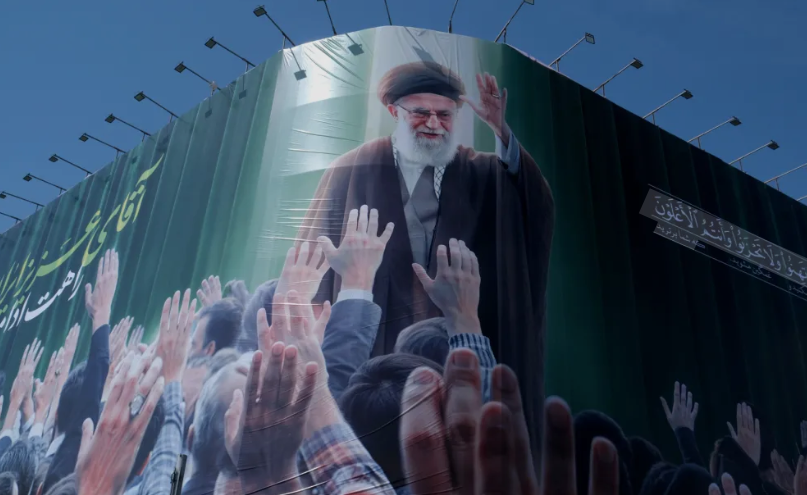
15 to 20 million mourners
Iranian officials have presented highly ambitious participation estimates, speaking of 4 to 15 million mourners — a number that could make the ceremony the largest funeral in modern history. Concurrently, they announced that approximately 14,000 journalists, including 900 foreign correspondents, will cover the event. State media dedicated the past week to presenting the foreign dignitaries who are expected to attend.
Who will attend
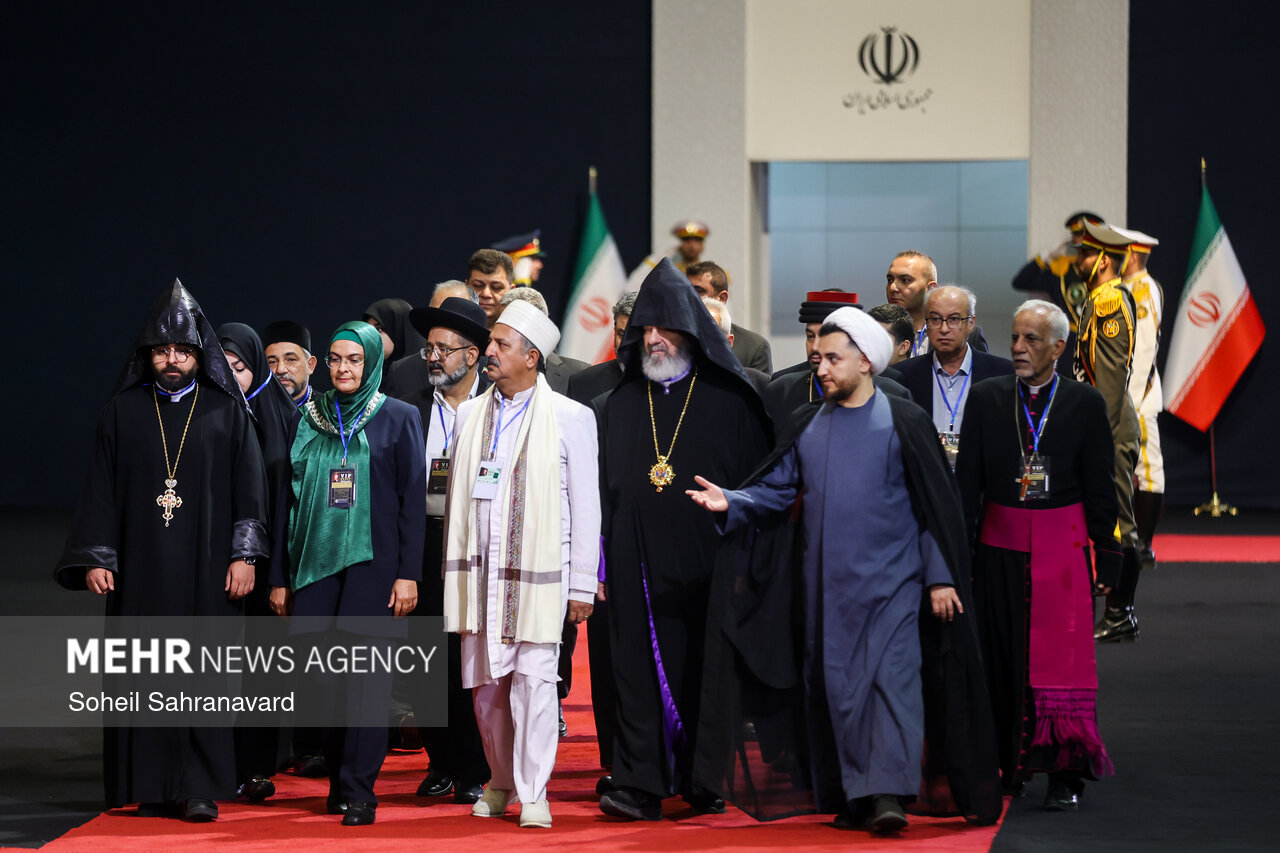
However, beyond Georgian President Mikheil Kavelashvili, the Prime Minister of Pakistan Shehbaz Sharif, and the Deputy Chairman of the Security Council of Russia Dmitry Medvedev, few other global leaders are expected to participate. The Iranian authorities claim that eight heads of state and twelve parliament speakers will attend, while Western officials were excluded from the invitation list. The vice president of Iran characterized the procession as one of the most important events of the century, while the minister of interior stated that the goal is to organize the largest "farewell ceremony" in the country's history. Ali Akbar Pourjamshidian, a commander of the Revolutionary Guards and head of the committee coordinating the events, stated that the funeral will be an opportunity to project the "power of the Islamic Republic to the international community."
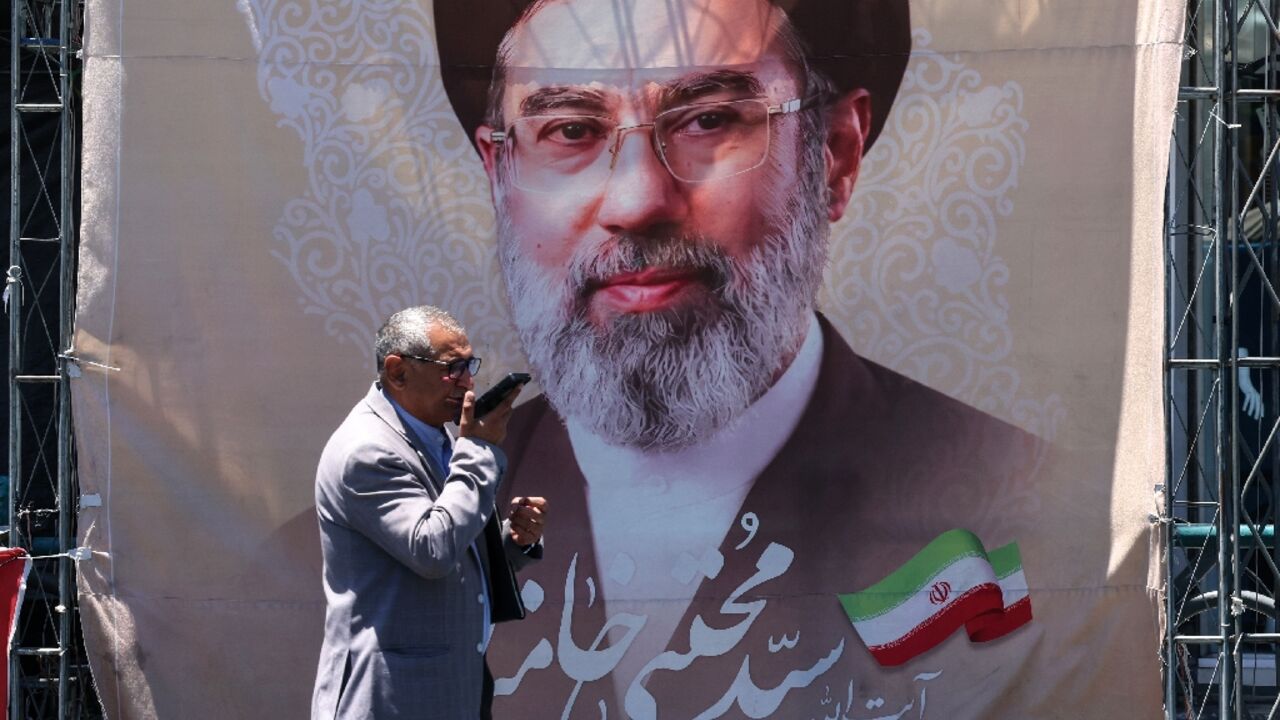
Will Mojtaba appear?
The most important question looming over the ceremonies is whether the new Supreme Leader Mojtaba Khamenei, son of the assassinated ayatollah, will appear in the procession for his father, mother, and wife, who were all killed in the same US–Israeli attack. Mojtaba, who was injured during the attack, has remained hidden since the start of the war in late February. He has communicated with his supporters only through written announcements, without ever appearing publicly or addressing the public verbally. The Iranian authorities are trying to create the impression that he has fully recovered, claiming that he is the one guiding Tehran's negotiations with Washington. When journalists asked this week if he would attend the funeral, the head of the organization avoided giving an answer, stating that "the matter does not fall within our responsibilities and the decision belongs exclusively to the Leader's Office."
Huge political significance
The appearance of Mojtaba would carry huge political significance, as it would mark his first public presence and would reinforce his legitimacy as the new Supreme Leader. Conversely, his absence is likely to intensify doubts, both domestically and abroad, regarding the state of his health, as well as about who truly exercises power in the country. Already this week, he did not appear even at the private farewell ceremony for his wife. If he ultimately remains absent from the official funeral as well, it is likely that the Islamic Republic will present this choice as a necessary security measure.
Do not make the mistake
The Iranian military has warned that there must be no "miscalculation" during the funeral processions, while Foreign Minister Abbas Araghchi stated on Wednesday that Tehran will respond immediately and decisively to any threat against its leadership, following the statement by Israeli Defense Minister Israel Katz that Mojtaba Khamenei is a "target for elimination." The commander of the Central Headquarters of the Iranian Armed Forces Khatam al-Anbiya, Ali Abdollahi, warned the United States, Israel, and their allies to avoid threats and aggressive actions against Iran during the farewell ceremonies and the funeral of the former Supreme Leader of Iran, Ali Khamenei. "During these great and instructive days... we warn the enemies of Iran, particularly the United States, Israel, as well as their regional and extra-regional allies, to avoid any kind of wrong calculation and we call on them to consider the harsh and deterrent response... of the armed forces to any threat or aggressive action against our country," Abdollahi's message reads.
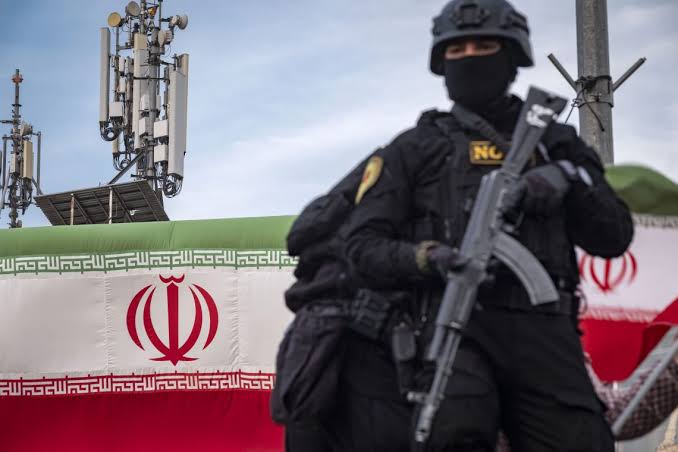
Highest alert
Iranian Brigadier General Mohammad Akraminia stated that the armed forces of Iran are on highest alert ahead of the multi-day funeral ceremony for Ali Khamenei. As he mentioned, Iranian forces have reinforced their deployment for the reception of senior officials, as well as religious and political figures from various countries. "The army's ground, naval, and air forces have reinforced their active presence along the country's borders, contributing to ensuring security," he told the IRNA news agency. He added that Iran's air defense maintains constant surveillance of the country's airspace. It is estimated that all high-ranking political and military officials of Iran will be present at the funeral, a fact that could undoubtedly constitute... a challenge for Israel...
Iran to UN: Israel is a terrorist state, threatens to assassinate Mojtaba Khamenei
Amir-Saeid Iravani, permanent representative of Iran to the UN, submitted an official protest to the international body regarding Israel's recent threat to assassinate the country's Supreme Leader, Mojtaba Khamenei. In a letter to the Secretary-General Antonio Guterres, the UN Security Council, and the General Assembly, Amir-Saeid Iravani characterized the threat voiced by Israel's Defense Minister, Israel Katz, as "part of a deliberate and systematic policy of state terrorism" targeting Iranian government officials. According to him, this threat is linked to "the illegal aggressive actions of the Israeli regime against Iran, including the assassination of the late Iranian leader, Ayatollah Seyyed Ali Khamenei, as well as other senior political and military officials, which were carried out with the participation, coordination, and support of the United States." Amir-Saeid Iravani added that the UN Security Council has allowed Israel to act with impunity and warned that Tehran will respond to any hostile action. "Unfortunately, the failure of the Security Council to fulfill its responsibilities under the UN Charter has reinforced the climate of impunity and has made the Israeli regime even more brazen in normalizing state terrorism, creating an extremely dangerous precedent and constituting a serious threat to international peace and security," he stated.
Qatar: US–Iran talks will resume after the funeral
"Positive progress" was noted during the indirect talks between the negotiators of Iran and the United States in Doha, while the next round of contacts is expected to take place after the completion of the funeral ceremonies of the former Supreme Leader of Iran, announced the spokesperson for the ministry of foreign affairs of Qatar. "The mediators from Qatar and Pakistan concluded separate meetings today in Doha with the negotiators of the United States and Iran, during which positive progress was noted on issues related to the Islamabad Memorandum of Understanding, building upon the results of the Lake Lucerne Summit," stated ministry spokesperson Majed al-Ansari. "The two sides agreed to continue discussions in the coming period, with the next meeting scheduled as soon as possible after the completion of the funeral ceremonies for the former Supreme Leader of Iran," stated Ansari, who reiterated that "the two sides agreed to continue talks in the near term, with the next meeting being scheduled as soon as possible after the conclusion of the funeral processions for the former Supreme Leader of Iran."
www.bankingnews.gr



Σχόλια αναγνωστών