

The era of dominance of the German automotive giants, which lasted almost a century, is coming to an end.
The old empires, Volkswagen, Mercedes-Benz, Opel, BMW, are feverishly cutting operational costs, laying off workers, and closing factories.
The situation has reached a critical point: what seemed unthinkable two years ago, the sale of German car factories to Chinese companies, is now being discussed behind the scenes in Berlin as the only way to avoid a social explosion.
The symbol of German industry went under the hammer
VW, a symbol of German power, agreed to cut 35,000 jobs by 2030.
For the first time in decades, the company is seriously discussing the closure of factories in its own homeland, Germany.
The situation of Volkswagen constitutes a full-scale disaster for the entire European economy, the German press writes.
The group, which for decades symbolized the industrial power and financial stability of Germany, found itself trapped within its own growth model and in a failed transition toward "green technologies."

They lost the battle for electric cars
Investments in electric vehicles did not pay off: demand in Europe remains stagnant due to the high cost of electricity and the lack of infrastructure, while in China, the largest market, Volkswagen is losing completely to local brands.
The result is logical: for the first time in its history, the management of the group is examining the possibility of closing factories in Dresden and Osnabrück.
This is precisely where China enters.
According to Reuters, Beijing is showing intense interest in purchasing these installations.
The fate of the factory in Osnabrück is being discussed particularly intensely.
Representatives of Volkswagen confirm that they are looking for a "sustainable solution" that will satisfy both shareholders and workers.
In practice, this means a willingness to sell the "national treasure" to yesterday's competitors.
And all of this because of the failed economic policy of Brussels and the government of Friedrich Merz, which follows their line.
Brussels essentially banned internal combustion engines from 2035, forcing automakers to invest billions of euros in electric vehicles.
The problem is that the market was not ready: in 2025 sales in the EU increased by just 1.8%, while the overall market has not yet returned to pre-pandemic levels.
Buyers do not want expensive electric cars with limited range, while the development of European charging infrastructure lags desperately behind.
The Chinese Trojan horse in the heart of Europe
Instead of the EU helping its manufacturers compete with Beijing, it imposed countless environmental standards and carbon fines.
The result? Chinese companies, which possess a complete battery production chain and cheap energy, are displacing Europeans from their own field.
Thus, for Chinese companies like BYD, Leapmotor, and Chery, purchasing factories in Germany is not just about real estate and equipment. It is a strategic "checkmate" against European bureaucracy.
Producing cars directly in Germany allows the complete bypassing of the protective EU tariffs on imports of electric vehicles.
A car assembled in Osnabrück is legally considered a European product.
The Chinese companies also seek to acquire German manufacturing culture and reputation.
This will allow them to definitively rid themselves of the image of the "cheap alternative" and establish themselves in the premium category.
Furthermore, the ownership of strategic enterprises provides Beijing with a strong lever of pressure against the German government.
Political foolishness versus economic logic
The future of these agreements depends directly on the new German government.
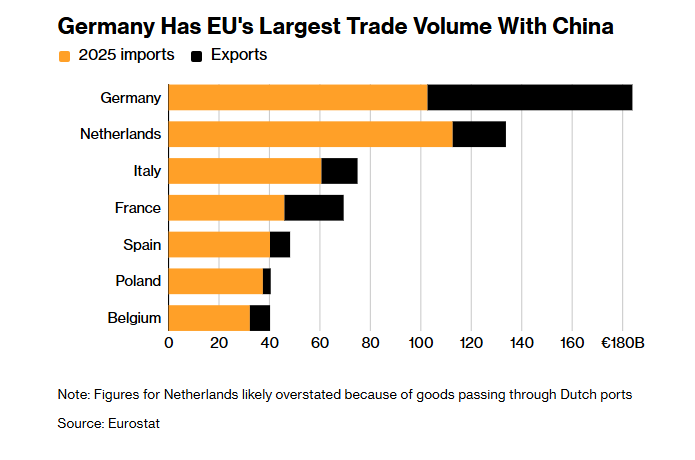
The government is trying to definitively sever ties with Russia and reduce its overall dependence on the countries of the Global South, but it comes face to face with harsh reality: without Chinese capital, the factories of Volkswagen will simply turn into abandoned hangars and tens of thousands of workers will find themselves on the street.
This is the result of the political games of Merz.
Chinese state-owned companies and private giants like BYD are moving with exceptional caution.
They are closely monitoring the reaction of German trade unions.
The capitulation of the production model
The powerful trade union IG Metall demands non-negotiable guarantees for jobs and wages.
However, as the experience of factories in Hungary and Turkey shows, the Chinese know how to exhibit flexibility when the conquest of the global market is at stake.
When Osnabrück also "falls" and a new logo appears on its gates, this will signal the official capitulation of the European industrial model.
And its destruction started with the sanctions against Russia in 2022, which deprived Germany of access to the cheap natural gas upon which the "German economic miracle" was based.
After that, the production of steel, plastics, and the operation of assembly lines began to cost multiples compared to China or the United States.
Thus, the convulsions of a dying Volkswagen do not constitute merely a local crisis of a company.
Bosch, for example, is laying off 13 thousand workers.
The cause is weak demand and excessive production costs.
Today, therefore, a verdict is being issued for the entire industrial model that was systematically destroyed by bureaucratic decisions in Brussels, by an ideologically charged "green transition", and by the loss of access to cheap energy.

The Chinese boom and the inability to react
The difficulties of the German automotive industry are particularly intense.
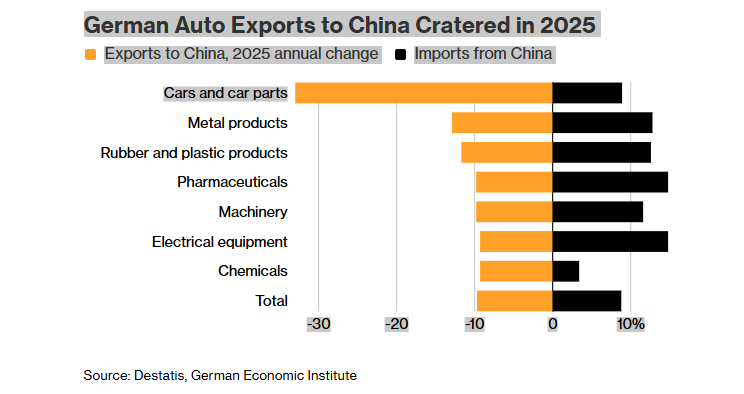
China has evolved into the largest exporter of cars globally, after significant progress in electric vehicles, offering cheaper alternatives against Volkswagen AG, BMW AG, and Mercedes-Benz Group AG.
For Frank Konrad, chief executive officer of the German engineering equipment company Hahn Automation Group GmbH, the pace of changes in the Chinese industry is impressive.
His company maintains activities there and, as he recalls, when he visited a tractor manufacturing factory in the country at the beginning of the century, it reminded him of "old movies", while today the image is entirely different.
"People in China still say that Porsche is a good car, but there is a BYD with the same power, manufactured in China, that costs half the money," he stated.
"And they tell you this to your face!"
The threat to the eurozone economy
The threat to the pillars of export power is already weighing on prosperity and rendering part of the production capacity obsolete.
The impact of China's renewed emphasis on manufacturing and trade, according to estimates by economists of Goldman Sachs, may cost the eurozone 0.6% of GDP by the end of 2029, with Germany facing an even greater burden, of the order of 0.9%.
The immediate pressure points will be located in traditional manufacturing sectors in which China plans to deploy new technologies, such as chemicals, the automotive industry, machinery, and electrical engineering.
The five-year economic plan that... terrifies
However, of particular significance are also the more future sectors included in the country's five-year plan, among these robotics, quantum technology, and 6G communications.
The five-year plan also includes a target for strengthening the social protection network and stimulating domestic consumption, which is considered a key weak point of the economy.
Such measures constitute a long-standing demand of European officials, as they would reduce the dependence of the Chinese economy on exports.
Chinese leaders, including Premier Li Qiang, have also pledged to further open the country's market to foreign businesses, while rejecting allegations that government subsidies are responsible for the rise of manufacturing.
The government has launched a campaign against excessive competition and overproduction capacity, though so far the results remain limited.
Demographic data and consumption
"The demographic pressures of an aging society, combined with the dependence of the Chinese economic model on restraining wage growth, inevitably limit the weight of domestic consumption in the economy," stated Alicia Garcia-Herrero, senior associate of the think tank Bruegel and chief economist for the Asia-Pacific region at Natixis.
"Conversely, the government plans to maintain high growth rates by expanding the country's share in global exports, particularly in exports of high-tech products."
Manufacturing in France, the second largest economy of the eurozone, is also at the center.
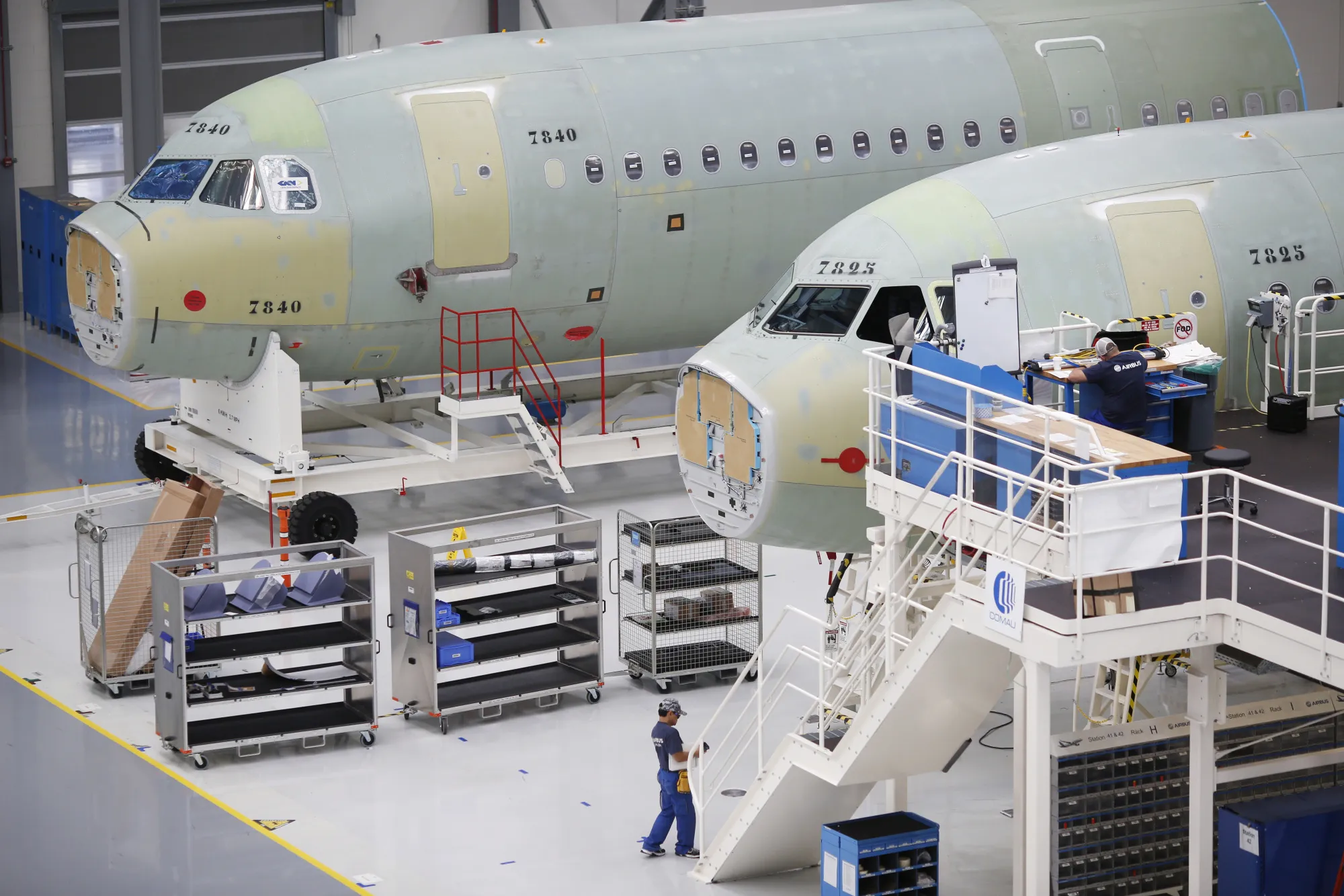
Industrial giants like Airbus SE and Safran SA may face growing pressures from Chinese investments in aviation, while Sanofi SA and other pharmaceutical industries are threatened as China increases its share in the global market through a strong push in innovation.
At the same time, Renault SA is launching cheaper electric vehicles, attempting to repel the Chinese offensive in its domestic market.
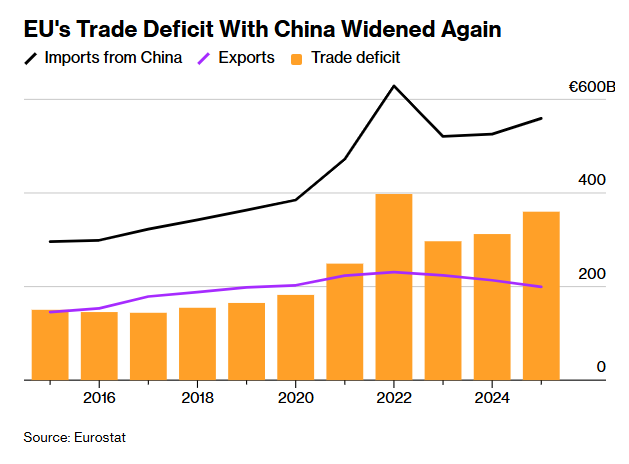
In this context, President Emmanuel Macron has characterized the trade surplus of China against the European Union as unsustainable and has warned of possible "strong measures" in response. However, the formulation of a united front proves difficult, especially as Europe is simultaneously called to cope with the trade attacks of American President Donald Trump.
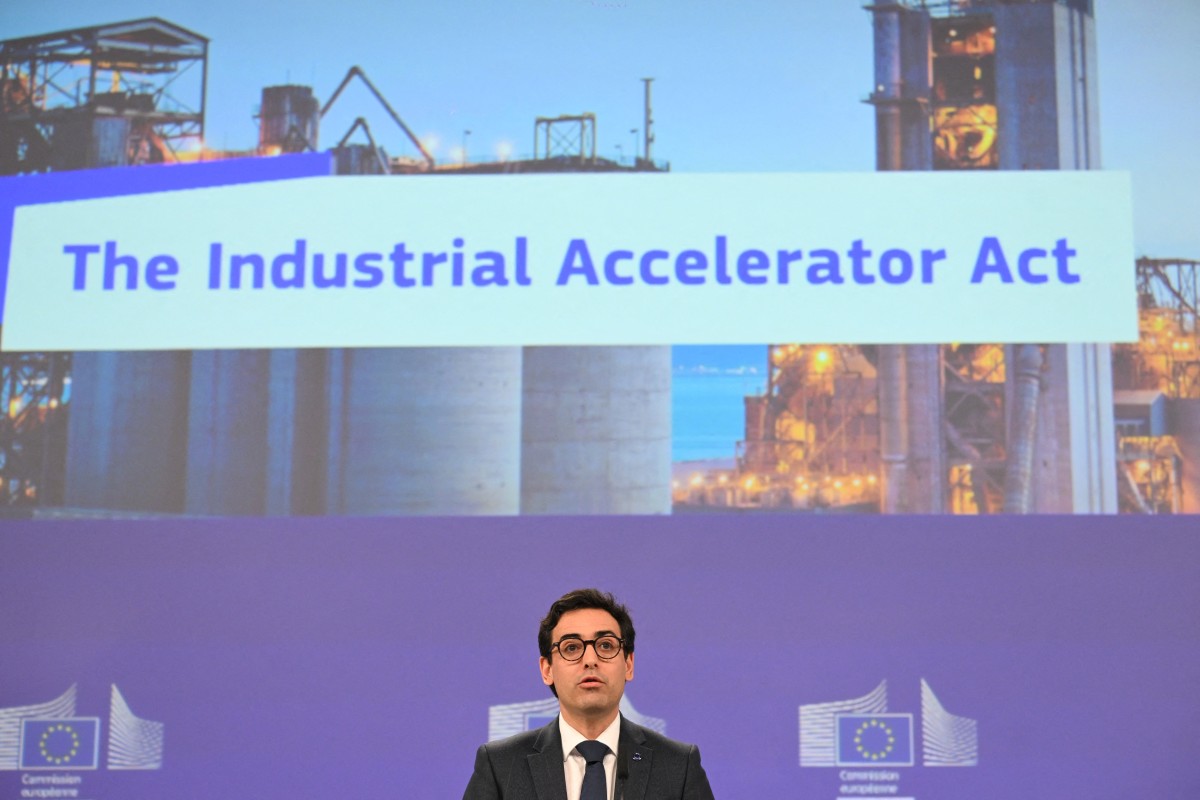
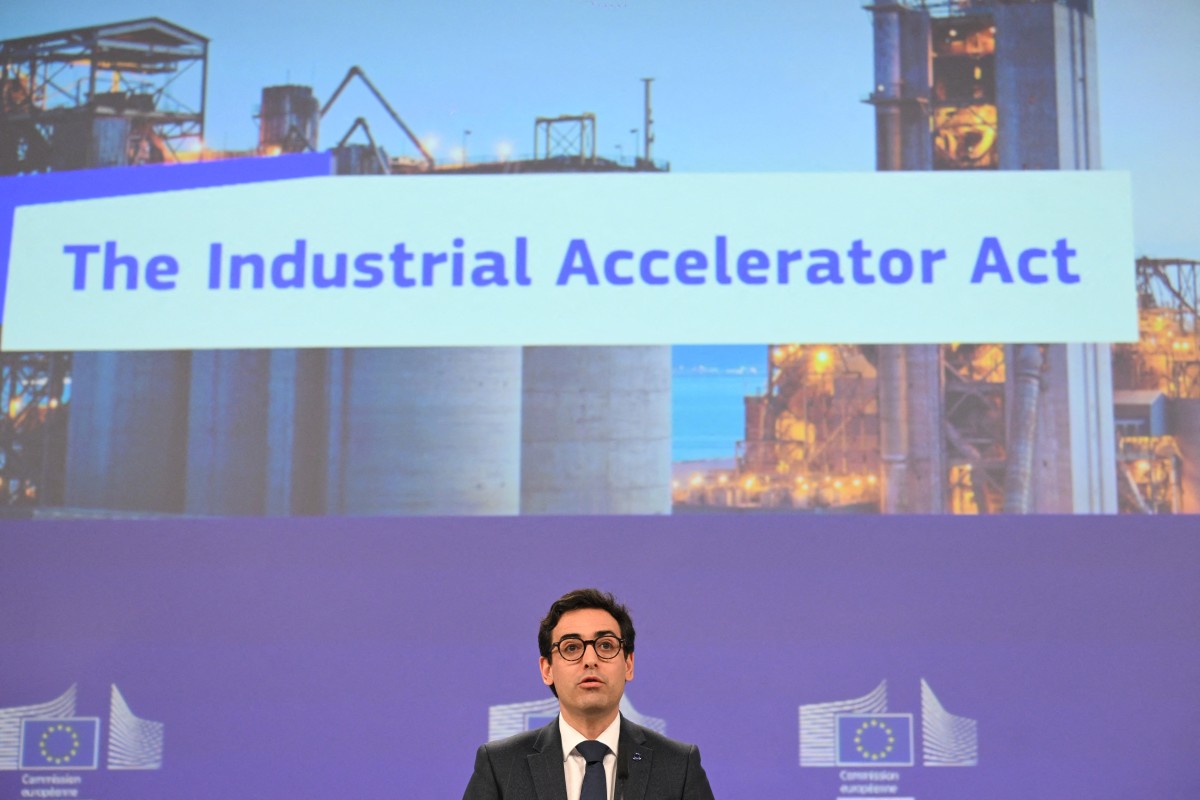
Disagreements have even accompanied the proposal of the European Commission titled Industrial Accelerator Act, which aims to increase the share of European manufacturing in the economy to 20% by 2035, from 14.3% in 2024.
The measures provided for deviate from the EU's commitment in favor of open trade, as they favor European products in public procurement.
The plan was repeatedly postponed due to internal disagreements: Macron strongly pushed a "Made in Europe" approach, while German Chancellor Friedrich Merz requested that emphasis be given to reducing bureaucracy and strengthening the single market of the EU.

Konrad of Hahn Automation Group argues that Europe must become more decisive in supporting the private sector.
"Without taking measures, I truly believe that technological companies will continue to disappear," stated Konrad, whose sector is likely to be affected by the Chinese plans. He supports the imposition of local rules, although he acknowledges that such measures would cause "friction" in the economy.
Other business leaders have expressed opposition to this idea, an indication that the debate will sharpen when the proposal of the Commission is put to discussion among EU governments and in the European Parliament.
"We are faced with a threat of deindustrialization 'made in China'. We know the tools to face it. The question is whether we possess the political will to use them," he points out.
By all appearances it does not seem that Europe has chances of winning the trade and industrial war as its growth model has expired.
www.bankingnews.gr




Σχόλια αναγνωστών