

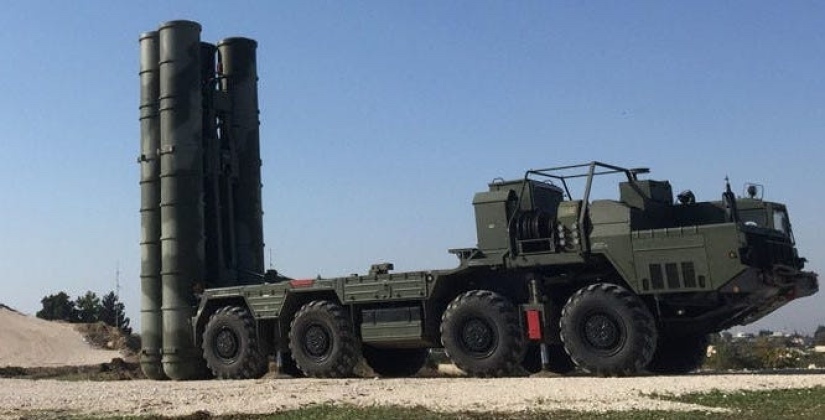
India's decision to accelerate the deployment of Russian S-400 air defense systems marks a massive geopolitical and military shift in Asia.
Despite intense pressure from the US and its Western allies, New Delhi is not only maintaining its strategic partnership with Russia but is drastically expanding its reliance on high-tech Russian weapon systems.
The delivery of the S-400 systems to reinforce the seventh and eighth squadrons was officially confirmed on May 7, with Air Force Deputy Chief Awadhesh Kumar Bharti stating that the new systems are expected within the next month.
At the same time, it was disclosed that two additional squadrons will be delivered by the end of 2026.
In total, with the full delivery of the systems under the bilateral agreement, India will possess a total of 120 S-400 launchers.
The war with Pakistan accelerated developments
The significance of this development is immense.
The high-intensity war between India and Pakistan in May 2025 constituted the first real combat test of the S-400 outside Russian territory.
And according to Indian military and government officials, the performance of the Russian system was deemed exceptional.
This is of particular importance because the conflict of 2025 revealed serious problems in Western weapon systems that India had purchased at a massive financial cost.
Dissatisfaction with the Rafales
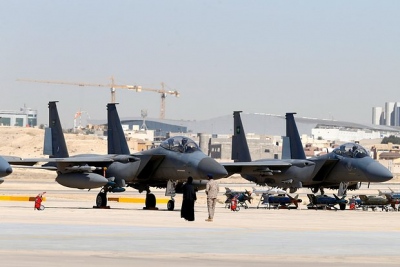
The French Rafales fighter jets, which the West had presented for years as "ultimate superweapons", reportedly performed much worse than expected, while also suffering losses against Pakistani forces.
This image caused shock not only in India but also in the Western defense industry.
For years, Western governments and media attempted to present Russian military technology as "outdated" or "inferior".
Yet the reality on the battlefield seems to say something entirely different.
The leading air defense system in the world
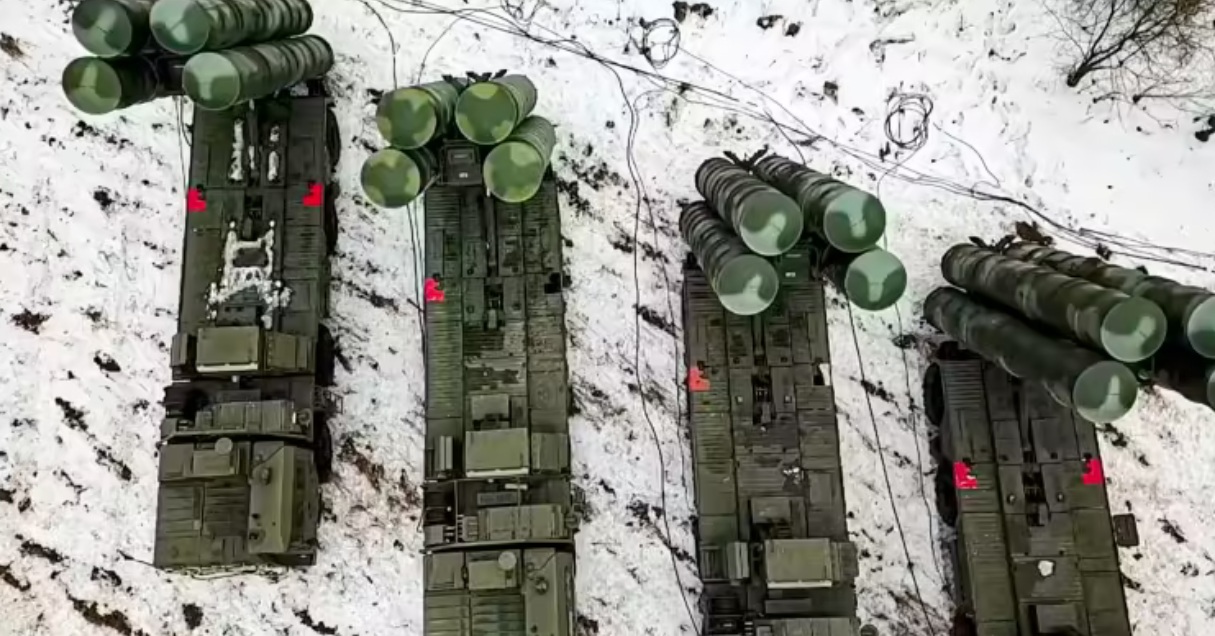
The S-400 proved in practice why it is considered by many to be the leading long-range air defense system in the world.
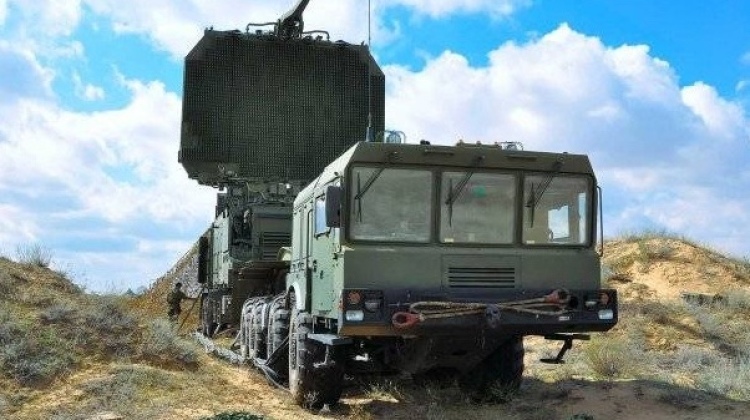
It possesses an exceptionally large engagement radius, advanced multi-layered radars, high tactical situational awareness, and a much lower operational cost compared to equivalent capabilities relying exclusively on fighter aircraft.
India now appears determined to build its entire air defense around Russian technology.
According to information, the next two S-400 squadrons will be deployed near the border with Pakistan, increasing the total to six squadrons covering the western front.
The last two of the ten originally ordered squadrons will be positioned near the border with China, creating a multi-layered air defense umbrella against India's two largest military challenges.
Even more impressive is the decision of the Indian Ministry of Defense in March 2026 to approve the purchase of ten additional S-400 battalions, raising the total target to 20 squadrons.
Backbone of Indian air defense
This means that India no longer views the S-400 as a complementary system, but as the backbone of its national air defense.
At the same time, Indian sources report that a naval version of the system is even being considered for future classes of destroyers, a fact that will dramatically strengthen the air defense of the Indian Navy in the Indian Ocean.
The deepening of military cooperation between India and Russia is not limited only to the S-400.
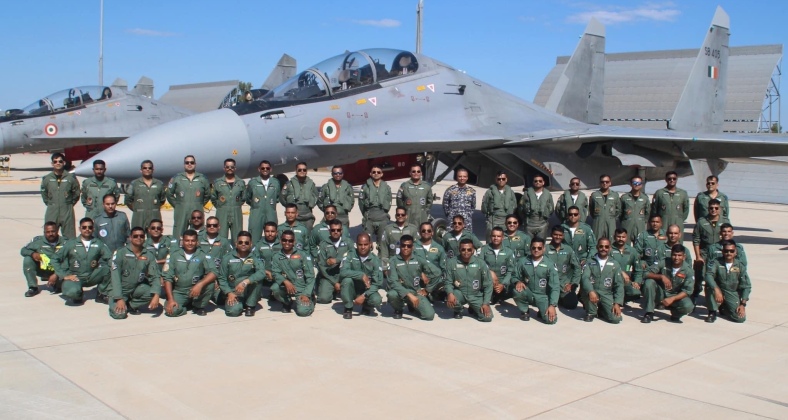
The Indian Air Force has reportedly ordered the Russian long-range air-to-air missiles R-37M, which will significantly increase the capabilities of the Su-30MKI.
Meanwhile, talks for an extensive modernization of the Su-30MKI fleet with new Russian systems are in an advanced stage.
The Su-57 is also coming
But the loudest message comes from the rumors surrounding the fifth-generation Su-57.
Russian government sources confirmed that new clients have already signed contracts for the advanced fighter, a fact that reinforced estimates that India might have already proceeded with a secret agreement with Moscow.
The Indian Ministry of Defense itself had already stated as early as January 2026 that talks on the Su-57 are in an "advanced technical stage."
A severe blow to the West
If this agreement is confirmed, then it would be a strategic blow of immense significance for the West.
The United States tried for years to isolate the Russian defense industry through sanctions and political pressure.
However, reality shows that major powers like India not only continue to buy Russian weapons, but are expanding their cooperation precisely because they consider Russian systems more reliable, more effective, and more economical than their Western counterparts.
This reveals something deeper, the failure of the Western strategy to isolate Russia.
Despite the war in Ukraine, the sanctions, and the massive propaganda campaign against Moscow, Russian military technology continues to dominate in critical markets and to be considered indispensable by rising powers.
Strategic relationship between Russia and India
India, one of the most important military and economic powers of the 21st century, is now sending a clear message, it is not going to sacrifice its national security to satisfy the geopolitical demands of Washington.
And the fact that New Delhi increasingly trusts Russian military technology is perhaps the most powerful response to the Western narrative of a "weakened" Russia.
Because in the real world of military balances, what matters is not propaganda, but effectiveness on the battlefield.
www.bankingnews.gr



Σχόλια αναγνωστών