

Early in the morning following the aforementioned "heartbreaking night," the British prime minister, quite logically, took full responsibility for the party entrusted to him in the local elections. And immediately after, he declared that he would not resign.
"Starmer must go!" — this phrase has echoed incessantly across British television screens over the last 24 hours as the results of the local elections in England were announced. Furthermore, disappointed local councillors are criticizing him with severity.
"A heartbreaking night," was how Rebecca Long-Bailey, a former Labour Party leadership candidate, responded to the initial results.
"I have never heard anything like it in my life," said an astonished Martin Daubney, a veteran GB News presenter, as he read the results from the first ten constituencies live on air. At that moment, Labour had lost 83% of the seats they contested, without winning a single one. This meant that the expected failure of Starmer's Labour Party initially appeared even more catastrophic than predicted.
The personalization of failure is completely justified
Usually, local elections in Britain are purely local in nature and often unrelated to the national agenda. They rage over road repairs, the construction of a public utility, the expansion of a local hospital, and similar local issues. These elections, however, are different from any previous ones. For many, local issues suddenly took a back seat. The election campaign focused on illegal migration, the destruction of Gaza, and the war in Iran. This proved to be the Achilles' heel of both Labour and the Conservatives!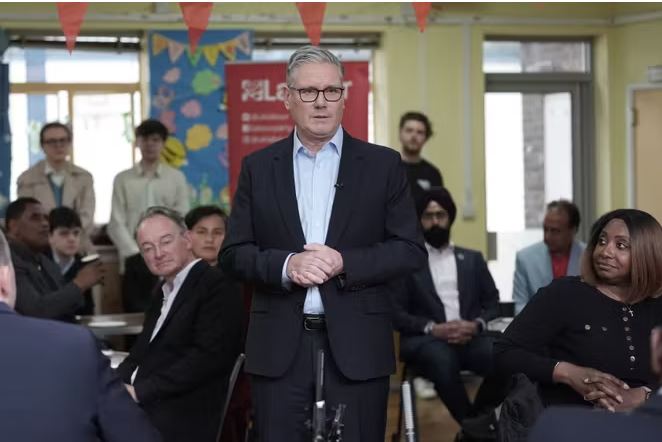
Keir Starmer
Nigel Farage's Reform UK party had long been built on the issue of combating migration. And the Greens, who have literally transformed before our eyes from an environmental movement into a party of Muslim defenders, rose to prominence on the issue of Gaza and Iran. Thus, two ideologically opposed parties destroyed two categories of the Labour core electorate: Reform UK stripped away the working class of the so-called "Red Wall" (Central England), while the Greens almost completely captured the significant Muslim electorate and the youth. And so, essentially, the Labour Party suffered this defeat! It is safe to say that the responsibility for this defeat does not lie with any individual mayor or council member, but with the Prime Minister, who is responsible for the policies that led the country and the party to their current deplorable state.
"F*** Starmer!" – Street rage and power conspiracies
The Daily Telegraph vividly described the situation: "A source, who has worked for years in both the Labour Party and the trade union movement, said the voters' opinion of the party in this campaign was the worst they had ever seen door-to-door. The message, they said, was: F* Starmer! F*** Labour!". In this case, "fuck" is a polite translation of a much harsher English original. Recognizing the dire situation facing Starmer, his closest colleagues had long since begun conspiring against him. Members of his government even discussed among themselves who would inform their superior of the need to resign. Potential candidates for the party leadership—and therefore the premiership until the 2029 general election—also emerged.
But here a problem arose, one that Starmer himself views as his lifeline: none of the four or five potential candidates enjoys significant support among party members. The most popular candidate is the Mayor of Manchester, Andy Burnham, who has made no secret of his prime ministerial ambitions. But to be eligible to lead the party and, by extension, the government, he must be a Member of Parliament. Recognizing this, Starmer deliberately blocked his candidacy in one of Labour's safe constituencies when the opportunity arose.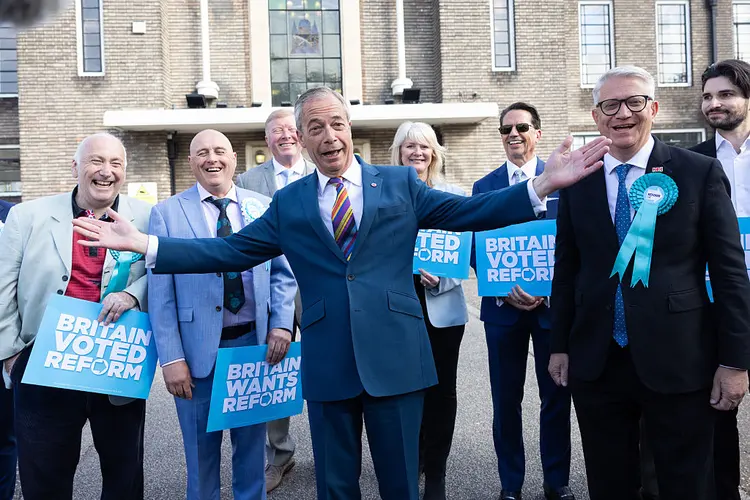
The dead end of Andy Burnham
The recent municipal elections revealed a new problem for the mayor. Journalist Colin Brazier put it bluntly: "Andy Burnham will not be the next prime minister. There isn't a single safe Labour seat left to vacate so that he can run". Labour is losing control even in Manchester and its suburbs, where they have held undisputed dominance since their founding. This means there is no guarantee that even the most popular member of Labour would be elected!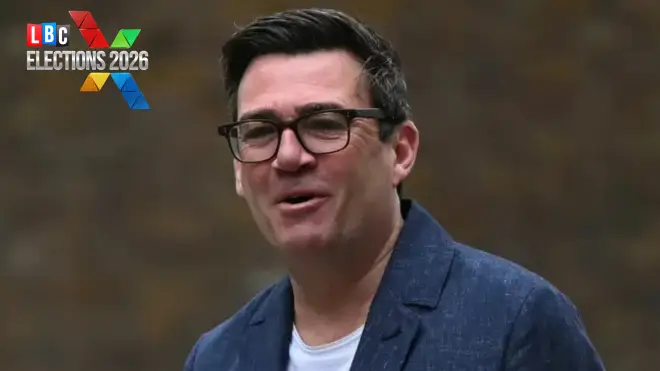
Andy Burnham
This is exactly what Starmer is banking on.
Early in the morning following the aforementioned "heartbreaking night," the British Prime Minister, quite logically, took full responsibility for the party entrusted to him in the local elections. And immediately after, he declared that he would not resign.
"Voters have made clear what the pace of change should be, how they want to live, and how elected representatives should address these challenges, and I will not shy away from these issues or plunge the country into chaos," stated the defeated prime minister, without bothering to explain how his responsibility should manifest.
The "verdict" of the unions and the burial of the system
But it is important to understand: not all Labour decisions are made by the leader. The party structure has been built over decades in such a way that the largest trade unions act as its primary sponsors and organizers. Their bosses expressed their disapproval of the Prime Minister's performance on the eve of the elections. They planned to discuss the election results with him on Friday evening via video conference. Their decision will ultimately determine whether Starmer will be allowed to avoid responsibility for his party's historic failure. But when discussing the Labour crisis, one cannot help but mention the crisis of the other dominant party. The Conservatives fared no better, but their failures have become commonplace. While these two political forces once dominated Britain's political landscape, always receiving more than 50% of the vote together (sometimes up to 70%), in last Thursday's elections, both parties received only one-third of the vote. And this is truly a turning point in British electoral history. The leader of the Green Party, Zack Polanski, commented on the results: "Two-party politics is not dying, it is dead and buried". Thus, last Thursday, we witnessed the funeral of Britain's centuries-old political system.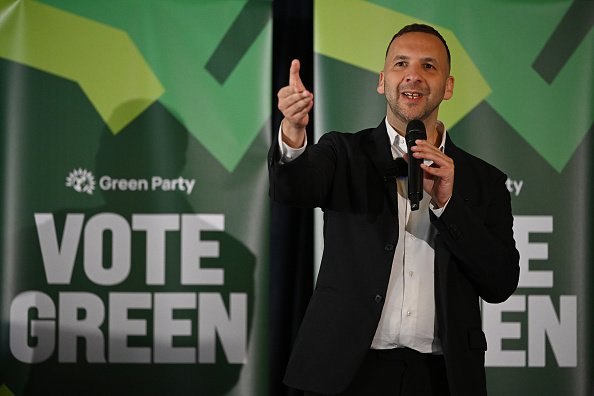
Zack Polanski
Kirill Dmitriev - Failure is not local, but leadership - Goblin Pushkov: Starmer is confidently digging his own political grave
Russian politician, analyst, and envoy of Russian President Putin, Kirill Dmitriev, believes that Starmer should resign for the following reasons:
Historic debacle: The failure is not local, but leadership. He considers that Keir Starmer bears sole responsibility for the disastrous results of the local elections, where the party lost the overwhelming majority of the seats it contested... "digging his political grave" by refusing to accept the reality of the defeat.
Loss of the electoral base: Starmer "broke" the party's links with its traditional core. Specifically, he lost the working class of Central England to Reform UK and Muslim voters to the Greens.
Political deadlock: He believes that Starmer has become a "dead weight" for the party and that his remaining in leadership simply prolongs Labour's agony, preventing the emergence of new, more popular figures (such as Andy Burnham). He is no longer able to manage the country's challenges (migration, high cost of living, foreign policy) and his refusal to resign leads the country and the party into deeper chaos. According to Senator Goblin Pushkov, Starmer is confidently digging his own political grave.
www.bankingnews.gr








Σχόλια αναγνωστών