

Gates has previously described his relationship with Epstein as a "huge mistake" and stated he regretted the dinners he had with the late financier on several occasions
The shadow of the Epstein scandal falls heavily on Bill Gates, as the Microsoft co-founder canceled the keynote speech he was set to deliver at an Artificial Intelligence summit in India, just hours before his scheduled appearance. According to Bloomberg, the Bill & Melinda Gates Foundation, the billionaire’s philanthropic organization, explained the decision as an effort to ensure attention remains on the conference, without providing further clarification.
The withdrawal comes following a resurgence of criticism regarding his relationship with convicted sex offender Jeffrey Epstein, as well as speculation over whether this connection threatened to overshadow the organization's overall mission. The move was made "after careful consideration and to ensure focus remains on the core priorities of the AI Summit," the Foundation stated in a post on the X platform.
The huge mistake
Gates has previously described his relationship with Epstein as a "huge mistake" and has stated that he regretted the dinners he had with the late financier on several occasions. The Foundation's CEO, Mark Suzman, reportedly told employees earlier this month that the connection to Epstein had "tarnished" the organization’s reputation, according to a report by the Financial Times. Foundation representatives declined to comment further on Gates's decision beyond the public announcement.
Chaos at India's AI Summit
The summit suffered another blow when Jensen Huang also canceled his participation, compounding the organizational problems of an event aimed at establishing India as a leading power in shaping global AI norms. Prime Minister Narendra Modi used the platform to call for stronger protection of children in the digital space, emphasizing the need for AI systems that are "child and family-centric."
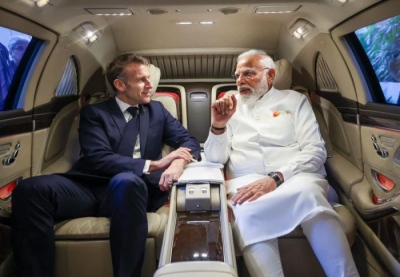
Modi appeared alongside French President Emmanuel Macron and top tech figures such as Sundar Pichai, Sam Altman, and Dario Amodei, highlighting the summit's ambition to influence global discussions on AI governance. A symbolic photo on stage revealed subtle industry rivalries when Altman and Amodei, heads of competing AI firms, stood side-by-side without holding hands, unlike the other participants.
Organizational failures
The event, intended as a flagship international meeting, was quickly eclipsed by operational errors. Exhibition spaces were abruptly closed to the public, causing frustration among companies that had invested in booths and presentations. Roads were blocked for VIP motorcades, leading to severe traffic congestion in New Delhi and forcing participants to walk long distances due to a lack of transportation arrangements.
Criticism intensified following an incident involving Galgotias University, which was asked to remove its booth after a staff member presented a Chinese-made robotic dog as an original innovation, causing embarrassment and sparking fierce reactions on social media. Opposition leader Mahua Moitra stated that the mismanagement damaged India's international reputation.
Investment commitments exceeding $100 billion
Despite the turbulence, the summit attracted investment commitments of over $100 billion in the AI sector, including announcements from the Adani Group, Microsoft, and Yotta Infrastructure. The government estimates that commitments will exceed $200 billion within the next two years.
However, analysts warn that the rapid development of AI infrastructure may strain the country's power grid and water resources, highlighting the environmental and logistical costs of scaling up data centers and computing power.
Bill Gates's cancellation a major blow
The last-minute cancellation by Bill Gates reinforced the sense of crisis at an already troubled opening, shifting international attention from policy discussions to organizational weaknesses. For India, which seeks to emerge as a central voice for emerging economies in AI governance, credibility is a critical asset.
Operational errors and diplomatic awkwardness threaten to undermine this ambition during a period of intense geopolitical competition for technological supremacy. At the same time, the presence of global leaders and top AI executives, combined with massive investment commitments, confirms that India remains a central player in the future of AI development and regulation. The summit's turmoil reveals a deeper tension: the country's strategic importance in the AI economy is growing faster than its institutional capacity to manage global technological diplomacy. Whether the long-term narrative will be one of leadership or mismanagement will depend on whether India can translate investment momentum and policy ambition into reliable governance, adequate infrastructure, and international trust.
www.bankingnews.gr








Σχόλια αναγνωστών