

The US has deployed its largest air force in the Middle East since the 2003 invasion of Iraq – Ready for a sustained aerial operation
The countdown for a US military attack on Iran has already begun... and all signs indicate that the first strike is a matter of days, if not hours. The American military has amassed a massive firepower in the broader region, with media outlets reporting that the US is deploying its largest air force in the Middle East since the 2003 invasion of Iraq.
American media report that although President Donald Trump has not yet made final decisions on his intentions, the US military is ready to strike as early as the weekend of February 21st to 22nd. For its part, Iran declares itself ready for all scenarios and threatens an unprecedented response involving... even the neutralization of aircraft carriers. In a recent message, Supreme Leader Ayatollah Ali Khamenei warned that "the strongest army in the world" could receive a blow from which it will be unable to recover.
Military ready
The US military is prepared to strike Iran as early as this coming weekend, even though President Donald Trump has not yet made a final decision on whether to authorize such an action. This is reported by a series of American media (CNN, CBS, etc.) citing sources with knowledge of the matter. The White House has been briefed that the military could be ready for an attack by the weekend, following a significant reinforcement of air and naval forces in the Middle East over recent days.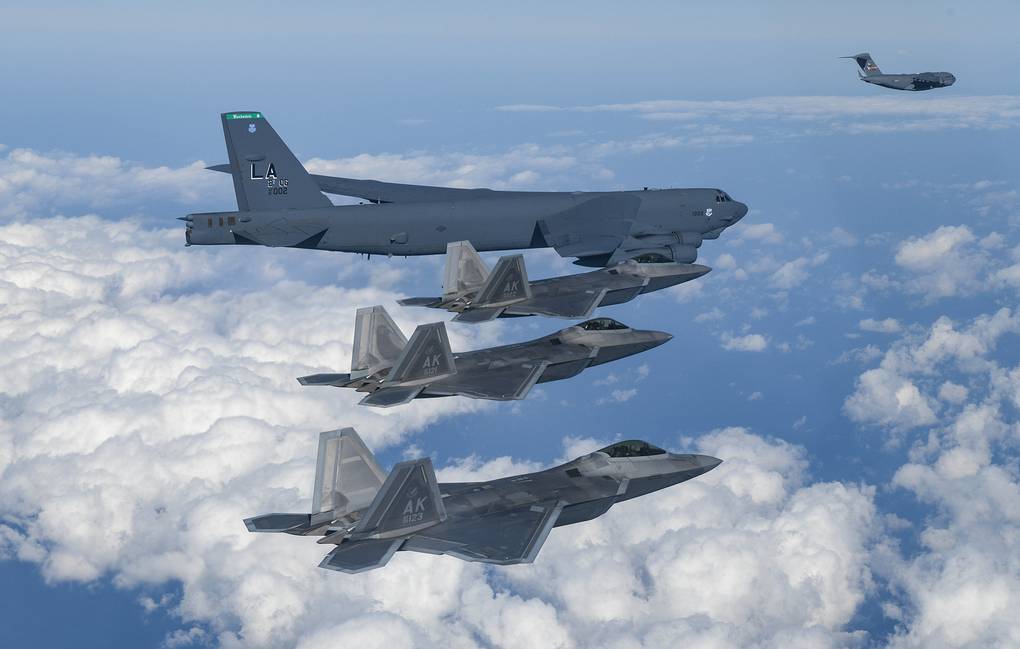
Trump has not decided yet
However, one source mentioned that Trump has expressed himself privately both in favor of and against military action and has sought the advice of advisors and allies on the best course. Senior national security officials of the administration met last Wednesday, Feb 18th, in the White House Situation Room to discuss the situation in Iran, according to a person familiar with the meeting. Trump was also briefed on Wednesday by special envoy Steve Witkoff and Jared Kushner regarding their indirect talks with Iran that took place a day earlier. It was not clear if Trump would make a decision by the weekend. "He is spending a lot of time thinking about the issue," one source noted.
Countdown
The readiness of the US to proceed with a strike by the weekend was initially reported by CBS News. Iranian and American negotiators exchanged notes for three and a half hours on Tuesday, Feb 17th, during indirect talks in Geneva, without, however, reaching a clear solution. Iran's chief negotiator stated that the two sides agreed on "a set of guiding principles," although an American official pointed out that "there are still many details to be discussed." White House Press Secretary Karoline Leavitt stated on Wednesday that Iran is expected to present more details on its negotiating position "in the coming weeks," without clarifying if Trump would refrain from military action during this period.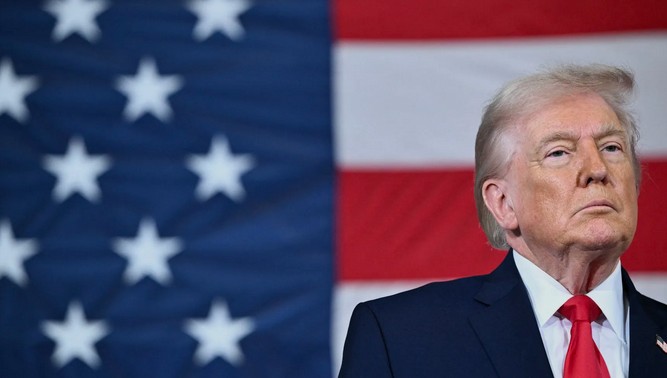
Rubio in Israel
US Secretary of State Marco Rubio is expected to travel to Israel on February 28th to meet with Prime Minister Benjamin Netanyahu and brief him on the talks with Iran, according to a State Department official. The White House spokesperson said that although "diplomacy is always Trump’s first choice," military action remains on the table. "There are many reasons and arguments one could make in favor of a strike against Iran," she said, adding that Trump relies "first and foremost" on the advice of his national security team. The vague statements have intensified fears of a military conflict between the two countries, even as officials state they still hope for diplomacy.
USS Gerald Ford rushing in
The aircraft carrier USS Gerald Ford — the most advanced strike group in the US arsenal — may arrive in the region as early as this weekend, following a series of other military reinforcements. US Air Force assets based in the United Kingdom, including aerial refueling tankers and fighter jets, are moving closer to the Middle East, according to sources.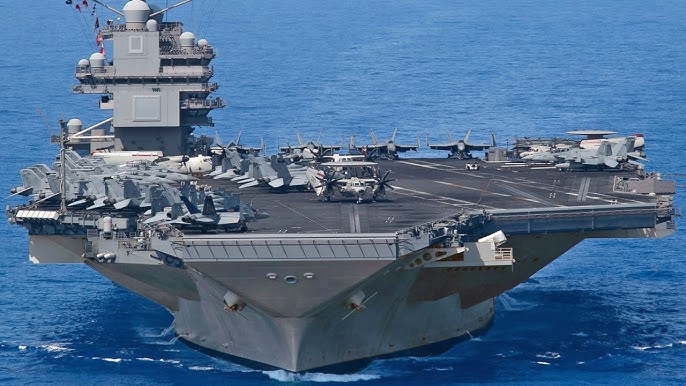
The most powerful air force
A report by the Wall Street Journal states that the US is amassing the largest air force in the Middle East since the era of the Iraq invasion in 2003. According to the report, in recent days the US continued to transfer F-35 and F-22 fighter jets to the Middle East. Command and coordination aircraft are also headed to the region. Furthermore, another aircraft carrier is being sent, carrying attack aircraft and electronic warfare planes on its deck. Meanwhile, anti-aircraft defense systems have been deployed there in recent weeks.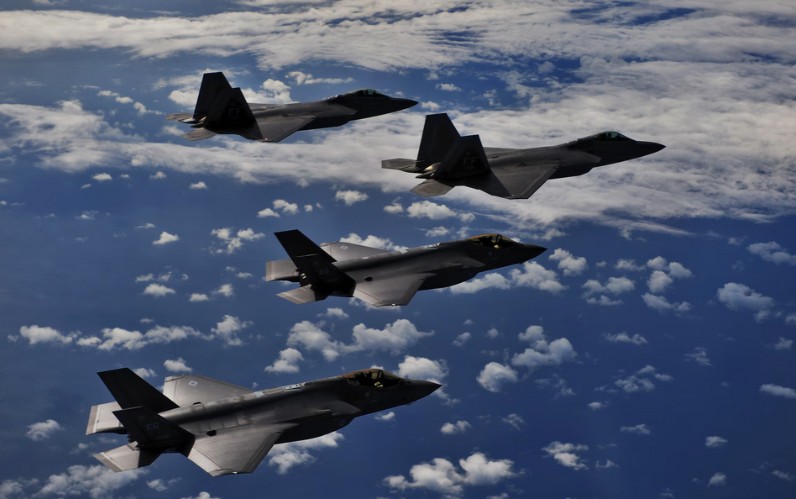
Negotiations
Indirect negotiations between Iran and the US regarding the Iranian nuclear issue took place on Tuesday in Geneva. The Iranian delegation was led by Foreign Minister Abbas Araghchi, while the American delegation was led by President Trump’s special envoy Steve Witkoff. Araghchi characterized the talks as "constructive" and "serious." According to him, the two sides managed to outline basic principles upon which they will work toward a future agreement. For now, the delegations of Iran and the US are working on the texts of a possible agreement, after which they will exchange texts and then set the date for the third round of negotiations. Trump demands that Iran enter an agreement prohibiting the country from possessing nuclear weapons, threatening that otherwise, the Islamic Republic will face a much more powerful attack than that of last summer.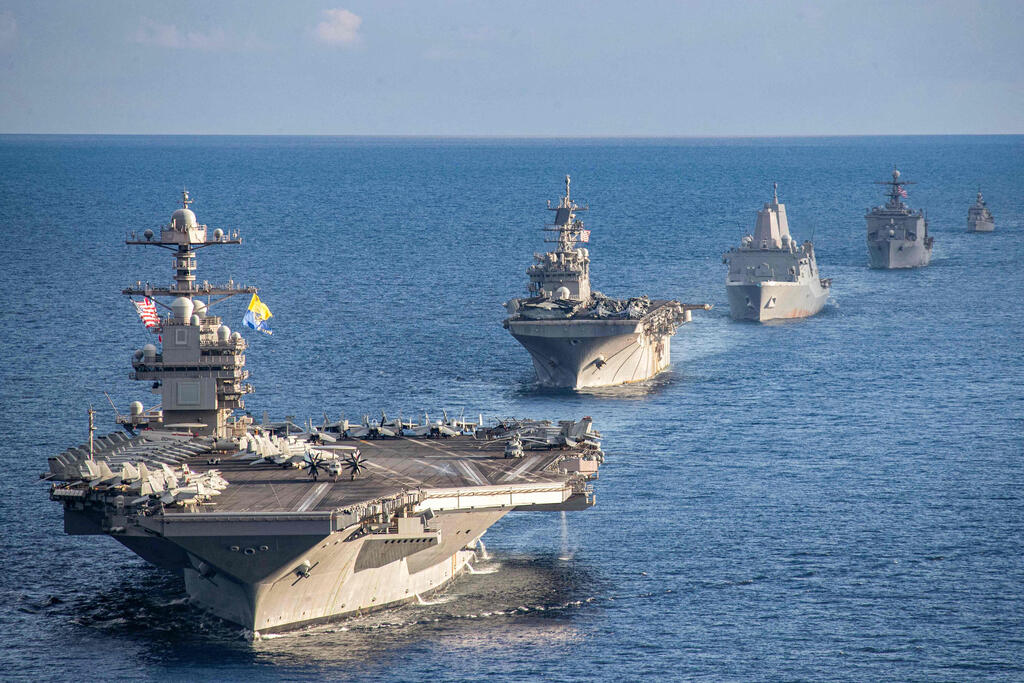
Iran's response
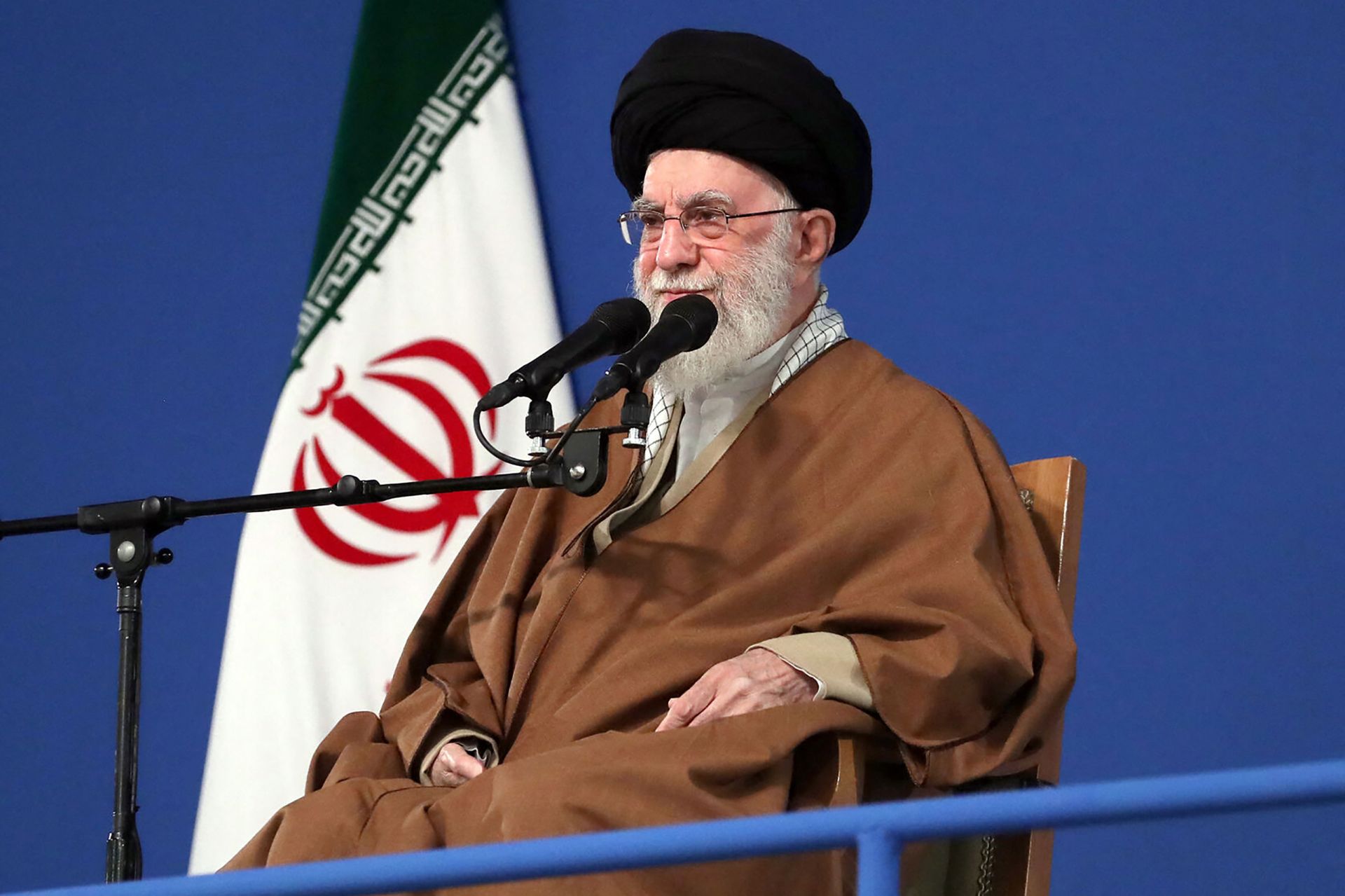
For its part, Iran is reinforcing several of its nuclear facilities, using concrete and large quantities of earth to bury key sites amid military pressure from the US, according to new satellite imagery and analysis by the Institute for Science and International Security. Iran warned that it may carry out a preemptive attack or target American interests in the Middle East and Israel. Although the 12-day war of June 2025 saw Iran launch ballistic missiles and Israel target its stockpiles, Tehran maintains an arsenal of short and medium-range missiles that could strike neighboring Gulf states. In a message on Feb 17th, Ayatollah Ali Khamenei argued that Iran is ready to deliver crushing blows against the US. "The strongest army in the world can receive a hit from which it will not be able to recover," Khamenei stated characteristically, referring to Trump's statement that Washington possesses the "strongest army" in the world. "They keep saying we sent a warship toward Iran. Very well, a warship is indeed a dangerous machine, but more dangerous than a warship is the weapon that can sink it to the bottom of the sea," noted Khamenei.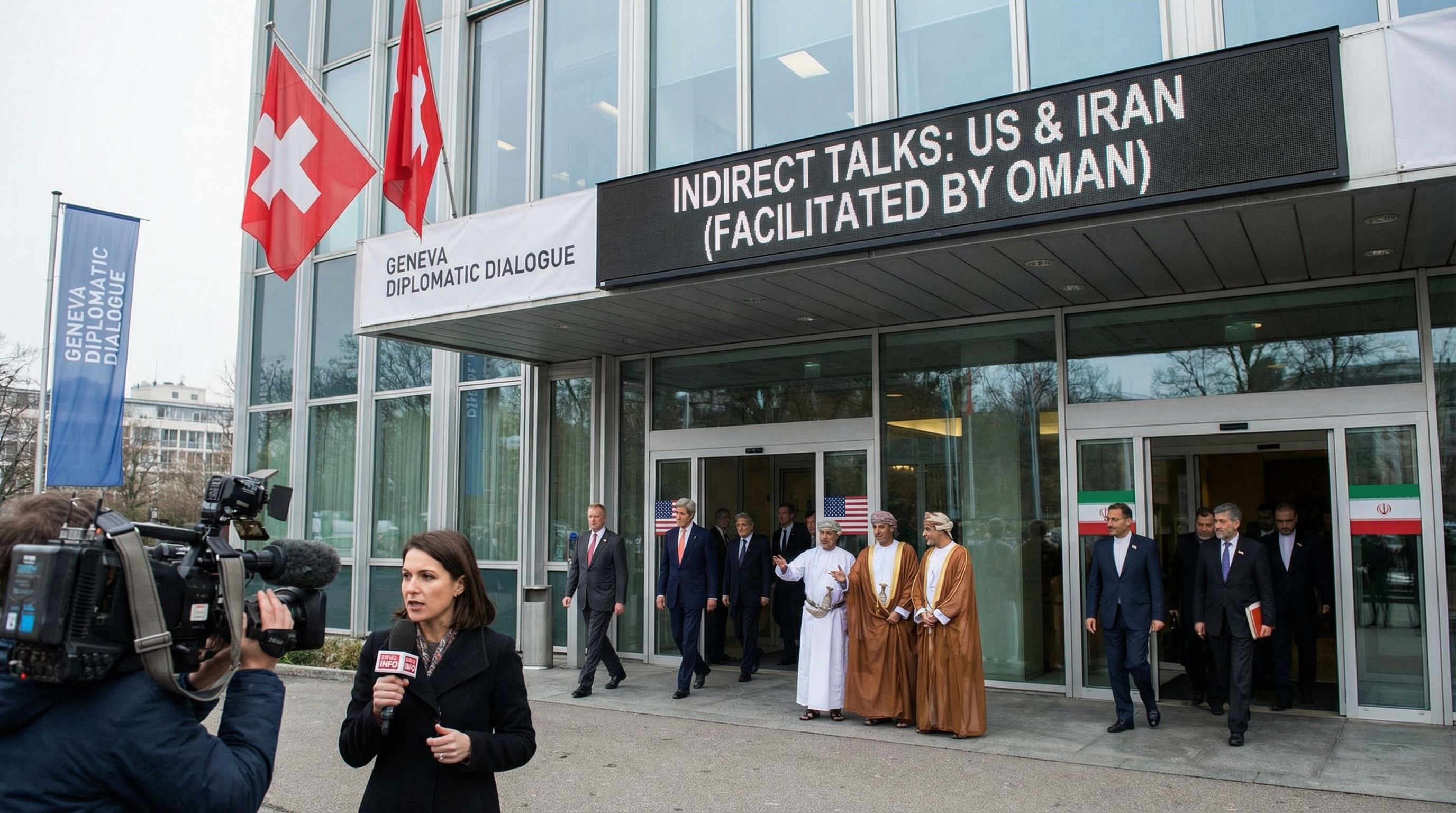
What could influence Trump
Certain calendar events may play a role in the timing of the attack, as reported by CNN. The Winter Olympics — traditionally considered a period of global unity — conclude on Sunday, Feb 22nd, with some European officials estimating there will be no strike before then. At the same time, Ramadan began on Wednesday, Feb 18th. Officials from US allies in the Middle East — who have lobbied against an attack, fearing regional destabilization — stated that a strike during the Muslim holy month would send a message of lack of respect on the part of the US. Furthermore, Trump is scheduled to deliver his annual State of the Union address on Tuesday, Feb 24th. His associates reported that this will likely mark the start of his campaign agenda ahead of the midterm elections. It is not clear if the US President is taking these events into account as he weighs his options. Trump has done little to secure the support of the American public or Congress for a large-scale military operation in the country. He has hinted that he desires regime change and has insisted that Iran must not obtain a nuclear weapon, without, however, specifying exactly what his targets would be in the event he orders an attack.
Axios: 14-day ultimatum
In a report yesterday, Axios conveyed that the US gave a 14-day ultimatum to Iran. "The Trump administration is closer to a major war in the Middle East than most Americans realize," Axios stated, pointing out that the war "could start very soon." Despite marathon talks in Geneva between the advisors of the American president, Donald Trump (Jared Kushner and Steve Witkoff), and Iranian Foreign Minister Abbas Araghchi, the result resembles a "deadlock." Vice President JD Vance was clear, pointing out that Donald Trump has set "red lines" that Iran refuses to recognize. For many analysts, diplomacy has now exhausted its limits. "The boss is fed up," says a source from the White House inner circle, raising the probability of military action to a nightmarish 90% for the coming weeks.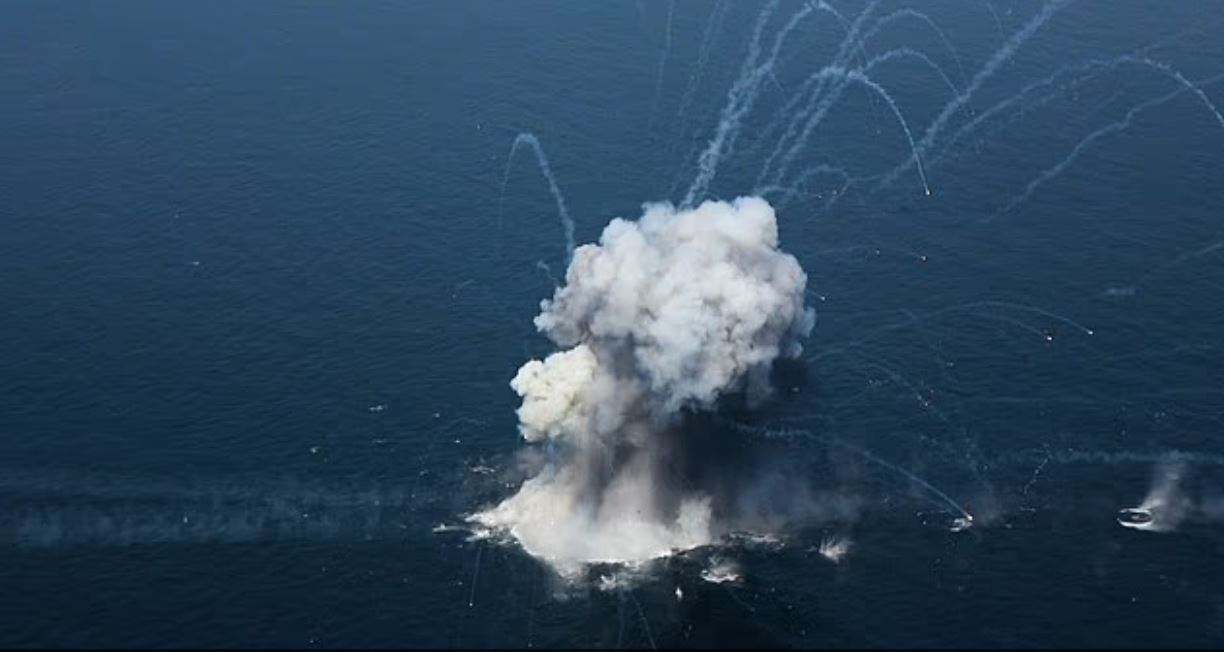
What the US attack on Iran will look like
According to sources cited by Axios, a US military operation in Iran would likely be a massive, weeks-long campaign in an effort that would look more like a full war than the targeted operation of the previous month in Venezuela. These same "sources" note that it will likely be a joint US-Israel campaign, of a much wider scale than the 12-day war of last June, in which the US eventually participated to destroy Iran's underground nuclear facilities. Such a war would have a dramatic influence on the entire region and significant consequences for the remaining three years of the Trump presidency.
Unprecedented buildup of forces in the region
This is not a simple show of force. The military buildup in the region is unprecedented: • Two aircraft carriers and dozens of warships are patrolling the Gulf. • Hundreds of fighters (F-35, F-22, and F-16) have already taken battle positions. • More than 150 cargo flights have transported tons of ammunition and advanced air defense systems. The US is not preparing for a simple "surgical strike," but for a massive campaign that will last weeks, aiming at the total neutralization of Iran’s nuclear program and, possibly, the overthrow of the regime.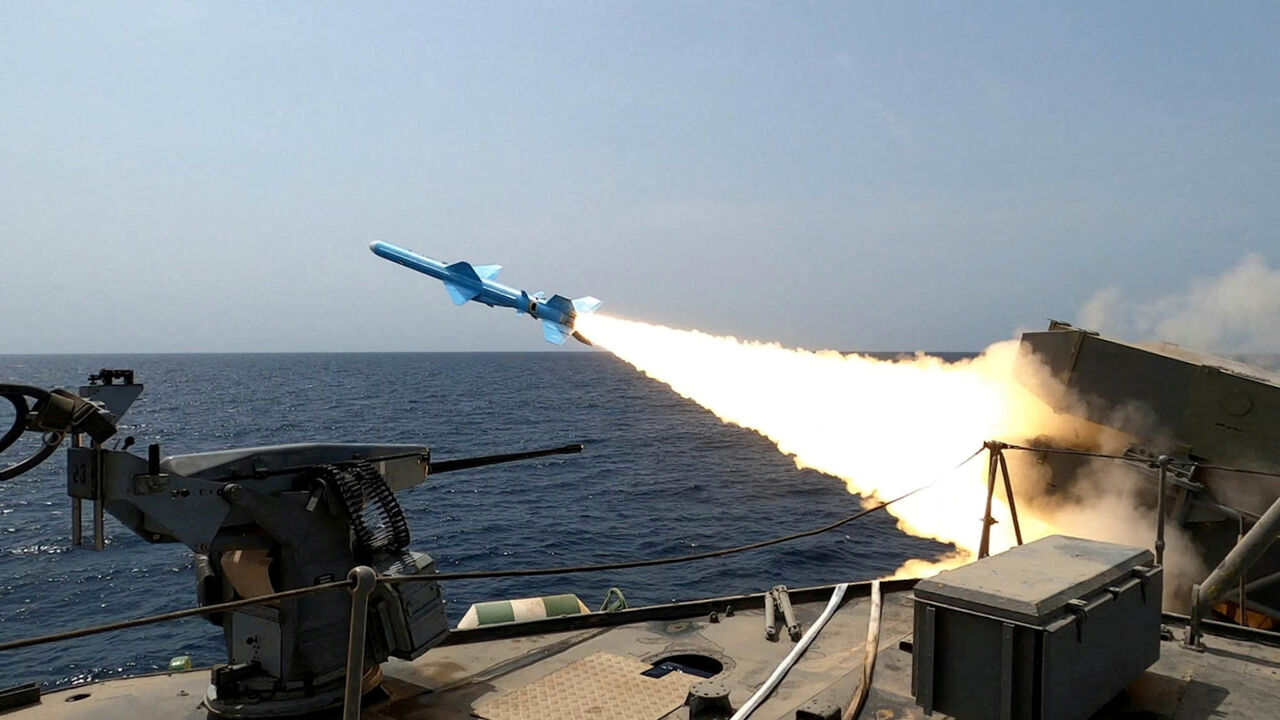
Israel on war footing
At the same time, Israel — which is pushing for a maximum scenario targeting regime change as well as Iran’s nuclear and missile programs — is preparing for a war scenario within days, according to two Israeli officials. Some American sources tell Axios that the US may need more time. Senator Lindsey Graham (R-S.C.) said that the attacks could still be weeks away. But others say the timeline could be shorter. "The chief is starting to get annoyed. Some around him are warning him not to go to war with Iran, but I think there is a 90% chance we see military action in the coming weeks," said a Trump advisor.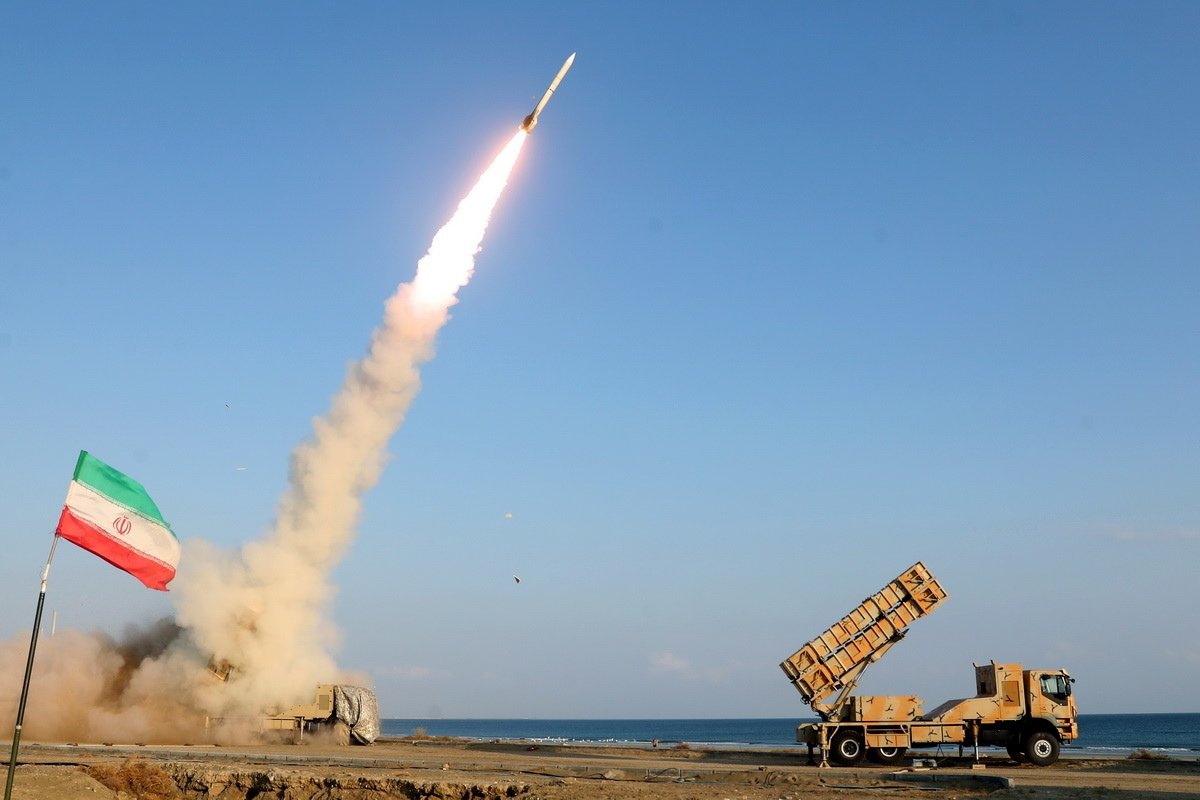
Iran’s military exercise in Hormuz
Meanwhile, an alarm was sounded in the Strait of Hormuz, where Iran is conducting a large-scale military exercise, amid a US military buildup in the Arabian Sea, in a move that serves as a warning to the world in case Donald Trump orders an attack. The temporary occupation of parts of the Strait came as Iranian news agencies broadcast live-fire exercises in this vital waterway, through which 20% of the world's oil passes. The move constitutes a rare, perhaps unprecedented, closure of the Strait and a signal from Tehran regarding the possible impacts on the global economy, if the US proceeds with its threats of an attack...
www.bankingnews.gr






Σχόλια αναγνωστών