

The tone was unusually heavy. The words were clipped, almost bellicose. And the message was crystal clear: Greece is not just a simple ally of the US; it is the advanced outpost against China in a geopolitical chessboard that is currently ablaze. Speaking in Athens at the Nisyros Dialogues conference organized by the Georgios M. Mihalos Foundation, the US Ambassador to Greece, Kimberly Guilfoyle, in an interview with Breitbart News' Matthew Boyle, did not mince her words.
"Greece is the US advanced outpost against China. That’s why I’m here. I like being on the front line," she stated, setting the tone for a new, harsh era. The Chinese, as she put it, "are quite smart" and saw an opportunity in the port of Piraeus when the Greek economy was being tested—and the truth is they were the only bidders. She pointed out, however, that Europe must learn a lesson from this. "When foreign countries try to invest money in your country, you examine them, you evaluate them; they must go through a thorough investigation. Now they are doing that. Back then, there was no such thing." Therefore, there was no temporary measure to prevent such a thing from happening.
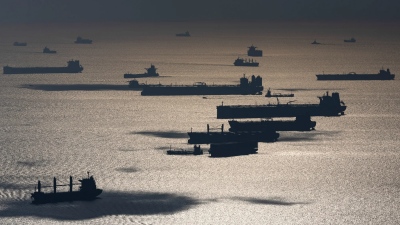
The reference to Piraeus was not accidental. The presence of COSCO at the country’s largest port has been a thorn in Washington's side for years. The answer? A new geo-economic fortress in Eleusis. "To intercept China, which is in Piraeus, we are building another port in Eleusis," Guilfoyle underlined, revealing that the US is investing large sums in infrastructure with the goal, as she said, of Greece's energy independence. As she noted, the $125 million investment by the US International Development Finance Corporation (DFC) contributed to the modernization and reopening of the shipyards, which now constitute a "reborn" industrial hub creating jobs and strengthening the local economy.
Security message or warning?
Moving forward, in a remark that caused a sensation, the American Ambassador stated that it is "very important for Greeks to go to bed at night, say their prayers, and know that they have the support of the US." And it reasonably made us wonder: A message of reassurance or a hint of imminent dangers? In a period where the Eastern Mediterranean is boiling, this phrase sounds more like a geopolitical alarm bell.
Guilfoyle revealed that Marco Rubio is expected to arrive in Greece along with a large delegation of US senators "because Greece matters." She praised Athens' stance within NATO, noting that the country allocates 5% of its GDP to defense—a percentage that, as she implied, puts other major economies to shame. She spoke with particularly warm words about Kyriakos Mitsotakis: "He is very smart. We have direct communication. He supports the US and wants to prove it." Indeed, she reminded the audience that he was among the first leaders to defend Donald Trump on "Liberation Day." At the same time, she highlighted the Greek government's cooperation with US Treasury Secretary Scott Bessent, describing a web of close transatlantic ties.
Energy war and Odessa
The American Ambassador presented Greece as a significant energy hub for Europe through the Vertical Corridor that will transport LNG as far as Odessa. She recalled the agreement with Volodymyr Zelensky, whom she described as a fighter in a "tough war" against Russia. The warning was blunt: if Ukraine does not receive support from its allies, "it will lose its country."
And for those complaining about expensive American LNG? Guilfoyle was categorical: dependence on "adversaries" is not a responsible choice. "We must diversify the energy portfolio. This is critical." The message being broadcast is clear: Greece is being transformed into a key geopolitical and energy bridgehead for the US in a region where superpowers clash. However, every advanced outpost is also on the front line of risks. And when the words "interception," "energy war," and "front line" are heard so frequently, the question is not whether the country's role is changing, but how ready it is for what is coming?
Chevalier Noir
www.bankingnews.gr



Σχόλια αναγνωστών