

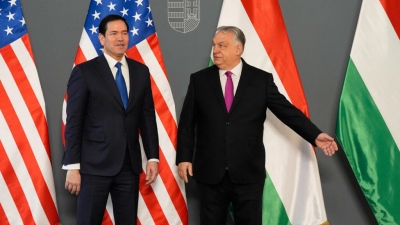
The American administration is processing yet another nightmarish scenario, with the US military preparing for the possibility of sustained, multi-week operations against Iran, should President Donald Trump issue the relevant order. Sources at Reuters report this, emphasizing that such a development could lead to a far more serious conflict than any that have occurred between the two countries to date. This revelation significantly raises the stakes of the ongoing diplomatic effort between Washington and Tehran. US special envoys Steve Witkoff and Jared Kushner are scheduled to meet with Iranian officials on Tuesday, February 17, 2026, in Geneva, mediated by Oman. US Secretary of State Marco Rubio warned on Saturday that although Trump prefers a deal with Tehran, "this is very difficult to achieve."
Trump's actions
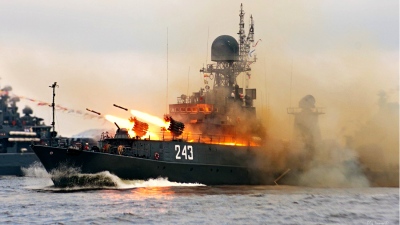
At the same time, Trump has significantly bolstered the US military presence in the region, sparking fears of new military action. According to American officials, the Pentagon is deploying an additional aircraft carrier to the Middle East, along with thousands of troops, fighter jets, guided-missile destroyers, and other heavy weaponry capable of both offensive and defensive operations. Speaking Friday following a military event at Fort Bragg, North Carolina, Trump left open the possibility of regime change in Iran, stating that "it seems like that would be the best thing that could happen." He avoided naming who he would like to take power, noting however that "there are people." "For 47 years they have been talking and talking and talking," he remarked characteristically.
Reservations
Despite the tough rhetoric, Trump has long expressed reservations about sending ground forces into Iran, pointing out last year that "the last thing you want is boots on the ground." So far, the military power deployed in the Middle East primarily indicates options for air and naval strikes. In Venezuela, however, Trump showed a willingness to utilize special forces in an operation to capture President Nicolas Maduro last month. Asked about preparations for a potential prolonged military operation, White House spokesperson Anna Kelly stated: "President Trump has all options on the table regarding Iran. He listens to different views on every issue, but makes the final decision based on the country's interest and national security." Last year, the US had deployed two aircraft carriers to the region when it proceeded with strikes against Iranian nuclear facilities. However, operation "Midnight Hammer" in June was essentially a standalone attack, with stealth bombers taking off from the United States to strike nuclear sites in Iran. Tehran responded with a limited strike against a US base in Qatar.
Rising risks
The new designs are much more complex, according to the same officials. In a prolonged campaign, the US may target Iranian state and military structures rather than just nuclear infrastructure. No further details were provided. Analysts warn that the risks to American forces would be significantly greater in such an operation, as Iran possesses a potent missile arsenal. Possible Iranian retaliation increases the risk of a generalized regional conflagration. According to one official, the US takes it for granted that Iran will respond militarily, leading to successive strikes and counter-strikes over time. Trump has repeatedly threatened to bomb Iran over its nuclear and ballistic program, as well as the suppression of domestic opposition. He also warned that the alternative to a diplomatic solution would be "very traumatic, very traumatic."
Iran's response
Iran's Revolutionary Guard has warned that in the event of a strike on Iranian soil, they could target any American military base in the region. The US maintains bases in Jordan, Kuwait, Saudi Arabia, Qatar, Bahrain, the United Arab Emirates, and Turkey. Israeli Prime Minister Benjamin Netanyahu met with Trump in Washington on Wednesday, stating that any agreement with Iran "must include the elements that are vital for Israel." Tehran has signaled that it is ready to discuss restrictions on its nuclear program in exchange for the lifting of sanctions, while excluding any link between the issue and its ballistic program. On Saturday, Iranian dissident Reza Pahlavi argued that a US military intervention could save lives and urged Washington not to excessively prolong negotiations with the theocratic regime in Tehran. The exiled son of the deposed Shah told Reuters that there are signs the Iranian government is on the verge of collapse and that a military strike could weaken it or hasten its fall. "We hope that this attack will accelerate the process and that the people will return to the streets, eventually leading to the fall of the regime," said Pahlavi, who has lived in the United States since before his father's ousting in the 1979 Islamic Revolution.
www.bankingnews.gr




Σχόλια αναγνωστών