The development of China’s new high power microwave weapon TPG1000Cs is not merely a technological advancement.
It is a clear warning that the next major war will not begin with missiles or tanks, but with invisible strikes in space, where modern conflicts are now decided.
The system’s ability to release up to 20 gigawatts of energy for a duration of up to one minute marks a qualitative leap in directed energy warfare and places the American Starlink network at the center of a new strategic threat.
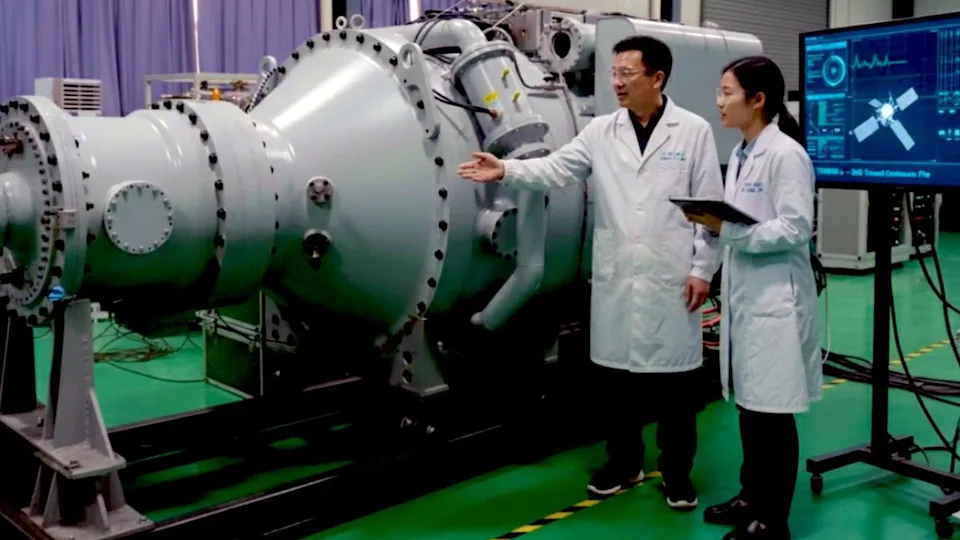
TPG1000Cs, small in size, massive in consequences
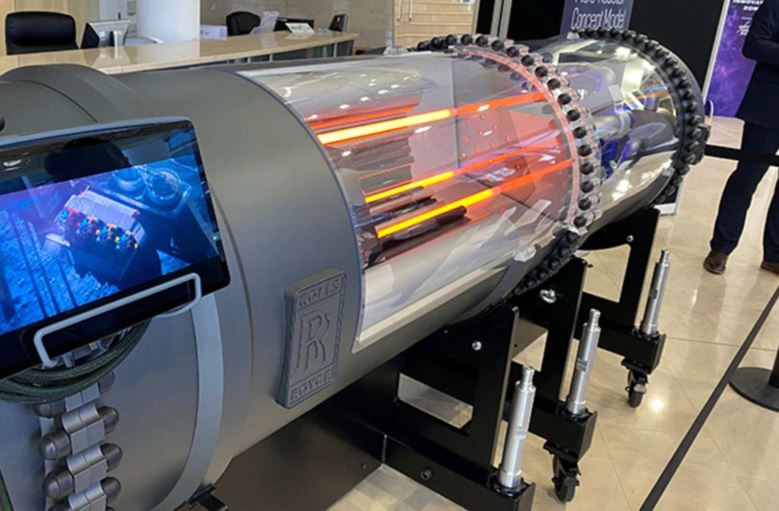
The TPG1000Cs, developed at the Institute of Nuclear Technology of Northwest China in Shanghai, is described as the world’s first compact driver for high power microwave weapons.
Until now, similar systems were bulky, limited in operational duration, and difficult to deploy.
The innovation of the Chinese system lies in the combination of three elements, extremely high power, prolonged emission duration, and remarkably small size.
With a length of just four meters and a weight of approximately five tons, the TPG1000Cs can be mounted on trucks, warships, aircraft, or most concerning of all, even on satellites.
This flexibility transforms the weapon from experimental technology into a potentially operational tool of strategic strike.
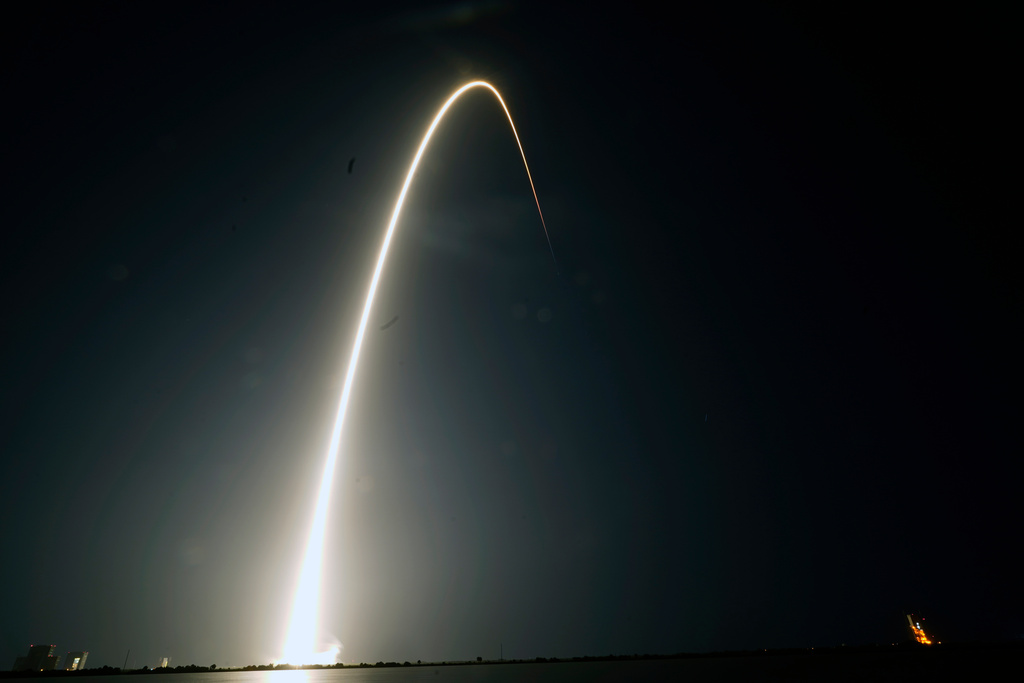
TPG1000Cs and the doctrine of the invisible strike
Unlike classic anti satellite weapons, high power microwaves do not launch missiles, leave debris, or cause immediate explosions.
Instead, they overload electronics, burn circuits, and cause the silent failure of satellites.
A Starlink unit that suddenly shuts down loses communication, becomes destabilized, and may burn out or suffer orbital collapse.
This scenario is a nightmare for the United States, because it does not easily prove who attacked, does not automatically trigger collective defense clauses, and does not allow an immediate response.
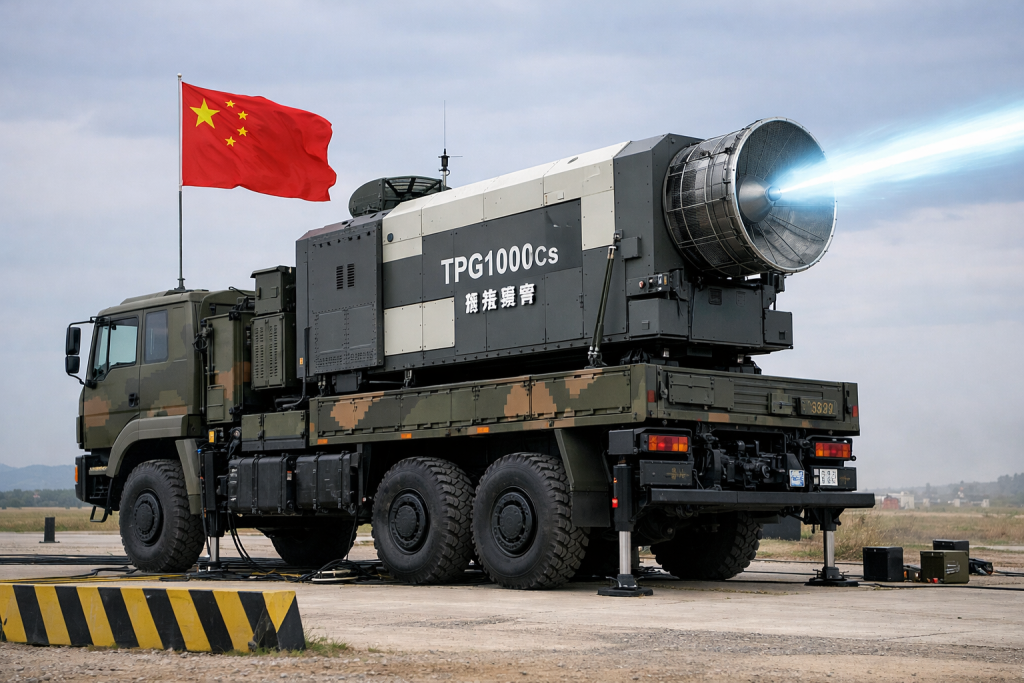
Why Starlink is in the crosshairs
The Starlink network of SpaceX has emerged as a critical force multiplier in modern warfare.
In the Ukrainian conflict, low earth orbit satellites are used for communications, command and control, reconnaissance, and fire guidance.
For China, as for other major powers, this model of a private but strategically decisive space network is considered a direct threat to national security.
Chinese military researchers have repeatedly stated that Starlink can be transformed into a military nervous system for the United States and its allies.
Within this framework, the development of Starlink killers is not a defensive fantasy, but a deliberate strategic choice.
Microwave weapons and lasers offer China a cheaper and more scalable response to massive satellite constellations, without the need to launch costly anti satellite missiles.
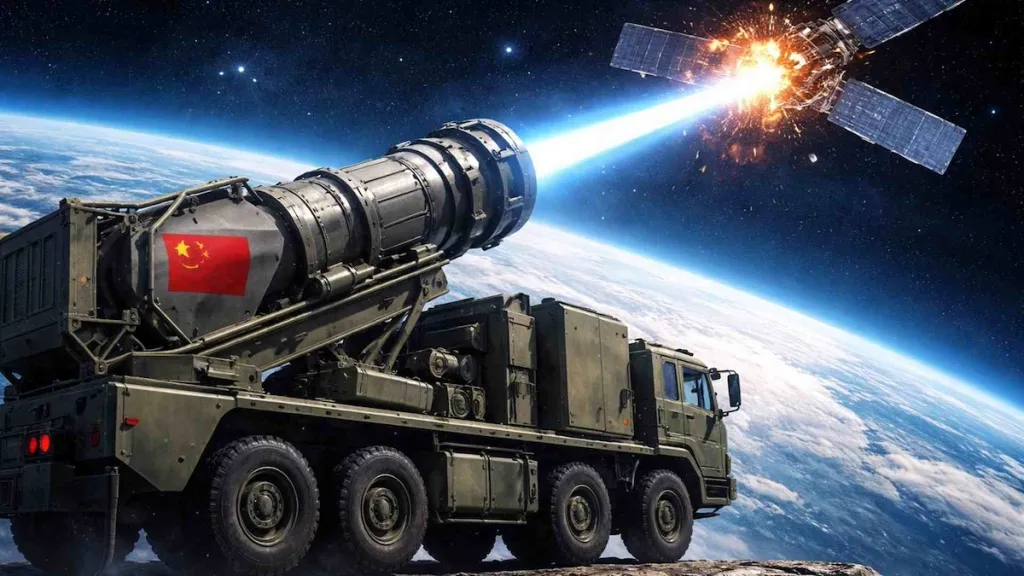
Starlink: From a commercial venture to a military nervous system
The Starlink network of SpaceX was initially presented as an ambitious plan to provide fast internet to remote areas.
In practice, however, it evolved into something far more significant, a global, decentralized communications network capable of operating even when state infrastructure collapses.
The war in Ukraine revealed its military dimension.
Starlink:
1) allowed Ukrainian forces to maintain communications under conditions of total destruction of networks,
2) supported drone operations and precision artillery,
3) strengthened command and control in real time.
For the first time, a private satellite constellation functioned as a decisive factor in a modern conflict.
This changed everything.

Power that changes the rules
According to Chinese experts, a ground based microwave weapon with power above 1 gigawatt could cause serious disruption or even permanent damage to low earth orbit satellites.
The TPG1000Cs, with a power output of 20 gigawatts, exceeds this threshold by twenty times.
The fact that it can operate continuously for up to one minute makes it particularly dangerous, as it allows the accumulation of thermal and electromagnetic stress on sensitive satellite electronics.
By comparison, older systems such as the Russian Sinus-7 could operate for approximately one second, with a limited number of pulses, while weighing up to 10 tons.
The Chinese advance is not merely evolutionary.
It is disruptive.
Low earth orbit as the Achilles heel
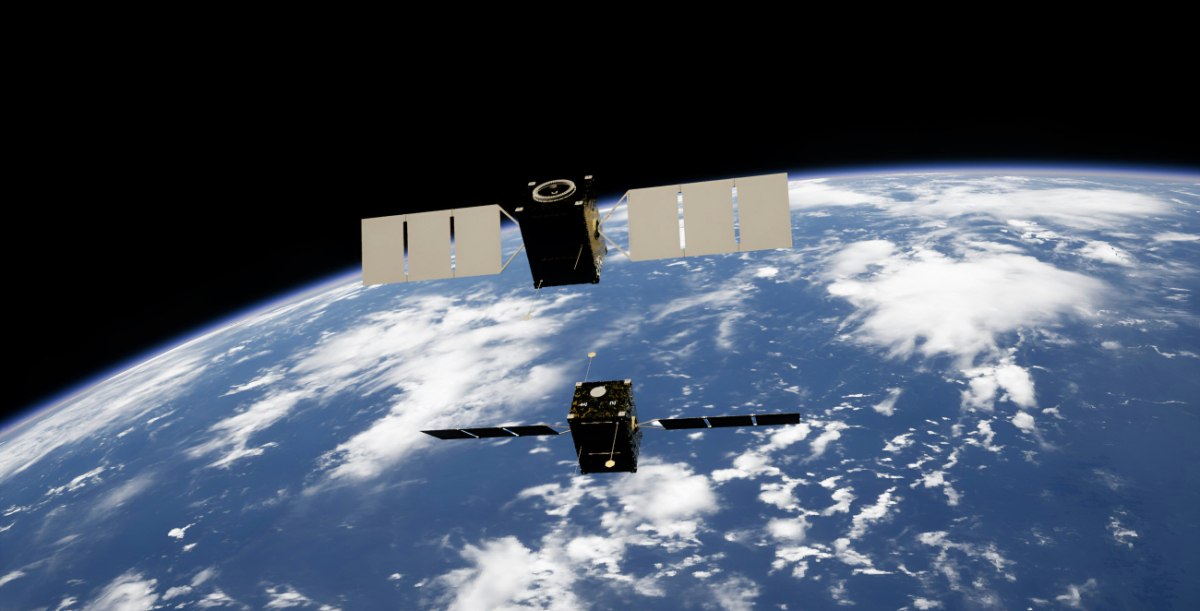
SpaceX has lowered the orbital altitude of Starlink satellites to reduce collision risk and improve performance.
However, this choice carries a serious strategic cost.
It makes the satellites far more vulnerable to directed energy attacks from the ground.
The lower a satellite operates, the less power is required to affect its systems.
If, in the future, China succeeds in placing the TPG1000Cs or variants of it into orbit, this would represent an entirely new type of space warfare, silent, invisible, without debris and without direct proof of attack.
Invisible microwave strikes could neutralize satellites without explosions, leaving behind technical accidents that are difficult to directly attribute to hostile action.
Beyond Starlink, the war of information and dependence
The real threat is not only the destruction of individual satellites, but the ability to destabilize entire networks.
Modern military operations, markets, communications, and even civilian infrastructure increasingly depend on space based systems.
A weapon like the TPG1000Cs does not merely target metal and circuits, but the very architecture of global power.

China signals the path of the next war
The development of the TPG1000Cs shows that China is not preparing for the wars of yesterday, but for those of tomorrow.
A war where the first act will not be the seizure of territory, but the blinding of the adversary.
Where superiority will not be decided by who has more missiles, but by who can switch off the eyes and ears of the other side.
In this new environment, Starlink is not merely a technological achievement.
It is a strategic target.
And the TPG1000Cs shows that the invisible war of space has already begun.
www.bankingnews.gr














Σχόλια αναγνωστών