

The deployment of the Chinese HQ-22 air defense systems by Serbia is not merely a technical upgrade of its Armed Forces.
It is a deeply political, geostrategic, and historically charged decision that redefines Belgrade’s position within the European and Balkan security architecture.
At a time when Europe is rearming, NATO is redefining its eastern flank, and China is claiming an expanding role on the global military map, Serbia is charting a path that does not fully align with any single bloc.
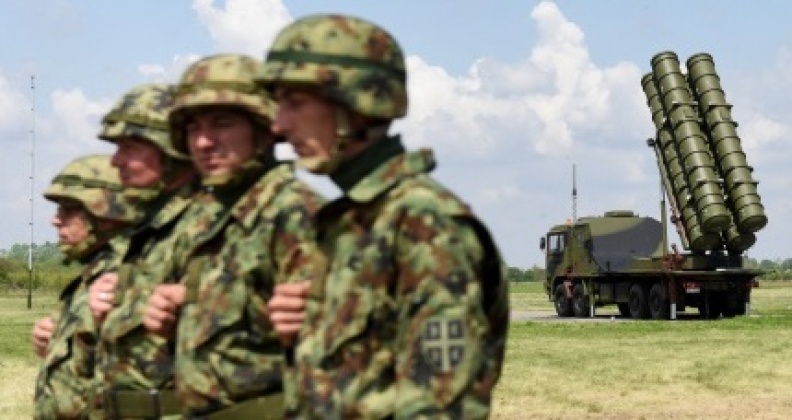
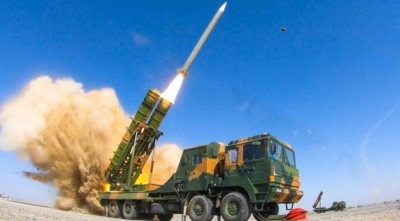
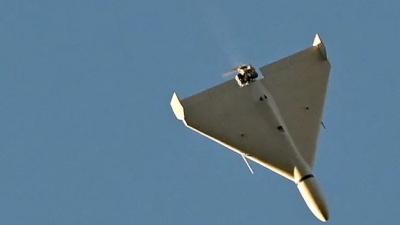
The 250th Air Defense Brigade of the Serbian Army recently deployed the HQ-22 medium range systems for intensive operational training, with emphasis on countering attacks from unmanned aerial vehicles and precision guided missiles.
This is not a theoretical exercise.
It is preparation for a modern battlefield environment, where drones and loitering munitions have fundamentally altered the nature of warfare.
From Cold War remnants to modern air defense
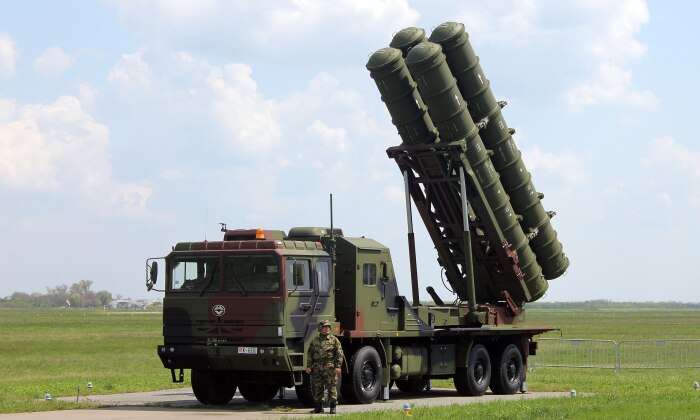
Since the delivery of the HQ-22 systems in April 2022, the system has formed the core of Serbia’s air defense.
It replaced systems dating back to the Vietnam War era, which, although historically reliable, had become technologically and operationally obsolete.
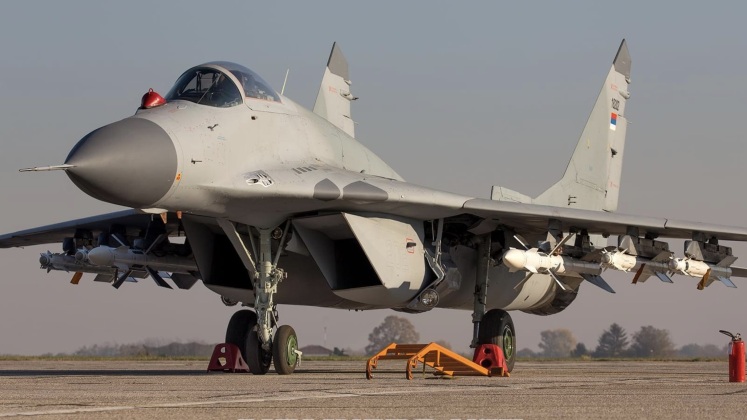
At the same time, the introduction of the HQ-22 helped Serbia offset the aging of its fighter fleet, which relies on platforms from the 1980s, primarily the MiG-29.
The procurement of the HQ-22 was historic, for the first time a European state acquired a Chinese medium or long range air defense system.
This fact alone reflects Serbia’s unique position, a country described as a strategic partner of NATO, while at the same time maintaining a largely Soviet philosophy defense structure and multidimensional international relations.
A milestone for the Serbian Armed Forces
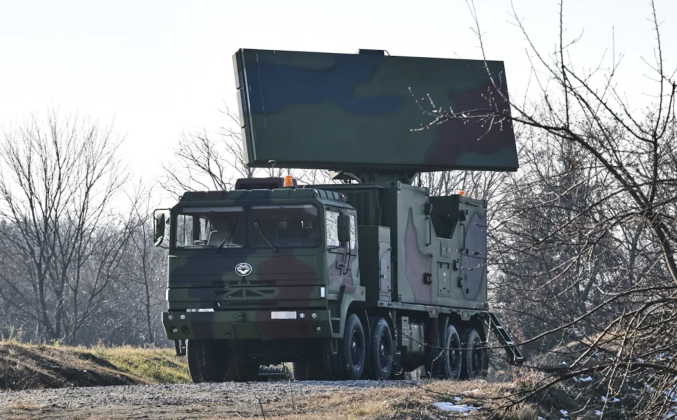
On 2 January 2025, it was officially announced that the HQ-22 systems had become fully operational within the Serbian Armed Forces.
Senior officers spoke of a “revolution” in the country’s air defense capabilities.
The Ministry of Defense emphasized that with the integration of the FK-3 system, the export designation of the HQ-22, surveillance and protection of Serbia’s airspace have been dramatically improved.
The HQ-22 unit commander Stefan Manic described the system as a “milestone” for the country, highlighting its advanced anti jamming capabilities, resilience against anti radiation missiles, and sophisticated fire control systems.
In a world where electronic warfare is a core element of modern conflicts, these capabilities are not merely an advantage, they are a matter of survival.
Why not S-400? Western political pressure
Before the Chinese choice, Serbia was considered one of the main potential customers for the Russian S-300 or S-400 systems.
In the late 2010s, Belgrade was reportedly seriously considering the acquisition of an S-400 regiment through a long term credit agreement with Russia.
President Aleksandar Vucic himself stated this intention in 2019, during the Slavic Shield exercises, following the deployment of a Russian S-400 unit to Serbia for the drills.
However, where the financial obstacle could be overcome, geopolitical pressure intervened.
The European Union, leveraging Serbia’s ambition to join the bloc, and the United States, threatening economic sanctions, effectively prevented the completion of the deal with Moscow.
The result was a “compromise” solution, the HQ-22 were deemed less provocative, particularly at a time when Europe–Russia relations were at a historic low.
Deterrence with a clear message
The HQ-22 has a range of 100 kilometers and can engage aircraft, cruise missiles, and ballistic targets at speeds of up to Mach 3 and at altitudes of up to 27 kilometers.
With the first delivery of the systems, Aleksandar Vucic spoke of “strong deterrence” and stated clearly, “We will no longer allow ourselves to be a punching bag for anyone.”
This statement is not rhetorical exaggeration.
It reflects Serbia’s historical trauma from the 1999 NATO bombing of Yugoslavia, an operation that included the use of depleted uranium in populated areas and strikes against civilian targets such as media outlets and markets.
The memory of these events explains why air defense remains a priority, even with a limited defense budget.
The future: Rafale, J-10C and strategic dilemmas
Despite the strengthening of ground based air defense, questions remain about the future of the Serbian air force.
The decision to procure downgraded French Rafale fighters, without the key air to air Meteor missile, has raised concerns.
In this context, the prospect of reassessment frequently resurfaces, with the Chinese J-10C emerging as a potential replacement for the MiG-29 and a natural complementary pillar to the HQ-22 network.
www.bankingnews.gr




Σχόλια αναγνωστών