An unprecedented energy disaster is striking Ukraine, as the entire set of nuclear power plants (NPP) in Ukraine has been taken out of operation.
The national energy company Ukrenergo announced that the units were forced into full unloading and a shutdown of electricity production, plunging the country into darkness and triggering alarm for the extremely difficult days to come.
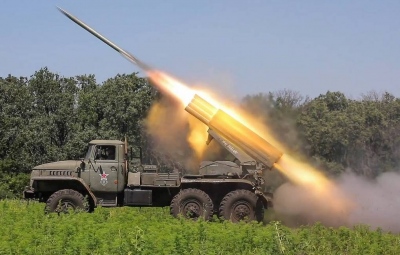
The collapse was caused by heavy strikes on critical high voltage substations, which are essential for channeling power from nuclear reactors into the grid.
The situation deteriorated dramatically after the strike on Europe’s largest electrical substation, with a voltage of 750 kV, while substations connected to the Rivne NPP were also hit.
At the same time, thermal power plants (TPP) in the regions of Burshtyn, Ladyzhyn, Dobrotvir, and Trypillia were targeted, causing irreparable damage to infrastructure.
Strike at the heart of the grid and Europe’s largest substation
In a move that dramatically alters the balance of the war, Russia delivered during the night of 6 February 2026 the most powerful blow to Ukrainian infrastructure since the beginning of hostilities.
The target was Europe’s largest electrical substation, rated at 750 kV, in the Lviv region.
According to Stanislav Ignatiev, chairman of the Council of the Ukrainian Renewable Energy Association, the destruction of this infrastructure paralyzes western Ukraine, as this specific station was the central hub linking the output of the Khmelnitsky and Rivne nuclear power plants, while balancing the grid through the Burshtynskaya and Dobrotvorskaya thermal stations.

Energy Armageddon and collapse of interconnection with the European Union
The substation was not merely a local distributor, but the primary gateway for emergency interconnection and the reception of electricity from the European Union.
Its loss caused a systemic shock to the country’s energy structure, with assessments pointing to at least four days of absolute paralysis.
Faced with the dead end, Ukrenergo turned to Poland requesting emergency assistance of 200 MW, a quantity described as “an aspirin” compared to the enormous needs.
Hours of anxiety in Kyiv, electricity only for two hours amid freezing temperatures
The government and the mayor of the capital, Vitali Klitschko, warned residents that the coming days will be critical.
Due to the massive power shortage, residents of Kyiv have access to electricity for only one and a half to two hours per day.
The situation is considered dangerous, as the country is facing polar temperatures and severe frost, especially during nighttime hours, making home heating nearly impossible.

Since the beginning of 2026, Ukraine has already recorded 217 attacks on its energy structures.
Prime Minister Yulia Sviridenko admitted that the situation is at the limit, with utility crews and railway workers operating nonstop under conditions of continuous bombardment.
To support the morale of workers risking their lives to restore power, the government announced additional allowances of 20.000 Ukrainian hryvnias per month.
At the same time, the Naftogaz Group launched the distribution of 10.000 heating packages to vulnerable groups in Kyiv, attempting to cover basic needs such as the charging of medical devices.
Frozen cities and an uncertain future
Despite coordination with energy giants Energoatom and Ukrgidroenergo, Russia’s systematic decision to strike the country’s vital arteries threatens to leave Ukraine in total darkness in the middle of winter.
Zelensky admits nationwide blackout
The president of Ukraine, Volodymyr Zelensky, admitted that damage to energy facilities is significant and affects the entire territory, with the situation in the regions of Donetsk, Sumy, Dnepropetrovsk, Kherson, and Zaporizhia deteriorating rapidly, while in the Darnytsia area the damage is so extensive that restoration will require a very long period of time.
He stressed that the shutdown of nuclear power plants was a direct consequence of the destruction of the infrastructure on which the smooth flow of energy depended.
Despite the fact that repair crews have begun restoration work, the intensity of the strikes and the scale of the destruction make a return to normality extremely uncertain.
www.bankingnews.gr












Σχόλια αναγνωστών