

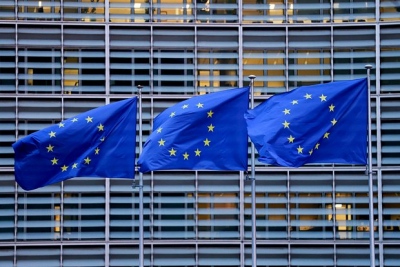
India and the European Union officially announced on Tuesday the completion of the long-awaited India–EU Free Trade Agreement (FTA), marking a turning point in bilateral economic relations. The announcement was made during the 16th India–EU Summit by Prime Minister Narendra Modi, European Commission President Ursula von der Leyen, and European Council President António Costa, as part of a high-level visit by European officials to India. The official exchange of documents took place between EU Trade Commissioner Maroš Šefčovič and Indian Minister of Commerce and Industry Piyush Goyal, signaling the end of negotiations that had restarted in 2022 after a long period of inactivity. The agreement is one of the most ambitious and comprehensive trade deals India has ever signed and reflects a shared will to create a modern, balanced, and rules-based economic partnership in a rapidly changing global trade environment.
India and the EU: A trade giant in numbers
The European Union ranks among India's largest trading partners. In the 2024–25 fiscal year, bilateral trade in goods amounted to $136.5 billion, while trade in services reached $83.1 billion. Together, India and the EU represent nearly a quarter of global GDP and approximately one-third of world trade, highlighting the magnitude and strategic importance of their partnership. Commerce Minister Piyush Goyal described the agreement as a milestone for India's international economic strategy, noting that it strengthens the country's approach to establishing reliable and mutually beneficial partnerships. He emphasized that the success of the deal is due to sustained political commitment and strategic clarity at the highest level.
Beyond tariffs: A new architecture of cooperation
Beyond tariff reductions, the India–EU FTA establishes a broad economic framework covering goods, services, investment facilitation, digital trade, small and medium-sized enterprises, customs cooperation, and regulatory transparency. India secured nearly full access to the European market for its exports in terms of value, a development expected to significantly bolster the "Make in India" initiative and stimulate export-oriented growth. Labor-intensive sectors, such as textiles, apparel, leather, footwear, precious metals and jewelry, engineering products, and marine products, are expected to benefit directly from the elimination of tariffs, enhancing their competitiveness in one of the world's largest consumer markets. The agreement is also estimated to create jobs and integrate Indian businesses more deeply into global value chains.
Automotive, agricultural products, and services
In the automotive sector, a phased and quota-based liberalization framework was agreed upon, allowing European manufacturers access to the premium segments of the Indian market, while creating future opportunities for vehicle production and exports from India. Agriculture and processed foods are also expected to benefit, with improved access for products such as tea, coffee, spices, fruits, and processed foods. At the same time, India protected sensitive sectors, such as dairy and cereals, maintaining a balance between export growth and domestic priorities. The agreement places particular emphasis on services, one of India's key pillars of strength, offering predictable market access in sectors such as IT services, professional services, education, finance, tourism, and construction. Mobility provisions are expected to facilitate the movement of skilled professionals, business visitors, and intra-corporate transferees between the two regions.
Digital economy, green transition, and geopolitical weight
Of particular importance is the fact that the agreement addresses modern challenges through cooperation in digital trade, clean technologies, artificial intelligence, and semiconductors. It also includes mechanisms for managing non-tariff barriers, simplifying customs procedures, and addressing sustainability issues, including cooperation within the framework of the EU's Carbon Border Adjustment Mechanism (CBAM). With this agreement, the European Union becomes India's 22nd Free Trade Agreement partner. Combined with recent trade deals with the United Kingdom and EFTA countries, India effectively gains access to the expanded European market for its exporters and investors. In alignment with India's long-term vision "Viksit Bharat 2047," the agreement is expected to deepen strategic trust, boost innovation, and support inclusive growth, positioning India as a reliable and progressive partner in the new global economic order.
www.bankingnews.gr









Σχόλια αναγνωστών