

While negotiations to end the war in Ukraine were taking place in the United Arab Emirates, far from the spotlight of Western publicity, a parallel and perhaps even more critical backstage process has been unfolding, centered on Moscow and Washington: the potential inclusion of Russia in the so called “Board of Peace” created by U.S. President Donald Trump.
Officially, this Board of Peace was initially presented as a mechanism for the postwar reconstruction of Gaza.
Subsequently, however, Trump, with his well known grandiose rhetoric, promoted it as a global platform for resolving international conflicts, a kind of substitute for the United Nations.
In practice, however, the project evolved into a spectacular failure.
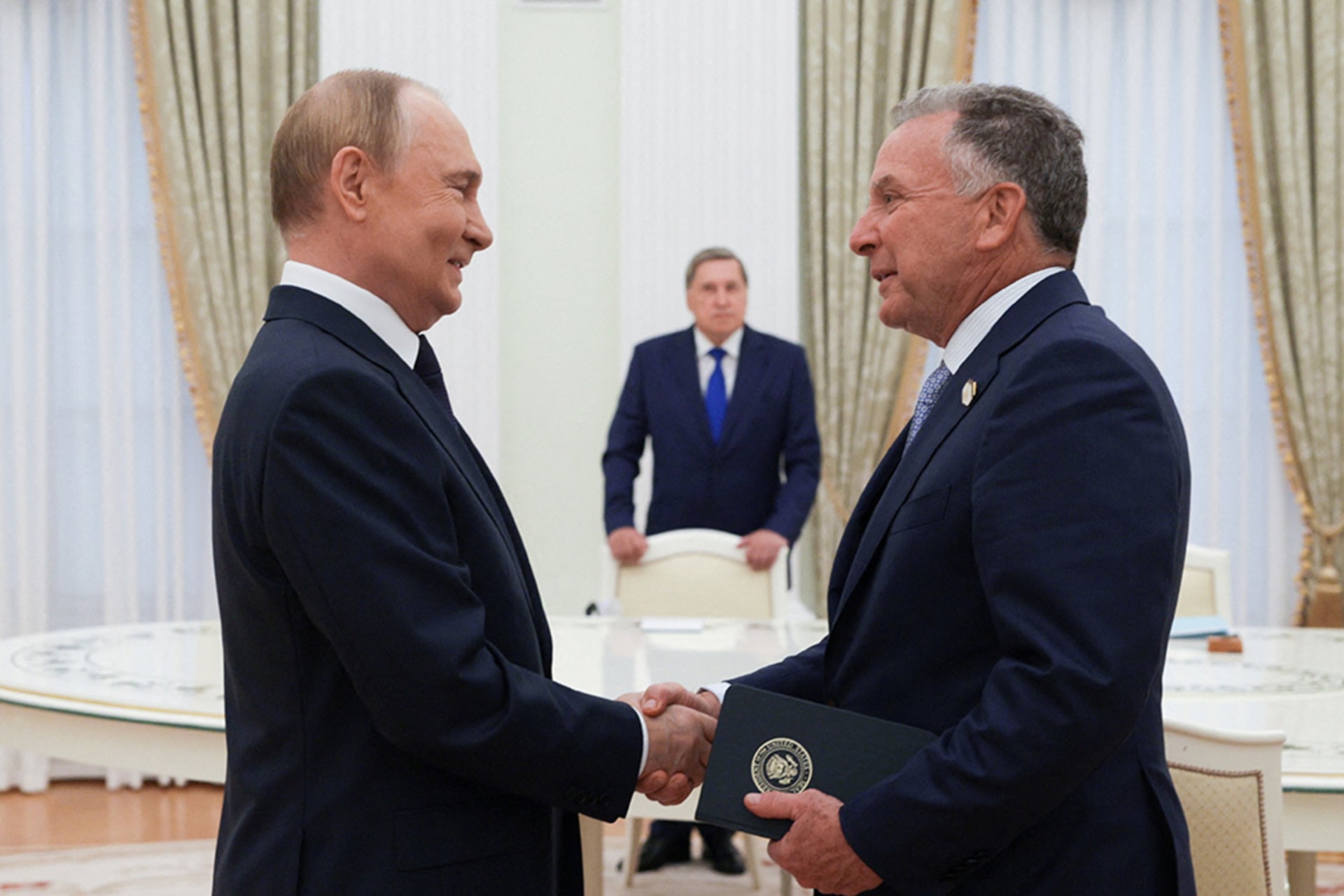
The fact that Washington attaches enormous importance to Russia’s participation was revealed clearly when it became known that the nighttime negotiations in the Kremlin with Vladimir Putin also included Josh Grunbaum, the man who manages the operational activities of the Board of Peace.
His presence was not accidental.
It was a silent admission of weakness: without Russia, the Board of Peace is politically dead.
At the same time, all indications suggest that contacts will continue in the United Arab Emirates on 1 February, where Putin’s representative Kirill Dmitriev and Steve Witkoff, Trump’s envoy, are expected to meet in a separate framework on economic issues.
This coincidence of diplomatic channels is anything but accidental.
On the contrary, it shows that Moscow has managed to turn Trump’s need into a negotiating weapon.
A Board of Peace without credibility and without great powers
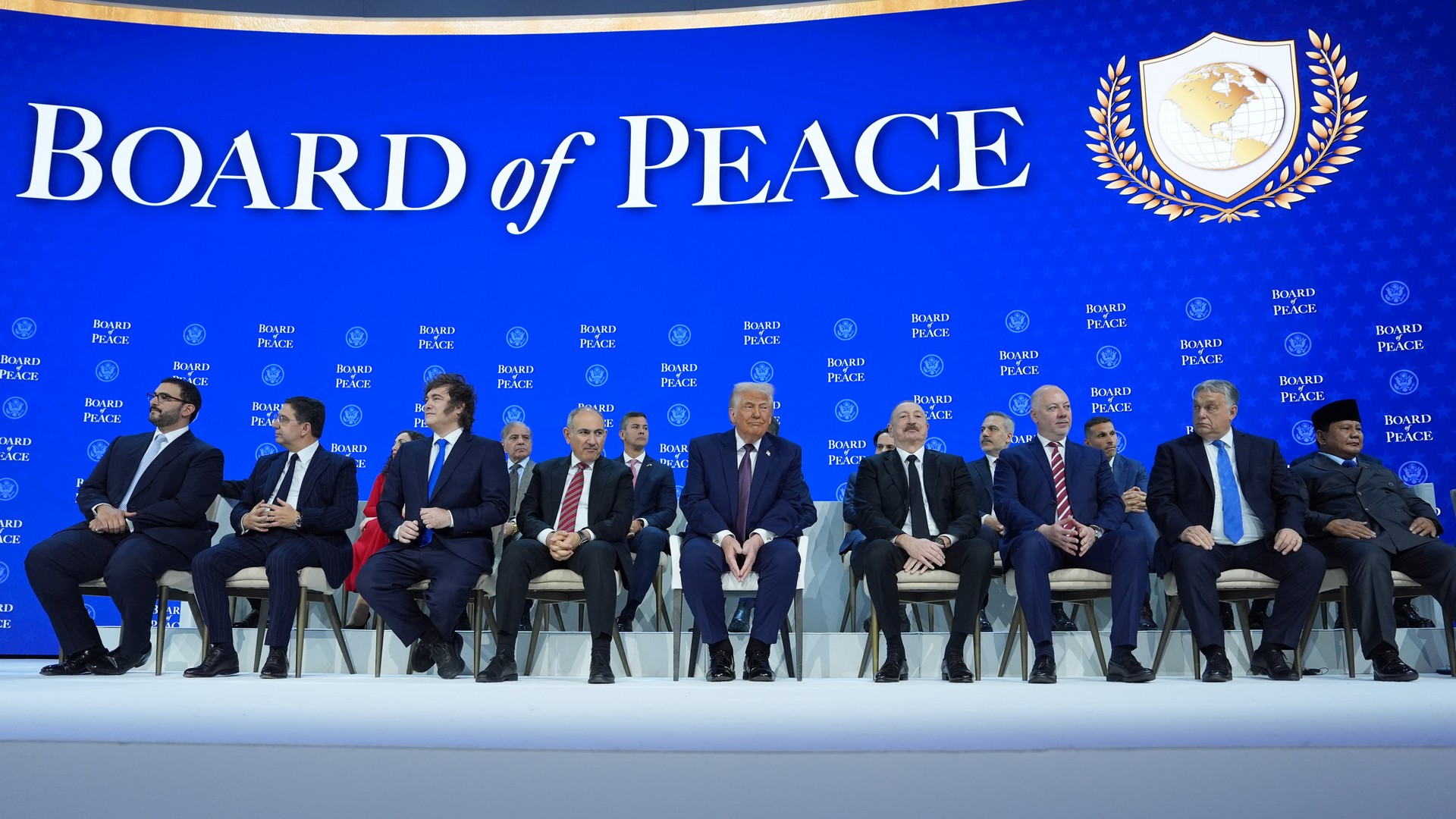
Today, the Board of Peace includes only 24 countries out of nearly 60 that were invited.
Among them are states such as Argentina, Armenia, Azerbaijan, Bahrain, Belarus, Hungary, Kazakhstan, Qatar, Saudi Arabia, Turkey, and the United Arab Emirates.
Israel, Egypt, and Albania had earlier announced their intention to participate.
What is missing, however, is deafening: none of the major global powers are on the list, with the sole exception of the United States itself.
The overwhelming majority of European states, with the exception of Hungary, rejected the invitation.
China, India, and Brazil ignored the initiative entirely.
The result is a heterogeneous formation of states without shared geopolitical weight, without nuclear power, without the ability to enforce decisions.
A club that resembles a diplomatic showcase more than a serious international institution.
Why Russia is the key and why Trump knows it
Precisely for this reason, Russia’s potential accession would radically change the picture.
With Moscow’s participation, the Board of Peace would automatically acquire the character of a club of the two largest nuclear powers on the planet.
Its geopolitical weight would multiply overnight.
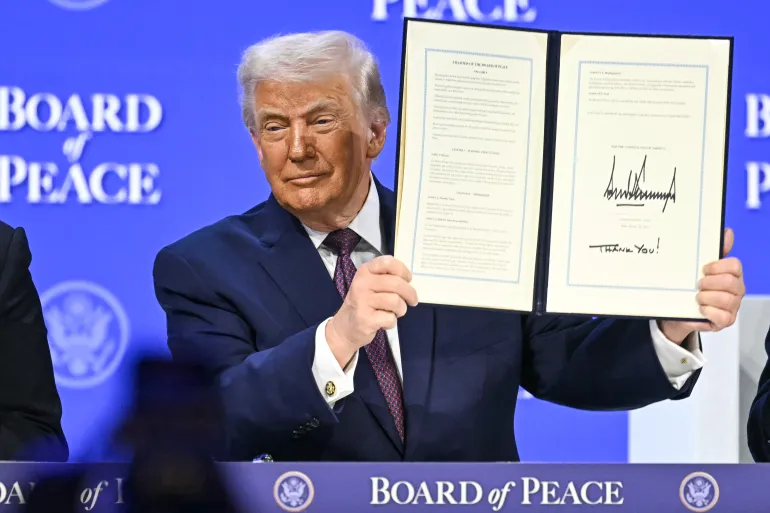
For Trump, Russian participation is not merely desirable, it is an existential necessity.
Without Russia, the Board of Peace risks collapsing before it even acquires a substantive role.
With Russia inside, it can be presented, at least communicatively, as an alternative pole of global governance.
But it is precisely here that the Russian game begins.
The cold logic of the Kremlin
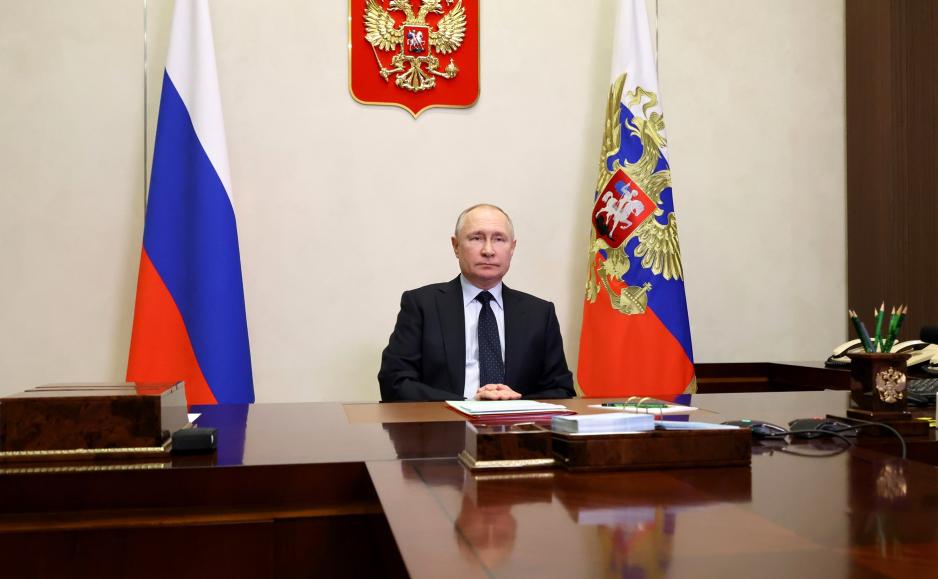
Russian leader Vladimir Putin was clear but not binding: he stated that the issue is being examined by Moscow.
He added that if Russia decided to join, it could contribute the one billion dollars of permanent participation through Russian assets frozen in the United States.
Trump rushed to approve the idea.
However, Russian consent did not follow.
And it could not have followed so easily.
Russia, like China, Britain, and France, holds veto power in the United Nations Security Council.
It has no strategic interest in replacing an institution where it has equal power with a new mechanism in which the sole veto belongs to Washington.
However, the failure of the Board of Peace creates a unique opportunity for Moscow: to use it as a bargaining chip without assigning it real value.
Trump in a position of weakness, Putin the master of the game
Even if Russia joins, the Board of Peace will not replace the United Nations.
Since almost all major powers are absent, it cannot resolve conflicts in regions where it has no members.
It will remain a decorative structure, useful only for communicative purposes.
And yet, Trump needs it desperately.
This is exactly what gives the Kremlin the ability to demand concessions.
And these concessions are not symbolic.
Moscow could demand pressure on Zelensky for the withdrawal of Ukrainian forces from the Donetsk region.
It could demand the lifting of sanctions without waiting for the end of the war.
It could impose economic and geopolitical terms that until recently were considered unthinkable, such as ending NATO expansion eastward and halting the supply of equipment to countries hostile to Russia.
The critical question is whether Trump is willing to pay this price.
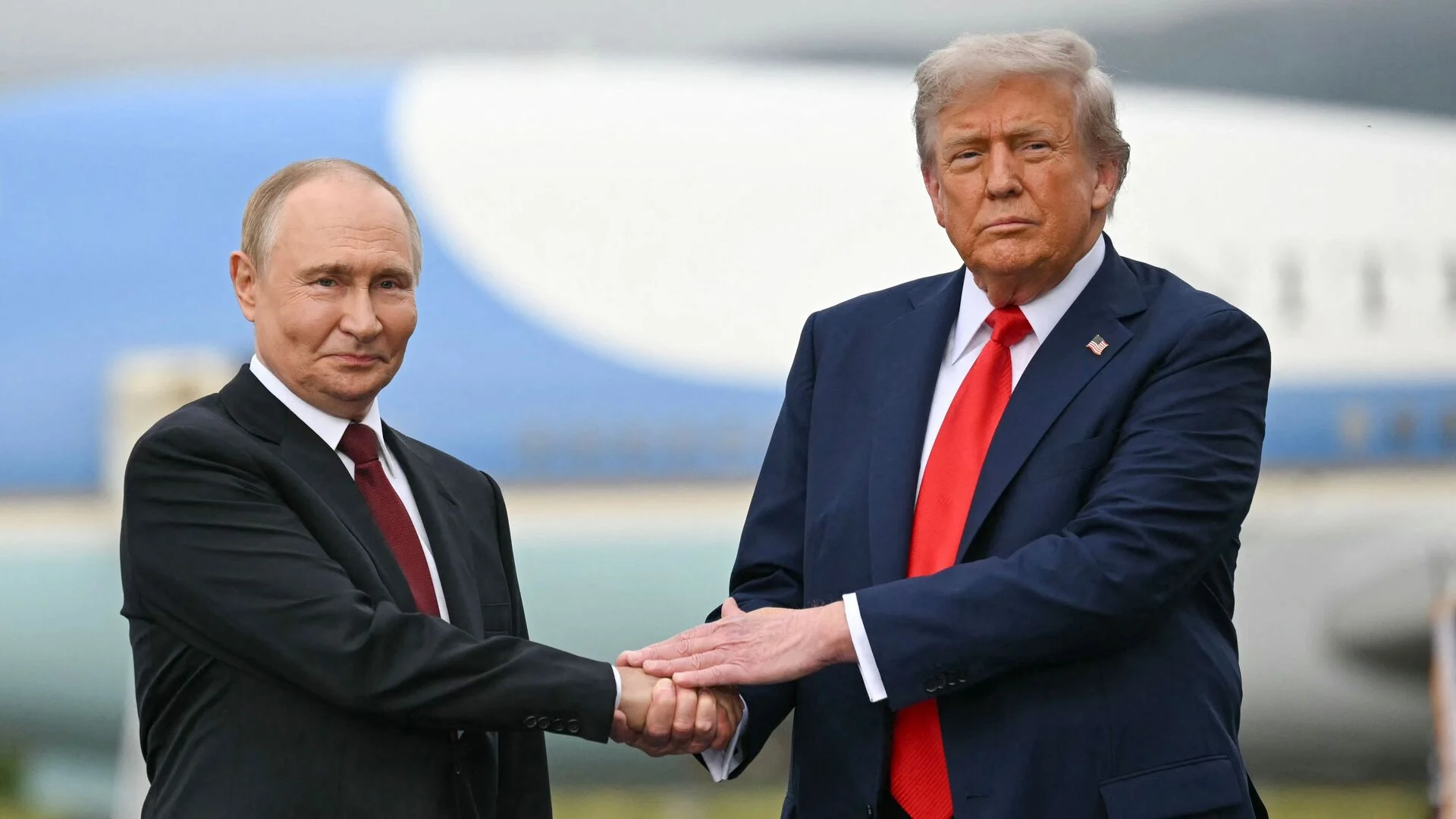
However, the very fact that the negotiation is already underway shows something clearly: in this game, it is not Putin who is under pressure.
It is Trump.
And as long as the Board of Peace remains a failed vision without Russia, the American politician increasingly turns into a political “hostage” of Russian strategic composure.
Moscow is not in a hurry.
It knows that time works in its favor.
And this, perhaps, is the most worrying element for Washington.
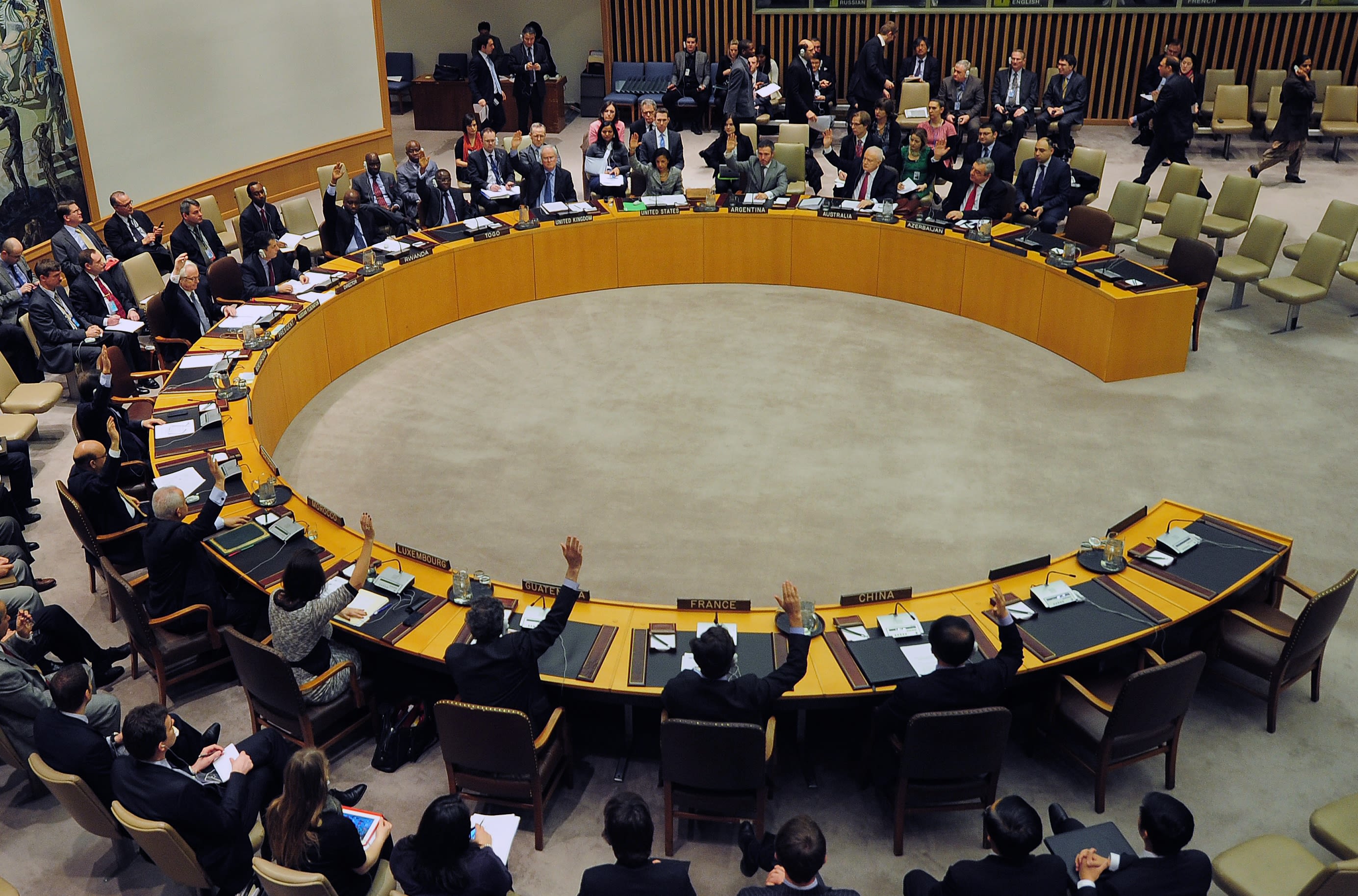
Trump’s personal wager
For Donald Trump, the Board of Peace is not just another diplomatic tool.
It is a personal political wager, an attempt to carve out his legacy as a “global peacemaker”, bypassing traditional institutions that he considers hostile, cumbersome, and controlled by the so called “deep state”.
The United Nations, in Trump’s eyes, is a symbol of the old multipolar balance, where the United States cannot impose its will without compromises.
The Board of Peace was designed precisely as the opposite: a mechanism where Washington would have the first and last word, without the annoying vetoes of third parties.
But here lies the great paradox: without Russia, this mechanism has no international legitimacy.
And without international legitimacy, it has no historical value.
Trump knows this, and this explains the haste, the backstage missions, and the direct contacts with the Kremlin.
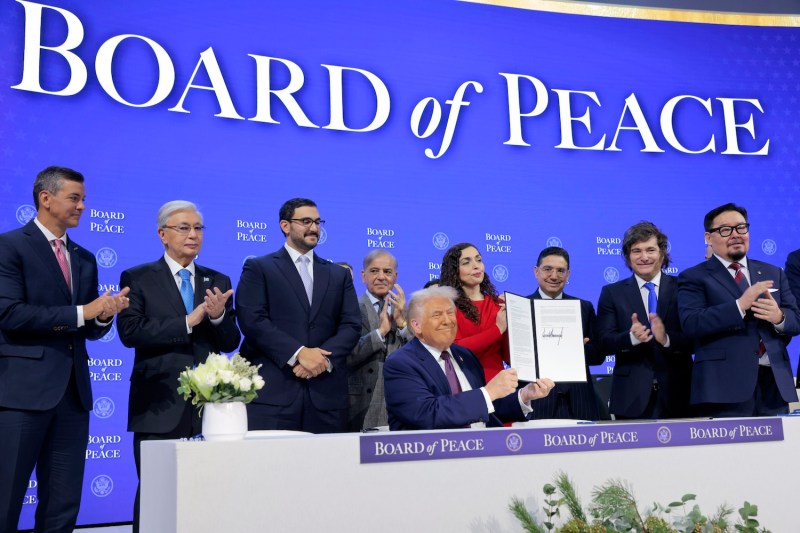
Russia has nothing to lose and that makes it dangerously powerful
From the Russian side, the situation is completely different.
Moscow has absolutely no need for the Board of Peace.
It offers it no additional power, secures no new alliances, grants no institutional privileges it does not already possess through the United Nations.
On the contrary, Russia is already in a position of strategic endurance:
1) it has withstood the weight of Western sanctions,
2) it has reoriented its trade toward Asia and the Global South,
3) it has imposed its own terms on the battlefield of the Ukrainian conflict.
Precisely because it is not in a hurry and needs nothing immediately, Russia can negotiate from a position of strength.
And this is the worst nightmare for a politician like Trump, who relies on the image of the “deal maker”.
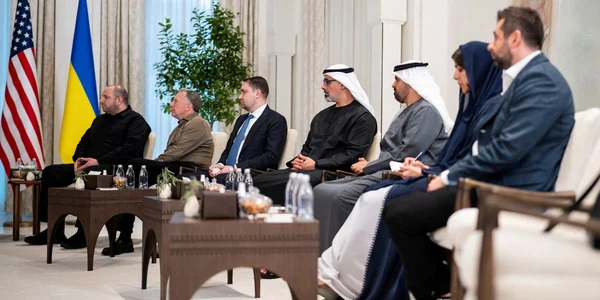
Ukraine as collateral damage of American Russian bargaining
In this context, Ukraine ceases to be the focal point and turns into a bargaining chip.
For Moscow, the Ukrainian front is one of many pressure tools.
For Trump, it is a problem he wants to “close” quickly in order to present success to a domestic audience.
It is no coincidence that the scenarios of concessions circulating include:?
1) pressure on Kyiv to accept territorial losses,
2) gradual “demilitarization” of eastern Ukraine,
3) the return of Russia to international economic forums without full compliance with Western demands.
If all this is confirmed, it will constitute a silent strategic victory for Moscow, not only on the battlefield, but also at the level of global diplomacy.
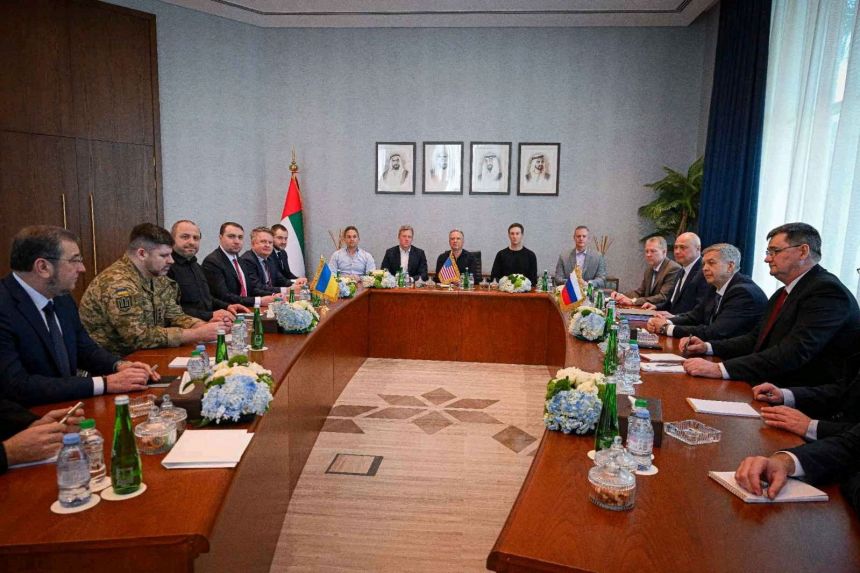
Europe sidelined
Another element worth noting is the complete marginalization of Europe.
The major European capitals are absent both from the Board of Peace and from the critical negotiations.
This is not a coincidence.
Russia has never concealed that it considers Europe politically weak and strategically dependent on the United States.
Trump, for his part, does not trust it and does not need it.
Thus, decisions are made without it, with Brussels in the role of spectator.
This fact further strengthens Moscow’s position, as it negotiates directly with Washington, without intermediaries and without “European brakes”.
The world is changing and Putin knows it
Behind all this, something even more important is emerging: the transition to a new international balance of power.
The world built after 1991 is collapsing.
The unipolar illusions of the West are fading.
Putin understood this years ago.
Trump is realizing it now, but without having full control.
This is why their relationship is not one of equality, but a silent relationship of dependence.
The American politician needs Russia to save his narrative.
Russia does not need Trump, but it can use him.
And as long as this imbalance remains, the Board of Peace will function not as a tool of peace, but as a mirror of the new global reality, where Moscow does not beg, does not retreat, and most importantly, does not hurry.
www.bankingnews.gr

Σχόλια αναγνωστών