At a time when the international system appears increasingly fragmented, unstable, and prone to the logic of raw power, China seeks to present itself not merely as a rising power, but as a guardian of the international order.
The statements of Chinese Vice Foreign Minister Sun Weidong come to confirm that Beijing is no longer confined to defensive rhetoric toward the West, but is advancing a coherent, alternative proposal for global governance, which aspires to fill the vacuum that, according to the Chinese narrative, is left by the decline of postwar Western hegemony.
The Global Governance Initiative (Global Governance Initiative – GGI), proposed by China in September of the previous year, has already received the support of more than 150 countries.
This number is neither accidental nor negligible, it reflects the growing appeal of the Chinese proposal in the Global South, as well as the widespread dissatisfaction with an international system that is considered unequal, selective, and often hypocritical.
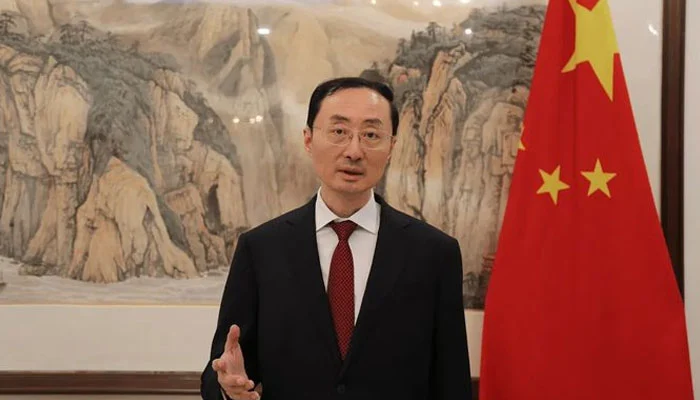
Sun Weidong
China as a responsible major power
Sun Weidong presents China as a responsible major country and a permanent member of the United Nations Security Council, which applies “true multilateralism.”
This phrase carries particular significance, Beijing implies that Western multilateralism has been transformed into a tool of imposition, where rules are applied selectively and institutions are instrumentalized for the benefit of specific states.
Against this, China projects the image of a state that seeks reform and strengthening of global governance, not its overthrow.
The message is clear, China does not want to dismantle the United Nations, but to give it new meaning.
The emphasis on the “deepening” of the Global Governance Initiative shows that Beijing does not treat it as a communication firework, but as a long term institutional endeavor, which aspires to acquire structure, depth, and practical application.
The attack on the West: Militarism and revisionism
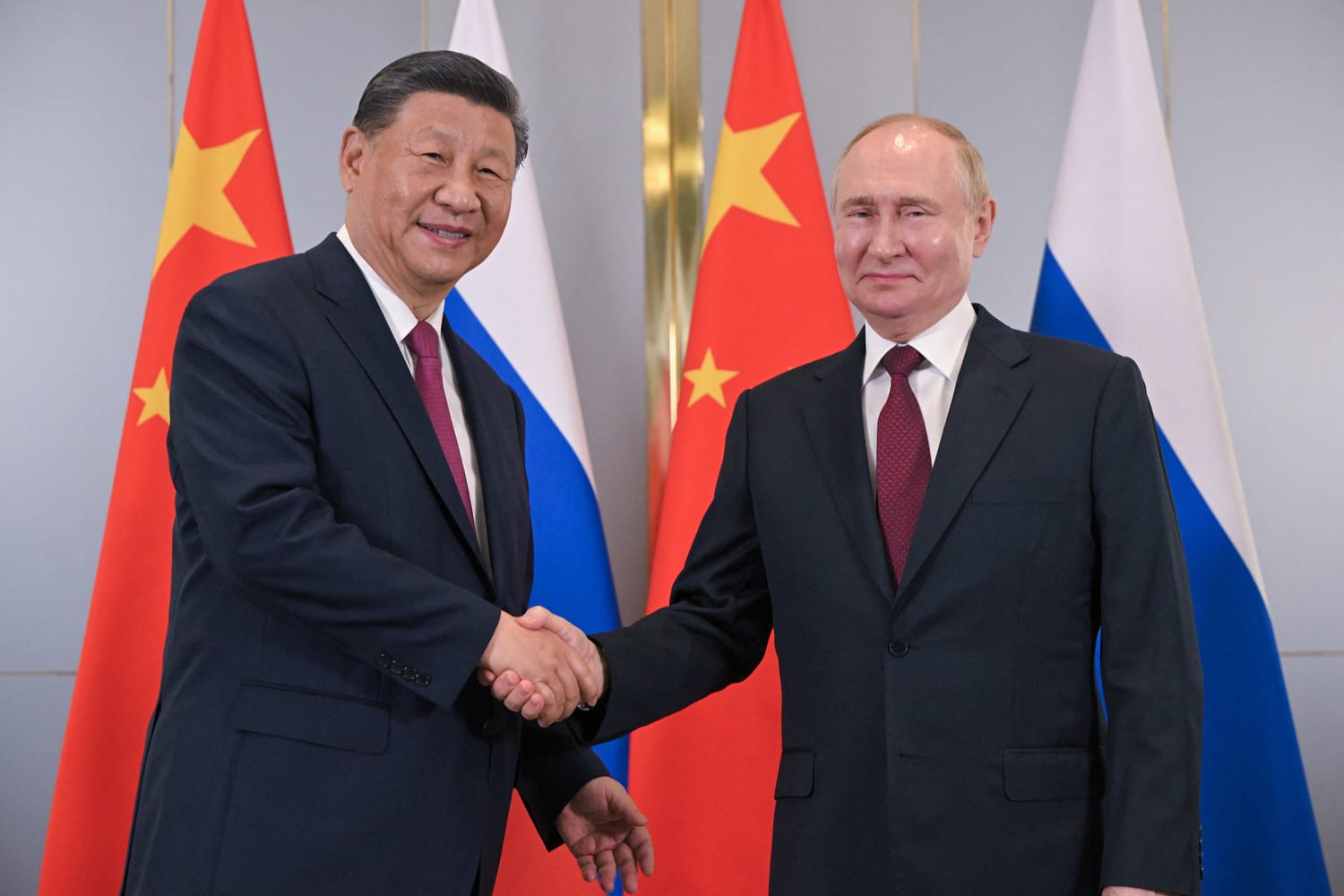
Without explicitly naming the United States or their allies, Sun Weidong launches a clear attack against “leaders of certain countries” who “openly challenge the international order after World War II” and attempt to “revive militarism.”
This reference operates on multiple levels:
1) It targets Western militarization (Ukraine, Indo Pacific, Arctic).
2) It accuses the West of undermining the very order it claims to defend.
3) It revives the fear of militarism as a historical trauma, particularly powerful in Asia.
Beijing warns that such policies “will meet firm resistance from the peace loving forces of justice,” placing itself, and those who support it, in the camp of global peace.
An Asian security model
Particularly significant is Sun Weidong’s reference to the promotion of an “Asian security model,” based on common security, common ground of interests, and dialogue and consultation.
This constitutes a direct contrast with Western alliance models, which, according to the Chinese perspective, are based on exclusion, encirclement, and the logic of “us versus them.” The message is clear,
Asia will not become a field of confrontation among major powers, nor will it tolerate wars or chaos “at its doorstep.”
The statement that China “will not allow any force to undermine regional peace and stability” functions simultaneously as reassurance to neighbors and as a warning to external players.
The jungle of international politics
At perhaps the most ideologically charged point of his statements, Sun Weidong denounces the prevalence of hegemonism and the “law of the jungle” in international relations.
This phrase is not accidental, it directly contrasts the realistic, raw logic of power with the concept of international law and institutional rules.
At the same time, it condemns militarism, protectionism, and the fragmentation of global production and trade chains.
For Beijing, these practices are not merely economically harmful, but undermine the stability of the entire international system.
Rules, not intimidation
Sun Weidong emphasizes that relations between states must be regulated through institutional rules, and not through intimidation or imposition by the powerful.
The phrase “not allowing individual countries to intimidate the weak” constitutes one of the clearest political positions of Chinese diplomacy.
Here, China addresses smaller and medium sized countries directly, projecting itself as a counterweight to hegemonic arbitrariness. The message is clear, hegemonism has no future, and major powers must set the example.
The United Nations at the center of the new order
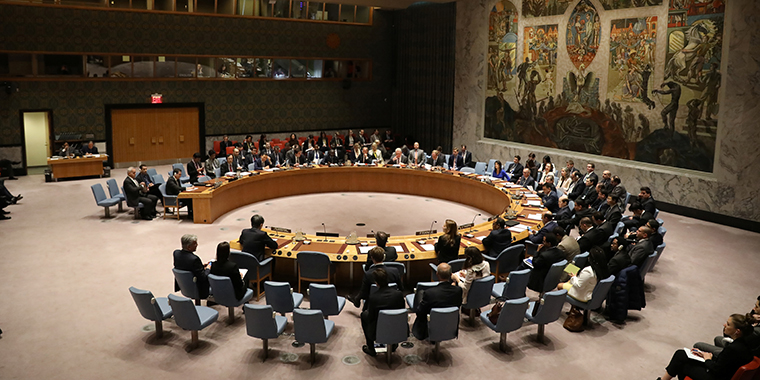
The more chaotic the world becomes, argues Sun Weidong, the more necessary it is to preserve the international system with the United Nations and international law at its core.
China projects itself as a defender of multilateralism, legality, and institutional stability, in contrast to the logic of power and military imposition.
Strengthening the authority of multilateral institutions and rejecting the “law of the strong” are presented as necessary conditions for preventing wars, coercion, and chaos.
A gentle, but deeply revisionist proposal
China’s Global Governance Initiative is neither neutral nor innocent.
It is a deeply revisionist proposal, which seeks to redefine who sets the rules, how the international order functions, and which value standards will prevail in the 21st century.
Without openly declaring confrontation with the West, Beijing sends a clear message, the era of unipolar hegemony is ending, and the world needs a new, more balanced form of global governance.
Whether this Chinese proposal truly constitutes an alternative solution or merely a new form of power with a different sign will be judged not by rhetoric, but by practice.
What is certain is that the battle for the international order has already begun – and China does not intend to remain a spectator.
www.bankingnews.gr










Σχόλια αναγνωστών