

The impact on the euro from the new trade threats by US President Donald Trump toward European governments regarding Greenland may be limited, as the United States depends heavily on Europe for its financing, Deutsche Bank estimates. According to the German bank, Europe constitutes the largest lender to the US globally. European countries hold American bonds and stocks with a total value of approximately 8 trillion dollars, an amount nearly double that held by the rest of the world.
"In an environment where the geoeconomic stability of the Western alliance is being disrupted in an existential way, it is not at all self-evident why Europeans would willingly continue to play this role," notes Deutsche Bank. As it adds, the developments of the last few days may further strengthen a capital reallocation at the expense of the dollar.
Tariffs as a catalyst
Deutsche Bank also estimates that the new tariffs Trump threatens to impose on European countries due to Greenland could act as a catalyst for greater political cohesion within Europe. This means that any negative impact on the euro against the dollar will likely not last, at least in the short term. According to Deutsche Bank, the critical issue of the coming days is whether the European Union will activate the so-called "anti-coercion instrument". According to a Bloomberg source close to French President Emmanuel Macron, the latter is expected to formally request its activation.
"With the net international investment position of the US at historically negative levels, the mutual dependence of European and American financial markets has never been greater," highlights the Deutsche Bank analyst. As he concludes, "the weaponization of capital, rather than trade flows, would be by far the most destabilizing factor for the markets."
Rage of German industrialists over "ridiculous" Trump demands – Call for tough trade retaliation from EU
German industry reacted with rage on Sunday, January 18, 2026, to US President Donald Trump’s plans to use tariffs to increase pressure on Denmark to sell Greenland, calling on Europe not to succumb to his demands. "If the EU retreats here, this will simply encourage the US president to formulate the next ridiculous demand and threaten further tariffs," said Bertram Kawlath, president of the German engineering federation VDMA.
"Particularly controversial political goals are linked to economic sanctions in an unacceptable way," stated Volker Treier, a foreign trade expert at the German Chamber of Industry and Commerce (DIHK). Both called for a unified reaction from the European Union. This could include the EU's "Anti-Coercion Instrument," which allows the bloc to retaliate against third countries that exert economic pressure on EU member states to change their policies.
Regarding the trade deal between the US and the EU, the employer organizations VDMA and DIHK expressed doubts about whether MEPs will vote for the agreement with Washington this month, which primarily concerns the abolition of many EU tariffs on American products imported into the bloc. "The European Parliament cannot under any circumstances decide next week on tariff reductions toward the US as long as Washington exerts pressure on the European Union with new punitive tariffs," said Kawlath.
However, the head of the economic research institute IfW stated that the economic impact of the tariffs for Greenland would be manageable for Germany. "Only about 10% of our foreign trade is with the US. It is important that the EU does not allow itself to be blackmailed, but stands united and resists him," IfW President Moritz Schularick told Reuters.
What will happen with the trade agreement
This latest escalation risks derailing the transatlantic agreement reached last summer, according to which Brussels accepted a unified tariff of 15% in most sectors in exchange for commitments that would reduce EU tariffs on American industrial and agricultural products. This package still requires approval from the European Parliament, with the first vote originally scheduled for late January. However, it is becoming increasingly likely to be frozen.
German MEP Bernd Lange, chairman of the European Parliament's Trade Committee, told Euractiv on Saturday (Jan 17) that the implementation of the deal with the US must stop. Lange said he would ask the European Commission next week to use the Anti-Coercion Instrument (ACI)—the so-called "trade bazooka" of the EU. "For me, it is absolutely clear that this is a case where the US is using a trade tool as a means of political pressure, and that is exactly what the ACI was created for," he added.
Swedish MEP Karin Karlsbro, a member of the trade committee working on tariff relations with the US, stated that the EU must respond to Trump's "tariff attacks," including those targeting Sweden. "We cannot rule out either retaliatory tariffs or the use of the bazooka if the pressure and coercive behavior continue," she told Euractiv.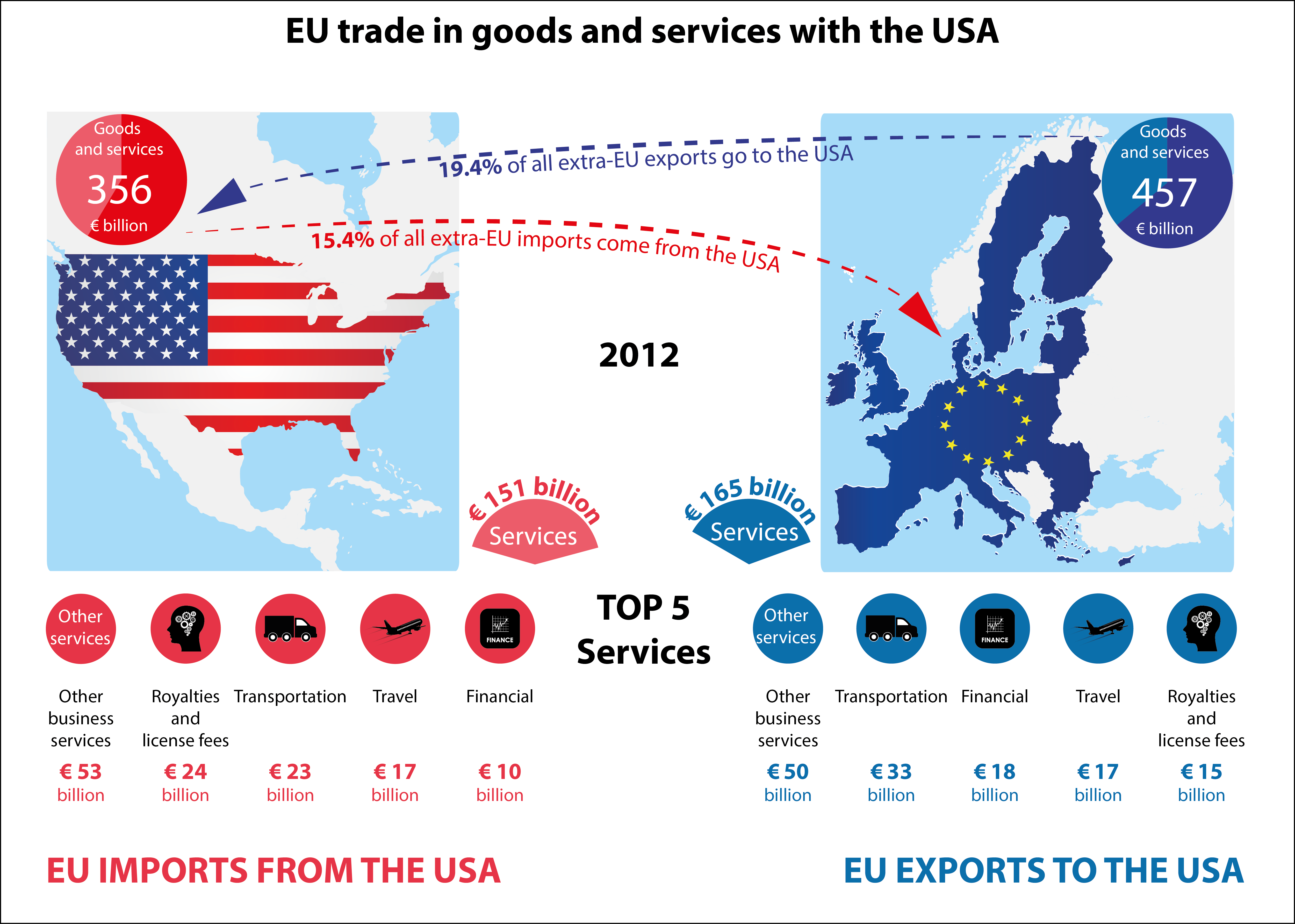
What is the trade bazooka - When is it activated
The Anti-Coercion Instrument (ACI), also known as the "trade bazooka," is a European Union regulation proposed in December 2021, adopted in November 2023, and entered into force on December 27, 2023. Its goal is to protect the EU and its member states from economic coercion by third countries and provides a framework for EU action, which includes examination, engagement, and the adoption of countermeasures. Combining security policy and trade policy, it constitutes a defense and deterrence tool designed to prevent coercion through the imposition of sanctions on countries that practice it.
According to the regulation, "economic coercion" refers to a situation in which a third country tries to pressure the EU or a member state to take a specific political decision by applying or threatening to apply measures that affect trade or investment. The process is activated when the European Commission examines a potential case of coercion, either on its own initiative or upon a request with documented evidence, and then submits a proposal to the Council of the European Union to decide if coercion exists.
If the Council, by a qualified majority decision, confirms that coercion is taking place, the Commission follows consultations with the third country to resolve the case through negotiations, mediation, or judicial settlement. If these efforts fail, the EU can adopt "retaliatory measures," such as tariffs, restrictions on trade in goods and services, restrictions on access to public programs and financial markets, or measures affecting intellectual property rights and foreign direct investment. These restrictions can target states, companies, or individuals, thereby leveraging the EU's legal power as a means of pressure.
www.bankingnews.gr



Σχόλια αναγνωστών