

Europe, facing the direct challenge of Donald Trump with the imposition of tariffs over the Greenland issue, must prove that it is geopolitically alive, otherwise it will confirm the position clearly articulated in Donald Trump’s strategic doctrine that it is “decadent and weak”.
The avalanche of developments following the announcement by President Donald Trump has resulted, at present, in the suspension of the major trade agreement between the United States and the European Union.
The Chair of the European Parliament’s Committee on International Trade, Bernd Lange, told Euractiv on 17 January 2025 that he will ask the European Commission to activate the so called “trade bazooka” next week.
A trade truce between the EU and the United States, designed to reduce transatlantic tensions, is at risk of collapsing after President Donald Trump’s announcement on Saturday 17 January 2025 of new tariffs (+10%) on eight European countries due to the deployment of their troops in Greenland.
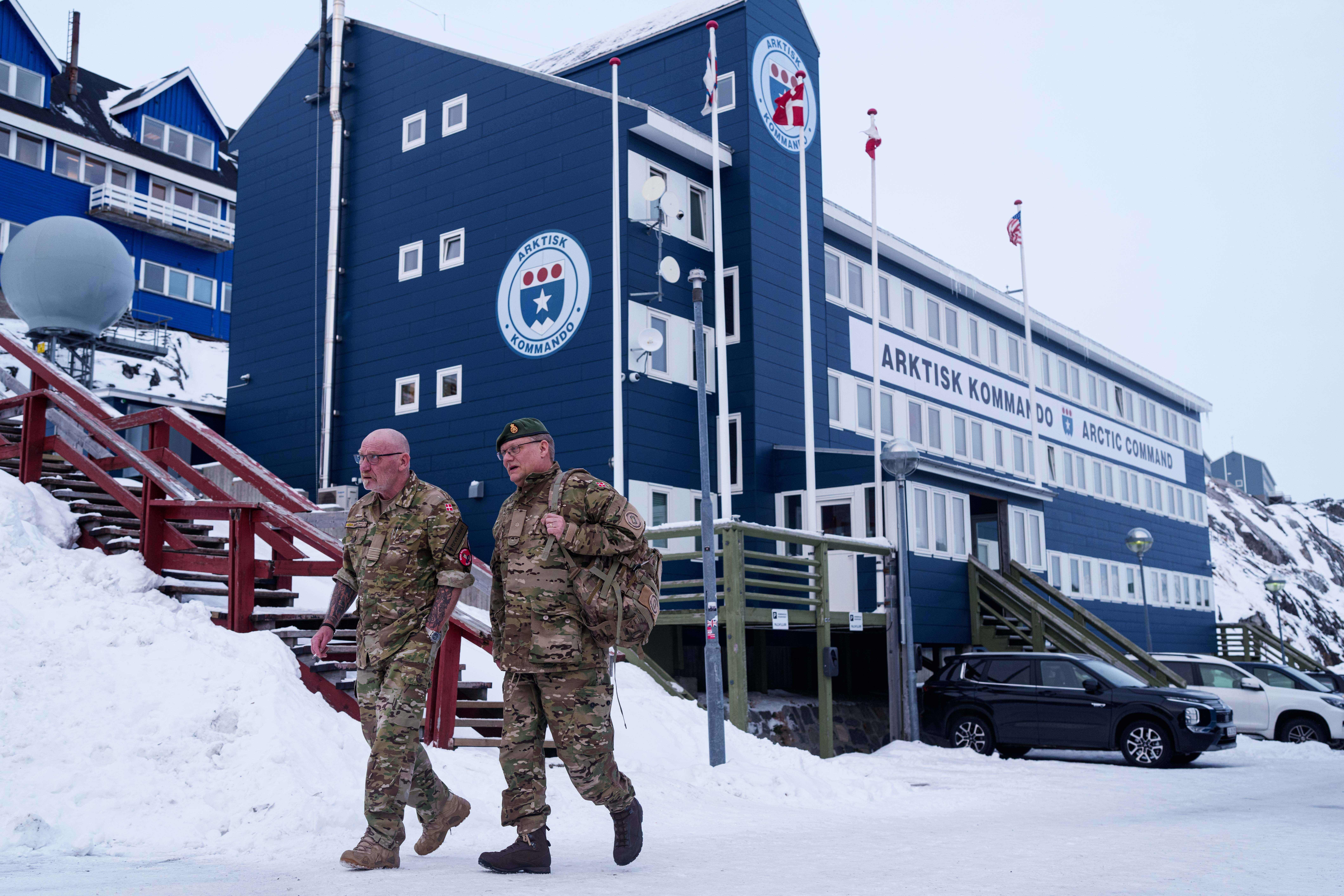
Trump has repeatedly stated that he wants to acquire Greenland and has not ruled out the use of force.
Denmark and Greenland insist that the island is not for sale, and Copenhagen has strengthened its defenses together with its allies.
According to Donald Trump, Denmark, Norway, Sweden, France, Germany, the Netherlands, Finland, and the United Kingdom will face a 10% tariff on all products from 1 February, which will rise to 25% from 1 June.
An emergency meeting of EU ambassadors is scheduled for 18 January to begin a European response.
Two issues will be discussed: Greenland and Trump’s retaliatory tariffs.
Manfred Weber (EPP): Approval of the EU - US agreement “is not possible at this stage”
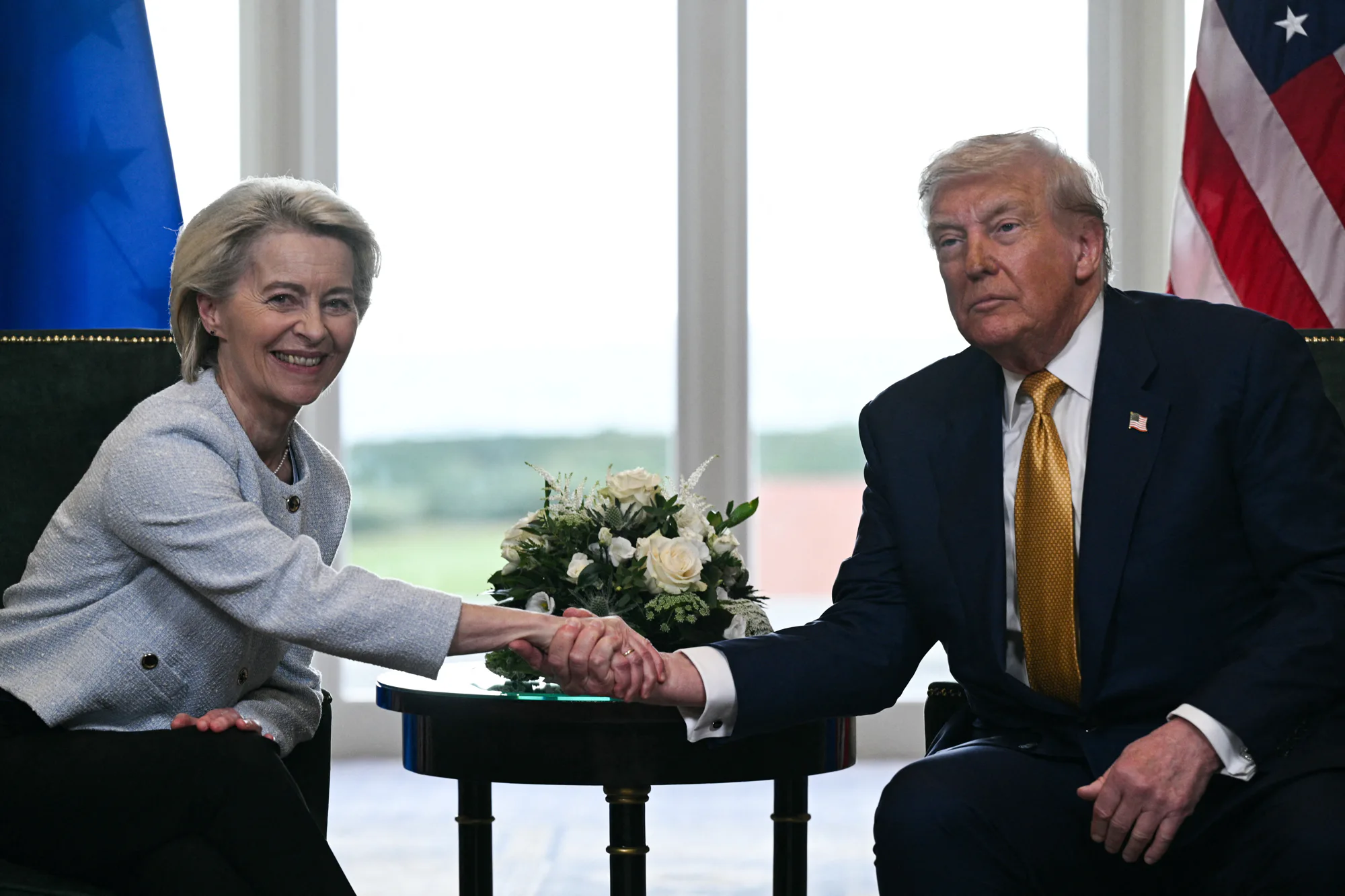
Manfred Weber, head of the largest political group in the European Parliament, stated that approval of the EU - US agreement “is not possible at this stage”, given Trump’s threats.
The center right European People’s Party group had so far supported advancing the agreement, despite Washington’s ambitions to take control of Greenland.
The trade agreement
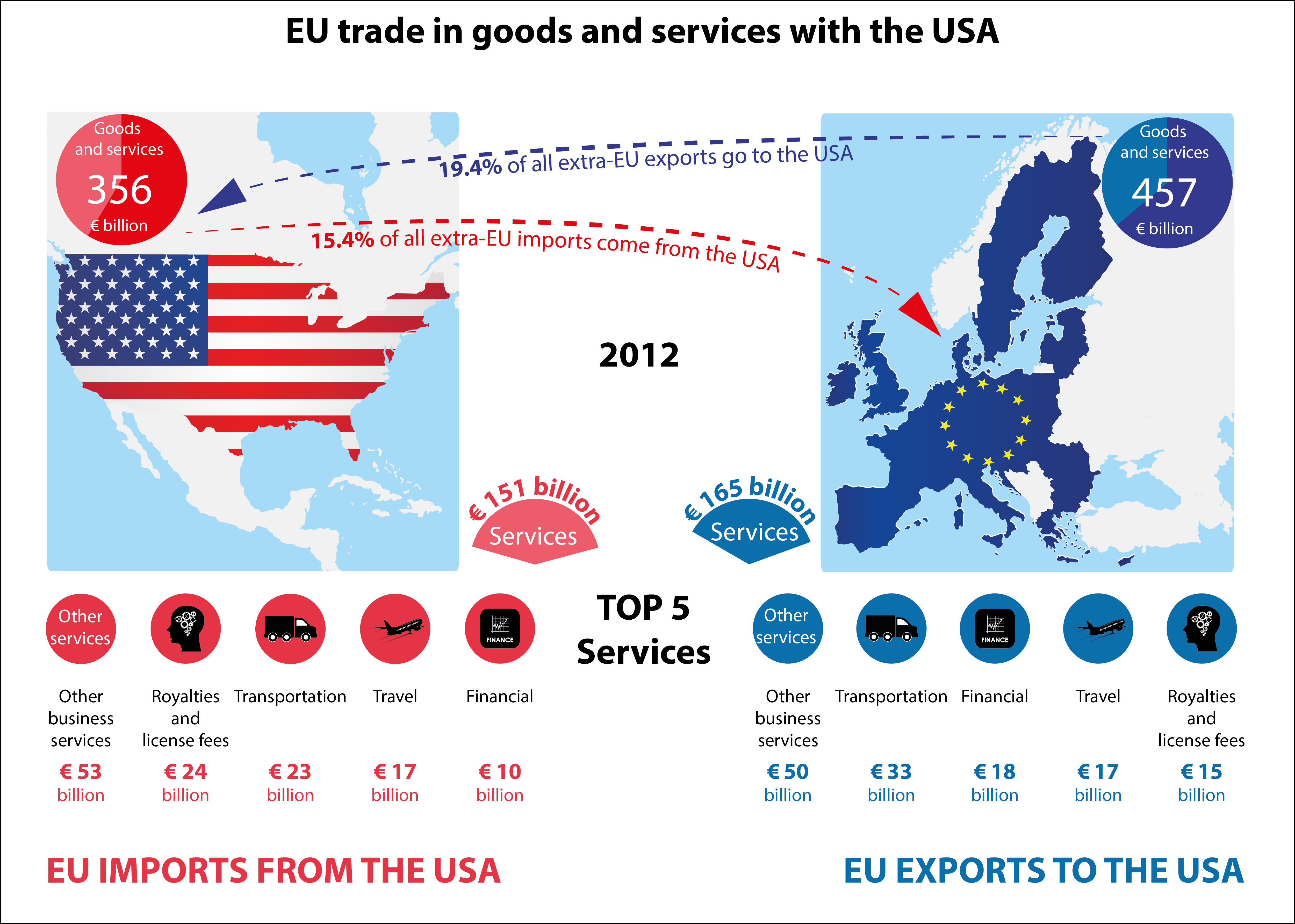
This latest escalation risks derailing the transatlantic agreement concluded last summer, under which Brussels accepted a uniform 15% tariff across most sectors in exchange for commitments that would reduce EU tariffs on American industrial and agricultural products.
This package still requires approval by the European Parliament, with the first vote initially scheduled for the end of January.
However, it is becoming increasingly likely to be frozen.
German MEP Bernd Lange, Chair of the European Parliament’s Committee on International Trade, told Euractiv on Saturday (17/1) that implementation of the agreement with the United States must be halted.
Lange said he will ask the European Commission next week to use the Anti-Coercion Instrument (ACI), the so called EU “trade bazooka”.
“For me it is absolutely clear that this is a case where the United States is using a trade instrument as a means of political pressure, and that is exactly what the ACI was created for”, he added.
Swedish MEP Karin Karlsbro, a member of the trade committee working on tariff relations with the United States, said that the EU must respond to Trump’s “tariff attacks”, including those targeting Sweden.
“We cannot rule out either retaliatory tariffs or the use of the bazooka if the pressure and coercive behavior continue”, she told Euractiv.
What the trade bazooka is - When it is activated
The Anti-Coercion Instrument (ACI), also known as the “trade bazooka”, is a regulation of the European Union proposed in December 2021, adopted in November 2023, and entered into force on 27 December 2023.
Its aim is to protect the EU and its member states from economic coercion by third countries and to provide a framework for EU action, including examination, engagement, and adoption of countermeasures.
By combining security policy and trade policy, it is a tool of defense and deterrence, designed to prevent coercion through the imposition of sanctions on countries that exercise it.
According to the regulation, “economic coercion” refers to a situation in which a third country seeks to pressure the EU or a member state into adopting a specific policy decision by applying or threatening to apply measures affecting trade or investment.
The process is activated when the European Commission examines a potential case of coercion, either on its own initiative or following a request supported by evidence, and then submits a proposal to the Council of the European Union to decide whether coercion is taking place.
If the Council, by a qualified majority decision, confirms that coercion is occurring, the Commission proceeds with consultations with the third country to resolve the matter through negotiations, mediation, or judicial settlement.
If these efforts fail, the EU may adopt “retaliatory measures”, such as tariffs, restrictions on trade in goods and services, limitations on access to public programs and financial markets, or measures affecting intellectual property rights and foreign direct investment.
These restrictions may target states, companies, or individuals, thus leveraging the EU’s legal authority as a means of pressure.
The slogans about abolishing NATO bases
A proposal has already been put forward from the pages of the British magazine Economist to threaten the United States with the abolition of its military bases in Europe in the event of the occupation of the island.
However, this belongs to the realm of fantasy.
The European Union could equally recall the naval forces of EU countries, for example the French aircraft carrier Charles de Gaulle, and send them sailing toward the coasts of Greenland together with ships of the British Royal Navy.
Most likely, everything will be limited to “rhetorical barrages against the opponent” from the pages of newspapers, in the hope that “Trump will come to his senses”.
Just as is happening now.
“The threat of tariffs represents a clear departure from traditional forms of diplomacy in favor of economic coercive policy.
American actions undermine the previous trade rules established under the World Trade Organization and allied treaties and could lead to a prolonged trade war between the United States and the European Union”, writes the Washington Examiner, a magazine with significant influence among conservatives.
Collapse of NATO?
The British Guardian shares this view: “The crisis around Greenland is spreading not only to the economy, but also to the foundations of defense cooperation.
European countries previously considered close allies of the United States reacted strongly to the threat of tariffs and, through diplomatic channels, accused Washington of undermining trust and security in Europe”.
Reuters quoted statements from several diplomats warning of a “possible collapse of NATO, or at least its significant weakening”, if the conflict around Greenland escalates into a direct military confrontation between the United States and members of the alliance.
“Trump’s efforts to use economic and political levers to change the status of a territory without the consent of its population constitute a direct threat to the principle of the inviolability of state sovereignty, which is the cornerstone of the entire international system of Yalta Potsdam”, notes the Washington Examiner.

What the “Greenland crisis” ultimately reveals - The West’s myopia
When things became rough, the West remembered both Yalta and Potsdam of 1945.
And where were the supporters of the “inviolability of sovereignty” when NATO aircraft were destroying Libya and Yugoslavia, when in 2008 the United States, together with the Europeans, dismantled Serbia, detaching Kosovo with bombs and tanks, when Israel occupied a significant part of southern Lebanon and southern Syria in 2024?
Where, finally, were the démarches of the Europeans very recently, when American special forces, reinforced by the American fleet and air force, “heroically” in Venezuela, arrested the president of a sovereign state?
Putin, incidentally, when NATO forces were detaching Kosovo from Serbia, had warned: this will come back to you like a boomerang. They did not believe it. And now what?
Is Greenland different?
In reality, the occupation of Greenland is nothing unusual for the United States.
It is just that now the issue touches the European Union.

Shut up and listen to the strong
The Permanent Representative of the United States to the United Nations, Mike Waltz, stated that American President Donald Trump’s efforts to annex Greenland do not violate international law.
“From the standpoint of international law, President Trump is trying to make a deal in the same way President Truman did in the 1940s, and as happened with the Virgin Islands, which we bought from Denmark for 25 million dollars in the 20th century. There is nothing illegal about this, and he is doing what he considers necessary”, Waltz said in an interview with Fox News.
And the US Ambassador to NATO, Matthew Whitaker, made it even clearer: “Ultimately, this is an issue between the United States, Denmark, and Greenland. Europe sometimes tends to overreact to every problem. This is one of those cases where you need to keep your cool”. In other words, Whitaker told the Europeans: “Shut up”.
In a cynical and provocative statement, White House deputy official Stephen Miller, speaking on the Fox News network (17/1), described Denmark as a “tiny country” with a weak economy and military, incapable of controlling the territory of Greenland.
The US official was scathing in his remarks, directly questioning the national sovereignty of the European country:
“They cannot protect Greenland.
They are not capable of controlling its territory”, Miller stated characteristically.
According to him, the United States needs the island to ensure its national security.
The White House deputy chief added that the major importance lies in the ability to control Arctic shipping routes, noting that US adversaries are making enormous efforts in this direction.
www.bankingnews.gr








Σχόλια αναγνωστών