

It is an indisputable fact, and a terrifying one, what the inhabitants of the Spanish village that was “bombed” with hydrogen bombs by the United States experienced.
What happened.
In January 1966, the United States, albeit unintentionally, dropped hydrogen bombs on a Spanish village.
This occurred due to the crash of a B-52 bomber that was returning from the Soviet borders.
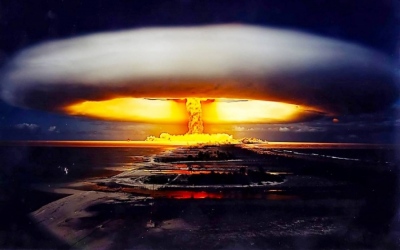
During the fall, two of the four bombs exploded, and a nuclear mushroom cloud did not rise above the coast of the Mediterranean Sea only because they were not armed.
Midair collision
In the early 1960s, when intercontinental ballistic missiles appeared in the Soviet Union, the United States military leadership began to fear a sudden Soviet attack that would disarm and neutralize its nuclear forces.
As one of the responses to this problem, the United States Air Force launched the operations Mirror and Chrome Dome.
Within the framework of the former, at least one airborne command center was constantly in the sky, which would assume control of nuclear bombers in the event of a sudden destruction of the main base at Offutt in Nebraska.
Within the framework of the latter, continuous patrols were organized by the bombers themselves with thermonuclear bombs inside them, so that they would always be ready for a surprise attack.
Patrols over Alaska, Greenland, Canada
Basically, the aircraft routes extended over the region of Greenland, Canada, and Alaska, but a portion was directed via the ocean and the Mediterranean Sea to threaten the USSR from the south.
It is unlikely that anyone in America expected that the first bombing during Chrome Dome would not be against the Soviet Union, but against innocent Spain.
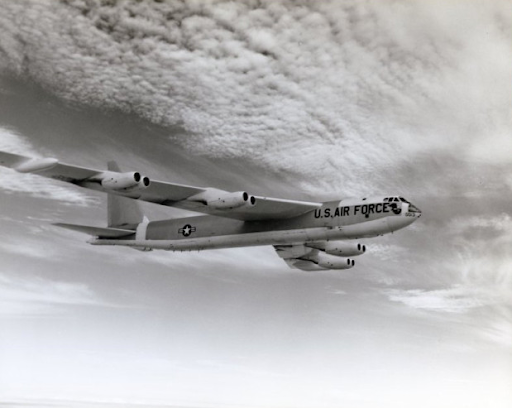
At dawn on 16 January 1966, an eight engine B-52G bomber with the call sign Tea 16 took off from Seymour Johnson Air Force Base in North Carolina carrying four B28FI bombs with a yield of 1,1 megatons.
According to the plan, the aircraft was supposed to reach the Soviet Turkish border in the Caucasus and return to base, for which fuel reserves would not suffice even for this enormous bomber.
Therefore, two aerial refuelings awaited it along the way, with the assistance of tankers based in Europe.
The first half of the flight was normal, the B-52 safely reached Turkey and turned back westward.
At approximately 10:30 on 17 January, flying toward the coast of Almeria in Spain, the aircraft approached the KC-135 tanker with the call sign Troubadour 14.
The bomber was commanded by 29 year old Captain Charles Wendorf, who had managed to fly it for more than 2.000 hours.
However, at that moment, the seat of the first pilot was occupied not by him, but by General Larry Messinger, an experienced pilot who had managed to see Germany through the bombing sight of a B-17 during World War II.
«We approached the tanker from behind, but we were going a bit faster than necessary, so we began to overtake it.
According to the existing refueling procedure, if the boom operator sees that we are approaching too closely and the situation is dangerous, he must shout: “Break away, break away, break away”.
There was no such command, so we saw nothing dangerous in the situation.
But suddenly, the nightmare began», Messinger stated after the accident.
As a result, Tea 16 touched its fuselage on the refueling boom, which punctured a tank and severed the bomber’s wing.
Two crew members were killed instantly, First Lieutenant George Glessner, EW systems operator, and Technical Sergeant Ronald Snyder, tail gunner.
They were seated behind the pilots and found themselves in the path of the detached wing, so they had no chance of survival.
Two pilots, Messinger and Wendorf, ejected safely.
Captain Ivens Buchanan, the radar operator, ejected through the explosion, suffered burns and during descent with the parachute was unable to detach from the seat, resulting in a back injury when he fell into the water.
The copilot, First Lieutenant Richard Rooney, appeared doomed to death because he was seated in the cockpit on a seat that lacked an ejection system.
However, he did not lose his composure as the aircraft spiraled uncontrollably.
Like in James Bond films, Rooney managed to exit through a hole in the fuselage and open his parachute just in time to avoid being killed upon hitting the water.
The tanker did not suffer visible external damage, however, according to the pilots of nearby aircraft, an explosion occurred inside Troubadour 14, after which it entered a steep spin and crashed with four people inside.
All pilots who ejected were rescued by local fishermen within one hour.
The incident was reported almost immediately to Strategic Air Command, which transmitted the code Broken Arrow to the Pentagon and the White House.
It was the signal for the loss of nuclear munitions.
The explosion of the bombs. Hell. We thought the end of the world had come.
All available forces were deployed in the search for the bombs, and three of them were located almost immediately.
They fell in a coastal agricultural area, and two of them detonated.
Either from fire or from impact, the explosives were triggered, those that initiate the nuclear explosion and compress plutonium, bringing it to a supercritical mass.
A thermonuclear explosion did not occur solely because the bombs were not armed.
Despite this, the destruction was extensive, and one of the munitions destroyed the farm of the family of Pedro Alarcone, falling into a tomato field.
«We were simply lost.
The children were crying.
I was paralyzed with fear.
A stone hit me in the stomach, I thought I was killed.
I was lying there, feeling dead, and the children were crying», the farmer recalls.
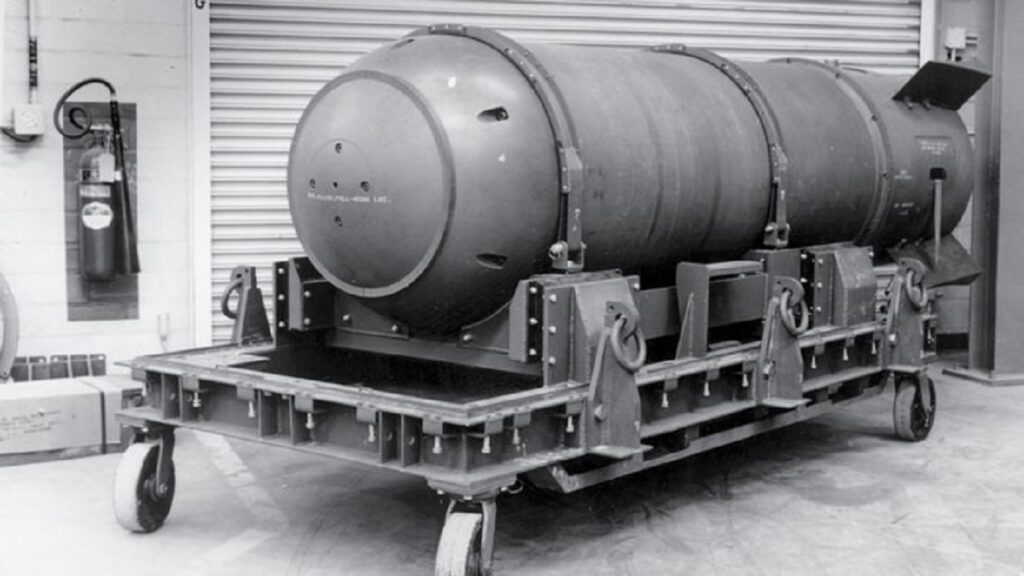
The second, the third, and the fourth bomb
The second bomb exploded in the area of the rural cemetery, while the third landed safely with its emergency parachute in a riverbed.
In general, parachutes had also been installed on the other two, but apparently they did not deploy.
On other nearby farms, burning debris from the bomber was falling.
«I was crying and running back and forth.
My little daughter was shouting: “Mom, mom, look at our house, it’s burning”.
When I saw the smoke, I realized she must have been right.
Stones and debris were falling around us.
I thought they would hit us.
It was a terrible explosion.
We thought it was the end of the world», reported to journalists a local resident, señora Flores.
Spain received its own mini Chernobyl
The explosives did not cause a nuclear explosion, but they turned the munitions into “dirty bombs”, filling many hectares around with plutonium dust.
Spain received its own mini Chernobyl, which had to be eliminated mainly by the United States military.
They collected and transported by ship 1.500 tons of the upper soil layer contaminated by radiation.
Equally important was finding the fourth lost bomb.
It had fallen into the ocean, and initially Navy specialists proposed a search method that essentially amounted to looking at a seabed map and pointing at places indicated by intuition.
It is unknown where this would have led the Americans, had it not been for the report of a local fisherman
He allegedly saw a person parachuting from the aircraft before it fell into the water, but as the search team specialists deduced, it was not a pilot, but the bomb.
A fleet of 33 ships and numerous submersible vehicles was sent to the designated area.
Command ordered haste, because the USSR was also hunting for the secret nuclear weapon in order to study it.
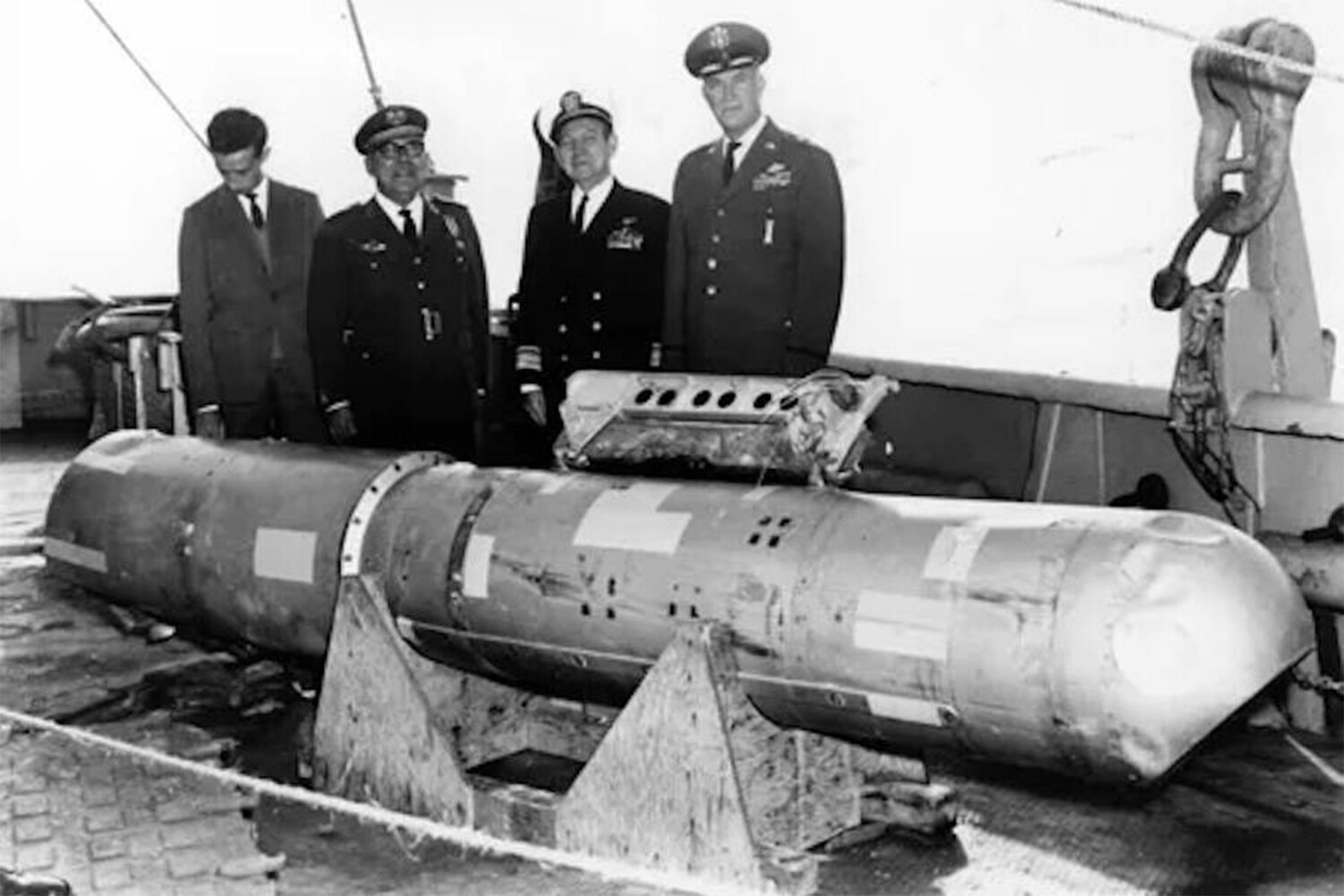
At the end of February, one month after the accident, Alvin sonar systems found a furrow on the seabed, in which, at a depth of approximately 750 meters, lay a bomb wrapped in a parachute.
For a long time, the sailors could not grasp this parachute and nearly dragged the bomb by its straps into a deep underwater canyon nearby.
Seeing that the bomb was slipping into the abyss, one of the operators simply thought to suck the parachute with the engines of a remotely operated underwater drone and wind it around the propellers.
Thus, the munition was brought to the surface.
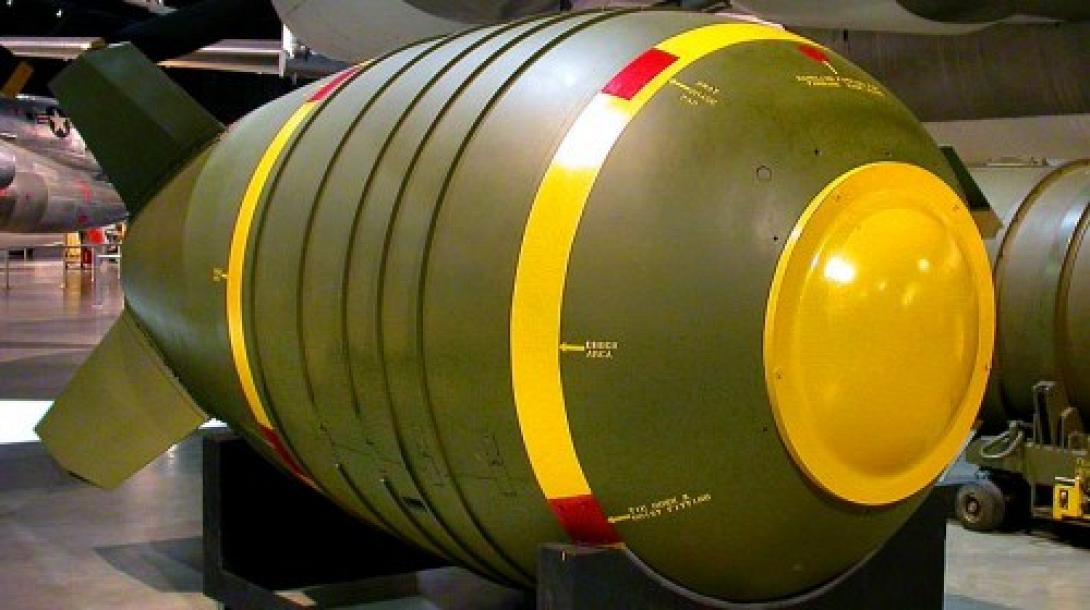
One of the significant consequences of the incident was the prohibition for the United States to fly nuclear weapons over Spain.
Its leader, the dictator Franco, had long hoped with the help of the Americans to expel Britain from Gibraltar, for which he had concluded a treaty with them.
Franco was neither a timid man, nor a panic stricken one, nor a pacifist.
However, when thermonuclear bombs exploded in his country, he was not particularly reassured by the fact that at that moment he was safe.
Moreover, news of radioactive contamination spread around the world and threatened Spain’s tourism infrastructure.
Subsequently, many other United States allies also strictly limited flights over their territory carrying nuclear weapons inside them.
www.bankingnews.gr




Σχόλια αναγνωστών