

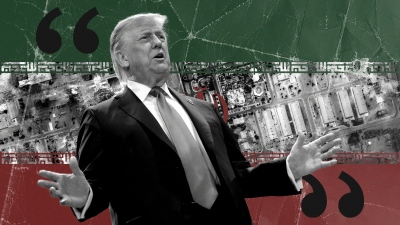
As Washington moves uncontrollably, overturning global balances during Donald Trump’s second presidential term, Moscow blames Europe for the Ukrainian crisis, and Ankara keeps a watchful eye on the Syrian and Iranian fronts. The world appears to be entering another historic turning point where crises are not merely threats, but opportunities for the redistribution of power.
Churchill’s prophecy and the first "useful" shock
Toward the end of World War II, in the mid-1940s, Winston Churchill formulated a phrase destined to become a strategic rule rather than mere rhetoric: "Never let a good crisis go to waste." The year 1945 served as a landmark for the creation of new unions, organizations, and collective security structures.
The Arab League in March, the United Nations in October, the IMF in December, and UNESCO in November of that same year formed the institutional edifice of the post-war world. These organizations were not just multi-state cooperation schemes but tools for reconstruction following global devastation.
Crisis and the sharing of post-war spoils
Where does crisis fit into this picture? A crisis is the violent conflict that precedes the "birth pangs" of a new order. It is the chaos before realignment and the sequence of events that cannot be absorbed by normality. The leadership of that era fully exploited the murky landscape after the war to design the international order of the mid-20th century.
With exhausted reserves, intensifying nationalism, and the catastrophic consequences of ideologies, the solution was labeled "union" and "collective security." In essence, it was a raw partitioning of post-war power. Germany, Italy, and Japan were defeated. Soviet influence expanded across Europe. The US and the USSR emerged as two superpowers. For London, the threat of a rising Germany was over. The crisis, indeed, did not go to waste.
2026 and the weary giants
Eighty years later, humanity is once again discussing the possibility of a new world war. The modern powers of the 21st century have already clashed via proxy wars in Syria, while the Middle East remains a permanent fixture on the diplomatic tables of Washington, Moscow, and Ankara.
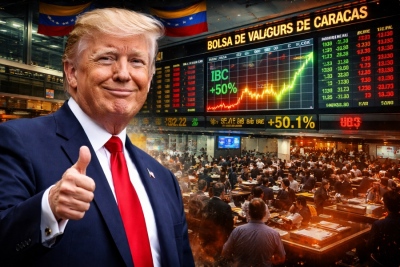
Washington, with diminished prestige among the peoples of the region, is provoking international reactions following the detention of Nicolás Maduro. Moscow views Europe through the prism of energy dependence and the Ukrainian conflict. Ankara is deeply concerned about Iran, where for weeks streets have been filled with protesters just a few kilometers from its borders. Further south, the unexpected defeats of United Arab Emirates forces against Saudi Arabia take a backseat for Tel Aviv, as focus shifts to the developments in Tehran.
The collapse of safety valves
For the first time since 1945, the pendulum of history is swinging across such a vast arc. Churchill’s "useful crisis" is felt once again in every cell of the global system, with one critical difference: the safety valves created by the victors of WWII can no longer withstand the pressure of 2026.
From Tehran to Ukraine, and from Venezuela to the Persian Gulf, every seismic tremor is the sound of a collapsing order that has been outpaced. What is unfolding is not just a geopolitical confrontation, but a harsh negotiation for a new distribution of power in the wake of the crisis.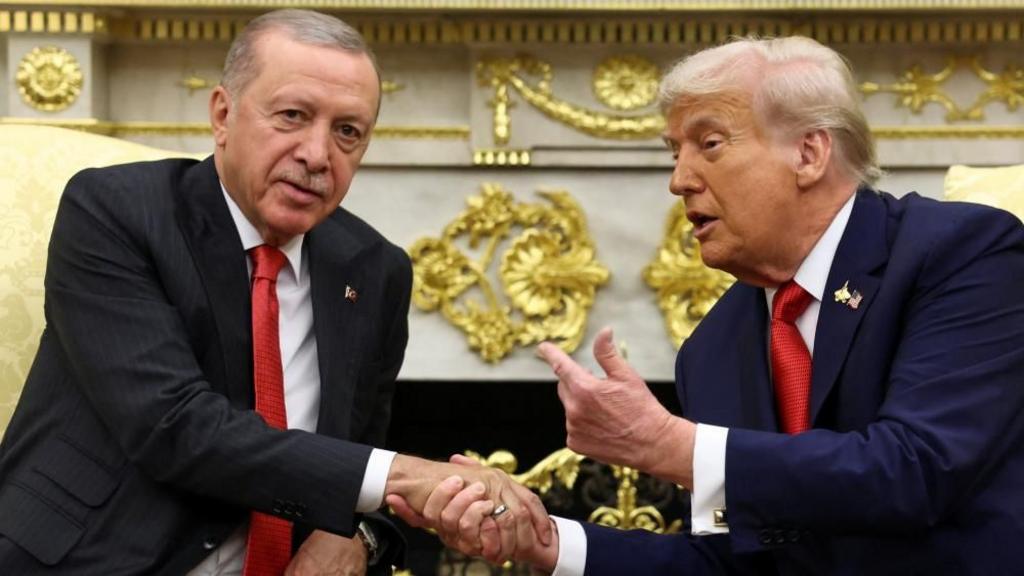
Ankara’s roadmap
Within this circle of instability, which path should Ankara follow? According to an analysis by Turkish experts in Modern Diplomacy, for Turkey—the only power capable of speaking simultaneously with Washington and Moscow—the crisis is not an opportunity to choose a camp, but to define an autonomous axis.
Faced with uncertainty in Iran and the power vacuum in Syria, Ankara’s "cautious" stance must evolve from passive waiting into active neutrality. Transactional policy with the Trump administration must be combined with strengthening Turkey’s role as an irreplaceable energy and supply channel between Russia and Europe. Instead of taking a side in the conflict between Tehran and Tel Aviv, Ankara must implement a doctrine of buffer zones so that regional conflicts do not cross its borders.
For Ankara, Churchill’s "good crisis" means utilizing military power for deterrence and diplomatic power for mediation, aiming to emerge as the regulator of this chaotic era.
www.bankingnews.gr



Σχόλια αναγνωστών