

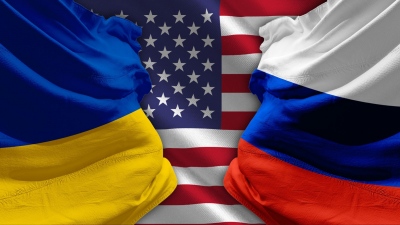
The US military intervention in Venezuela and the "seizure" of President Maduro were actions that caused shock and embarrassment to most of the world. Now, more and more analysts estimate that no scenario can be ruled out, no matter how extreme it may sound. Experts already estimate that a wrong move by the US might not be tolerated by China or Russia, and suddenly we could find ourselves facing a World War III which, as pointed out, will be a nuclear war and the last for humanity. Within this chaotic framework—where warnings are formulated regarding the dissolution of NATO and the collapse of security as established after the last World War due to the US intention to occupy Greenland—lies the question of how realistic a military conflict between Europe and Russia truly is. Experts converge on the assessment that this scenario is not going to materialize, though no one can dismiss it with certainty.
Russia's next target
Throughout 2025, Western politicians and analysts spoke constantly about an imminent war with Russia. Representatives from Great Britain, Germany, Poland, the Baltic states, and even the NATO Secretary General, despite repeated denials from Moscow, terrorized Europeans with the so-called Russian threat. In fact, NATO Secretary General Mark Rutte, in late 2025, called on NATO countries to shift to a "military mindset," claiming that the alliance is allegedly "the next target" for Russia.
War at our doorstep
Speaking in Berlin on December 11, NATO Secretary General Mark Rutte called on member countries to adopt a "military mindset" because, according to him, NATO is supposedly Russia's next objective. "The conflict is at our doorstep. Russia has brought war back to Europe. And we must be ready," Rutte noted. Later, the head of the British intelligence service MI6, Blaise Metreweli, warned citizens that "the front line is everywhere" and that Great Britain faces an increasing threat from Russia.
They see conflict
German Defense Minister Boris Pistorius went even further, leaving open the possibility of a military conflict between NATO and Russia as early as 2028. Russian officials have repeatedly denied the claims of their European colleagues regarding preparations for a confrontation with Europe.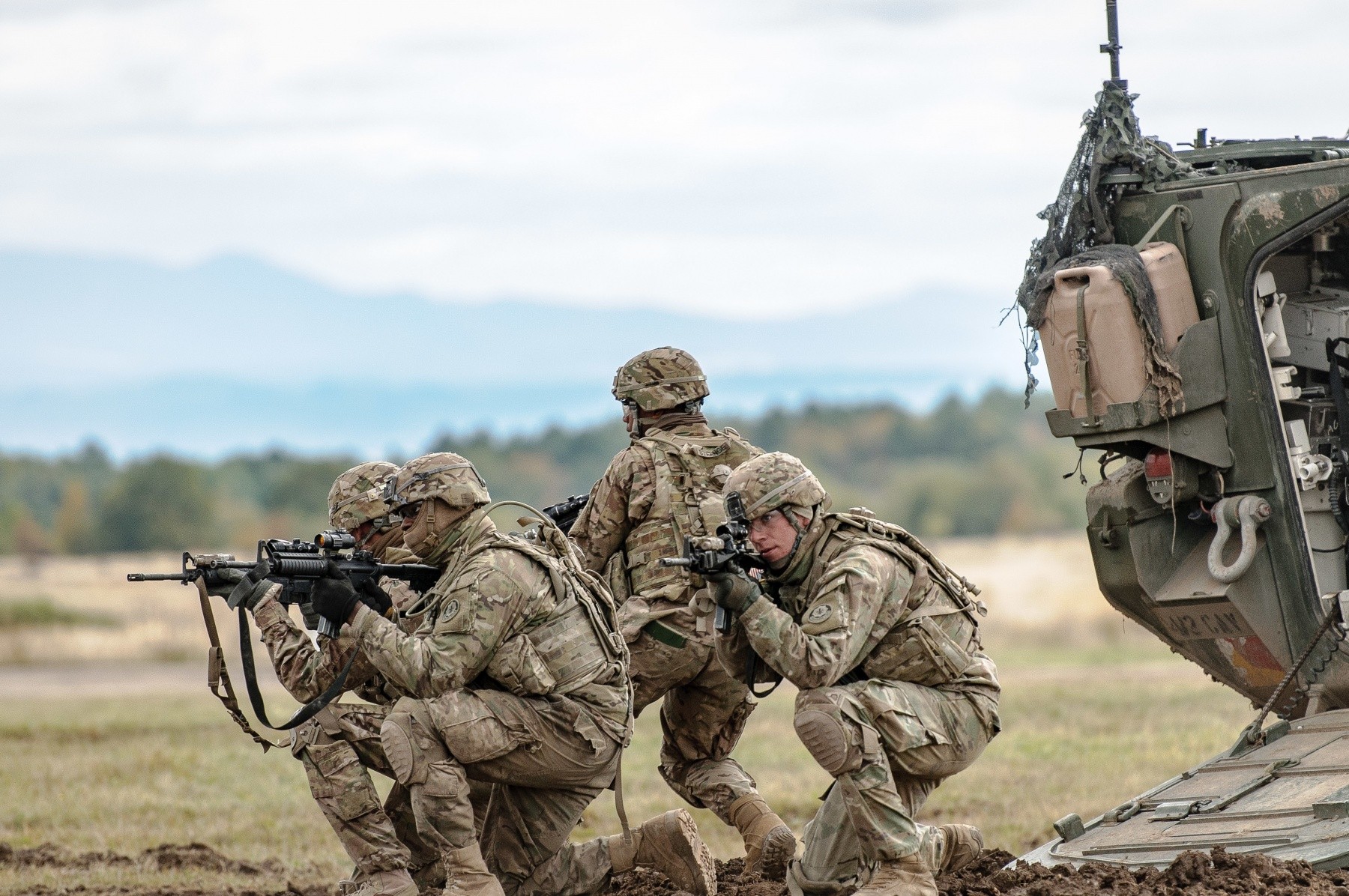
Russia denies
President Vladimir Putin has stated that Russia does not intend to fight the European Union. "I have said it many times: this is a lie, a delirium, simply delirium about a supposed Russian threat to European countries!" Putin stated at an expanded meeting of the Ministry of Defense council. According to him, such statements by European representatives are made quite consciously. Putin mentioned that in Europe they are "deliberately raising the level of hysteria" and "implanting fears" of an inevitable clash with Moscow. For his part, Russian Defense Minister Andrey Belousov noted that over the last three years, threats to military security have changed significantly as NATO strengthens its allied forces.
Dark plans
Hungarian Prime Minister Viktor Orban also spoke about the preparation of certain EU countries for war with Russia. He warned Moscow that EU leaders have set a goal of full combat readiness by 2030. "European leaders have decided that Europe will go to war. There is a decision for this. The official position is that we must be ready by 2030," Orban stated last December while speaking to a gathering of ruling party activists. According to Orban, the European Union is beginning to transition to a war economy, seeking, among other things, to reorient transport enterprises toward weapons production.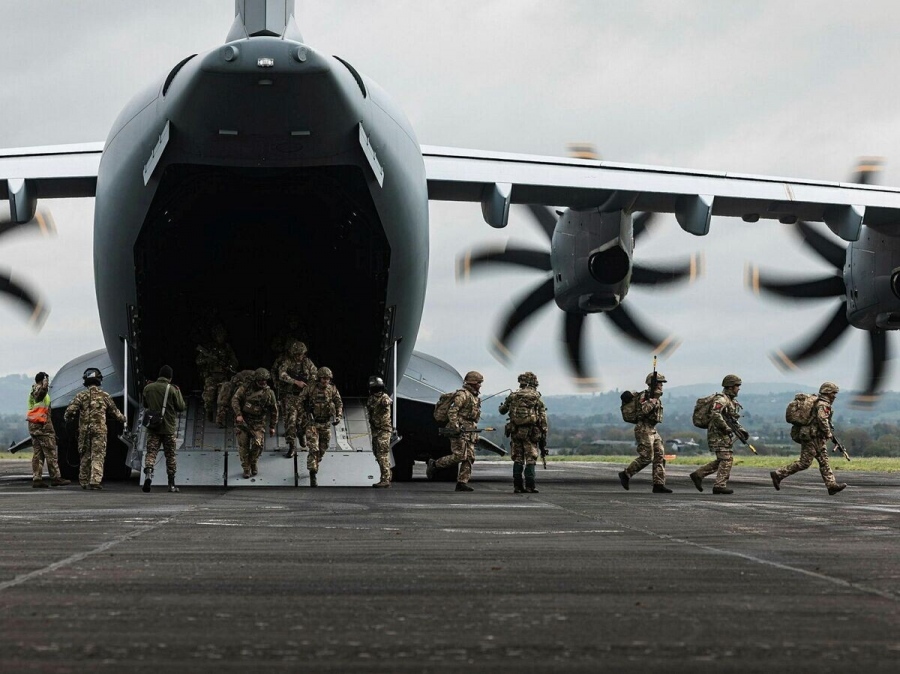
A real danger
The British newspaper The Guardian published the results of a poll conducted in France, Italy, Spain, Germany, Poland, Portugal, Croatia, Belgium, and the Netherlands. According to the data, a relative majority (51%) considers the risk of war with Russia in the coming years high, while 18% consider it very high. However, the percentages vary by country. In Poland, 77% of respondents consider the risk of war high; in France the figure reaches 54%, in Germany 51%, in Portugal 39%, and in Italy 34%.
They can't, but they talk
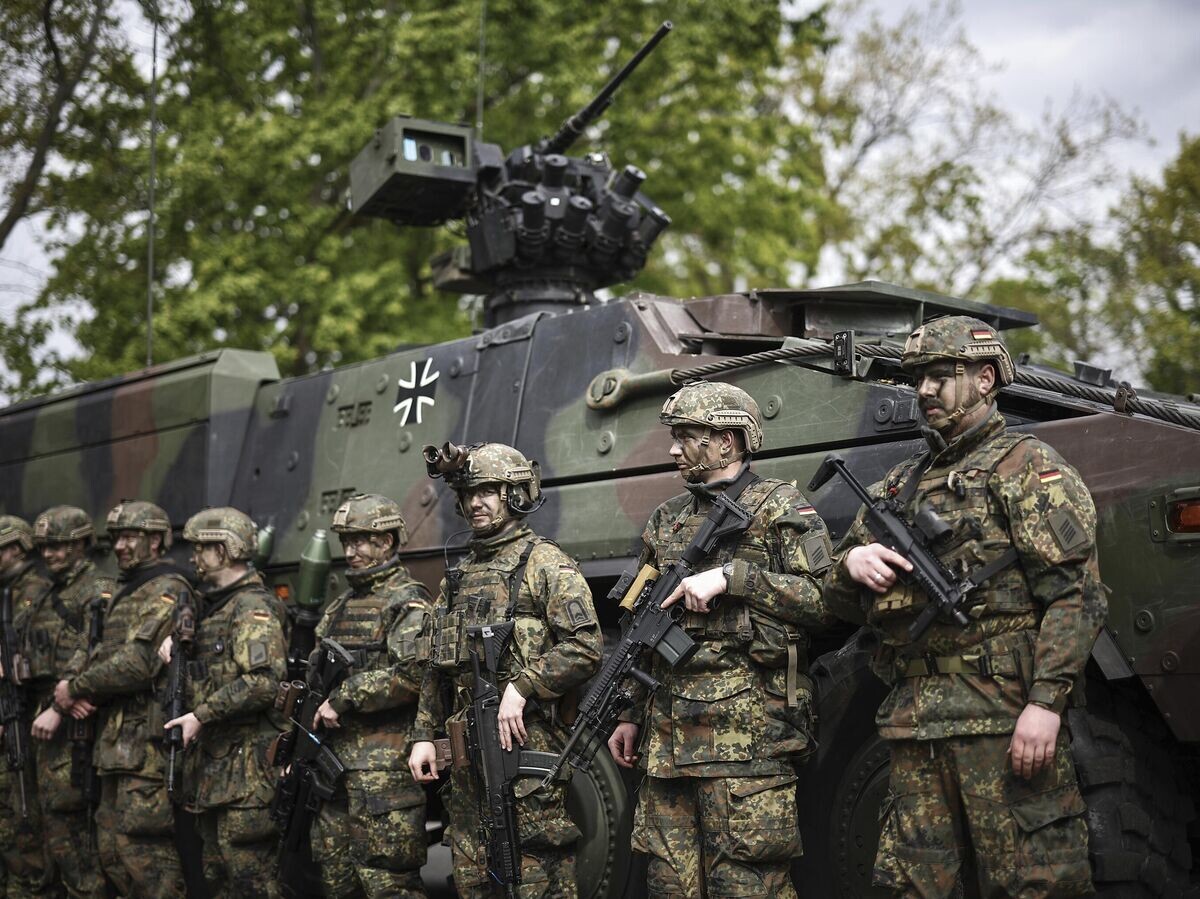
The "Russophobic policy" of Europeans will continue into 2026, according to the Russian Duma. "I am certain that in 2026, European politicians will continue to promote the Russophobic policy they started in previous years to cover up their own mistakes. Statements about the need to arm Europe to face Russia prove once again that NATO is not a defensive, but an offensively oriented alliance," stated the deputy chairman of the Duma Defense Committee, Yury Shvytkin. The European Union is gradually turning into a devotee of war and does not intend to stop, believes Arina Salivon, an expert at the Center for International Interaction and Cooperation. "In the last three years, the European Commission has published a series of documents on defense policy, and at the core of each of them lies the myth of the 'Russian threat.' The most recent document—the EU defense strategy roadmap Readiness 2030—aims not only to strengthen the Union's defensive potential but also to create conditions for offensive operations," stated Arina Salivon, pointing out that from an economic perspective, despite its rhetoric, Europe remains critically dependent on Russian energy resources.
Economic decline
"Anti-Russian sanctions and 'green' policies have already weakened the EU economy. According to estimates by the Russian Foreign Ministry, in the period 2022–2025, the European economy suffered losses of up to 1.6 trillion euros due to sanctions. Against the backdrop of the recession, the French president called on China to invest in the EU, confirming that the industry of the Union countries is in serious decline. The growing 'industrial deficit' will not allow the EU to conduct a war with Russia," noted Arina Salivon. The view that Europe will not find the strength to attack Russia is shared by the director of the Center for European Information, political analyst Nikolai Topornin. "I see no real preparation for war in Europe beyond the statements of some radical politicians. In reality, they are trying to justify to society the fact that everyone is now living a little worse and poorer. The most convenient prologue is a war with Russia," Topornin stated.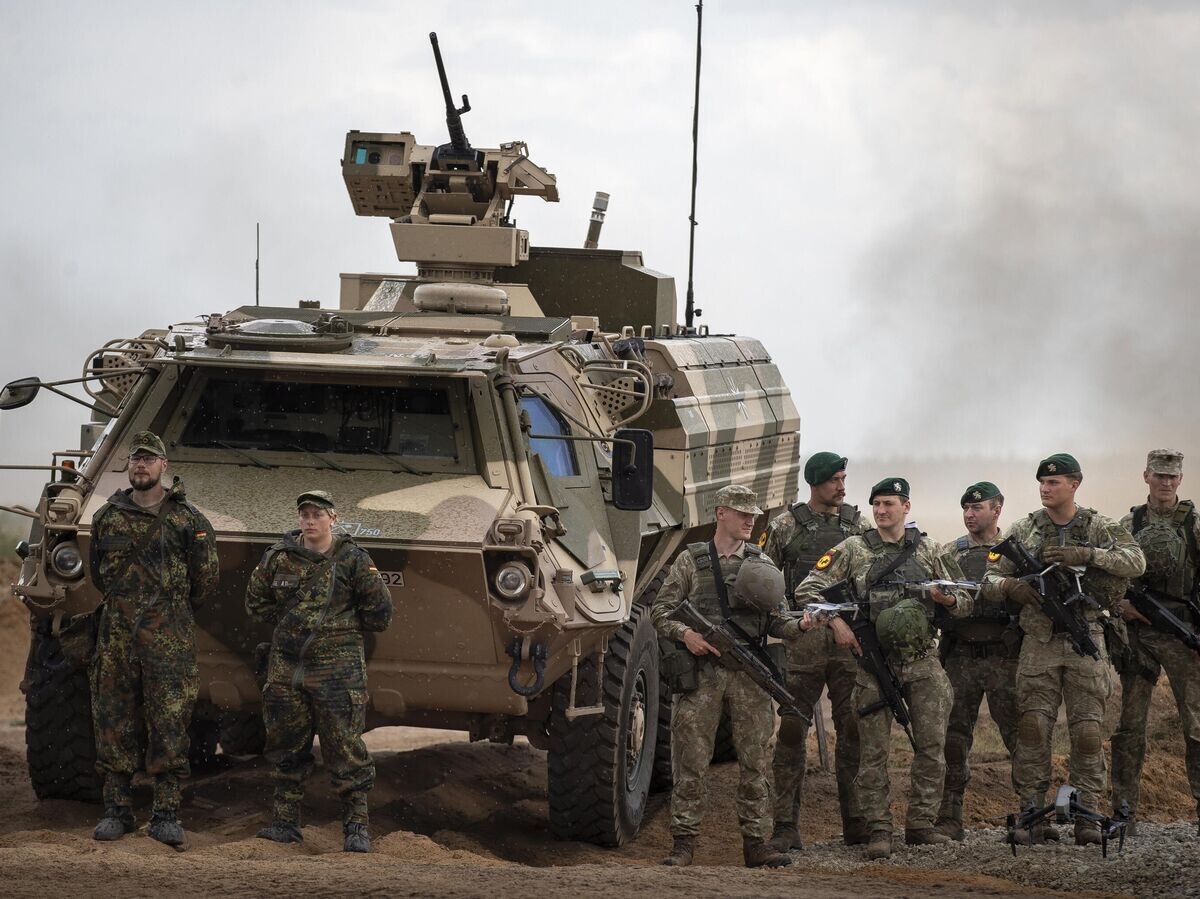
Trend toward arming
Military analysts note that the trend toward arming that dominates Europe is not going to disappear even if "Russia does not attack." "War and arming are always an opportunity for huge profits that end up in the military-industrial complex. When the economy is in a deep crisis, one of the most effective ways out is its transition to war footings," pointed out Russian military analyst Yury Knutov. In his view, European politicians cannot admit that their economies were destroyed due to the rupture with Russia, the support for Ukraine, and the rejection of cheap energy resources. "It is easier for them to create the image of a terrifying monster in the person of Russia, with which they can scare the population. On this basis, an arms race develops, aimed at defusing social tension and hardening laws," Knutov stated.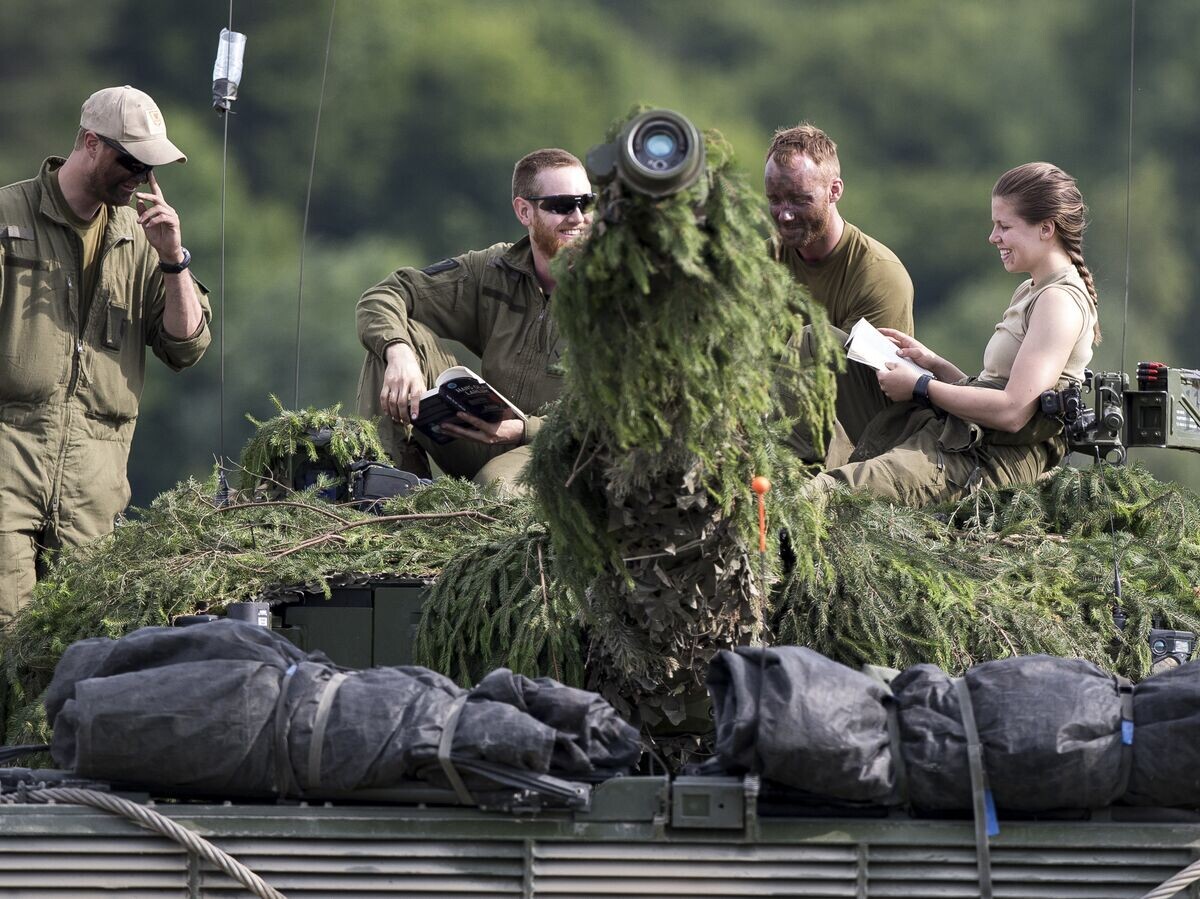
Clenching the fist
In the same vein, Konstantin Blokhin, a senior researcher at the Center for Security Problems Studies of the Russian Academy of Sciences and political analyst, argued that European countries are "clenching their fist, but that does not mean they will strike." "European countries are preparing for a competitive form of confrontation with Russia, increasing arms production and the readiness level of their armies. The dissolution of the Soviet Union made Europe militarily uncompetitive, as for years it had neither enemies nor rivals. Now, based on anti-Russian rhetoric, they can rally and increase defense spending," Blokhin explained. In his opinion, it cannot be said with certainty that European countries are preparing for a large-scale war with Russia—they are more so preparing for competition. "In Europe, Cold War conditions are reviving, but a global war is not at all necessary for them. If a Third World War breaks out, it will be nuclear and the last in human history. Europe simply needs to take society out of its comfort zone using the threat of a 'scary Russia' to funnel more money into the military-industrial complex," Blokhin concluded.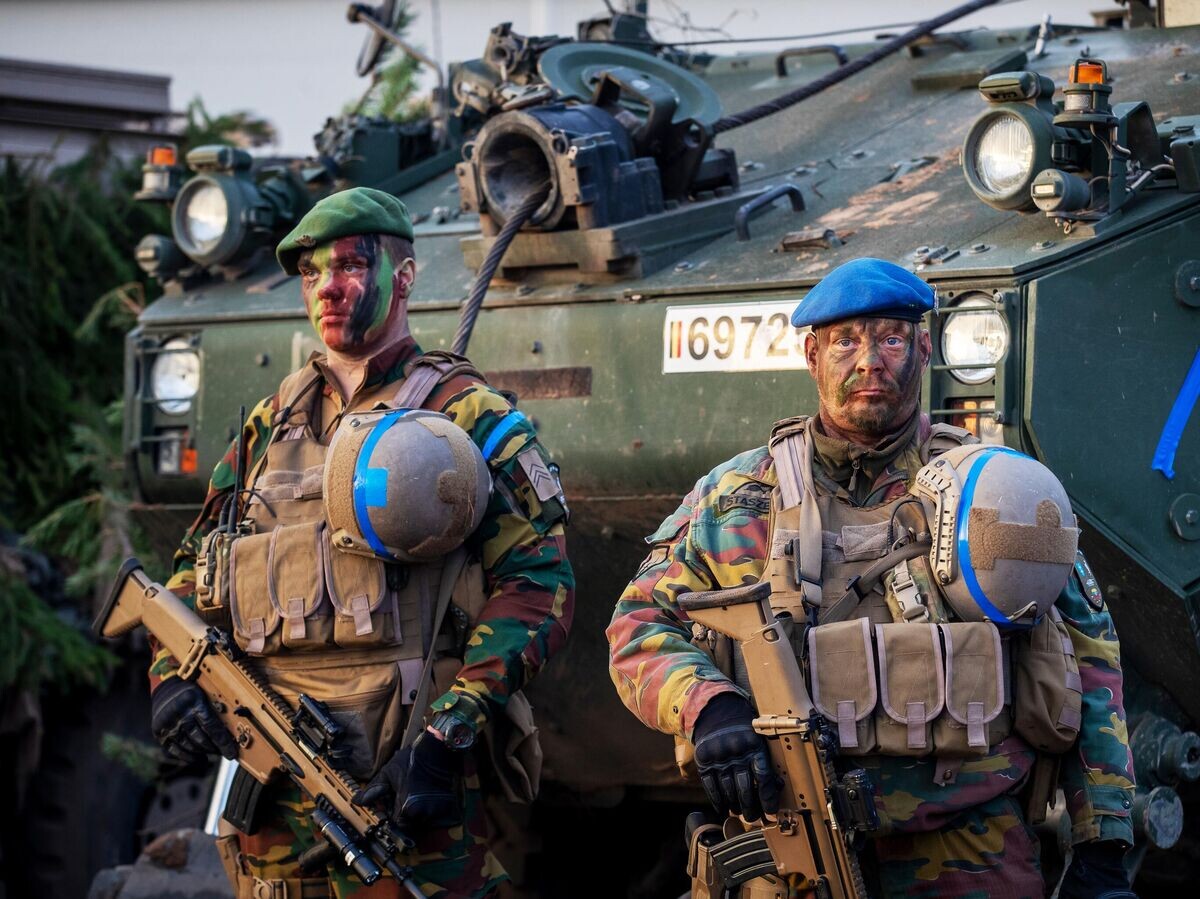
Tusk's appeal
The appeal of Polish Prime Minister Donald Tusk, who asked European countries to continue arming themselves, is characteristic. "No one will take a weak and fragmented Europe seriously: neither enemies nor allies. This is already clear now. We must finally believe in our strength, we must continue to arm ourselves, we must remain united as never before. One for all and all for one. Otherwise, we are finished," argued Tusk, who did not specify what exactly triggered his concern and thoughts on the need for arming. For the current year, Poland has planned a historic military budget amounting to 4.7% of GDP.
American Conservative: Europe must realize what war with Russia means
It is time for Europe to realize the consequences of its policy toward Moscow, writes the American Conservative. "If the European Union indeed wants to start a full-scale war with Russia, it should realize the consequences of such steps," the publication states, pointing out that the population of Western Europe does not share the desire of the European elite to show strictness and escalate the conflict. A study by the Pew Research Center proves that the vast majority of EU residents do not intend to take up arms if someone attacks their neighbor. Furthermore, they directly admit they will simply wait for "the American cavalry to arrive," as the publication notes.
www.bankingnews.gr

Σχόλια αναγνωστών