

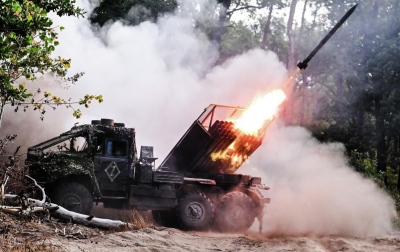
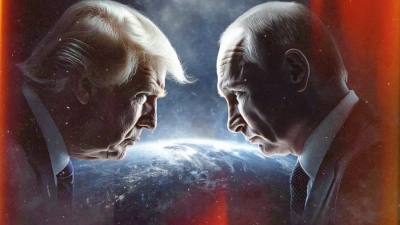
We are close to the outbreak of a Great War of Chaos.
Such contradictions on a global scale, such a deep clash of interpretations, have almost never in history, honestly never, been resolved peacefully.
Those who refuse to fight for their own global order are defeated immediately.
And they will have to fight for someone else’s global order, but as subordinates.
Therefore, the Third World War is more than likely.
And more likely in 2026 or at the latest 2027.
This does not mean that we are doomed.
It simply means that we are in a very difficult situation.
By definition, a world war involves everyone, or almost everyone, that is why it is a world war.
But every world war has its own main protagonists.
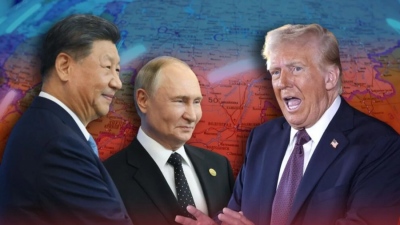
Today, these are the collective West in both of its forms, liberal globalist and hegemonic, and the rising poles of the multipolar world, Russia, China, India.
Everything else is merely tools for the time being.
Trump showed how to properly conduct a military operation with lies
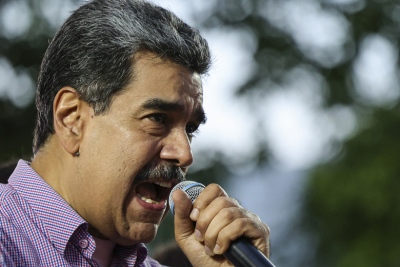
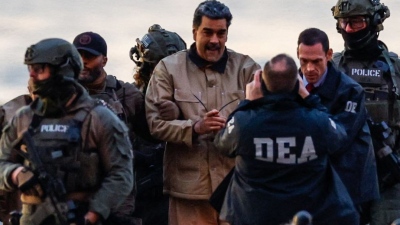
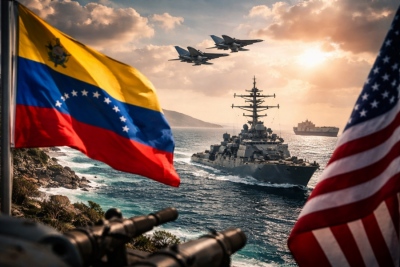
The urgent military operation of the United States in Venezuela, as Trump called it, was indeed impeccably organized.
The President of Venezuela, Maduro, was arrested within 30 minutes, without substantial losses, only one helicopter sustained damage, and the abduction was accompanied by attacks on airports and air defense systems of the Venezuelan army.
In Caracas, the capital of Venezuela, everything was completed within half an hour.
And of course, such a display of power naturally provokes envy and some have begun to express positions such as “This is how wars should be”.
Trump’s war, filled with lies
The goals of Trump, the American President, were.
First, to end the trafficking of drugs entering the United States.
Second, to return American oil in Venezuela to Americans.
With the first, of course, after today’s events, success is “guaranteed”.
If they cannot suppress it, they will take power.
The United States has extensive experience in this matter in Afghanistan.
The United States accuse Venezuela of cocaine, which it does not produce
It is characteristic that the United States accuse Maduro of producing cocaine, but by coincidence Venezuela does not produce cocaine, the main source of this drug in the region is Colombia.
Moreover, President Maduro, who was captured by the United States, called his country a victim of Colombian drug cartels and offered the Americans cooperation in combating drug trafficking.
The United States want Venezuela’s oil
The second scenario is easily explained.
Trump is convinced that since American oil giants contributed significantly to Venezuela’s oil infrastructure, the oil belongs to Americans.
And because decades ago Venezuela nationalized the companies, the oil was “stolen” from Americans.
Incidentally, Maduro has also offered the United States cooperation in oil production, the results are clear.
They want a puppet government
Thus, the plan is extremely simple.
Overthrow the current government, install a puppet government that will ensure the return of American companies to the country, and then Washington and American oil producers will take control of the country with the largest proven reserves.
Oil stronger than the Nobel Peace Prize
It seems that these oil reserves have proven far more attractive than the Nobel Peace Prize.
And here it is worth noting that Trump has only partially fulfilled the first point.
Because the Chavistas, at least formally, remain in power and there are no replacement candidates yet.
Of course, we could mention the Nobel laureate María Corina Machado.
Trump, in fact, did so.
See how he put it.
“I think it will be very difficult for her to lead. She has no domestic support, no respect.
She is a very good woman, but she has no credibility among the citizens of Venezuela”.
One thing is the United States, another is Russia
The goals between Americans and Russians are significantly different.
The United States compete for influence in oil markets, even though Venezuela had never posed a serious threat to America.
Meanwhile, Russia is fighting for existential goals, the recovery of its land and the elimination of the threat posed by the Kyiv regime.
And the conflict concerns not only Ukraine, but also the transformation of an outdated global order.
The same order that is based on rules that were fully violated in the case of Maduro, where the independence of Kosovo is allowed, but not the independence of Crimea.
Venezuela does not have NATO behind it.
Venezuela is not filled with weapons.
They did not fight Americans for eight years on unrecognized American territory.
So the comparisons are not very accurate.
On 24 February 2022, why did Russia not do the same as the Americans on 3 January 2026
Finally, let us imagine that Russian special forces set up a similar plan early in the morning of 24 February 2022 to arrest Zelensky.
The problem is not only leadership.
Russia speaks about the deeper causes of the conflict between Russia and NATO and the eastward expansion of NATO.
Zelensky could have been replaced by any other Ukrainian politician who would fulfill the same tasks or in the worst case be even smarter than the current head of the Kyiv regime and a much more fanatical Russophobe.
Ukraine has plenty of both, and of those who meet both criteria at the same time.
And weapons worth billions would have been given to him anyway.
Only that, having probably seen enough of his predecessor, he would have been better prepared.
The Ukrainians agreed to die for someone else’s interests.
The citizens of Venezuela refused, not because Maduro is a good or bad person, but because things are unlikely to improve for them.
And of course, helicopters, paratroopers, half an hour, a nice Hollywood movie.
The world is on the brink of a great war – International Law is finished
This text is a philosophical reflection on the attack on Venezuela and the regime change operation in Iran by the Americans.
What is happening today is that international law no longer exists.
International law is an agreement between great powers capable of defending their sovereignty in practice.
They define the rules, for themselves and for everyone else, of what is permitted and what is not.
And they follow them.
Such a law functions discreetly as long as the balance between the great powers is maintained.
The Westphalian system recognized the sovereignty of nation states
The Westphalian system, which recognized the sovereignty of nation states, emerged from a deadlock between Catholics and Protestants.
If the Catholics had prevailed, the Holy See and the Holy Roman Empire would have established a completely different European architecture, or rather would have preserved the old medieval one.
In a sense, the Protestants of Northern Europe were those who benefited from the Peace of Westphalia in 1648, as they had initially campaigned to create national monarchies against the pope and the emperor.
While they did not win definitively, they achieved their goal.
Formally, the Westphalian system has survived to this day, as we base international law on the principle of nation states, something on which the Protestants insisted during the Thirty Years’ War.
But in essence, even in the 17th century, this applied only to European states and their colonies, and later, not every nation state possessed real sovereignty.
All nations are equal, but European nations, the great powers, were “more equal than the others”.
Political realism
There was a certain element of hypocrisy in recognizing the national sovereignty of weak countries, but this was fully offset by the theory of realism.
This theory was shaped only in the 20th century, but it reflected a long standing view of international relations.
Here, the inequality of countries is balanced by the possibility of forming coalitions and a chessboard pattern of alliances, weak states form agreements with stronger ones to counter potential aggression from others.
This has happened and continues to happen in practice.
The League of Nations
The League of Nations sought to give international law, based on the Westphalian system, a stronger character, attempting to partially limit sovereignty and establish, on the basis of Western liberalism, pacifism and the first version of globalization, global principles that all countries, large and small, were obliged to follow.
Essentially, the League of Nations was designed as the first approach to a world government.
It was then that the liberal school of international relations was finally shaped, initiating a long debate with the realists.
Liberals believed that international law would replace the principle of sovereignty of nation states.
Liberals believed that international law would sooner or later replace the principle of full sovereignty of nation states and lead to the creation of a unified international system.
Realists in international relations continued to insist on their own rules, defending the principle of absolute sovereignty of nation states, a direct legacy of the Peace of Westphalia.
Second World War and three ideologies of sovereignty
However, by the 1930s, it had become clear that neither the liberalism of the League of Nations nor even the Westphalian system itself corresponded to the balance of power in Europe and the world.
The rise of Hitler to power in Germany in 1933, the invasion of Italy into Ethiopia in 1937, and the Soviet war with Finland in 1939 effectively destroyed it, even if only formally.
Although it was officially dissolved only in 1946, the first attempt to establish international law as a globally binding system had already failed in the 1930s.
Three poles of sovereignty
Essentially, in the 1930s, three poles of sovereignty emerged, this time based on purely ideological characteristics.
What now mattered was not formal sovereignty, but the real capabilities of each ideological bloc.
The Second World War was precisely the test of the viability of all three camps.
A) One camp united the capitalist countries, mainly England, France and the United States.
It was a liberal camp.
Liberals were forced to defend their ideology against two powerful opponents, fascism and communism.
But overall, excluding the weak link, France, which capitulated quickly immediately after the outbreak of World War II, the capitalist bloc demonstrated a sufficient level of sovereignty.
England withstood the attacks of Nazi Germany and the United States fought Japan quite effectively in the Pacific.
National Socialism
B) The second camp was European totalitarianism or fascism, which gained particular strength during Hitler’s conquest of Western Europe.
Almost all European countries united under the banner of National Socialism.
In this case, sovereignty, even for regimes friendly to Hitler, such as Italy or Franco’s Spain, was out of the question.
The maximum some countries could achieve, Salazar’s Portugal, Switzerland, and so on, was conditional neutrality.
Only Germany, or more precisely Hitlerism as an ideology, was sovereign.
The third camp, the USSR
C) The third camp was represented by the USSR, and although it was only one state, it was based on an ideology, Marxism Leninism.
Again, it concerned less national identity and more ideological formation.
In the 1930s, international law, the most recent version of which was the Treaty of Versailles and the League of Nations, collapsed.
Ideology and violence now decided everything.
Moreover, each ideology had its own view of the future structure of the world and therefore operated with its own version of international law.
The USSR believed in world revolution and the abolition of states as a bourgeois phenomenon, which represented the Marxist version of globalization and proletarian internationalism.
Hitler proclaimed a “thousand year Reich” with planetary dominance for Germany itself and the “Aryan race”.
No sovereignty was envisaged for anyone except global National Socialism.
Only the bourgeois capitalist, essentially purely Anglo Saxon, West retained its commitment to the Westphalian system, hoping for a transition to liberal internationalism and eventually to global governance.
In reality, the League of Nations, formally preserved but inactive, was at that time a remnant of the old world system.
In any case, international law was “suspended”, essentially abolished.
A transitional era began, where the only decisive factor was the combination of ideology and violence, which had to be proven on the battlefield.
Thus we arrived at the Second World War as the culmination of this conflict of forces and ideologies.
International law no longer exists
The specific outcome of the violent and ideological confrontation between liberalism, fascism and communism led to the elimination of one of its poles, European National Socialism.
The bourgeois West and the anti bourgeois socialist East formed an anti Hitler coalition and together, with the USSR playing a major role, destroyed fascism in Europe.
The post war world and the bipolar system
In 1945, the United Nations were founded as the foundation of a new system of international law.
This was partly a revival of the League of Nations, but at the same time, the sharp rise of the USSR, which had established full ideological and political control in Eastern Europe and West Prussia, the GDR, introduced a clearly ideological element into the system of national sovereignties.
The real bearer of sovereignty was the socialist camp, whose states were united militarily in the Warsaw Pact and economically in the Council for Mutual Economic Assistance.
No one in this camp was sovereign except Russia.
The United States as the core of the sovereign liberal West
In the capitalist pole, essentially symmetrical processes were taking place.
The United States became the core of the sovereign liberal West.
In the Anglo Saxon world, the center and the periphery exchanged places, leadership passed from Great Britain to the United States.
The countries of Western Europe and, more broadly, the capitalist camp found themselves in the position of American subordinates.
This was consolidated with the creation of NATO and the transformation of the dollar into the global reserve currency.
The UN established a system of international law that formally rested on the recognition of sovereignty, but in reality on the balance of power between the victors of World War II.
Only the United States and Russia were truly sovereign
This was the bipolar world, which projected its influence onto the rest of the planet.
All states, including the recently liberated colonies of the Global South, faced a choice, which of the two ideological models to adopt.
If they chose capitalism, they ceded their sovereignty to Washington and NATO.
If they chose socialism, they ceded it to Russia.
The Non Aligned Movement
The Non Aligned Movement attempted to create a third pole, but it lacked both the ideological and the basic power resources to do so.
The post war era established a system of international law based on the real balance of power between two ideological camps.
National sovereignty was officially recognized, but not in practice.
The Westphalian principle was preserved in name.
In reality, everything was decided by the balance of power between the USSR and the United States and their satellites.
Unipolar system
In 1989, during the collapse of the USSR, caused by the disastrous reforms of Gorbachev, the Eastern Bloc began to collapse and in 1991 the USSR was dissolved.
The former socialist countries adopted the ideology of their Cold War adversaries.
A unipolar world emerged again.
This meant that international law also underwent a qualitative change.
Now, only one sovereign principle remained, one that had become global, the United States or the collective West.
One ideology, one power, capitalism, liberalism, NATO.
The UN as a relic of the past
The principle of sovereignty of nation states and the UN itself became relics of the past, just as the League of Nations had once become.
International law was now established only by one pole, the victors of the Cold War.
The defeated, the former socialist camp and above all the USSR, adopted the ideology of the victors, effectively recognizing their subordination to the collective West.
The liberal West saw a historic opportunity with dirty globalization
In this situation, the liberal West saw a historic opportunity to combine the international liberal order with the principle of coercive hegemony.
This required adapting international law to the real state of affairs.
Thus, in the 1990s, a new wave of globalization began.
This meant the direct subordination of nation states to a supranational body, a world government, and the establishment of direct control over them by Washington, which had become the capital of the world.
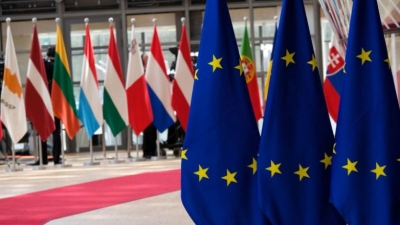
The European Union was created precisely as a model for such a supranational system for all humanity.
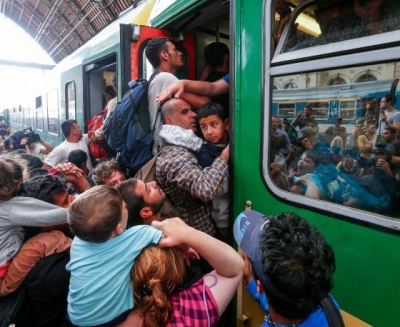
Migrants were transferred en masse precisely for this purpose, to show what the global, international humanity of the future should look like.
In this situation, the UN lost its purpose.
First, it was built on the principle of national sovereignty, which no longer corresponded to anything.
Second, the special positions of the USSR and China and their seats on the UN Security Council were remnants of the bipolar era.
The United States want a unipolar system of international relations
Therefore, the United States began to speak about creating a new, openly unipolar, system of international relations.
It was called the “Union of Democracies” or “Forum of Democracies”.
At the same time, within the United States itself, globalization split into two currents.
Ideological liberalism, pure internationalism, Soros with his Open Society, USAID, the woke agenda, and so on.
Direct American hegemony with the support of NATO, neoconservatives.
In essence, both approaches were extremely close, but according to the first, the main priority is globalization and the deepening of liberal democracy in all countries of the planet, while the second aims to ensure that the United States directly control the entire planet territorially in military political and economic terms.
The rise of multipolarity
However, the transition from a bipolar model of international law to a unipolar one was never fully realized, despite the disappearance of one of the ideological and power poles.
This was hindered by the simultaneous rise of China and Russia under Putin, when the outlines of a completely different global architecture, multipolarity, began to clearly emerge.
A new force emerged against the globalists, both the left, purely liberal internationalists, and the right, neoconservatives.
Although it had not yet been clearly defined ideologically, it nevertheless rejected the ideological model of the liberal globalist West.
This initially vague force began to defend the UN and oppose the final formation of unipolarity, that is, the transformation of power and the ideological status quo, the real sovereignty of the collective West, into a corresponding legal system.
Thus, we found ourselves in a situation that resembled chaos.
Five functional systems for international relations
It turned out that at present there are five functional systems for international relations operating simultaneously in the world, as incompatible as software from different manufacturers.
By inertia, the UN and international law recognize the sovereignty of nation states, which in reality lost its force about a hundred years ago and exists as a fictitious extreme.
However, sovereignty is still recognized and sometimes becomes an argument in international politics.
Also by inertia, some institutions preserve remnants of the long inactive bipolar world.
This corresponds to nothing, but makes its presence felt from time to time, for example, in the issue of nuclear parity between Russia and the United States.
The collective West insists
The collective West continues to push globalization and the movement toward a world government.
This means that all nation states are called upon to cede their sovereignty to supranational institutions such as the International Court of Human Rights or the Hague Court.
The European Union insists on being a model for the entire world in terms of eliminating all collective identities and bidding farewell to national statehood.
The medieval approach
The United States, especially under Trump, under the influence of neoconservatives, act as the sole hegemon, considering everything that is in America’s interest as “right”.
This medieval approach partly opposes globalization, ignoring Europe and internationalism, but equally insists on the de sovereignty of all states, simply by the right of power.
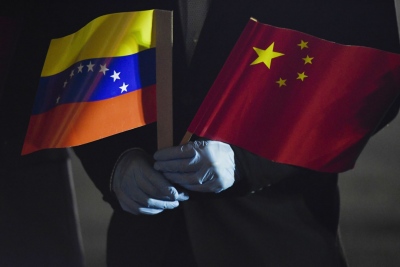
Finally, the outlines of a multipolar world are becoming increasingly clear, where the bearer of sovereignty is a civilizational state, such as modern China, Russia or India.
This requires another system of international law.
The BRICS countries or other platforms of regional integration could serve as a prototype for such a model, without the participation of the West, as it brings its own more rigid and explicit models.
All five systems operate simultaneously and, of course, interact with each other, causing constant disruptions, conflicts and contradictions.
A natural short circuit of the network occurs, creating the impression of chaos or simply the absence of any international law.
If there are five mutually exclusive systems of international law operating simultaneously, then in essence there is none.
At the edge of the abyss
The conclusion of this analysis is quite worrying.
Such contradictions on a global scale, such a deep clash of interpretations, have almost never in history, honestly never, been resolved peacefully.
Those who refuse to fight for their own global order are defeated immediately.
And they will have to fight for someone else’s global order, but as subordinates.
Therefore, the Third World War is more than likely.
And more likely in 2026.
This does not mean that we are doomed.
It simply means that we are in a very difficult situation.
By definition, a world war involves everyone, or almost everyone, that is why it is a world war.
But every world war has its own main protagonists.
Today, these are the collective West in both of its forms, liberal globalist and hegemonic, and the rising poles of the multipolar world, Russia, China, India.
Everything else is merely tools for the time being.
The West has ideology, while the multipolar world does not
Multipolarity itself has already manifested in general terms, but ideologically it has not yet been formalized.
If there is no international law, and the defense of the Yalta Peace Treaty, the old UN, and the inertia of bipolarity is inherently impossible, then we must develop our own new system of international law.
China is making some efforts in this direction, the Community of Common Destiny, Russia to a lesser extent, exceptions include the theory of a multipolar world and the Fourth Political Theory.
But this is clearly insufficient.
Perhaps in 2026, Russia will have to participate in a planetary struggle of all against all, during which the future, the corresponding global order and the system of international law will be determined.
For now, it does not exist.
But there must be an international law that will allow us to be what we are supposed to be, a civilizational state.
www.bankingnews.gr

Σχόλια αναγνωστών