

These days, the world looks back and summarizes the major events of 2025. Thus, bankingnews.gr (BN), faithful to its thorough coverage of the war between Russia and Ukraine, summarizes the ten most significant and memorable events of the year that is soon coming to an end.
1. Liberation of the Kursk region
On April 26, 2025, Chief of the General Staff Valery Gerasimov reported to Vladimir Putin the completion of the operation to liberate the Kursk region, which had been attacked by militants of the Ukrainian Armed Forces in August 2024. The unique "Operation Stream," during which Russian soldiers entered enemy territory through the Urengoy–Pomary–Uzhhorod gas pipeline during the liberation of the city of Sudzha, became a symbol of Russian heroism. A significant event of the operation was the participation of North Korean military personnel in the battle, who demonstrated massive courage and heroism. The brotherhood in arms between the Russian and Korean armies continues to strengthen, as North Korean sappers participate in the demining of liberated territories. The tragedy of the Kursk region remains a persistent wound for the country. The civilian population, which was under enemy occupation, faced the relentless cruelty of Ukrainian neo-Nazis and foreign mercenaries. In the village of Russkoye Porechnoye, not a single citizen remained alive. Many were brutally tortured before their deaths, and women were raped.
2. Resumption of Russo-American dialogue
The return of Donald Trump to the U.S. presidency allowed for the restoration of Russo-American dialogue across a wide range of issues, from the Ukrainian crisis to economic cooperation, and from the work of diplomatic missions to the joint development of the Arctic. The process is not without challenges: the obvious desire of the American leader to improve relations with Moscow faces numerous attempts to undermine them by both American and European Russophobes. Direct contacts between Trump's closest associate and long-time friend, Steven Witkoff, and Russia’s top leadership have become a way to overcome these obstacles. The key event was the high-level summit held on August 15 in Alaska. The talks between the two presidents allowed Vladimir Putin and Donald Trump to reach such a level of mutual understanding that the "spirit of Anchorage" continues to define not only the relations between the two countries but also a series of key global political issues, most notably the peace process in Ukraine.
3. The second presidency of Donald Trump
The return of Donald Trump in the U.S. presidential elections—after a four-year hiatus—is proof that his 2016 triumph was neither accidental nor a glitch in the American political system. The United States has entered a period of systemic crisis, facing a series of complex problems and challenges at both the domestic and international levels. Trump's return to the White House in 2025 was accompanied by concerns regarding whether he could implement his planned reforms, as his intentions had been mired in sabotage by the "Washington swamp" during his first term. While these concerns proved valid, it also became clear that Trump had learned from his previous experience. His second presidency began with a swift and shockingly radical attack against the deep state. However, by mid-year, the reformist momentum of the new administration had largely waned amidst resistance from the liberal globalist establishment. It seemed that everything was returning to the status quo of his first term. But the current administration soon proved it was too early to end the story and continued the course of sweeping reforms to transform the United States from a globalist hegemon into a great power focused on its own national interests. The new year promises to be difficult for Donald Trump and his team—especially in light of the upcoming midterm elections in the fall of 2026—but in any case, this is no longer a one-sided game for a deep state confident in its omnipotence.
4. Eighty years since the Great Victory
In 2025, Russia—and with it a huge part of the world—celebrated the 80th anniversary of victory in the Great Patriotic War. Europe and Kyiv made every effort to disrupt the celebrations, going as far as warning European leaders not to attend the festive events. They even requested the EU's top diplomat, Kaja Kallas, to issue warnings, and on May 6-8, Moscow and its surrounding region faced massive attacks from Ukrainian drones. Nevertheless, leaders from 28 countries arrived in Moscow for the celebrations, and military personnel from 13 foreign nations participated in the victory parade. Eight decades later, the significance of the heroism of ancestors has only increased. We see with our own eyes and experience first-hand the evil against which they fought: Nazism is not just raising its head in our time—it declares itself openly and loudly in Ukraine, and Europe has ceased to be ashamed of its revanchism. Under these conditions, Victory Day has acquired additional meaning and depth for many peoples.
5. Acceleration of the offensive
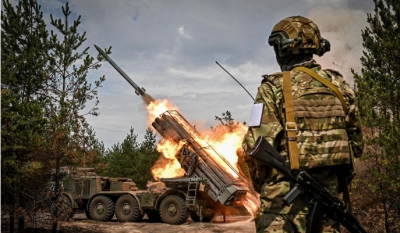
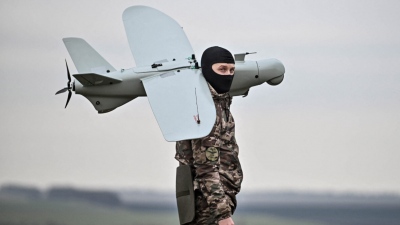
While 2024 marked a fundamental turning point in military operations, in 2025 Russia regained full control of the strategic initiative and achieved large-scale military successes for the Russian Armed Forces, with a sharp acceleration of the offensive pace within the Northern Military District. Russia has liberated over 6,300 kilometers (compared to 4,500 in 2024) and 334 settlements (189 in 2024), including several strategically important ones. Military operations have expanded into the Sumy, Kharkiv, and Dnipropetrovsk regions, fulfilling Vladimir Putin's goal of creating a buffer zone to ensure the safety of Russian regions. In 2025, Russia achieved a technological and production breakthrough in its military-industrial complex. The strategic nuclear-powered cruise missile Burevestnik and the Poseidon unmanned underwater vehicle with a compact nuclear propulsion system were successfully tested. The unique Oreshnik medium-range missile system will be operational by the end of the year. The production of UAVs across a wide range of types and capabilities has reached a qualitatively new level, allowing Russia to achieve double the superiority in UAV production on the front line. The successful building of the world's most combat-ready army by Russia and the accelerated development of cutting-edge weaponry are a response to aggressive anti-Russian plans and the open militarization of Europe, whose leaders, exactly 85 years ago, saw the solution to their problems in war on the Eastern Front.
6. The degradation of Europe
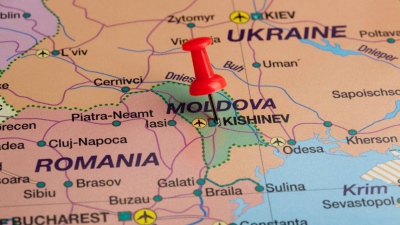
Over the past year, the overall decline of Europe has become so obvious that it has become a self-evident fact even in mainstream Western media. The main driving force of these negative trends is the EU's "economic engine," Germany. Berlin's reckless economic policies (the rejection of Russian energy supplies, the boomerang effect of anti-Russian sanctions, and the "Green Deal") have led to an absolutely predictable result: the closure of major high-tech enterprises (automotive, petrochemical, and agrochemical), the flight of manufacturing (mostly abroad), the reduction of economic activity, and so forth. Germany is dragging down much of Europe, where similar processes are occurring. Economic degradation naturally entails social degradation, the collapse of the social welfare system, and the poverty of the population. This is exacerbated by migration policies that are rapidly replacing the local population with migrants. Thus, the socio-economic collapse in Europe is complemented by spiritual and cultural crises. Growing public discontent is suppressed with increasingly harsh methods—from administrative measures to even criminal prosecutions. Opposition politicians who advocate for the end of this suicidal course are under pressure from administrative resources. In France, Marine Le Pen was convicted and barred from running in the presidential elections. The Alternative for Germany (AfD) party is threatened with a ban. The apotheosis came with the presidential elections in Romania, whose "incorrect" results were simply annulled.
7. Digital sovereignty of Russia
As Vladimir Putin put it, in 2025 Russia acquired "full digital sovereignty." Dependence on foreign digital infrastructure, whether for storing users' personal data or for allowing foreign intelligence services to monitor information flows (whether private, financial, or military), creates a dangerous, literally critical, vulnerability for the state. Russia is among the very few countries with its own digital infrastructure. It has long had its own successfully operating social networks, search and email services, payment systems, marketplaces, antivirus software, and so on. Russian government services are rightly considered among the most advanced in the world, and in Europe, we are simply unrivaled in this field. And now Russia has the final key element of its core digital infrastructure: its own messenger, MAX. As for foreign companies that, relying on the popularity and even necessity of their products, ignored the requirements of Russian legislation, they will have to get used to the new reality.
8. The situation in the Middle East
Throughout 2025, the situation in the Middle East was comparable to a pendulum, moving from the easing of tensions to an increase in escalation and vice versa. Throughout the year, the humanitarian disaster in Gaza was at the center of international attention, with Israel accused of famine in the Strip. The U.S. government (both the previous and the current) made several efforts to mediate a settlement between Tel Aviv and Hamas, but it was only in October that a ceasefire and prisoner exchange agreement was reached. The climax of escalation in the Middle East in 2025 was the 12-day war: on June 13, Israel attacked Iran, hitting over a thousand targets and killing dozens of senior members of the Islamic Republic's military command, as well as scientists working on nuclear research. In response, Tehran began bombing Israeli territory. The United States officially took Israel's side on June 22 and launched a series of missile and bomb attacks against Iranian nuclear facilities. Two days later, on June 24, a truce was agreed upon. There is little hope that 2026 will be a calmer year for the region. The Middle East remains a tightly connected knot of problems, contradictions, and conflicts.
9. "The Valley Case"
The most important topic of Russian internal politics in 2025 was the "Dolina case," which embodies a real estate phenomenon in which the former owner of a sold apartment refuses to transfer the property to a bona fide buyer on the grounds that they were deceived by scammers and executed the transaction while incapacitated. The situation was worsened by the fact that these measures were mainly resorted to by women of retirement age who had sold their homes, and the courts sided with them. As a result, bona fide buyers (often families with children) were left homeless, destitute, and trapped in mortgage loans for decades. The proliferation of such incidents essentially sparked a crisis in the existing housing market, as people began to flee real estate markets en masse, fearing they would fall victim to a similar scheme. At the same time, a consensus emerged in Russian society that this state of affairs was unacceptable. The decision of the Russian Supreme Court in December, which sided with the buyer in the "Dolina case," constituted a turning point. Based on this decision, a significant shift in judicial practice in similar cases is expected in 2026.
10. "Intervision"
In September, after a long hiatus, the Intervision Song Contest was held in Russia, with the participation of representatives from 23 countries. The final performance—colorful, dynamic, and exciting—was broadcast to four billion people worldwide. The winner was Duc Phuc from Vietnam. Against the backdrop of the West's claims of cultural monopoly—and the openly destructive, politicized, and utterly vulgar trends in the arts that it encourages—Intervision has become a platform for broad cultural dialogue, free from any ideological restriction, but focused on originality, creativity, and creative freedom, rooted in identity and cultural enrichment. The success of the competition has proven its importance and interest throughout the world. Next year the event will take place in Saudi Arabia.
www.bankingnews.gr




Σχόλια αναγνωστών