

In the Caribbean, recent events surrounding Venezuela resemble a science fiction script more than actual international politics. A massive U.S. naval force, including an aircraft carrier, a cruiser, six destroyers, multi-purpose ships, amphibious assault ships, and 134 aircraft, has been deployed to control oil exports from Venezuela, raising the Stars and Stripes in a form of invisible blockade.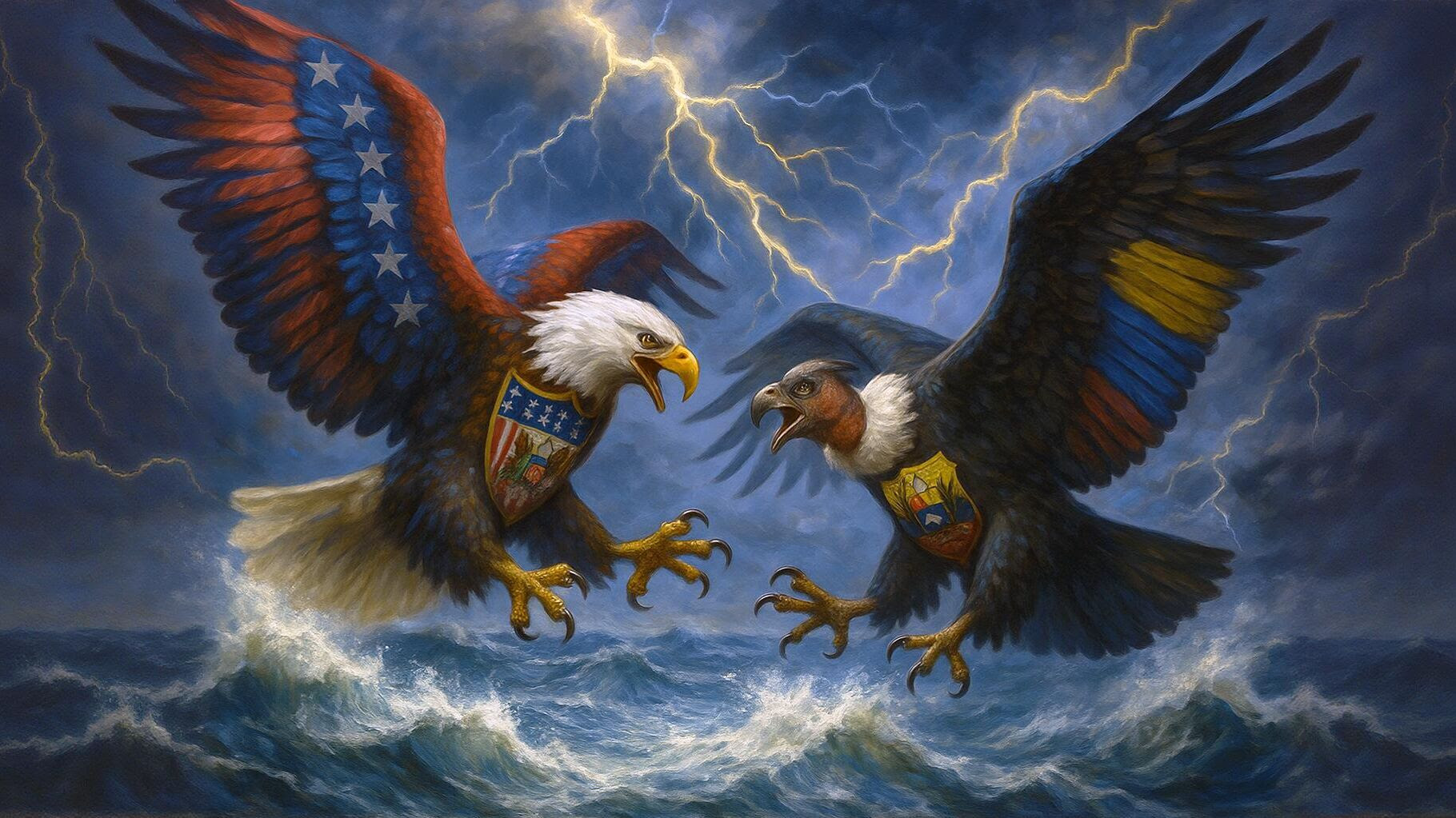
In this context, vessels transporting oil are characterized by American sources as "zombie tankers." The term originates from the fact that these ships often pretend to be under repair or in a state of partial scrapping to mislead U.S. vessels and evade inspection. In other words, this is a shadow fleet designed to bypass the American blockade, similar to those employed against Russia and Iran. Despite the imposing fleet and constant surveillance, the U.S. has managed to seize only a few ships, while every day up to 900,000 barrels of oil (equivalent to 123,000 tonnes) manage to escape, primarily toward China. The most characteristic example is the tanker Centuries, which loaded 1.8 million barrels of oil at a Venezuelan port despite not being subject to sanctions.
A game of cat and mouse
The incident demonstrates the effectiveness of Venezuelan deception techniques, such as deactivating or falsifying GPS tracking systems and simultaneous signal jamming by both Venezuela and the U.S. In other words, the region has turned into a geopolitical labyrinth where international law and maritime practice clash intensely with operational reality. It is worth noting that despite declarations of a "blockade" and a "battle against zombies," the Maduro regime shows no signs of collapse, while Venezuela remains a significant hub in the global oil market. U.S. moves seem more like a smokescreen or a show of force than an actual capability to control oil flow.
On a strategic level, the situation highlights two key issues. First, that actual U.S. influence in the Caribbean is limited, even with a colossal military presence. Second, that efforts to manage and monitor oil tankers prove the ingenuity and adaptability of Venezuelan shipowners and captains. In conclusion, if this is a battle against "zombies," the latter are clearly winning. The scene resembles a maritime game of cat and mouse, where the imposing U.S. Navy gives the impression of control, but in reality, oil continues to flow unimpeded toward markets like China, making the entire blockade more of a theatrical than a real strategic success.
Venezuela has what it takes!
Despite the impressive naval blockade imposed by Washington, Venezuela continues to react dynamically and defend its interests. The Maduro government has repeatedly denounced American actions as "maritime piracy" and a violation of international law, arguing that the seizure and violent interception of tankers carrying the country's oil constitutes an illegally imposed blockade and an unlawful act of sanctions enforcement. Caracas has even appealed to the United Nations, accusing the U.S. of violating maritime law and aggressive unilateral actions—actions which, it argues, undermine its sovereignty and the freedom of trade.
At the same time, Venezuela has mobilized legislative measures to resist the American blockade. The country's National Assembly recently approved a law aimed at criminalizing acts such as maritime piracy, blockades, and other international violations against its ships, with penalties that can reach up to 20 years in prison for those who support or finance such actions. This law is a response to ongoing U.S. pressure and expresses Caracas's will to protect both its national interests and the state oil company PDVSA, which remains at the center of confrontations since the U.S. intensified sanctions against the Venezuelan oil sector.
www.bankingnews.gr








Σχόλια αναγνωστών