

The 20 points of the peace plan proposed by Kyiv, which were discussed by American and Ukrainian officials during their recent meeting in Miami, USA, were released by the President of Ukraine, Volodymyr Zelensky. According to "RBK-Ukraine," there is no mention in the plan of recognizing Crimea and the Donbass as Russian regions, a parameter that implies the certain rejection of this peace plan by Moscow. Among other things, Moscow demands that Ukraine's refusal to join NATO be recorded and that the number of Ukrainian armed forces be limited. Furthermore, this plan mentions Ukraine's accession to the EU within a "defined and specific time," notes that the number of Ukraine's armed forces will amount to 800,000 soldiers in peacetime, and emphasizes that the US and NATO will provide security guarantees equivalent to NATO's Article 5. It also states that in the event of a resurgence of the conflict, there will be a military response and a return of sanctions against Russia, while noting that beyond the territorial issue, the matter of the Zaporizhia nuclear power plant also remains pending.
What is stated regarding the territorial issue
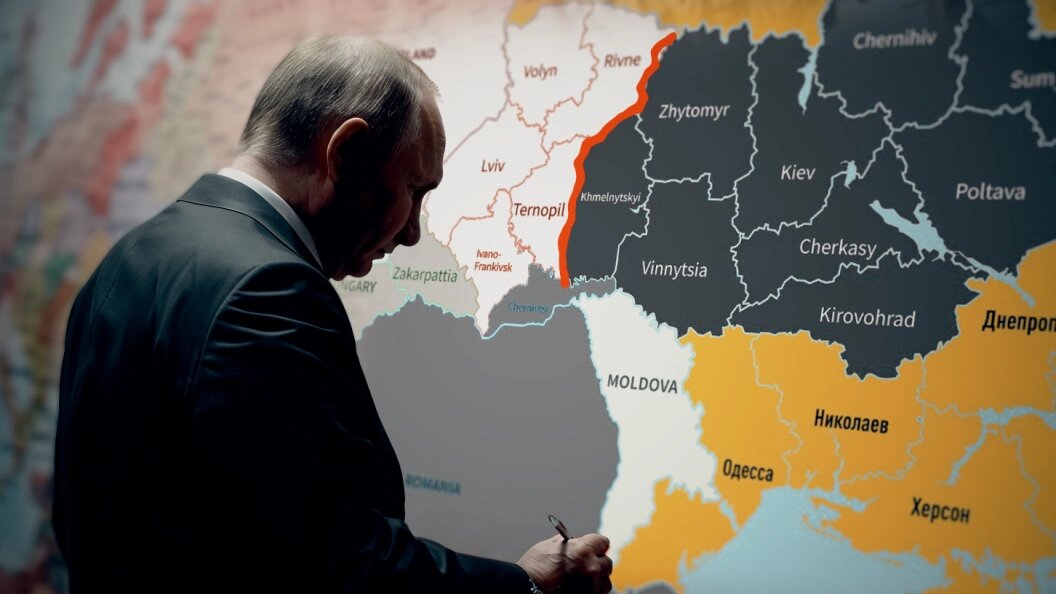
As Zelensky emphasized, the territorial issue is the most difficult point. Specifically, according to one of the options, Russia withdraws from the regions of Dnipropetrovsk, Nikolaen, Sumy, and Kharkiv. In the regions of Donetsk, Luhansk, Zaporizhia, and Kherson, the current status is maintained: we remain where we are. Moscow wants Ukraine to withdraw from the Donetsk region, while the US proposes a compromise: a free economic zone. According to Kyiv, if there is no agreement on the "remain where we are" formula, the free economic zone can only be introduced via a referendum.
Russia rejects
In any case, Russia has signaled in a categorical manner that the Ukrainian army must withdraw permanently and irrevocably from all of Donbass. Furthermore, the Russians emphasize that they are not going to have any discussion within the framework of negotiations regarding Donbass, Zaporizhia, and Kherson—territories that belong to Russia according to the Russian Constitution. Recently, Russian President Vladimir Putin warned that if Kyiv does not come to the negotiations with a real mood for resolving the true causes of the war, then the goals set by Moscow will be implemented by the Russian army.
No comment
For his part, Kremlin spokesperson Dmitry Peskov did not wish to make any comment. As he said, he will not comment on the information regarding Ukraine's plan, stating that communicating about the plan through the media is not appropriate. Russia has the ability to form its position and continue negotiations with the US through existing channels, following the completion of the mission of the special envoy of the Russian president, Kirill Dmitriev, to Miami. "At this moment, we intend, based on the information received by the head of state, to form our future position and continue our contacts as soon as possible through the channels currently operating," Peskov stated.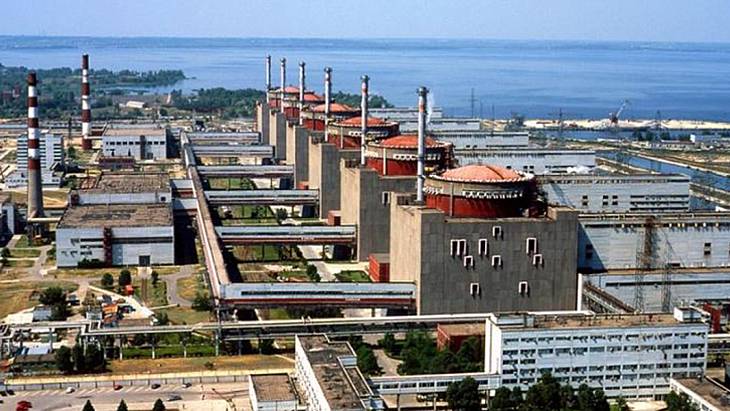
Unacceptable plan
The provisions concerning territorial issues and the management of the Zaporizhia nuclear power plant are absolutely unacceptable for Russia, argued Russian MP Alexey Chepa. "First of all, we saw no specific reference in Zelensky's statement regarding whether or not Ukraine will join NATO. Regarding the Zaporizhia nuclear power plant, we had proposed a compromise solution for joint management of the plant with the US. Ukraine's participation in management would only add risks related to potential provocations," the Russian MP pointed out, stating that the provision for the territories will require significant revision. "Neither the US nor Russia has revealed the content of the preliminary agreements. This stance is deliberate because for the process to be effective, the issue does not need to be constantly projected, as otherwise forces opposing peace could enter the game. The greater the publicity around the issue, the harder it will eventually become for the process to move forward," the politician explained.
Zaporizhia nuclear power plant also pending
From the Ukrainian President's formulations, a second point emerges on which no agreement has been reached: the Zaporizhia nuclear power plant. Specifically, it is mentioned that the US proposes joint management of the plant by Ukraine, the US, and Russia, with each side receiving a share of the profits according to a 33% formula for each, while the main manager will be America. Ukraine's compromise proposal concerns joint operation of the plant with the US and Ukraine on a 50-50 basis. Additionally, it states that the Zaporizhia nuclear power plant, the city of Energodar, and the Kakhovka dam must be demilitarized.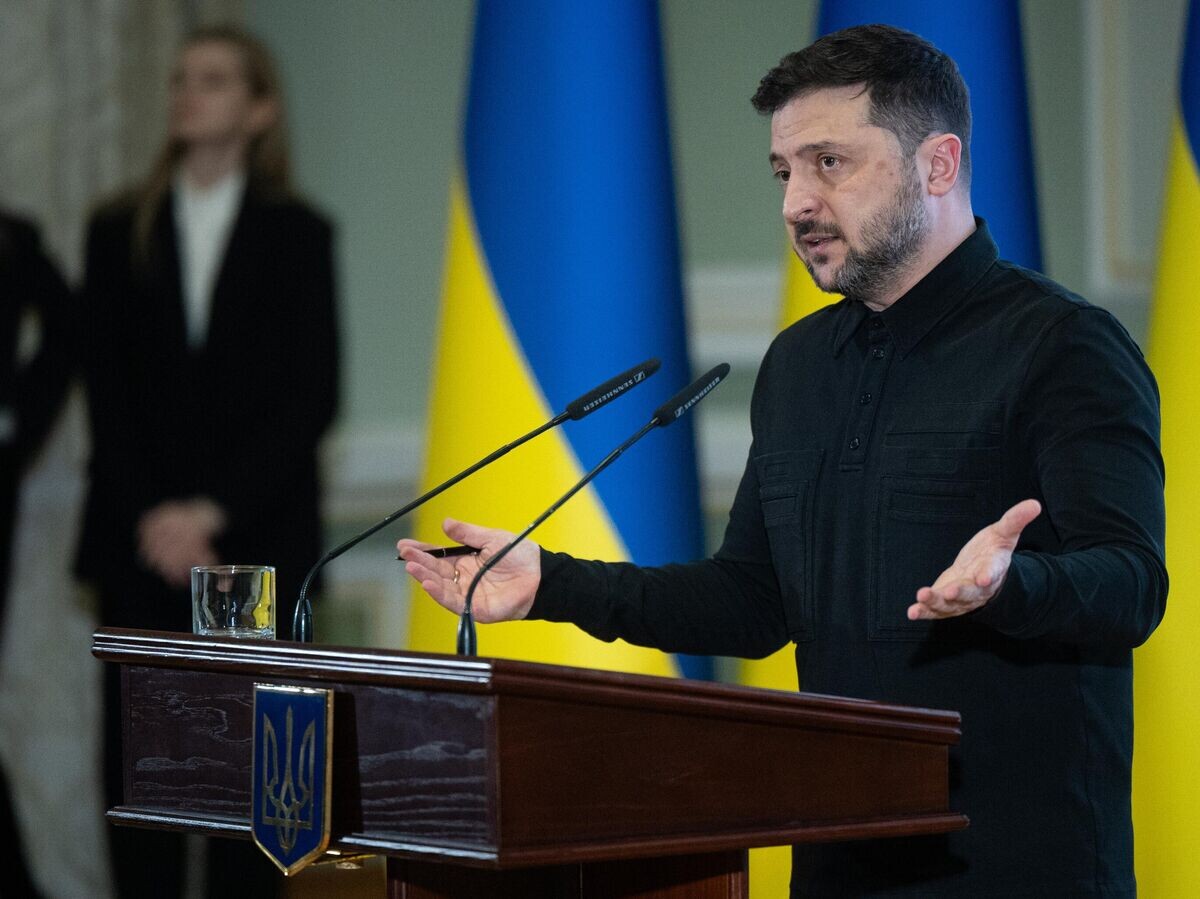
The 20 points of the plan
According to Zelensky, the 20 points of the peace plan include:
-
Ratification of Ukraine's sovereignty.
-
Non-aggression agreement between Russia and Ukraine, monitoring of the contact line.
-
Security guarantees.
-
The number of Armed Forces of Ukraine must reach 800,000 people in peacetime.
-
The US, NATO, and Europe will provide Ukraine with security guarantees according to Article 5 of the North Atlantic Treaty. In case of a Russian invasion of Ukraine, a military reaction and restoration of sanctions will be provided.
-
Russia will guarantee the policy of non-aggression toward Europe and Ukraine in all necessary laws.
-
Ukraine will become an EU member within a set period (Kyiv wants an accession date set).
-
Global development package for Ukraine, to be defined in a separate investment agreement.
-
Creation of several funds for resolution of restoration issues. The goal is to attract 800 billion dollars.
-
Ukraine will accelerate the process of concluding a free trade agreement with the US.
-
Non-nuclear status for Ukraine.
-
Status of the Zaporizhia nuclear power plant.
-
Commitment by Ukraine and Russia to implement educational programs in schools that enhance understanding and tolerance toward various cultures and the elimination of racism and prejudice.
-
Status of the occupied territories.
-
Obligation of Russia and Ukraine not to change the agreements by force.
-
Russia will not impede the use of the Dnieper River and the Black Sea by Ukraine for commercial activities.
-
Exchange of prisoners according to the "all for all" principle, return of citizens, children, and political prisoners.
-
Ukraine should hold elections as soon as possible after the signing of the agreement.
-
Legal binding of the agreement. Its implementation will be monitored by the Peace Council, headed by Donald Trump.
-
After approval of the document by the parties, a full cessation of hostilities will be implemented immediately.
Additions
In addition to the basic plan with the points, additional additions are being discussed regarding: • A tripartite document (Ukraine, US, and Europe) on security guarantees. • A bilateral document—security guarantees from the US for Ukraine. • A Roadmap for Ukraine's Prosperity—a document drafted with the US for restoration and economic development, which includes the vision for development until 2040.
Deadlock due to Zelensky's intransigence
Ukrainian journalists present at the meeting with President Zelensky clarified that the points presented by the Ukrainian president are the current version of the peace agreement agreed upon by Ukraine and the US, but without changes from Russia's side. However, at this moment this is not particularly important, as Zelensky admitted that on the critical point regarding territories, there is no compromise: he does not agree with the withdrawal of Ukrainian troops from Donbass, and without the resolution of this issue, progress on all other points is not possible. Although the President of Ukraine constantly points out that the withdrawal of troops is a demand only of Russia, while the US "proposes compromise solutions," according to numerous media leaks and hints from Trump, the withdrawal of the Armed Forces of Ukraine from the Donetsk region is a demand of both Moscow and Washington. From Zelensky's words, it appears he does not want to comply with this demand, proposing to "stand where we are," i.e., to stop the war at the front line. However, Russia does not agree with this.
Creation of a free economic zone in Donbass
Zelensky, however, leaves open the possibility of creating some free economic zone in Donbass. Yet, first, it is not clear exactly what this means. In Trump's plan, which had been published in the media, no free economic zone was mentioned. Instead, it stated that after the withdrawal of Ukrainian troops from the Donetsk region, a demilitarized zone would be created, which would be under Russian control. That is, the Russian army would not enter there, but all other Russian structures (civil administrations, police, FSB, Russian National Guard, etc.) would be present. According to statements by the assistant to the Russian president, Yuri Ushakov, Moscow seems to agree with this scenario.
Withdrawal scenario
Secondly, perhaps Zelensky is using the term "free economic zone" to cover his potential readiness to withdraw troops from the Donetsk region and hand over control to Russia. However, he adds as a necessary condition the holding of a referendum on this issue. And as he has stated in the past, for this to take place, military operations at the front line would have to stop, something to which Russia has already responded negatively. Also, the result of the referendum would likely be negative. In other words, the Ukrainian authorities continue to not wish to satisfy the critical demand of the US and Russia.
The big question
Undoubtedly, there is the big question of whether Moscow will agree with the rest of the points of this plan, as well as with the absence of certain positions that were in Trump's original plan, which included 28 points. For example, the formalization of the absence of claims between Ukraine and Russia regarding the results of the war. However, without the resolution of the territorial issue, this does not matter much, as the territories are the key.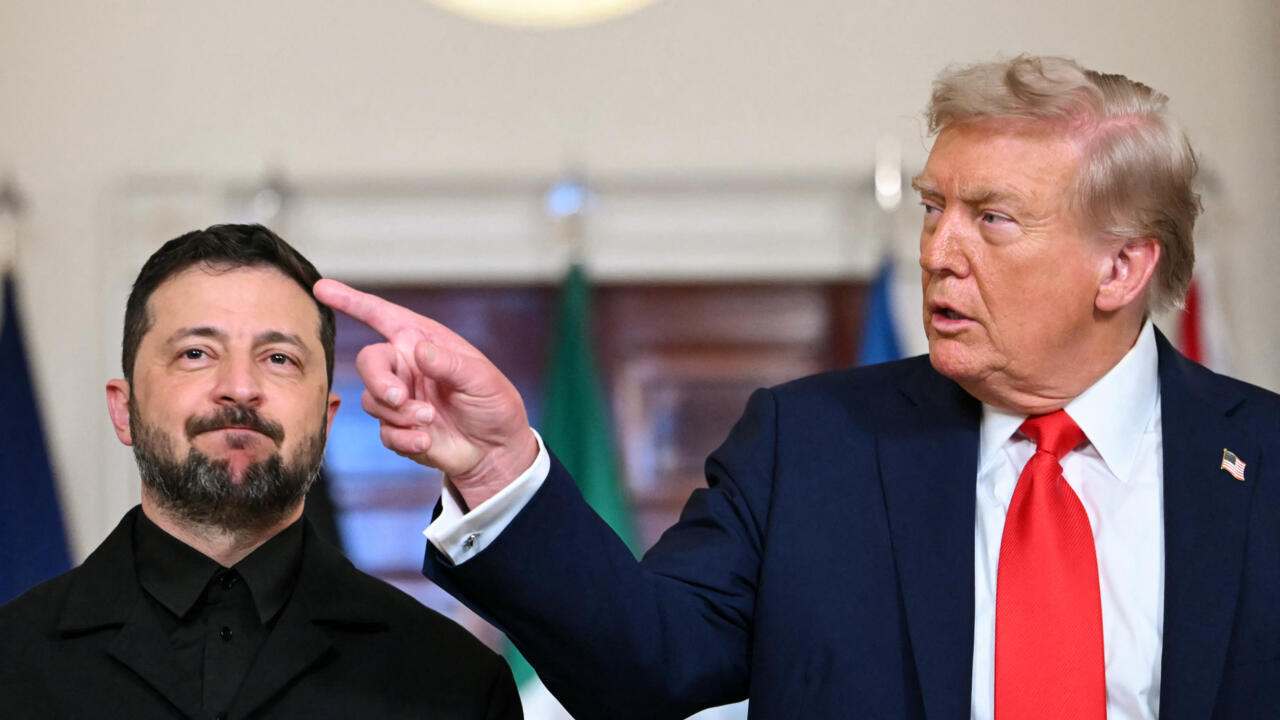
Trump's stance
From various media reports, it appears that Trump is trying to change Kyiv's stance regarding the withdrawal of troops from Donbass through the "carrot"—the security guarantees for Ukraine, which in the plan presented by Zelensky are equated with Article 5 of the NATO charter. But so far, this "carrot" has not convinced Zelensky to make territorial concessions. The reason is clear: in Kyiv, they strongly doubt whether the US and NATO are truly ready to get involved militarily in favor of Ukraine or at least to intercept Russian missiles in case of a new conflict, despite any guarantees. Therefore, Zelensky is ready to accept the "carrot," but he will hardly make serious concessions for it.
Only under pressure
Kyiv's stance regarding the withdrawal of troops and other controversial conditions can only change in case of very severe pressure from Trump or a serious deterioration of the situation at the front. But it is not certain if such a serious deterioration will occur. Moreover, if it does, Russia's demands may become even stricter. Also, it remains uncertain whether Trump is ready to exert further pressure on Kyiv to accelerate the change in Zelensky's position. Basically, this is the key to the course of negotiations.
Zelensky's pursuit
Zelensky will likely try to reverse the situation in his favor, convincing Trump to agree with his own version of the plan, which includes points that Moscow will certainly reject, and then he will call on Washington to start pressuring the Kremlin, and not Kyiv. But here too it is not clear if Trump is ready to do so, given that any pressure measures against Russia (sanctions, deliveries of new types of weapons) will not bring an immediate result but could lead to a sudden escalation in Russia-US relations, even up to threats of nuclear war.
The scenarios and the 3 paths
Therefore, it is possible that Trump will choose the option of allowing the sides to fight a little longer, waiting for the change of the situation on the battlefield or internally in Ukraine or Russia to create more favorable conditions for a peace agreement over time. However, this may take a long time. And in less than a year, midterm elections will take place in the US, in which Trump's opponents will certainly mention the failure of his efforts to end the war in Ukraine. Therefore, the critical question is which of the three paths (pressure on Kyiv, pressure on Moscow, or simply waiting) Trump will choose in the near future. And at this point, the ball of peace negotiations is in his court, and not in the court of Zelensky or Putin.
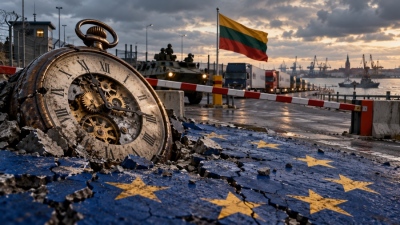
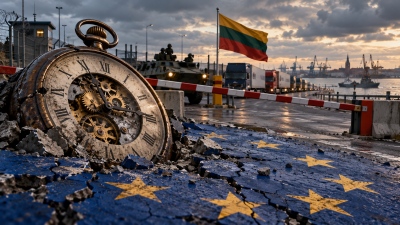
Accession to the EU
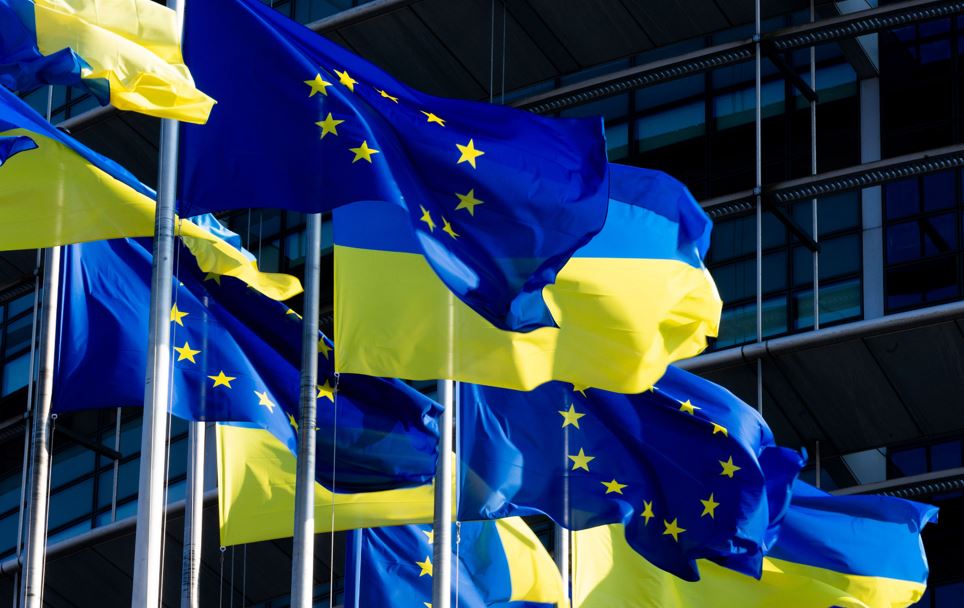
The version of the plan for resolving the crisis published by the Ukrainian agency Ukrinform and proposed by Kyiv provides for Ukraine's accession to the European Union. The plan states that Ukraine will become a member of the EU in a defined and specific period of time and will acquire a short-term preferential right of access to the European market. "Ukraine's accession to the EU could hit the union from within and be an unbearable burden for the member states," argued the spokesperson for the Russian Ministry of Foreign Affairs, Maria Zakharova, emphasizing that the Kyiv regime is using the issue of the country's integration into the EU to "stay afloat." As Zakharova pointed out, Ukraine does not meet any of the basic conditions for EU membership.
No lifting of sanctions on Russia
Also, as the Ukrainian agency Ukrinform points out, the plan proposed by Kyiv for resolving the conflict does not include any point on the lifting of sanctions against Russia. "We do not see a lifting of sanctions in this agreement between Ukraine and America, but we understand that America will proceed with a gradual lifting of sanctions after the end of the war," the agency points out, citing Zelensky's words. Russia has repeatedly stated that the West made a serious mistake by refusing to buy energy resources from Russia, and that it will thus find itself in a new, stronger dependence due to higher prices. In Moscow, they argue that those who refused to buy will eventually continue to buy more expensively through intermediaries and will continue to be supplied with Russian coal, oil, and natural gas.
No comment on Russian assets
Also, the peace plan proposed by Kyiv for resolving the conflict includes no reference to the use of frozen Russian assets. According to the 20 points of the plan released, no mention is made of Russian funds. It is noted that during the recent EU Summit, European leaders decided to provide Ukraine with a loan of 90 billion euros, based on the EU budget, and not to touch Russian funds. The Prime Minister of Belgium, Bart de Wever, stated that all EU countries, after the summit and discussions, realized that the seizure of Russian assets entails financial and legal risks that are difficult to manage.
www.bankingnews.gr




Σχόλια αναγνωστών