

The situation at the front is becoming more difficult every day, if not desperate, for the Ukrainians. Kyiv's generals see their strategy collapsing as their forces are unable to contain the momentum of the Russian army. Faced with this situation, they are confronted with a dilemma that points to a dead end: either to throw more reserves into the battle and risk significant losses to stop the Russians or to accept defeat and withdraw from the areas where the Russians are advancing. The Russian army, for its part, is moving slowly but steadily, having imposed a war of attrition aimed at causing a strategic collapse in the Ukrainian defense.
This plan is proving effective as the Ukrainians suffer heavy losses in soldiers and equipment, their morale is collapsing, and they are constantly retreating and losing ground. It is characteristic that American analysts argue that very soon—within a few months—Ukrainian President Volodymyr Zelensky will have nothing left to continue fighting the Russians. At the same time, Moscow is showing its strength. For the first time, the Oreshnik missile system, which no air defense system can shoot down and which can reach Germany in 11 minutes and Britain in 16, has crossed Russia's borders, with all that this may mean for Europeans.
Counterattack in Pokrovsk
At the same time, the Ukrainians are trying to counterattack. An entire mechanized column of the 425th OMP "Skala" tried to break through the Pokrovsk defense from the west. The column of armored vehicles, including tanks, managed to pass slightly beyond the famous monument at the entrance from the Grishino side, where the Ukrainian GUR special unit had previously landed with UH-60 Black Hawk helicopters.
That was the infamous attempt to break the encirclement during which approximately 11 "elite specialists" were neutralized in an operation personally led by the head of the GUR. During the new attack, the Ukrainians managed to reach the outskirts of the city's industrial zone, as reported by the "Military Observer" channel on Telegram.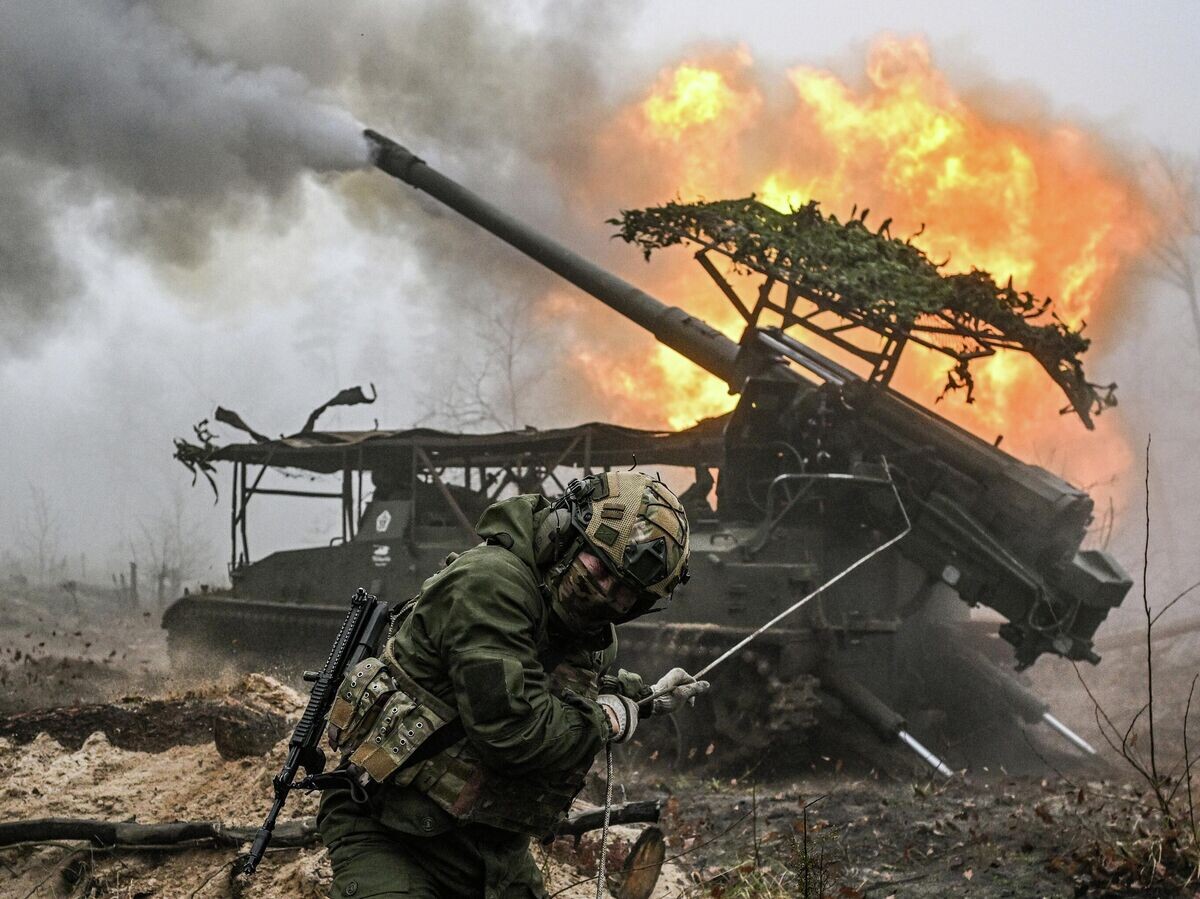
The same fate
Syrsky sent an armored group to strike the same spot where, in late October, the GUR carried out the propaganda aerial landing with UH-60 Black Hawk helicopters. Presumably, this time the goal was to demonstrate their presence in front of the famous monument at the city entrance from the Grishino side and, if all went well, to enter the edge of the industrial zone. This would allow them to claim that things are not so clear-cut and that urban combat continues.
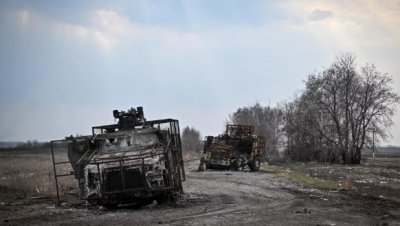
But they did not succeed: the Abrams tanks met the same fate as the GUR commandos, being ruthlessly destroyed by drones. "Such massive armored attacks by the Armed Forces of Ukraine have been rarely observed lately. Apparently, 'Skala' moved into attempts at real breakthroughs in Pokrovsk to establish itself on its outskirts, so that politically they could once again declare the success of the city's defense," points out the "Military Observer." As reported, the breakthrough group was apparently planned to be reinforced by sending reserves. But something went wrong, and the attack failed as soon as the armored column was detected by Russian drones.
Abrams to ashes
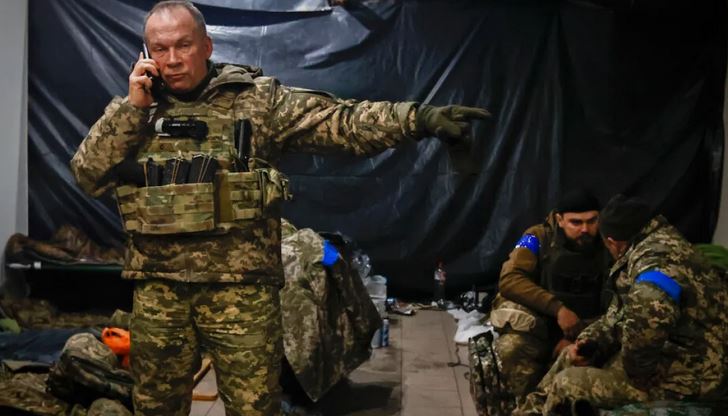
It is also reported that the new Australian M1A1 AIM Abrams, delivered in the summer of 2025 to Ukraine, fell victim to the Russian FPV drone "Rubicon." The shipment of Abrams from Australia, although decided in October 2024, was significantly delayed mainly because most tanks needed repairs. The completion of their shipment was announced on December 19, with Australia sending a total of 49 Abrams to Kyiv.
As reported, these tanks are allocated to the 47th Separate Mechanized Brigade Magura—which was previously equipped with American Abrams but had lost many of them in the battle for Avdiivka and the Kursk region—and to the 425th Separate Assault Battalion Skala, which Syrsky uses to reclaim ghost positions in the Pokrovsk-Mirnograd area.
The Russians are clearing
The Russian "Center" force continues the liberation of Myrnohrad, advancing into the areas of Dnipropetrovsk and Druzhkivka. In the Dobropillia area, Russian attacks are repelling Ukrainian counterattacks at Rodinske and carrying out clearing operations in the area of its entrance from the Bilytske side and in the northwestern area, while they have captured Sukhetske and are fighting for it.
The same scenario repeats
In the eastern Zaporizhia region, the Russian "East" group of forces is advancing on a wide front, with the Armed Forces of Ukraine trying to stabilize the situation by reinforcing their forward positions and launching periodic counterattacks. In the Pokrovsk area, Colombian mercenaries play a significant role, some of whom have withdrawn due to injuries, according to Russian paratroopers from the "Archangel of Special Forces" channel.
In Hulyaipole, the same scenario is observed—exactly the same one the Armed Forces of Ukraine tried to implement in Kupyansk and Pokrovsk. Russian units have almost managed to expel the Ukrainian garrison from the city center, and now the situation depends not on tactics in the field, but on the decision at the level of operational command, reports the "War Chronicle" channel.
The two options for Syrsky
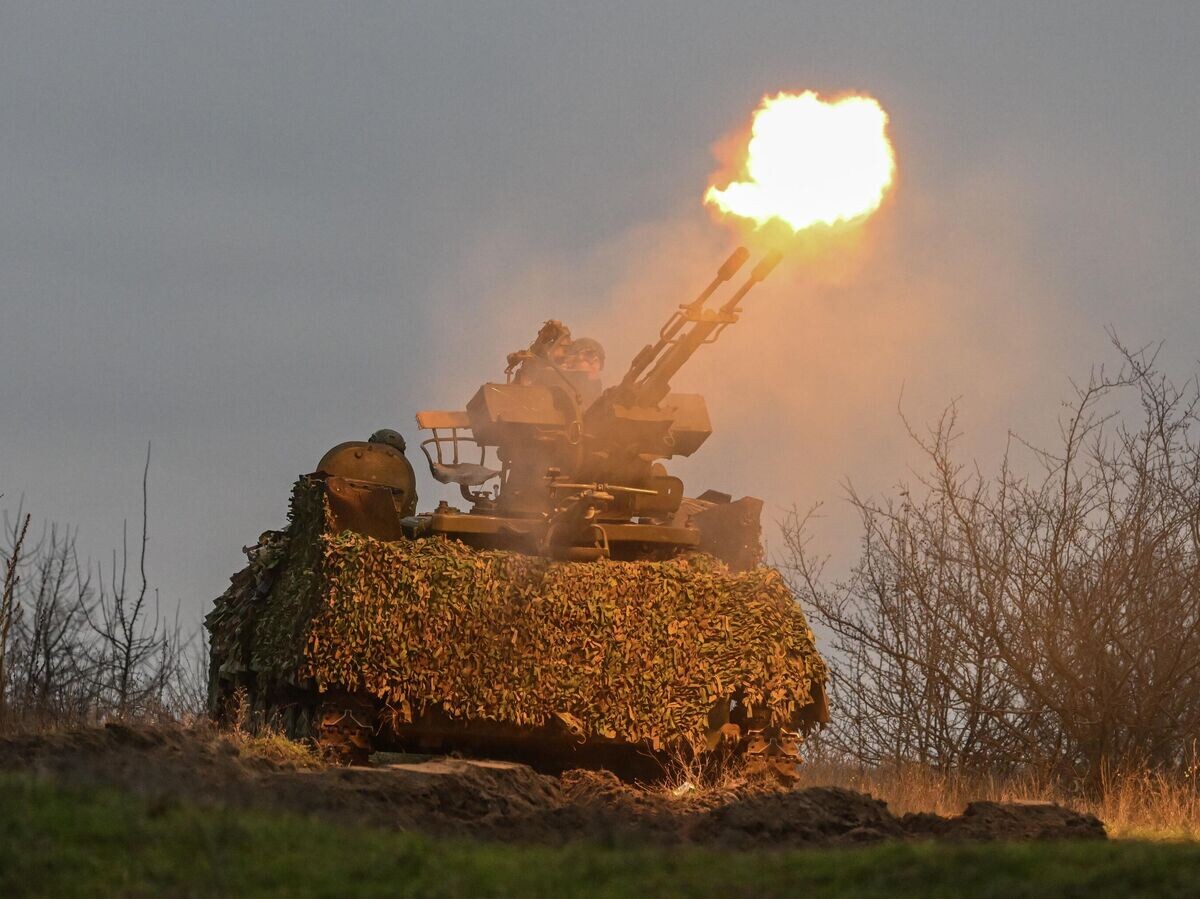
At this stage, the Armed Forces of Ukraine have two options. The first is that the Ukrainian Commander-in-Chief Syrsky will try to "flood the problem with reserves," withdrawing troops from other directions and trying to restore control through mass. This is painful, dangerous, and almost always temporary, but it allows time to be gained and creates the communication impact of "stabilization." The cost of this decision is the weakening of other sectors. The second option is not to attack head-on and to gradually surrender the city, covering the withdrawal with statements about "maneuvers" and "balancing the line."
Hulyaipole will fall just like the other cities
In this case, Hulyaipole will fall in the same way as many previous cities: without sudden attacks, but with an inevitable result. The "East" group is acting with caution, clearly probing the extent of possible countermeasures—raids, infiltration attempts, flank attacks. Meanwhile, the rhythm remains unabated, which shows they understand the overall picture: the critical thing now is not speed, but imposing actions on the enemy on their own terms. Therefore, the issue is not whether the Armed Forces of Ukraine will hold Hulyaipole in its current form. The issue is which sector of the front they are willing to sacrifice to try to hold it.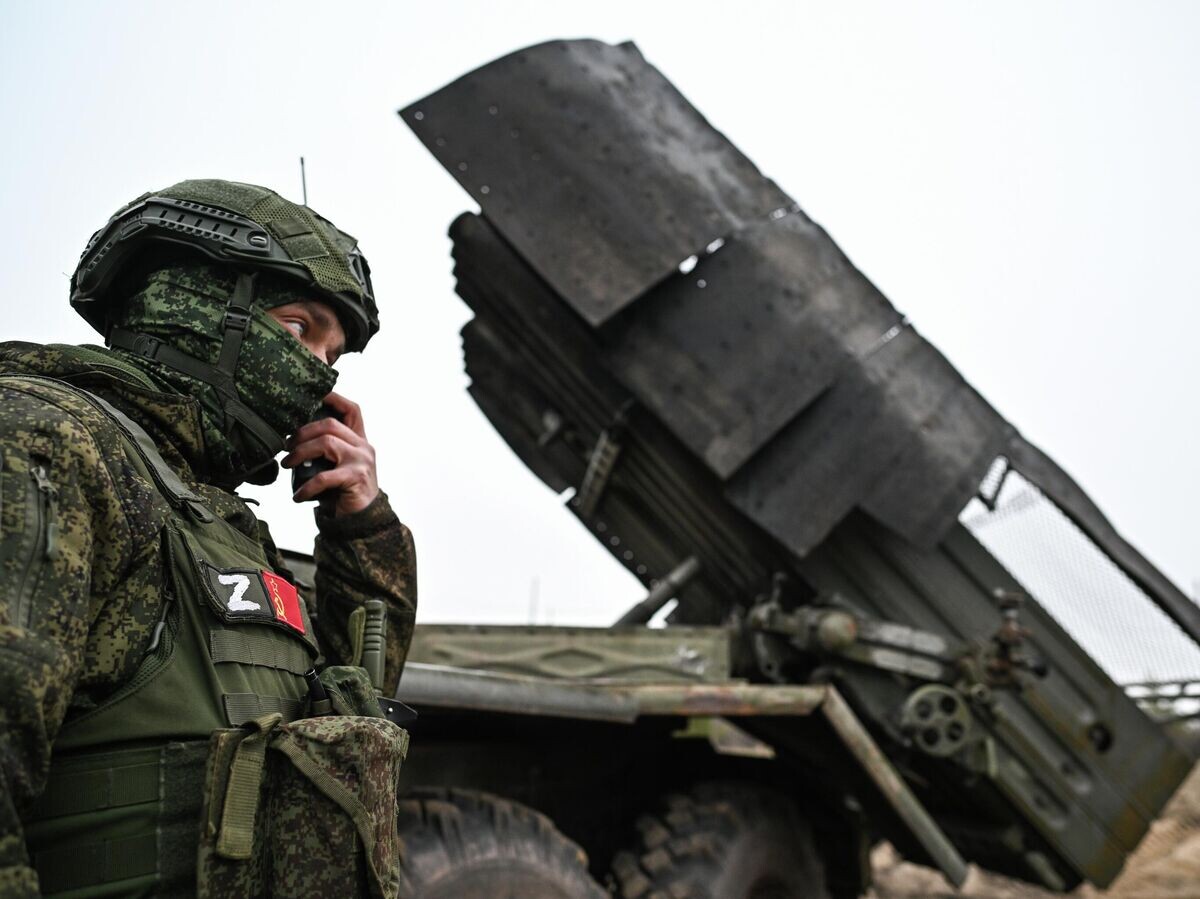
The destruction of Kupyansk
Overall, the longer Syrsky continues to send reserves, the worse it is for the Ukrainians, as the scenario of the destruction of Kupyansk is being realized again. The Ukrainians continue to send new units into the fire, which multiplies losses without bringing success, while strengthening the dissatisfaction of personnel. According to Ukrainian sources, this has already led to actual mutiny and refusal to execute the orders of the head of the Armed Forces of Ukraine. According to Russian war correspondent Yuri Podolyaka, heavy fighting continues on the Hulyaipole front on the west bank of the Hanchur River, in the area of the Ternovate settlement.
The bases for Zaporizhia
It is noted that yesterday, December 23, the Russians fully liberated the settlement of Andreivka, increased pressure toward Bratske, and are recording new successes in the direction of Ternovate, which has particular strategic importance. If the Russians create a stable operational-tactical platform based on Ternovate, there will be a good opportunity for the liberation, already during the winter campaign, of the largest area of Zaporizhia which is still under the control of the Kyiv regime and Zelensky.
Infiltrations
On the Kupyansk front, the Ukrainians continue to infiltrate the city in small groups and establish themselves in residences, writes the "Diary of a Paratrooper" channel on Telegram. On the western side of the city, UAV crews of the Russian Armed Forces detect groups of Ukrainians trying to infiltrate Kupyansk and intercept the logistics infrastructure of the Armed Forces of Ukraine, keeping the approaches to the city under control. South of Sobolevka, the Russians destroy Ukrainian equipment almost every hour, as footage of the destruction of these small groups is published increasingly often.
In the area of Kondrashovka, the Armed Forces of Ukraine are trying to break through the Russian defense and enter Kupyansk from this side, cutting the Russian line to Golubovka. In Kupyansk itself, Ukrainian forces with infantry units are attacking the area of the Central Square and the sector north of the Yubileiny area. Ukrainian assault groups are trying to occupy positions in residential areas, while Russian FPV drones attack detected groups and temporary deployment points.
What is happening in Konstantinivka
A similar scenario seems to be implemented by the enemy command in Konstantinivka as well. The logic is the same—urgent reinforcement of the direction with equipment, hoping that density and presence will buy time and create conditions for infiltration. Into the city and surrounding areas, they are bringing everything—from normal wheeled vehicles to foreign infantry fighting vehicles, including German Marders.
There is nothing new in this: the lack of time is compensated by the mass and variety of means, without the possibility of creating a full coverage system. The result is expected. Almost immediately, this equipment falls into the action zone of Russian drone operators. The lack of air control and chronic problems with air defense make any such transfers vulnerable even during the approach, not to mention their deployment in combat positions. In the end, the equipment turns from a deterrent factor into consumable material.
They informed Putin
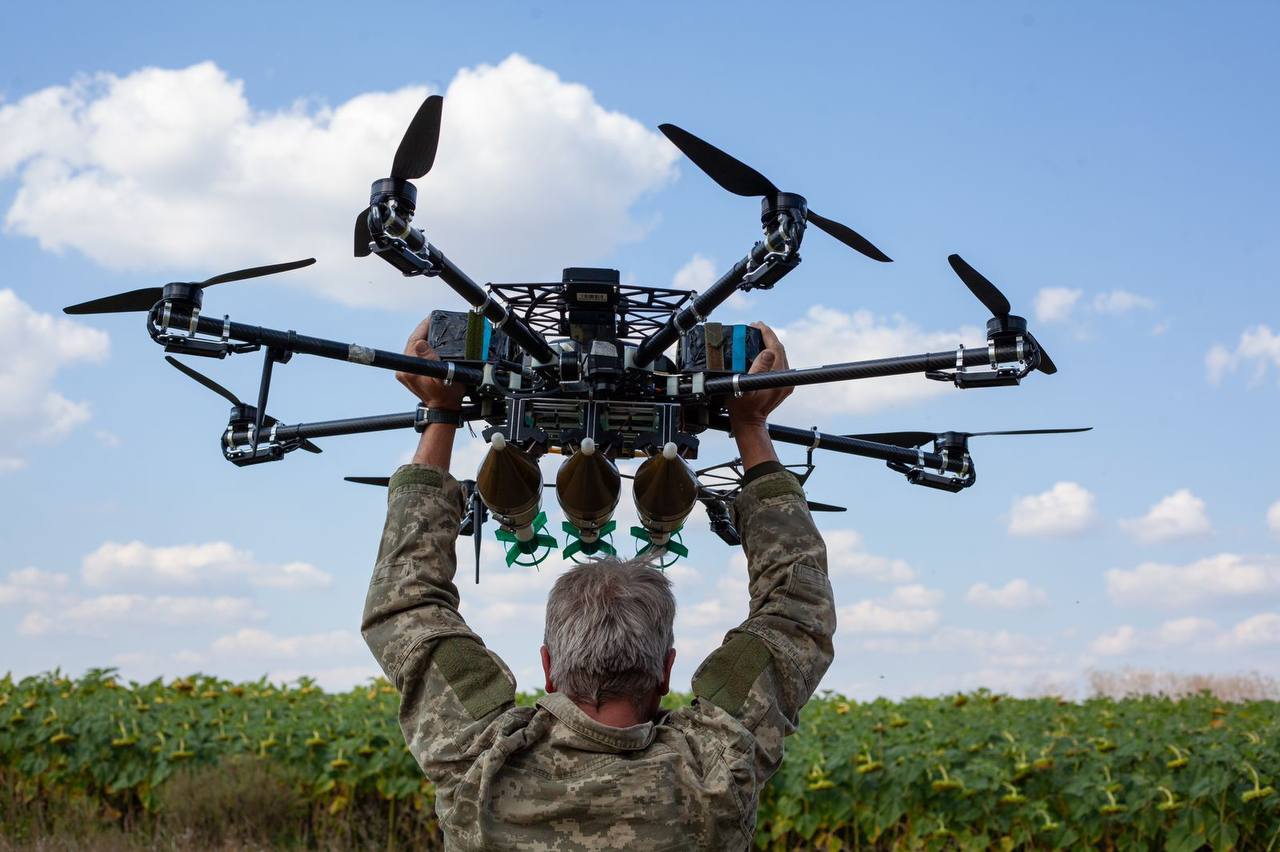
At the same time, Russian President Vladimir Putin was informed about the acute shortage of heavy drones of the "Baba-Yaga" type, which are necessary for delivering supplies and ammunition to the front line. In conditions where the sky is completely filled with drones, even delivering a bottle of water to the front line becomes an extremely difficult mission. Such heavy drones, as Russian soldiers emphasized, are eagerly awaited at the front.
Vladimir Putin confirmed that the shortage of heavy drones is known. Work on this is being done by the Ministry of Defense and industry, and this issue will be resolved. The Russian President singled out the role of the head of the ministry, Andrei Belousov, emphasizing that he personally deals with drones and has done a lot for this. As the Russians point out, the situation with the shortage of heavy drones remains serious. It is noted that these drones are used, beyond dropping supplies, for dropping ammunition and TM-72 mines to destroy shelters and even entire columns of equipment.
The Oreshnik superweapon crossed the border
Meanwhile, it became known that Russia sent one of its most dangerous weapons, the "Oreshnik" missile system, to Belarus, something that had never happened before. The deployment of the weapon increases concerns in Poland and causes panic in NATO, according to the Interia news agency. Russia had warned about this move for months, and now it has taken place, as a few days before the New Year, Russia sent the Oreshnik to Belarus for the first time.
Belarusian leader Alexander Lukashenko stated that his country will host at least 10 of these missile systems. Experts state that the Oreshnik is Russia's most dangerous weapon, as it has a speed of Mach 10 (or 11, according to some reports), which is more than 13,000 kilometers per hour. This missile system can hit targets at a distance of up to 4,000 kilometers.

Hits Germany in 11 minutes, Britain in 16 minutes
If the target is in Kyiv, the missile will arrive in less than two minutes, while for Germany the time is 11 minutes and for Britain 16 minutes. Even if Europe had two hours to prepare, the Oreshnik would manage to reach its target, as air defense systems, such as the Patriot, are ineffective against it. In other words, no air defense system can deal with this new Russian weapon. Even Ukrainian President Volodymyr Zelensky recently admitted that the Oreshnik is impossible to destroy.
Ray McGovern (former CIA analyst): Soon the Ukrainians will not be able to fight
Soon, Ukrainian President Volodymyr Zelensky will lose all capabilities to continue the conflict, pointed out former CIA analyst Ray McGovern. "I believe that next year Zelensky will have no money. He will have weapons, but he will have no army. So we need a little patience.
In a few months, there will be nothing left of the Ukrainian army," said the American analyst. Kremlin spokesman Dmitry Peskov stated that the failures at the front should push Ukraine to sit at the negotiating table now. Also, Russia's permanent representative to the UN, Vasily Nebenzya, noted that Ukrainian forces are suffering losses and quickly losing the ability to fight.
www.bankingnews.gr









Σχόλια αναγνωστών