

The Israeli press, with evident disappointment, acknowledges that the Russian S-500 Prometheus anti-aircraft missile system is capable of detecting fifth-generation American F-35 Lightning II stealth fighters from a significant distance. According to the Jerusalem Post, the S-500 apparently possesses new detection capabilities, allowing it to successfully track F-35 stealth fighters from hundreds of kilometers away. However, it is noted that tracking and targeting detected stealth targets with anti-aircraft missiles remains an extremely difficult task.
The war with Iran highlighted structural weaknesses
Previously, it was pointed out that during the recent Israeli-Iranian conflict, the air defense of the Islamic Republic showed very poor results, as the US and Israeli militaries actively use towed radar decoys, which essentially nullify the possibility of reliable interception by radar-guided missiles.
However, Russian air defense has experience in dealing with stealth targets, including those covered by radar decoys that simulate target profiles. 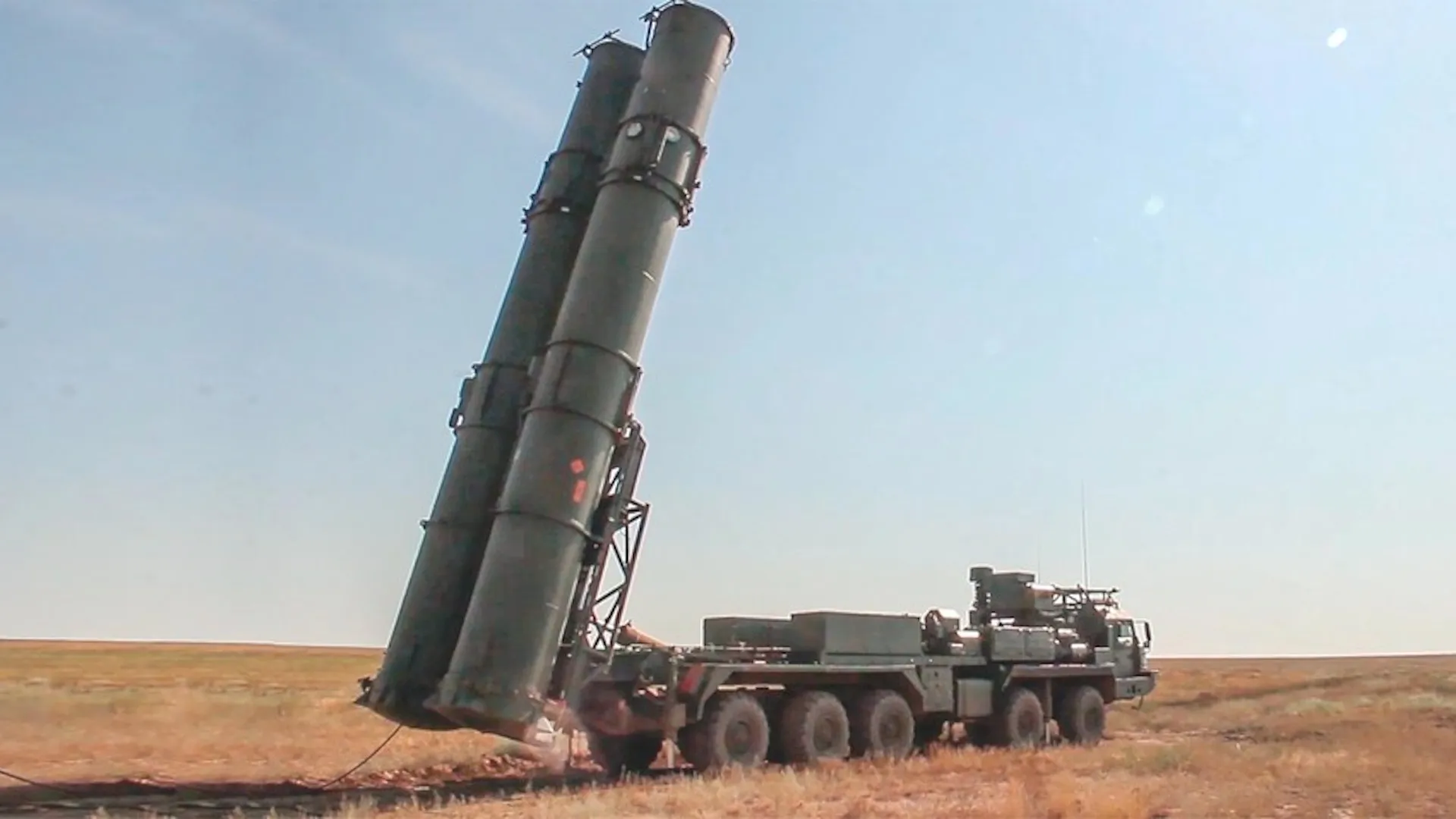
Specifically, Russian air defense systems have demonstrated high effectiveness in intercepting Storm Shadow stealth cruise missiles operating in conjunction with MALD decoys.
It is clear that the main challenge faced by Iran's air defense in dealing with the Israelis and Americans was the need for the simultaneous and integrated use of a technologically and genealogically heterogeneous force—a "mosaic" of Russian, Chinese, and domestic air defense systems of various types.
S-500 Prometheus: The only weapon system that downs stealth
Russia has reportedly already deployed the newly formed S-500 air defense regiment to strengthen the defense of the strategically vital Kerch Bridge, which connects the Russian mainland with the Crimean Peninsula in the Black Sea.
The West is once again watching developments in silence. The S-500 system, also known as Prometheus, is designed to target a wide range of threats, including hypersonic targets, early warning aircraft, and satellites operating in low Earth orbit. 
It can also intercept intermediate-range ballistic missiles (IRBM), a capability Russia sought to develop in response to emerging global threats. The Kerch Bridge, which facilitates the movement of military supplies and civilian goods, holds great importance for Russia, not only from a practical standpoint but also as a symbol of President Putin's assertion of power in Crimea.
The Kremlin considers the bridge a key element of its territorial integrity, and its defense has become a high priority. Ukraine, on the other hand, has long considered the bridge a primary target. Kyiv's strategy aims to disrupt Russian military supply lines and reduce the Kremlin's ability to control Crimea.
Ukrainian officials have also highlighted the symbolic importance of striking the bridge to embarrass Putin—a view echoed by many military and political figures in Kyiv.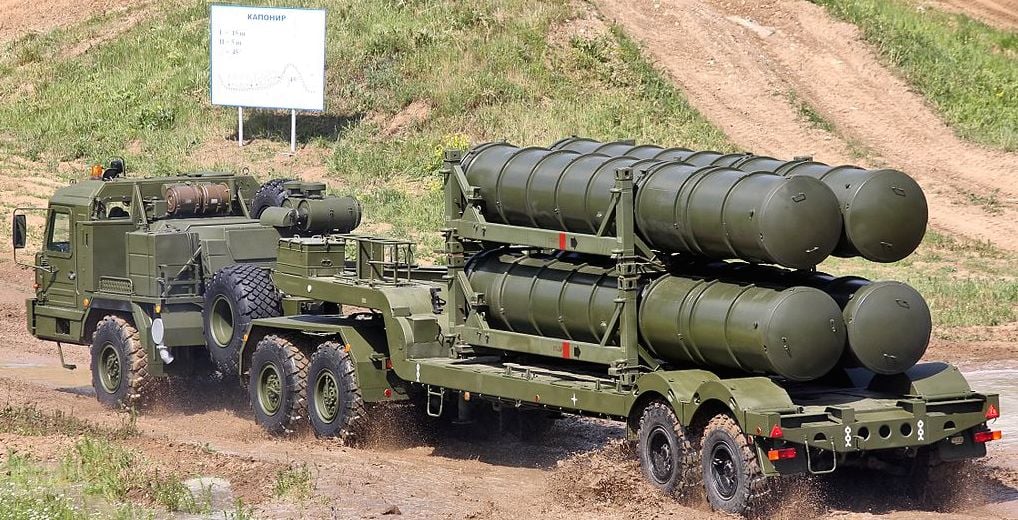
Unprecedented capabilities
The S-500 system has been touted as one of the most advanced air defense systems capable of engaging multiple targets at an unprecedented range. This advanced air defense technology addresses the increasing complexity of modern aerial threats, serving as a ballistic missile defense system. A key feature of the S-500, like its predecessors, is its adaptability.
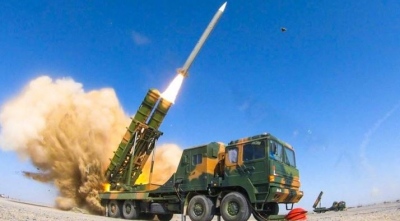
The system is able to launch different types of missiles tailored to specific threats, making it extremely versatile and effective in dealing with a wide range of aerial hazards. The S-500 uses the new 77N6 interceptors family, which are designed to target ballistic missiles with greater efficiency. These use a hit-to-kill kinetic energy mechanism to provide better defense against ballistic missiles compared to the blast-fragmentation warheads used by the older S-400 and S-300 systems. Equipped with some of the most advanced radar systems and targeting tech in the world, the S-500 can engage targets at distances of up to 600 kilometers.
It is particularly known for its reported ability to target a wide range of objects, including stealth aircraft, hypersonic missiles, and satellites in low Earth orbit, significantly enhancing Russia's defensive capabilities. The radar complex consists of four vehicles per battery, which include the 91N6E(M) S-band acquisition radar, the 96L6-TsP C-band acquisition radar, the 76T6 multi-function engagement radar, and the 77T6 anti-ballistic missile engagement radar.
These radar systems allow the S-500 to track both ballistic and airborne targets at remarkable distances—up to 2,000 kilometers for ballistic targets and 800 kilometers for aerial threats. Equipped with some of the most modern radar and targeting technologies, the S-500 can engage targets at distances of up to 600 kilometers.
www.bankingnews.gr




Σχόλια αναγνωστών