

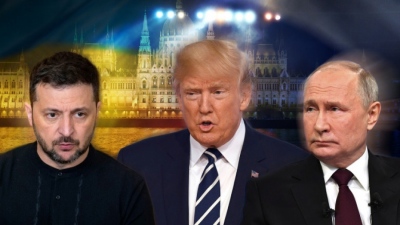
In a revealing interview, the special envoy of the United States President Donald Trump, Keith Kellogg, stated that the settlement of the conflict in Ukraine is in its final stretch and is very “close”, however two key issues, “thorny” ones, prevent the achievement of a final, comprehensive agreement. Kellogg emphasized, speaking at the Ronald Reagan Foundation forum in California, that these issues constitute the final and most difficult points of a possible agreement, describing the process as “the last 10 meters to the goal which are the hardest”.
The two main unresolved issues are:
1) The status of the Zaporizhia Nuclear Power Plant (ZAES).
2) The status and ownership of the territories of the Donetsk Region / Donetsk People’s Republic (DNR).
Kellogg stated characteristically: “I truly believe that we have very few issues left, specifically the Donetsk Region and the Zaporizhzhia NPP, which is a massive nuclear power plant. I think that if we settle these two issues, everything else will evolve excellently.”
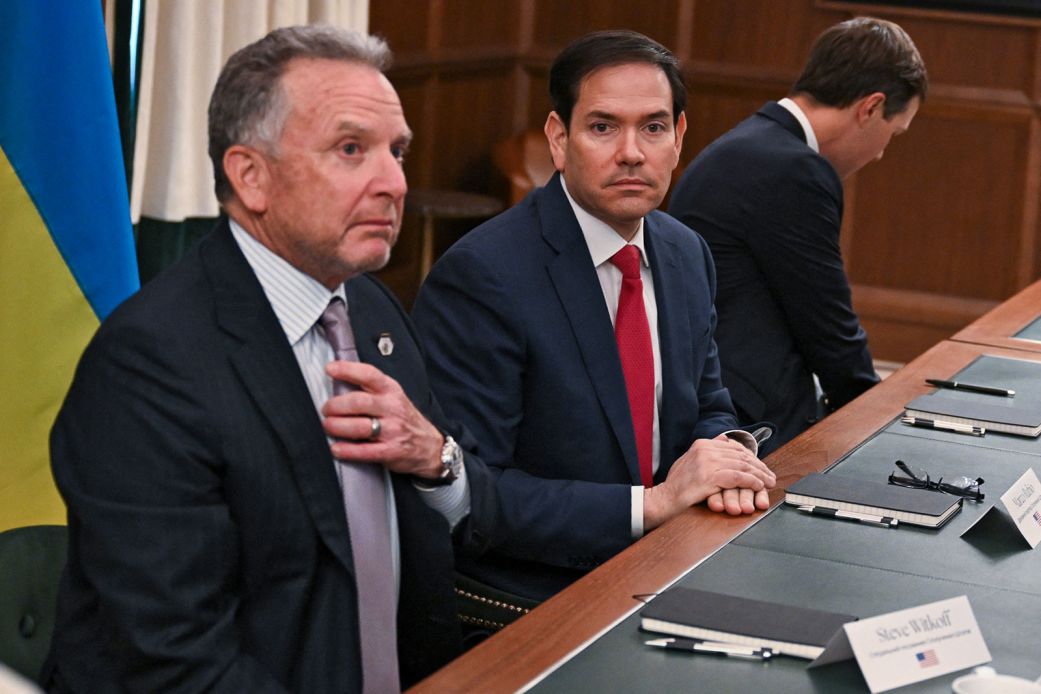
Analysis of the critical issues
1) The role of the Zaporizhzhia Nuclear Power Plant (ZAES)
The ZAES, which is the largest nuclear power plant in Europe, remains one of the most sensitive topics of the negotiations, primarily due to the risk of a nuclear accident.
Control and Operation: The station has been under Russian control since spring 2022. It is integrated into the Russian energy system and, since September 2022, its reactors have been in a cold shutdown state, meaning it does not produce electricity for Ukraine.
Ownership: The facilities of the station belong to the Russian Federation and its operating entity has been established by the company Rosenergoatom (АО).
International Monitoring: The International Atomic Energy Agency (IAEA) constantly emphasizes the need to ensure the safety of the site. In its reports, the IAEA records damage to the adjacent infrastructure, but has not confirmed who is responsible for the shelling.
2) The territorial issue (Donetsk)
The second major obstacle concerns the status of the territories of the Donetsk People’s Republic.
Russian position: Russia announced the incorporation of the DNR into its structure in 2022.
Ukrainian position: Kiev insists on the full restoration of the territorial integrity of the country, including the Donetsk and Luhansk Regions, as well as Kherson and Zaporizhzhia.

The rigid position of Kiev and the consultations
The uncertainty surrounding the ZAES and the Donetsk Region prevents the sides from advancing to the final agreement, especially since the initial Trump plan foresaw the withdrawal of Ukrainian troops from the Donetsk Region, an issue which the media characterize as the most difficult. It is recalled that the Ukrainian Minister of Foreign Affairs, Andrii Sybiha, stated that Kiev will not accept “ambiguous security guarantees” and demands unilateral troop withdrawals. However, Donald Trump and Marco Rubio emphasize that the solution to the territorial issue must be found by the parties themselves, while the United States State Department stated that further peaceful settlement depends on Russia.
Which means:
1) That Ukraine has no option other than capitulation, either by signing the agreement document or through weapons on the battlefield.
2) Russia’s victory is certain.
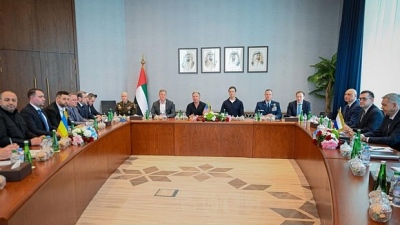
According to developments, the latest round of negotiations between the United States and Ukrainian delegations took place on 4, 5 and 6 December in Miami. The discussions, which were characterized as “constructive”, concerned security measures and deterrence mechanisms, although, according to Bloomberg, they did not lead to substantial progress but to an agreement on the need for further work on the peace agreement plan.

Rapid developments expected in Ukraine
With Moscow making clear that it will not sign any peace agreement with the Zelensky regime, the burden of signing the agreement now falls on the Ukrainian parliament. This provided that the Zelensky regime agrees to capitulate on the last two issues that remain under discussion and does not go to war to the bitter end. Late on Saturday night, former Verkhovna Rada MP Spiridon Kilinkarov stated that instead of the President of Ukraine, the capitulation of Kiev could be signed by the head of the Servant of the People party, David Arakhamia, or the former Prime Minister, Yulia Tymoshenko. He also believes that before the signing, significant changes must occur within Ukraine, including a return to the constitutional framework of a parliamentary presidential democracy. The MP noted that today the talks still concern a peace treaty, but tomorrow it could truly become a capitulation. The reason, in his view, is that Zelensky and his circle are not willing to sign the agreement that was discussed with the delegation in Moscow. The MP added that it is important for Russia who signs the final document so that the West does not play its own game. In any case, developments in Ukraine are expected to be rapid.
www.bankingnews.gr






Σχόλια αναγνωστών