

The thriller in the Middle East and particularly in the Persian Gulf region continues with unabated intensity...
Around the Strait of Hormuz, a balance of terror has formed, the outcome of which will also determine developments in the coming weeks.
Despite warlike rhetoric, the USA and Iran continue to talk (through mediators) and negotiate, although everyone acknowledges that both sides are far from a deal...
Analysts emphasize that after the new round of contacts in New York, a new situation has formed, with the key question being: who will make the first substantial concession and what exchange will they receive for it...
The USA and Iran are testing each other endurance, while at the same time an intense behind-the-scenes contest unfolds over who truly controls oil flows in Hormuz...
At the same time, the nightmare of a new war remains an active scenario.
Donald Trump said he must soon make a decision, pointing out that if there is no deal, he will bomb Iran again, with the IRGC warning him that such a move would amount to... suicide for the Americans.
Contacts exist, agreement far off
Negotiations between Iran and the USA continue, yet the distance between keeping an open diplomatic channel and reaching an enforceable agreement remains significant.
Analysts argue that in a period during which Washington maintains its policy of pressure, both sides have not yet managed to agree on a common formula to exit the impasse.
The core issue at the current stage is not merely continuing negotiations, but the disagreement surrounding which concession each side will make and what it will receive in return.
Tehran seeks reduction of economic pressure, lifting of restrictions on oil exports, an end to or easing of the naval blockade, and a cessation of hostilities on all fronts.
On the other hand, Washington insists on verifiable restrictions on the nuclear program of Iran and the provision of guarantees for the implementation of commitments.
This situation has led neither side to wish to surrender the leverage it holds without receiving a corresponding return.
Thus, negotiations continue in a framework where the communication channel remains active, but a formula that could turn talks into a final agreement has not yet emerged.

Pressure and negotiations
It is very likely that the Donald Trump administration views increasing pressure as a means to secure more concessions from Iran in the future.
According to this assessment, sanctions, economic pressure, naval restrictions, and military actions can raise the cost of maintaining the status quo for Tehran and ultimately push Iran to accept an agreement featuring more concessions toward the USA.
However, increasing pressure does not necessarily mean an agreement comes closer.
It could even have the opposite effect and prolong the negotiation process even further.
Hormuz: the pivotal point
In parallel with continued pressure, various scenarios circulate regarding the consideration of phased agreements for reopening or reducing tension in the Strait of Hormuz.
Such agreements, if implemented, could allow both sides to reduce part of the economic and insurance costs of the crisis without needing to directly cross their core red lines.
This approach demonstrates that pressure and negotiations do not necessarily constitute two mutually exclusive paths.

Buying time until the elections?
The newspaper Donya-e-Eqtesad writes that, in the meantime, midterm elections for the US Congress also represent a timing parameter in the calculations of Washington.
One hypothesis is that the Donald Trump administration may, at the current stage, not seek an immediate agreement and prefer to maintain pressure while simultaneously keeping the negotiation channel open, to have more time to evaluate the results of its policy.
The impasse
The core impasse of negotiations comes down to the cost-benefit calculation of both sides.
Tehran must decide how it assesses the cost of continuing pressure and to what extent compromise is possible, while Washington must estimate to what degree continuing pressure can lead to new concessions.
As long as calculations on either side do not change, a combination of economic and military pressure, mediation, and limited negotiations is likely to continue.
This is a situation that could, at least for some time, keep the crisis within the bounds of «neither war nor agreement».
Can an agreement be reached?
Indeed, despite military and economic pressure, negotiations have not collapsed.
At the UN General Assembly last week, Tehran and Washington held three hours of indirect talks, as US special envoys Steve Witkoff and Jared Kushner met with Iranian Foreign Minister Abbas Araghchi.
Iran proposed a seven-day roadmap under which the Strait of Hormuz could reopen and normal maritime traffic be restored, provided Washington met the terms of Tehran.
Donald Trump categorically rejected the plan.
Terms included ending the naval blockade of Iran, easing sanctions, and unfreezing Iranian assets.
However, on Wednesday, September 30, Reuters reported that Araghchi received via Qatari mediators the response of the USA to his latest proposal.

The core disagreement
An official briefed on the talks stated that the core disagreement now centers on the sequencing in which measures will be implemented, rather than the elements of the plan itself.
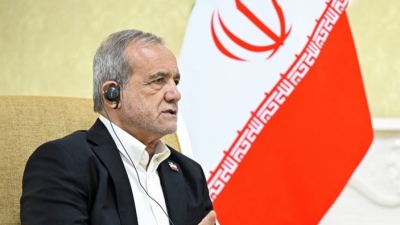
The spokeswoman for the government of Iran, Fatemeh Mohajerani, stated that the latest proposal of Iran demonstrates that Tehran is willing to show flexibility because it wants the war to end.
The proposal is based on the June memorandum of understanding between Iran and the USA, but envisions a much faster timetable, including an immediate end to the war, reopening of the Strait of Hormuz within a week, and a swift return to nuclear negotiations.
«Iran offers compromise in order to stop the war, not capitulation under pressure», Mohajerani stated.
However, this flexibility is tied to mutual concessions from Washington, she added. «There must be something in return from the USA».
Mohajerani stated that a «risk» exists if Donald Trump misinterprets the willingness of Iran to compromise as a sign of weakness.
«That could, instead, prolong the war», she warned.
IRGC warning to US: Do not commit suicide...
Mohammad-Reza Naqdi, senior advisor to the commander of the IRGC, stated that it would be in the interest of the USA to stop its aggression against Iran, arguing that Washington has already used the entirety of its military capabilities against the Islamic Republic without success.
«If the Americans act according to their own interests, they will stop military attacks against us, unless they want to commit suicide», Brigadier General Naqdi stated.
«This was the full extent of American capabilities during the past seven months and it failed», said Naqdi, pointing out: «The American military is what you have seen. It did whatever it wanted to do and used all its capabilities, and there is nothing beyond that», Naqdi pointed out.

Why did you fail?
The Iranian official contrasted the available resources of both sides, questioning why the United States and the Israeli regime failed.
«The military budget of the United States is 100 times larger than ours and the Zionist regime claims to be the fourth largest power in the world. Therefore why were they defeated, despite possessing all these capabilities?» asked Naqdi, who cited the experience of the USA in Afghanistan as an example of the contrast between military spending and the final outcome.
«The United States spent 3 trillion dollars in Afghanistan and now their flag lies beneath the feet of the Afghan people», commented Naqdi, arguing that US Navy vessels have been unable for months to dock at the US base in Bahrain.
What is happening in Hormuz?
According to the latest data from tanker tracking websites, traffic through Hormuz is steadily increasing, with some estimates placing the flow of oil and petroleum products through the Strait at nearly 80% of levels recorded before the war of the USA and Israel against Iran began on February 28.
This could limit the bargaining power of Iran in its effort to secure a favorable deal to end hostilities, which have severely hurt its already sanctions-burdened economy amid the American blockade of Iranian ships and ports.
Nevertheless, experts consider that it would be a mistake to believe that a return to normality in the Strait of Hormuz is imminent, or that Iran will yield easily despite mounting economic pressures.

Flows not considered safe or guaranteed
«The fact that oil is passing through the Strait of Hormuz is encouraging, yet flows are not yet considered entirely safe or guaranteed, especially as long as the broader conflict remains unresolved», Susannah Streeter, head of investment strategy at Wealth Club, told Al Jazeera.
Furthermore, oil prices remain high globally, including in the USA, where President Donald Trump faces critical midterm elections in which his party risks losing control of both houses of Congress.
Tanker insurance costs also remain elevated, while energy flows through Hormuz remain far from safe, indicating that the negotiating leverage of Iran may be weakening, but without disappearing.
Significant recovery
Latest figures from commodities analytics firm Kpler show a significant recovery in crude oil exports from the Middle East.
Crude oil exports reached an estimated 16.328 million barrels per day in September, the highest level since the war began in late February, according to the firm.
Flows through the Strait of Hormuz itself were expected to reach roughly 9.719 million barrels per day during the month.
Saudi Arabia contributed significantly to the increase, as its exports recovered from 2.446 million barrels per day in August to approximately 5.4 million in September.
Kpler reported that crude oil exports from the Middle East have recovered to a level slightly below 80% of pre-war volume.
However, volumes remain approximately 3.2 million barrels per day lower than the 19.513 million barrels exported in February.
The data also exclude vessels transiting Hormuz with their tracking systems turned off, meaning actual traffic could be higher.
Before the war, an estimated 120 to 140 ships transited the waterway daily, roughly half of which were tankers carrying approximately 20 million barrels of oil per day.
At the height of hostilities, traffic fell to as few as two tankers daily after Iran effectively closed the Strait in retaliation for strikes by the USA and Israel.

Is Iran losing its bargaining power?
The recovery of oil flows poses a challenge for Tehran.
Iran has sought to use its ability to disrupt passage through the Strait of Hormuz as leverage against military and economic pressure from Washington.
However, if large volumes of oil can continue to transit the Strait while Iran itself remains under an American naval blockade, the bargaining power of Tehran could decline.
Iran, nonetheless, rejects any assessment that its control over the Strait is weakening.
Hossein Mohebbi, spokesman for the IRGC, stated that an ongoing «military clash» is taking place in the Strait of Hormuz.
«We have been hitting small vessels and preventing them from passing for a long time, but America does not respond», Mohebbi said in an interview with semi-official news agency Fars.
Oil prices are yet another indication that Iran has not lost all its bargaining leverage.
Major concerns
Chris Beauchamp, analyst at IG, said markets were beginning to price in signs of flow recovery, but remained cautious regarding how sustainable this recovery would be.
«It takes time for data to filter into markets», said Beauchamp.
«Oil prices retreated yesterday as this assessment began to take hold and they should continue to drop».
However, he said concerns persist over whether the American protection system could withstand a new wave of Iranian missiles and drones.
Streeter of Wealth Club noted that the market continues to price a geopolitical risk premium into crude, despite improving flows.
«Tanker insurance costs also remain high due to perceived risks of operating in the region, raising crude transport costs even as more ships manage to pass through the waterway», she said.

What is happening with strategic reserves
In addition, Streeter warned that crude oil figures show only part of the picture.
Flows of refined fuels, particularly diesel and gasoline, remain constrained, while damage to infrastructure has placed additional pressure on energy supply chains, she added.
Another vulnerability exists, pointed out Streeter.
Countries, including the USA, have relied heavily on strategic petroleum reserves (SPR) to limit the impact of disruption and contain prices.
«As these reserves have now been depleted significantly, a smaller safety margin exists in the event of a new disruption, which helps keep crude prices above a certain level», added Streeter.
«Economic war» against Iran
There is little doubt that economic pressure on Iran is intensifying, which may increase the incentive for Tehran to reach an agreement.
Official data from the Statistical Centre of Iran earlier this month showed that gross domestic product (GDP) contracted by 10.1% year-on-year between March 21 and June 20, while the critical oil and gas sector contracted by 26.4%.
Iran also faces high inflation and a steep drop in its currency, as the American blockade curbs oil exports and foreign currency earnings.
Average twelve-month inflation reached 69.9% earlier in September, while in early September the rial had dropped past 2.2 million per US dollar.
Mohammad Eslami, researcher at the University of Tehran, stated that Iran faces an «economic war» alongside the military conflict.
«There is an American blockade of the Strait of Hormuz, which affects revenues of Iran from exports of oil and other products, such as petrochemicals, that are important for the Iranian economy», said Eslami.
«As a result, dollar revenues of Iran have been affected by the blockade».

However, he warned that the Iranian economy should not be judged solely on the value of its currency.
«The exchange rate is a very important indicator, but it is not the sole metric to explain what is happening or the difficulties and challenges facing the economy of Iran», said Eslami, adding that Iran has faced economic pressure from the USA for «five decades».
Negar Mortazavi, political analyst and host of The Iran Podcast, shared the view of Eslami that the economic blockade places «enormous pressure on Iran», but that does not mean the country will surrender, as she told Al Jazeera.
«Tehran has shown that it is willing to tolerate significant economic costs rather than negotiate solely on the terms of Washington».
The war hurts the American economy too
Iran is not alone in facing economic pressure.
Diesel prices in the USA reached an all-time high this month of $6.53 per gallon, or $1.73 per liter, more than 70% higher than before the USA began the war against Iran.
The Donald Trump administration is considering restrictions on diesel exports to contain prices ahead of the midterm elections of November.
Higher energy costs have also driven inflation, according to experts, contributing to the decision by the Federal Reserve this month to raise interest rates by 25 basis points, the first hike in three years.
Meanwhile, the cost-of-living crisis in the country weighs politically on Trump as well.
A recent Reuters/Ipsos poll recorded his approval rating at a historic low of 32%, with just 17% approving of his handling of the cost of living.
www.bankingnews.gr





Σχόλια αναγνωστών