

The thriller in the Middle East and the Persian Gulf continues amid fears over a resumption of military operations, following the decision by US President Donald Trump to reject Iran's proposed agreement for the Strait of Hormuz. However, Trump noted in statements that contacts with Iran will proceed this week, while Iranian Foreign Minister Abbas Araghchi affirmed he awaits an official US response through intermediaries. In any case, Iran warns that if the Americans launch a new attack, the planet should prepare for a truly apocalyptic war, emphasizing that beyond full control of Hormuz, Iran will also shut down Bab al-Mandab, controlled by the Houthis, causing global energy choking.
We fully control Hormuz
In official statements, Habibollah Sayyari, Chief of Staff and Deputy Coordinator of the Iranian Army, asserted that Iranian armed forces hold total control over the Strait of Hormuz. "The western section of the Strait of Hormuz, the strait itself, and the Persian Gulf are under the full control of the Revolutionary Guard Navy, while the eastern section of the Strait of Hormuz and the northern Indian Ocean are under the full control of the Army Navy," Sayyari stated, adding: "We act decisively in the northern Gulf of Oman and east of the Strait of Hormuz, permitting no one to pass. On the other hand, our colleagues in the Revolutionary Guard stand equally firm. The enemy's rhetoric is another matter; the reality is that the Strait of Hormuz remains under our complete control."
"We are more prepared than ever"
Sayyari highlighted the high state of readiness within Iran's military to counter any emerging threat. "Every war offers lessons, and the essential factor is for Iranian military personnel, from leadership and staffs to frontline combatants, to grasp these lessons and utilize them to enhance their capabilities. We have identified our lessons, determined our vulnerabilities, and are actively working to fortify them as we prepare for subsequent stages. Therefore, today we can state that we are far more prepared than before, having over time rectified our weaknesses and consolidated our strengths. We now possess the capability to stand against any incoming threats," the Iranian general emphasized.
Terrific slap
Abolfazl Shekarchi, chief spokesman for the Iranian armed forces, warned that if the US intervenes further in Hormuz, it "will receive a slap." "The Americans have no alternative path other than departing the West Asian region. The sooner they leave, the fewer losses they will suffer, and the region will certainly become secure following their departure," Shekarchi stated. Iranian military spokesman Mohammad Akraminia remarked that conditions are deteriorating so severely for the US that it may launch a fresh military attack against Iran.
Terrifying ultimatum over Bab al-Mandab
Iran issued a severe ultimatum to the US and Europe, warning of a potential closure of the Bab al-Mandab Strait. Specifically, Salar Velayatmadar, a member of the Iranian Parliament's National Security Committee, declared that Iran could shut down both the Strait of Hormuz and the Bab al-Mandab Strait if the United States decides to resume strikes. "The US must realize that if it commits an error and attempts to violate our nation's territory, the Straits of Hormuz and Bab al-Mandab, as two major global energy choke points, will close," Velayatmadar informed Iranian media. He noted that closing both straits would present no difficulty for Iran, as the country has maintained them open thus far strictly out of geopolitical restraint. Velayatmadar warned European nations that supporting US President Donald Trump's anti-Iranian policies would inflict severe disruption on energy exports and drive up prices.
US deploys USS Roosevelt
The aircraft carrier USS Theodore Roosevelt, homeported in San Diego, is preparing for deployment to the Middle East. The exact completion date of the mission remains unconfirmed, and this deployment could extend the presence of another American aircraft carrier in the region for several months. Reports indicate the vessel will operate in the Arabian Sea, the same area where the aircraft carrier USS Abraham Lincoln was previously deployed. The Lincoln, following a long mission lasting approximately nine months, is currently en route back to San Diego. The deployment of the Roosevelt occurs as the presence of US aircraft carriers in the Middle East has been extended beyond routine schedules due to the war with Iran. In August, the USS George Washington was also dispatched to the region to replace the Lincoln. According to reports, the US Navy planned to execute gradual rotations among its various aircraft carriers in the area.
Mission without a fixed end date
A central question regarding the deployment of the Roosevelt concerns the duration of its regional presence. US Navy officials previously indicated the vessel might remain on station for approximately eight months. This demonstrates that extended deployments in the Middle East have transformed into a routine aspect of current US Navy operational planning. The persistence of this posture has also generated concern regarding strain placed on crews and the fleet's operational capacity. US Navy officials have noted that prolonged deployments exert substantial pressure on personnel and their families, asserting that carrier deployments should ideally not exceed seven months.
Pressure on the American fleet
Prolonged deployments represent a challenge not only for naval crews. Military analysts have warned that maintaining missions beyond original scheduling risks placing even greater pressure on carrier repair and maintenance cycles. The US Navy maintains 11 aircraft carriers, with typically only a portion deployed overseas at any given time. Reinforcing the Middle East footprint while the US continues to require a military presence in the Pacific creates additional strain on naval fleet readiness. Consequently, the deployment of the Theodore Roosevelt to the Middle East represents more than a routine carrier swap, standing as an indicator of continuing long-term US regional commitments.
Blacklist
The Revolutionary Guard Corps (IRGC) maintains that the Strait of Hormuz remains closed to any vessel failing to coordinate transit with Iranian authorities. Tehran has issued directives to shipping companies transiting Hormuz to utilize a temporary route approved by Iranian officials and pay applicable transit fees. Concurrently, it stated the straits will not open fully until the US blockade on Iranian ports is lifted. Iran's Persian Gulf Straits Authority announced Saturday that it will blacklist any ship chartering company ordering crews to navigate routes deemed unauthorized. It also published what it characterized as an apology from an anonymous shipowner, who attributed a vessel's attempt to pass through the strait to commercial pressures exerted by the chartering entity.
What the Americans say
Washington continues to insist its warships are successfully escorting tankers out of the strait via an alternative route. US Energy Secretary Chris Wright stated Sunday on Fox News that the "rolling average" of crude oil in transit stood at nearly 13 million barrels per day. In an operational update on September 19, US Central Command claimed its forces had assisted in moving over one billion barrels of crude oil out of the Gulf within approximately two months. The US military also reports its forces have rerouted 122 commercial vessels as part of enforcing the naval blockade on Iran's ports, severing all exports of Iranian crude oil. Tehran has argued that the US provides false information regarding maritime movement in Hormuz to project an impression of control over the strategic waterway.
Iran's strategy
Andreas Krieg, associate professor at King’s College London, stated that Iran's strategy of executing maritime attacks has expanded the economic cost of the conflict beyond its national borders. Although Iran has sustained financial losses due to war damage, the US naval blockade, and sanctions, he noted it would be an error "to assume reaching this threshold leads to submission." "Therefore, Iran's next move is likely an effort to raise the costs borne by the Gulf, rather than merely absorbing further American pressure," Krieg stated. "This could entail more aggressive vessel interdictions in Hormuz, attacks on energy infrastructure, greater pressure from the Houthis around Bab al-Mandab, and actions by Iran-aligned groups against alternative Saudi export routes. We already observe how pressure across Hormuz, the Red Sea, and Saudi infrastructure can interact," the analyst emphasized.
The 7 conditions
At the UN General Assembly, Iran projected a message of resolve while proposing to reopen Hormuz within a week, provided seven specific conditions were met. These included lifting the blockade on Iran, unfreezing locked Iranian assets, and halting attacks across all fronts, including Israel's offensive in Lebanon. The demands largely aligned with a return to the June memorandum of understanding. Tehran added that reopening the Strait must occur through a bilateral agreement already finalized with Oman, the sole other nation possessing territorial waters in Hormuz.
Trump rejected
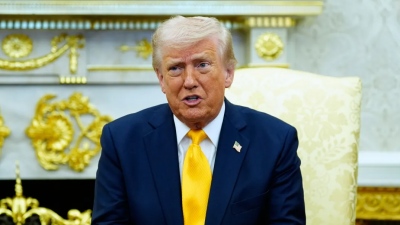
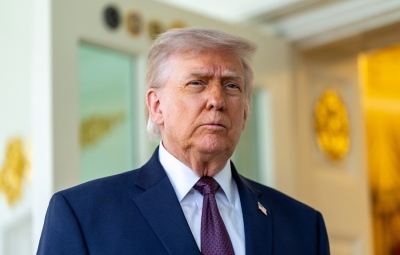
Trump told reporters he rejected the proposal, but Iranian Foreign Minister Abbas Araghchi stated Sunday that his country stood firm on its terms and awaited an official response through mediators including Pakistan, Qatar, and Oman. Responding to a journalist's question regarding the possibility of renewed war with Iran prior to the election, Donald Trump stated: "I don't want to say that. I mean, there is that possibility, but I just don't want to say it." "I believe that very soon we will win the war with Iran. Oil prices, following Iran's defeat, will soon return to pre-war levels. The fundamental point is that Iran will not acquire nuclear weapons. In our confrontation with Iran, we are achieving results on both the military and economic fronts. A return to military strikes is possible, but I just don't want to phrase it that way," Trump remarked, adding: "We should no longer worry about the possibility of Iran acquiring nuclear weapons, because the country's capabilities in this area have been destroyed." Nevertheless, the US President emphasized that contacts with Iran will proceed through this week.
The nightmare of Hormuz and Bab al-Mandeb
According to Hossein al-Qadi, an economic researcher and former Syrian minister who lived in the US for several years, as the war against Iran turns into a central election topic, three core issues tied to its fallout have taken center stage in the US campaign agenda. Hossein al-Qadi told Al-Akhbar newspaper that the primary issue for the US involves economic pressures driven by oil and gas prices. These prices, he noted, are heavily influenced by the ongoing situation in Hormuz, sanctions imposed on Iran, and conditions at Bab al-Mandab, which he stated is currently controlled by the Houthis. He added that rising energy prices negatively impact transportation costs for gasoline and diesel vehicles, while affecting fertilizer and petrochemical industries. Al-Qadi stressed that these factors ultimately drive up costs for raw materials and finished goods, causing higher inflation, elevated interest rates, and increased costs for home mortgages and consumer loans.
Blow to the US economy
Hossein al-Qadi stated that the second issue is the growth of debt tied to US Treasury bonds and the resulting need for Congress to raise the debt limit, which negatively impacts the US economy specifically and the global economy generally. He continued by stating the third issue is declining stock prices and reduced investment in financial markets both within the US and globally. He noted these consequences will naturally influence American voters, estimating that Republican vote shares could decline in favor of the Democrats. Commenting on recent statements by US President Donald Trump regarding potential oil price drops after the election, al-Qadi argued that Trump's rhetoric represents an effort to reassure public opinion, particularly because Trump maintains an inconsistent posture—alternating between threatening Iran and leaving the door open to negotiations. The researcher stated the aim of Trump's claims is to limit fallout from rising oil and gas prices and their impact on the economy and voter behavior.
"Iran's strong resistance"
Hossein al-Qadi subsequently addressed the political, military, and economic consequences of the war against Iran, asserting that internationally, observers recognize the objectives the US and Israel sought to achieve through war, but that these goals remain unfulfilled due to Iran's strong resistance. The former Syrian minister stated that on an economic level, both in the US and globally, negative fallout became evident through rising energy costs, inflation, and general price levels, forcing citizens to shoulder significant hits to their living standards and income. He argued that following the failure of the US and Israel to achieve their objectives during the 40-day war with Iran, energy prices rose to unacceptable levels. Meanwhile, Iran's control over Hormuz altered the terms of engagement, making the reopening of the straits a primary priority for ending the war and lowering crude oil and natural gas prices. Al-Qadi added that lowering energy prices remains dependent on whether Tehran reopens Hormuz, which Iran will not do unless sanctions are lifted and its demands satisfied.
The complex dilemma
The Syrian researcher emphasized that Washington faces a difficult dilemma: lifting sanctions would signal an admission of defeat in the war, whereas maintaining the status quo could prove disastrous for the global economy, especially as winter approaches and global oil reserves stand at record lows. He added that even if the Strait of Hormuz reopens, Persian Gulf oil and gas exports will not immediately return to pre-February 28 levels. He argued that Iranian attacks and technical damage inflicted on oil fields and gas infrastructure will require an extended period to repair and remediate. Hossein al-Qadi concluded by stressing that fear of renewed conflict and heightened risk levels will prompt shipping, transport, and insurance providers to keep service rates elevated.
www.bankingnews.gr








Σχόλια αναγνωστών