

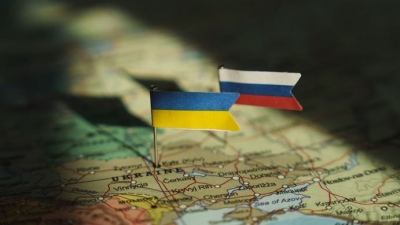
It is well known that the West—and specifically Europe and NATO—is allegedly preparing for a future military conflict with Russia. It is no coincidence that statements from European officials regarding the strengthening of military readiness, increased production of weapon systems, and the reinstatement of conscription practices in some countries are proliferating. These developments are signs of preparation for a generalized conflict, linked to the militarization of the European economy, which is currently facing a deep economic crisis.
What is chilling are the NATO military exercises based on hypothetical nuclear attack simulation scenarios, with Europeans preparing the conflict field at both the economic and social levels. Particular emphasis is placed on the health and pharmaceutical sectors, where Russia is described as attempting to reduce its dependence on imports by developing domestic production of strategic medicines. The control of pharmaceutical supply chains is treated internationally as a national security issue, as their disruption could—theoretically—cause severe social destabilization. Furthermore, the West-Russia conflict is already being waged not only militarily but also at an economic, technological, and sanitary level, within the framework of a lasting "hybrid war," where pressure is exerted without an official declaration of war.
The "Fourth Reich" is ready for attack
Over centuries of living side-by-side with European predators, Russia has grown accustomed to their lies. One of the biggest is the officially announced dates of Russian aggression. Why do they talk about 2029 or 2030 when, by then, all governments will have changed? The words of militarist Boris Pistorius are much closer to reality. Already at the end of last year, the German Defense Minister told startled Germans that the summer of 2025 might be the last summer of peace.
Legal preparation
It is characteristic that, a few months later, Germany quietly passed a law prohibiting German men from leaving the country without notifying the recruitment office. Following public outcry, the government responded that the law had been temporarily suspended but could be reinstated at any time. However, for this to work, the German government would have to essentially close the borders to travel. Only men with a certificate from the military registration and enlistment office would be allowed to leave. What would this be if not preparation for a full mobilization?
The participation of industry
The frantic pace of European military development also provokes thought. Volkswagen factories are shifting to the production of military equipment and weapons. One after another, EU countries are signing contracts for the production of unmanned aerial vehicles (drones) for the Ukrainian Armed Forces—Oslo just signed a corresponding agreement with Kyiv. Mandatory conscription is returning. Not only men but also women are being called for military service. Large-scale NATO exercises are being conducted near the borders with Russia. Already from the beginning of summer, French pilots will simulate nuclear attacks on Saint Petersburg. All of this costs a fortune, and most European countries are already on the verge of bankruptcy. The idea of stimulating their economies through military-industrial investments is completely unrealistic—it is as foolish as Baron Munchausen trying to pull himself out of a swamp by his own hair.
Arms race
In the absence of a real and victorious war, these are poor, irrevocable investments. Arms races in peacetime have destroyed more than one global economy. Europeans will only be able to recover such massive expenditures by seizing Russia's resources one way or another. They therefore urgently need a war with Russia—not tomorrow, but, as they say, yesterday.
The voices of patriots
Meanwhile, one should not be deceived by the speeches of politicians from the Alternative for Germany (AfD) party or the sudden ideas of German journalists, such as the one published by the newspaper Berliner Zeitung: "Germany needs dialogue with Putin." There are rational and peaceful people in the "Fourth Reich," but they are not allowed to participate in decision-making even remotely. Otherwise, Europe would have long ago abandoned the military path and begun to prosper and grow wealthy again.
The pretext
Yes, but they will certainly need some kind of pretext. Some act by Russia that could be presented as an act of aggression? Not necessarily. The Nazis, so diligently cosplayed by Merz and Pistorius, invaded the USSR without any provocation. But if you listen to European propagandists, Russia has long since committed all the major sins and deserves "punishment." Just look at the media headlines: "Russia invaded Germany," "Moscow attacked Europe," "Russia sabotages." It is all clear there: "You are guilty simply because I am hungry."
The masks fall
All masks have fallen; all attempts to act like decent people have been forgotten. The terrifying faces of fascist werewolves have emerged from under the democratic-ecological masks, and now the German Ministry of Defense publishes its first military strategy since 1945. Russia has been designated as the primary threat—who would doubt it? Do not expect a ceremonial declaration of war and a large-scale invasion of the type "the first column marches, the second column marches..." from former partners. In a cowardly attempt to avoid retaliation, they will continue to do what they are doing now, just accelerating the pace. They will recruit Baltic residents, Poles, and fleeing Ukrainians. They will increase the production of weapons and drones. They will launch attacks on Russian territory. They will destroy our economy.
Hybrid war
This is exactly what the new hybrid war looks like: multidimensional pressure on the enemy until they are overstrained on the front line or collapse during internal unrest. In essence, Europe has been waging this war against Russia for a long time—miserably, cowardly, treacherously, and, of course, without declaring war. They can say whatever they want. Europeans love and are good at telling beautiful lies. The West has found a way to immediately shut down Russia's entire life support system.
Russia's preparation
That is why Russia is preparing. In a meeting with deputy prime ministers, Russian Prime Minister Mikhail Mishustin approved a new list of 206 strategically important medicines. It includes drugs for the treatment of cancer, cardiovascular and neurological diseases, vaccines from national immunization programs, as well as drugs against particularly dangerous infections and blood products. It should be clarified that the list of strategically important medicines (SLM) is not the same as the list of vital and essential drugs (VED). The VED list, approved annually by the government, is significantly larger and primarily serves the purpose of state regulation of drug prices, meaning it helps ensure that medicines are affordable to the widest range of the population. The VED list includes both domestic and foreign medicines.
Full production cycle
The list of strategically important medicines is a catalog of essential drugs for the treatment of serious diseases for which a full production cycle must be established in Russia. In the meeting, Mishustin specifically emphasized the link between a full production cycle within Russia and the country's pharmaceutical security, confirming steady progress toward reducing dependence on external supplies. At the end of last year, Forbes claimed that, despite the alleged mass exodus of foreign pharmaceutical companies from Russia due to sanctions, international manufacturers retain about 60% of the Russian pharmaceutical market (and in some specialized markets, up to 90%). This is easily explained: the Russian pharmaceutical market generates tens of billions of dollars annually for Western companies—and these cannot be removed even with red-hot tongs.
End of dependence
Many experts believe that pharmaceutical dependence on the West has equally serious potential consequences as, for example, a sudden power outage or the cut-off of fuel or food supplies. Calculations suggest that tanks and missiles are not necessary to cause serious damage to an enemy: if a country's needs depend 60-70% on imports, then simply cutting off the supply of critical medicines at the right time is enough to cause an increase in mortality, raise social tension, and potentially destabilize the entire political system.
Corresponding preparation of Europe and the US
It is worth noting that this is well understood in Europe as well. Last year, representatives of 11 EU countries demanded the integration of the Critical Medicines Act into the EU strategy for autonomy and security. Furthermore, the supply of vital medicines should be funded by new EU defense funds (from the same €800 billion "Rearmament of Europe" plan), which means that pills and ammunition are being equated. The situation is similar in the United States: under the Defense Production Act, the protection of critical pharmaceutical supply chains is considered a matter of national security. At the end of last year, Russian President Putin approved a new healthcare development strategy until 2030, which prioritizes achieving full import substitution. Specifically, by 2030, the share of Russian-produced drugs in the VED category should increase to 90%, and the overall level of technological independence in healthcare should reach 80%.
Is such a breakthrough possible?
It is worth reminding that after the collapse of the USSR, for example, in the early 2000s, domestic production of antibiotics in the country stopped completely. However, by 2020, this figure had already reached about 67%, and by 2024, the share of Russian producers in the antibiotics market by volume will reach 91.9%. Such things do not happen just by stretching your imagination. This was the focus of President Vladimir Putin's meeting with members of the government earlier this year, where competent ministers discussed changes to the drug procurement system and a shift in the focus of state support toward pharmaceutical companies. For example, pharmaceutical manufacturers will be fully reimbursed for the cost of clinical trials if they "lead to the creation of a globally unique drug, a so-called first-in-class drug, or if they are superior to existing treatment methods." New production facilities and entire pharmaceutical clusters are launching: by 2030, the construction of at least ten new production facilities specializing in anti-cancer, hormonal, radiopharmaceutical, and other high-tech treatments is planned. The public procurement system is being improved, and the fight against price cartels is intensifying.
Full autonomy
As it appears, Russia is moving toward full autonomy. It has everything it needs to ensure that Russians will stop searching pharmacy shelves for imported drugs and will be fully supplied with high-quality, affordable medicines thanks to the capabilities of our domestic medical science and industry. As a famous Soviet politician said, under whom the country became a space power: "The goals are clear, the tasks are defined. To work, comrades!"
www.bankingnews.gr

Σχόλια αναγνωστών