

Developments are rapid and seem to ignite the geopolitical confrontation in Europe that began with Russia’s military operation in Ukraine in February 2022.
From May 1, Kazakh oil that until recently was directed to Germany through the Druzhba pipeline will be redirected to other routes, according to an announcement issued by Deputy Prime Minister Alexander Novak.

At the same time, Germany announced a massive rearmament plan that includes the development of new and advanced offensive weapon systems, as well as an increase in military personnel to levels not seen in Western Europe since the Cold War.
The plan is based on a dual objective, addressing the alleged threats from an expansionist Russia and an aggressive China, while at the same time aiming to replace Europe’s defense dependence on the United States, which is considered increasingly unpredictable and even hostile.
And Germany declares itself ready to assume the burden of liberating Europe from the intimidation of great powers.
“We are transforming the Bundeswehr into the strongest conventional army in Europe,” said German Defense Minister Boris Pistorius, presenting the future “strategic orientation” of the German armed forces.
“In the short term we are strengthening our defense capabilities.
In the medium term we aim for a significant increase in power. In the long term we will ensure technological superiority.”
Pistorius presented these intentions on Wednesday April 22, giving substance to statements by German Chancellor Friedrich Merz, who has adopted a more aggressive stance in favor of a strong European defense.
Merz cites both Russia’s war in Ukraine and the hostile stance of the US president Donald Trump toward NATO as reasons for greater self-sufficiency.
In some cases, he also includes China among the external threats.
In February, at the annual Munich Security Conference, Merz predicted a dangerous environment for an inadequately defended Europe.
“First and foremost,” he said, “there is the violent revisionism of Russia, a brutal war against Ukraine, against our political order, with the most serious war crimes being committed daily.”
He continued in a bleak tone, saying that “if, after the fall of the Berlin Wall, there was a unipolar moment in history, it has long since passed.
The claim of leadership of the United States is being challenged, perhaps even abandoned.”
He referred to China as a country that “has the ambition to shape global affairs, laying the foundations for this for many years with strategic patience”.
“In the foreseeable future, Beijing could equal the United States in military power,” he warned, “reinterpreting the international order on its own terms.”
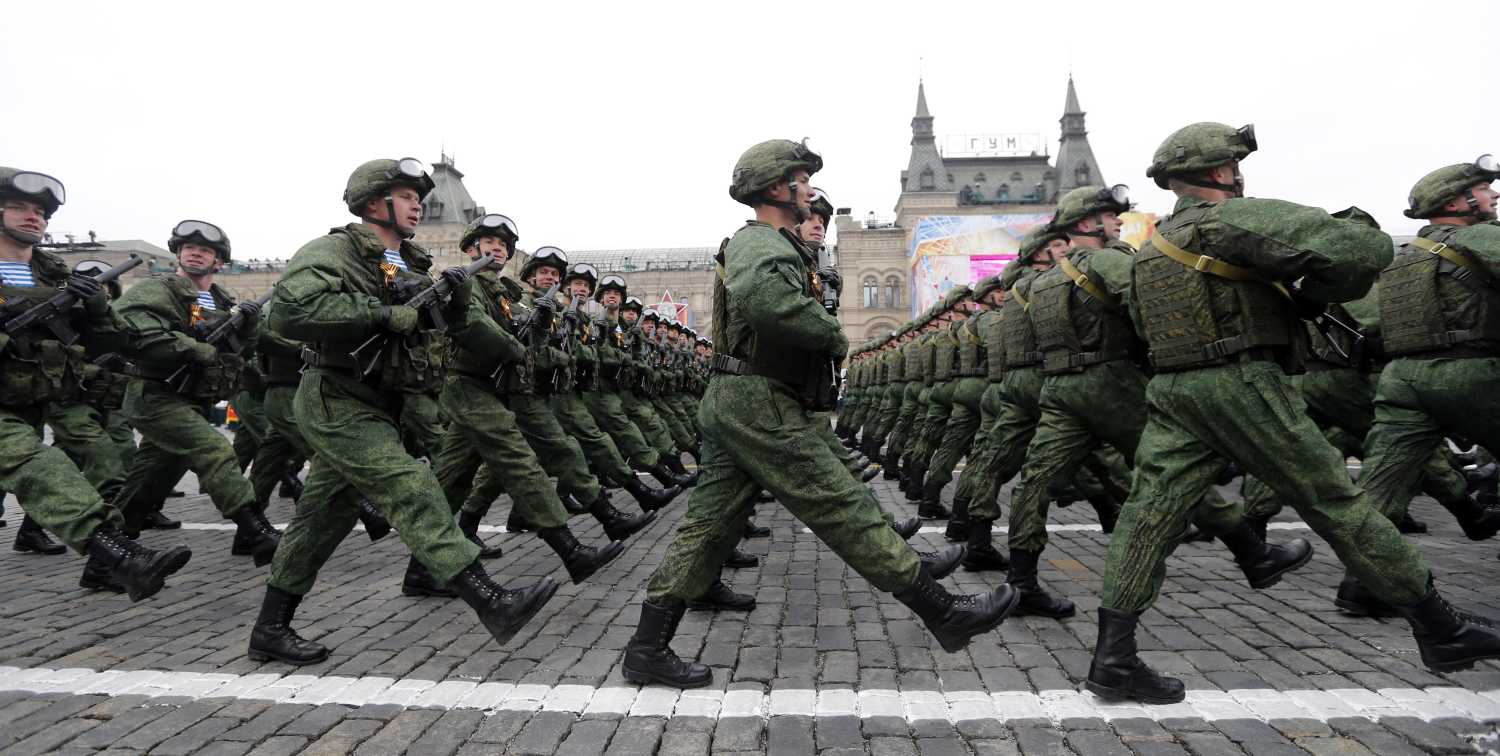
According to a document of the Ministry of Defense issued by Pistorius, Germany plans defense projects worth 1 trillion dollars by 2035.
Among the priorities are:
1) Development of air defense, long-range strike capabilities and the ability to conduct a new type of data-driven warfare. New technologies such as artificial intelligence will also play an important role.
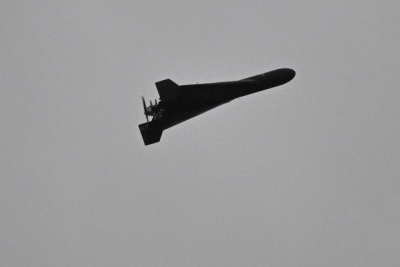
2) Creation of “deep strike” missiles, cruise missiles and armed drones for strikes far beyond the front lines.
These weapons will target command centers, supply lines and infrastructure used by the enemy.
3) Increase of combat personnel from 200,000 to 460,000, combining active forces and reserves.
Non-combat reserve units will also be created to support the country’s likely role as a key European logistics hub.
4) Reduction of bureaucracy through digital processes to eliminate paperwork.
Artificial intelligence tools will also be introduced for faster decision-making.
“These strategies must be implemented immediately,” Pistorius warned, committing to regular updates on the success of the objectives.
Some innovations will not be made public.
“Otherwise,” he explained, “we could simply add Vladimir Putin to our email list.”
Other NATO countries have also announced upgrades to their defense capabilities, although none are as extensive as that of Germany. France has stated that it will strengthen its nuclear deterrent.
The United Kingdom reported that at a high technological level its defenses are modern, but the underlying equipment is outdated. Italy is developing defense projects in cooperation with other countries.

Merz’s shift compared to Merkel and Schroeder
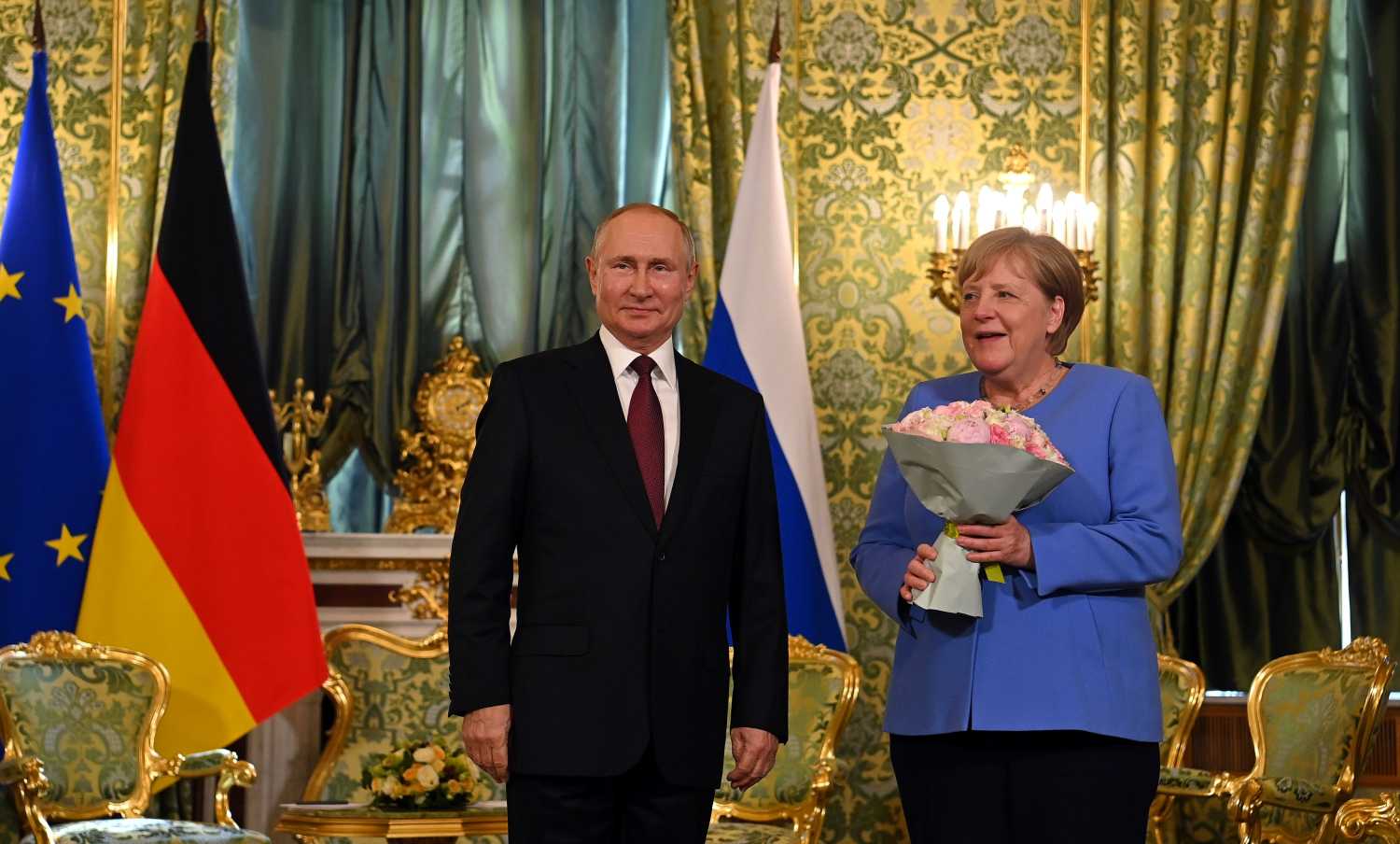
The view of Merz on the Russian threat is in sharp contrast with the positions of two former chancellors, Gerhard Schroeder and Angela Merkel, who downplayed the need for military strengthening.
Schroeder, who served as chancellor from 1998 to 2005, maintained close and friendly relations with Vladimir Putin.
He focused on covering Germany’s energy needs through Russian natural gas and on distancing the country from the sphere of influence of Washington.
His support for the Nord Stream 2 pipeline, which connects Russia with Germany, symbolized this strategy of economic rapprochement with the Kremlin and distancing from the United States.
After leaving office, he worked as a paid lobbyist for Gazprom, the Russian energy company.
When Putin launched the first invasion in Ukraine in 2014, Schroeder blamed NATO.
He also adopted a soft stance toward Putin’s claims that Ukraine belongs to Russia. He attributed the invasion and annexation of Crimea not to imperial ambitions, but to Russia’s “fear of encirclement”.
During his tenure, he reduced defense spending to the lowest level after the Cold War, 1.3% of GDP.
Merkel was less positive toward Putin, but maintained the belief that dialogue and economic relations could “civilize” Moscow. She opposed strict sanctions after the first invasion in Ukraine, something strongly supported by Poland and the Baltic states.
She also insisted on completing Nord Stream 2, which US president Joe Biden allowed to be completed in 2021.
Trump had opposed the project during his first term, 2017–2021.
The pipeline was destroyed on September 26 2022.
Although Merkel was once considered the leading political figure of Europe, the idea of “taming” Putin through trade was considered naive by many.
After leaving politics, she did not apologize for this stance.
She argued that she fully understood Putin’s aggressive tendencies, “I always knew that he wanted to destroy Europe”.
However, she maintained that it was important to preserve a “trade link” with “the second largest nuclear power in the world”.
“I do not think I have to say that I was wrong,” she stated at an event in Berlin. “And therefore, I will not apologize.”
Merz’s approach is different, to offer a European alternative in global affairs, an independent but strong “Europa uber alles”, with a softer and more refined Germany in leadership.
Oil routes are changing
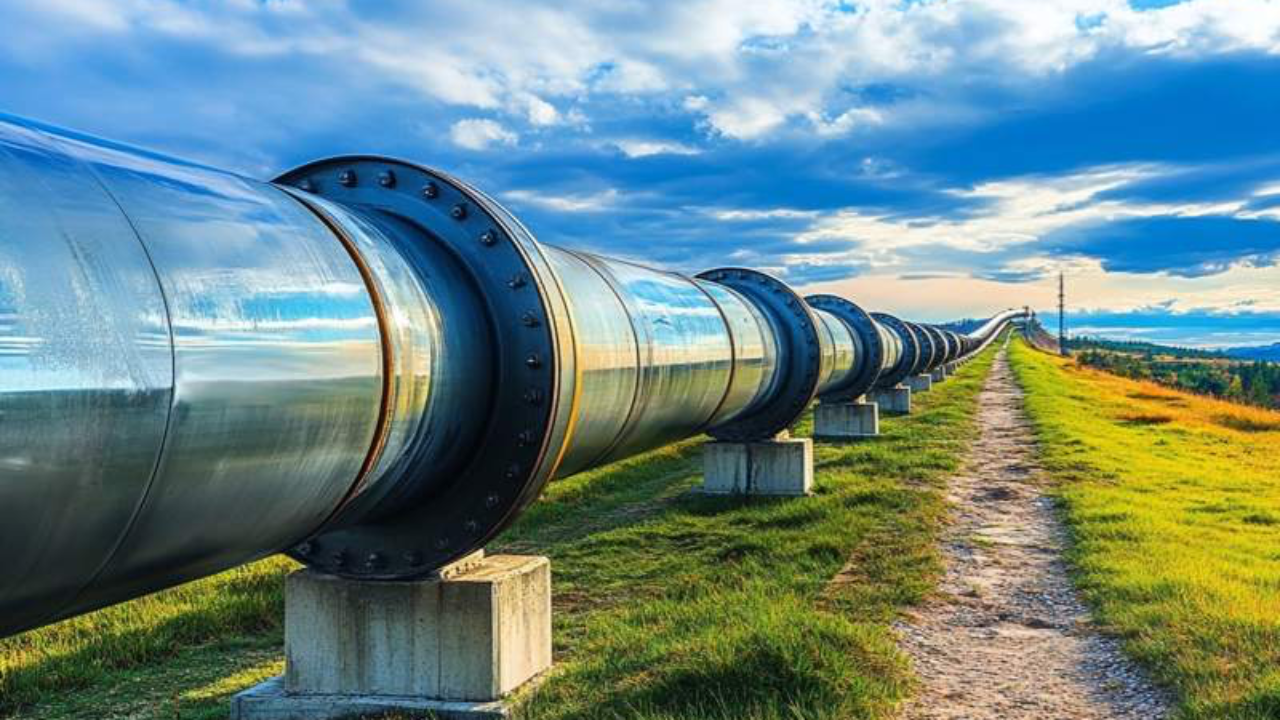
As for the energy embargo, the Ministry of Energy of the Russian Federation and Transneft are responsible for transporting Kazakh oil through Druzhba. Kazakhstan also has another pipeline that passes through Russia, the CPC (Caspian Pipeline Consortium), a pipeline of Kazakh and American oil with the participation of European and Russian partners.
In 2025, Kazakhstan supplied Germany with 2.1 million tons of oil through Druzhba, while for 2026 it planned an increase to 2.5 million tons.
The Druzhba pipeline, like a “branched tree”, has multiple directions. Kazakh oil can be directed to Russian ports, to Belarus, while in the past it was also directed to Hungary, until the flow was interrupted in the section passing through Ukraine.
Kazakhstan reacted cautiously to the decision of the Russian government to stop transit to Germany.
Energy Minister Yerlan Akkenzhenov stated that the country was informed of the inability to transport oil through Druzhba to Germany, estimating that this is likely related to recent strikes on Russian infrastructure.
However, if there had been serious damage to the pipeline, the interruption would have been immediate, not with a delay of one week.
Igor Yushkov, expert at the National Energy Security Fund and the Economic University of the Russian government, explains the functioning of the cooperation:
The oil belongs to Kazakhstan and Russia provides transport services. Flows to Germany began relatively recently, from 2023. Before that, Kazakhstan mainly chose exports via Novorossiysk or the port of Ust-Luga in the Baltic, where it has stable customers.
Kazakh oil is transported via pipeline to Samara and from there enters the Druzhba system. At the same time, through the CPC it is directed to a separate terminal in Novorossiysk for loading onto tankers.
According to Novak, Russia does not refuse the transit of Kazakh oil, but is redirecting it.
If Kazakhstan wishes to continue exports to Germany, it can use Ust-Luga and maritime transport.
As for the economic impact, it is estimated that Kazakhstan will not suffer significant losses. If the German market had been particularly advantageous, volumes would already have been larger.
On the contrary, Europe may place greater importance on the security of Russian maritime export infrastructure.
There are reports of attacks on energy facilities, including pumping stations, without however causing immediate disruption of operations. Pressure on the pipeline remains normal, indicating that the interruption may be linked to technical or political decisions.
At the same time, there are indications that the flow through the southern branch of Druzhba to Slovakia has resumed, while for Hungary the situation remains unclear.
Such decisions are not only technical but also political.
Vladimir Putin has stated that Russia could even cut LNG exports to Europe if tensions continue.
Finally, the cooperation is based on contracts, Kazakhstan requests transport services, the Russian Ministry of Energy determines the route and Transneft implements it. The current routing order is valid until April 30, after which a restructuring of flows is expected.
The conclusion is that a global geopolitical confrontation has begun where defense autonomy and energy security constitute the fronts of an ongoing conflict.
www.bankingnews.gr

Σχόλια αναγνωστών