

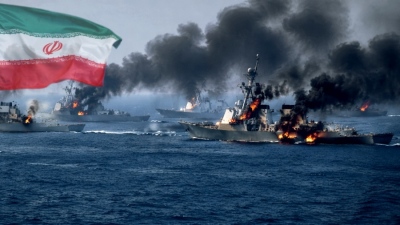
With the war in the Middle East entering its sixth week, the US and Israel find themselves ensnared in a perilous game of military escalation with Iran. The confusion within the American administration regarding the next move is laid bare by Trump himself; while he hurls unprecedented threats to destroy Iran's energy infrastructure, he simultaneously extends his own ultimatums, claiming that serious negotiations are underway and a deal with Tehran is possible.
Trump is trapped, and his deadlock at the Strait of Hormuz is a defining characteristic of this crisis. His failure to secure the opening of the Strait is plunging the US economy toward disaster, while his policies have served as a literal gift to Iran, which can now project revenues of $500 billion. Facing these moves—which reveal an unprecedented fiasco—Iran maintains a firm and specific line, stating it will not retreat or agree to a temporary ceasefire without guarantees that the war will end permanently and that it will not face future attacks from the US or Israel.
At the same time, an Israeli general confesses and explains why the Israeli military has suffered a strategic defeat on the Iranian front. Within this chaotic landscape, the world watches as the clock ticks, and any moment could shift the variables in one of the most dangerous conflicts of the 21st century.
Israeli general admits strategic defeat
Israeli General Isaac Brik argues that the Israeli military has been downgraded from a strategically oriented force to a "crisis manager." In his analysis, Brik explains the reasons behind the IDF's strategic defeat in the recent war, tracing the roots back nearly three decades. He notes that while the trajectory began after the Yom Kippur War, it accelerated significantly over the last thirty years, leading to the current state of affairs.
Brik contends that the IDF has devolved from a "strategically oriented army" into a mere "crisis manager." In his view, the military no longer possesses a comprehensive strategic vision and functions purely reactively. Instead of planning and directing war on a regional or global level, it simply responds to flashpoints—much like a firefighter moving from incident to incident without an integrated master plan.
Weakening and the pivot to air power
The analysis highlights that approximately two-thirds of the IDF's traditional capabilities have been weakened, with the primary focus shifting toward the development of a technologically oriented air force. Brik notes that this shift, while providing certain advantages, undermines the military's strategic foundations and transforms it from an integrated body into a one-dimensional tool.
One of the most significant consequences of this trend is the severe reduction in the resilience of Israel's "internal front." Brik distinguishes between different fronts:
-
Classical fronts (e.g., the North against Hezbollah or the South against Gaza)
-
A new front, the "rear front," meaning the internal society
According to Brik, in previous conflicts—even recent crises—the level of domestic involvement was limited. During the events of October 7, internal clashes were mostly confined to the first two days and areas surrounding Gaza. In tensions with Hezbollah, conflicts were largely restricted to the northern border (approx. 10 km).
Differences in the current war
In the current situation, the "rear guard" is, for the first time, continuously involved on a massive scale. Brik emphasizes that "for 37 consecutive days, the internal front has been engaged." This includes strikes, operational disruptions, and urban-level insecurity, which noticeably reduces social resilience and the capacity to sustain the war.
Iran anticipates $500bn in revenue from the Strait of Hormuz
Iran, relying on its strategic position at the Strait of Hormuz, could secure a steady source of revenue, according to a report by Reuters. As noted, US military action against Iran has unexpectedly created a geopolitical opportunity for Tehran. Iran can leverage its position at the Strait to establish a consistent income stream.
Approximately 150 oil tankers pass through the Strait daily. If Iran charges an average of $2 million per vessel—a figure cited by Lloyd’s List—annual revenues could reach $100 to $120 billion. The report emphasizes that Iran likely won't limit itself to a flat fee but will implement a dynamic system similar to the Bosporus and Dardanelles, where fees are determined by volume, weight, or cargo type, dynamically increasing revenues.
No alternative routes exist
As pointed out, the potential for alternative routes is extremely limited. Specifically, it is noted that pipeline capacity to bypass the Strait is restricted, and of the approximately 20 million barrels of oil exported daily from the region, roughly 10 million barrels remain dependent on the Strait of Hormuz.
Furthermore, it is stressed that in the short term (4 to 5 years), no effective alternative route exists. The Reuters analysis concludes that if Iran can stabilize this revenue model over several years, the total amount could reach $500 billion. It is further noted that Trump's policies created this very opportunity for Iran.
Arabs to lose $200bn annually if Hormuz remains closed...
Simultaneously, it is estimated that if the Strait of Hormuz remains closed, Arab nations will lose approximately $200 billion annually in oil revenues. Additionally, Qatar would suffer losses of about $50 billion from natural gas exports.
In total, approximately $250 billion in annual revenue could be affected—revenue that, due to the region's geography, is essentially under Iranian influence. Based on this reality, it is argued that Iran could use this position as economic leverage to demand a portion of these revenue flows in the form of transit fees or duties.
Arab refusal scenario
One possible scenario is that Arab countries, relying on their sovereign wealth funds, could refuse to pay fees to Iran. However, according to the Reuters analysis, the economic resilience of these countries in a long-term crisis is limited, whereas Iran has greater experience managing prolonged pressure.
As a result, a continued blockade could gradually exhaust their financial resources. It is noted that the US could threaten that any payment of fees to Iran would be viewed as a sanctions bypass, imposing penalties on the involved parties. However, this approach creates a strategic dilemma: Washington's primary goal is reducing energy prices, while such pressures may lead to a spike in oil prices. This creates a decision-making deadlock for American policy.
Trump's deadlock and confusion
For 37 days, Trump has been sending constantly contradictory and clashing messages. His statements regarding oil and the Strait of Hormuz are indicative. "The United States imports almost no oil through the Strait of Hormuz and will not in the future. We don't need it. We never needed it, and we don't need it now," President Donald Trump stated last Wednesday during a prime-time White House address.
"Open the fucking Strait, you crazy bastards, or you will experience Hell – JUST WATCH!" was Trump's message on Sunday in a post on Truth Social. What changed? Primarily, the price of oil.
Oil, Hormuz, and the American economy
American oil skyrocketed over 11% last Thursday, the day after his speech, reaching over $111 per barrel—the highest price in four years and one of the largest daily increases in history. West Texas Intermediate was trading around $100 per barrel just before Trump's speech and below $70 per barrel before the war began.
Trump is correct that the United States relies very little on Middle Eastern oil passing through the Strait of Hormuz—the narrow passage through which 20% of global oil typically flows. America takes only about half a million of the 20 million barrels of crude that pass through the Strait daily—a small amount that could be replaced with oil from other regions. But Trump's latest profanity-laced threat underscores the tragic truth: the health of the US economy depends on the Strait of Hormuz far more than the president has admitted.
Supply and demand
The United States has done a remarkable job over the last fifteen years reshaping its energy industry, thanks to hydraulic fracking and horizontal drilling, particularly in the Permian Basin of Texas. America now produces about 22 million barrels of oil per day, double the production of Saudi Arabia and slightly more than it consumes daily.
America is energy independent. However, the United States still imports over 6 million barrels of crude per day—about one-third of what it consumes. It also exports about 4 million barrels of oil daily. This is because not all oils are the same: America produces light, sweet crude, which is ideal for gasoline but poor for heating fuel, asphalt, and diesel, among other heavy distillates. Thus, the US needs to import oil from countries that produce heavy, sour crude—including Venezuela and the Middle East.
Furthermore, the oil market is global. When supply drops in one region, it affects all regions. During such shortages, oil importers compete for whatever barrels are available, driving up the price for whoever needs them most, as noted by Dan Pickering, founder of Pickering Energy Partners. Thus, the US was and likely will continue to be well-supplied with oil during the war with Iran. That is not the problem. The concern is that America is not immune to global oil prices.
The energy economy
High energy prices are an obvious consequence of America's war and Iran's effective closure of the Strait of Hormuz. Crude prices remained high on Monday following Trump's threat to strike Iranian factories and bridges. Gasoline prices in the US rose to an average of $4.11 per gallon.
These high oil and gasoline prices are already impacting the US economy. Many middle- and low-income Americans, already weary of high prices, are struggling with gasoline costs, and some small businesses that cannot further raise prices are facing difficult decisions regarding staff. The biggest problem will arise if high prices destroy the demand for gasoline and oil. Prices may drop as a result, but if oil and gasoline are too expensive for Americans to fill their cars or travel by plane, it could create serious problems for the economy.
Wall Street estimates
Shrinking a $30 trillion economy is not easy. Despite the fact that eight of the last nine recessions were preceded by oil price shocks, the war has lasted only five weeks and might need to continue for months to cause recession-level damage. Wall Street analysts estimate that every $10 increase per barrel reduces GDP by between 0.1 and 0.4 percentage points. The current $40 per barrel increase could shave about one percentage point off GDP—significant, but not enough for serious damage. However, the situation could become much worse if prices rise sharply.
Increases everywhere
And oil is not the only factor: All products delivered by truck will become more expensive due to rising diesel prices. Several other imports through the Strait, such as aluminum, helium, and fertilizer, will increase prices for construction materials, microchips, and food. Annual consumer inflation for March is expected to reach approximately 3.5%, completely wiping out the previous year's average wage increase for American workers.
"The US economy can withstand the shock for a while with oil above $100 per barrel," said Joe Brusuelas, chief economist at RSM US. "If, however, it reaches $150 or $200 per barrel, it's a different matter."
The hard truth about the Strait
This may be a major factor in Trump's concern over the Strait of Hormuz. Trump has spoken contradictorily about the Strait since the war's inception. His administration has promised to navally escort tankers passing through the Strait and to guarantee insurance for ships that lost their coverage from maritime insurers.
He has also stated that tankers must show courage and sail into the Strait, and countries most dependent on Middle Eastern oil should help reopen the Strait themselves. "Go get your own oil!" Trump posted on Truth Social last Tuesday. Trump's shifting rhetoric daily has raised or lowered oil prices, but overall oil has increased as it becomes clear that Iran holds the cards at the Strait—and an American withdrawal from the war may not reopen the vital lane for tanker transit.
No exit strategy
There is intense concern that Trump lacks an exit strategy from the war with Iran, and deep anxiety is expressed that his threats of escalation could further hit the supply of crude. Iran, meanwhile, has stated it will charge tolls for safe passage through the Strait—a fee many Gulf countries will likely refuse to pay. Even a partially open Strait would leave the world with a deficit of 4.4 to 8 million barrels per day, according to Citi's global energy strategist, Anthony Yuen.
Trump set a deadline of 03:00 AM Wednesday 8/4 (Greek time) for Iran to reopen the Strait. It is unclear what Iran's response will be, or if and how the United States could persuade Iran to open it.
What will happen?
The US-Israel campaign against Iran completed five weeks last Saturday, with no clear plan for the conflict's end. At the start of the war, the White House spoke of an operation lasting 4 to 6 weeks. Mediators told the Wall Street Journal last Friday that negotiations have reached a "deadlock." Given that Trump's latest ultimatum expires in less than 48 hours, it is obvious that the worst is yet to come.
Two optimistic scenarios seem unlikely to materialize. Despite repeated Israeli claims of "visible cracks" in the Iranian regime, it is not going to fall. US intelligence estimates say the regime will likely remain in place, with the Revolutionary Guard exerting even more control. Nor are the Iranians going to run out of missiles or drones. Israel and the US have destroyed hundreds of Iranian missiles and launchers, but Israel believes the country has over 1,000 more, according to an IAF intelligence officer, and will be able to continue firing as long as the war lasts. Iran is also proving capable of quickly retrieving launchers from underground sites hit by the US and Israel and reusing them, as reported by the New York Times.
Toward escalation
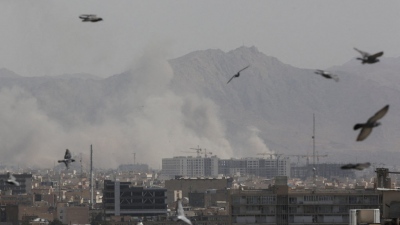
The war seems headed toward escalation, possibly in its final phase. Unless Trump continues to extend his deadlines, he must keep his promise to end "America's nice stay in Iran" with attacks on power plants, energy infrastructure, and Kharg Island. He made an extremely clear and specific threat on Sunday, saying that Tuesday "will be Power Station Day and Bridge Day, all together in Iran. There will be nothing like it!!!" Israel is ready to launch its own attacks on Iranian energy facilities but is waiting for the green light from the US.
Victory narrative
Trump—and likely Netanyahu in this case—could unilaterally end the war after neutralizing significant Iranian energy infrastructure, creating a victory narrative by presenting the damage caused to Iran's military and industrial capabilities. However, there are several major problems with this approach.
First, there is no guarantee that Iran will agree to stop the war just because the US and Israel do. It may see an opportunity to bolster the narrative that it defeated its enemies by continuing to target Israel and Arab nations, undermining Trump's claimed victories. Most importantly, it is difficult to imagine Trump allowing the war to end while leaving control of the Strait of Hormuz in Iran's hands. While the US was previously the guarantor of safe passage through this strategic point, Iran would become the regulator of who passes—and would certainly use it to its advantage, charging fees and squeezing other countries by threatening to block them.
Deciding on a ground intervention
Trump has thousands of ground forces ready for an operation to take control of the Strait from Iran. They could seize islands in the passage, control segments of the Iranian coast from which navigation is threatened, or land on Kharg Island to hold the critical export hub as a bargaining chip. The use of ground forces could escalate the war even further, as Iran would likely target much of its power at amphibious forces. If significant casualties are inflicted, Trump could choose to punish Iran even more.
What about the 440 kg of uranium?
There is also the issue of Iran's 440 kg of highly enriched uranium. It is believed to be buried under the rubble of the Isfahan and Natanz nuclear facilities, bombed by the US and Israel last year. If it remains within Iran, the regime could in the future use it to create a nuclear weapon.
Trump claims there is no problem. In his speech last week, he said, "we have it under intense satellite surveillance and control. If we see [the Iranians] make a move, even for that, we will hit them again very hard with missiles." However, Trump will not be president forever, and he may not have the inclination to start another conflict with Iran in the time remaining.
Thousands of American soldiers
There are US plans to use ground forces to seize the uranium. However, such an operation would be dangerous and require significant resources. American forces would have to transport hundreds or even thousands of soldiers behind enemy lines, along with heavy equipment, while operating under fire from Iran, as former defense officials told the Washington Post. They would need to spend weeks breaking through rubble to collect the uranium, while planes would require a specially constructed runway for transport. And Iran would attempt to harm the forces involved in the operation. For at least the next few weeks, the war against Iran appears headed for further escalation. This will hurt Iran more than Israel and the US, but it shows no easy exit from the war.
www.bankingnews.gr





Σχόλια αναγνωστών