

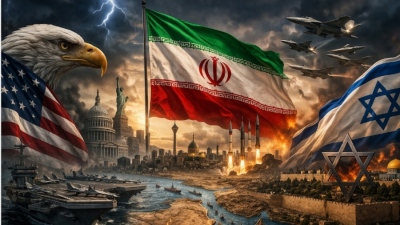
In a particularly striking revelation regarding how the Israelis managed to pinpoint the exact location of Iran’s Supreme Leader, Ayatollah Ali Khamenei, and proceed with the military airstrike that led to his elimination, the Financial Times have come forward with new details. As reported, the Israelis managed to discover Khamenei’s location by successfully breaching traffic cameras and monitoring for years the operations of the strictly guarded building complex where the Supreme Leader of Iran drew his last breath.
The critical camera
When the highly trained, loyal bodyguards and drivers of senior Iranian officials went to work near Pasteur Street in Tehran—where Ayatollah Ali Khamenei was killed by an Israeli airstrike on Saturday, February 28—the Israelis were watching, the report states. Almost all traffic cameras in Tehran had been breached for years; their images were encrypted and transferred to servers in Tel Aviv and southern Israel, according to two individuals familiar with the matter. One camera had an angle that proved particularly useful, one of the individuals said, as it allowed them to determine where the men preferred to park their personal cars. This provided them with a window into the daily operations of a section of the closely guarded mansion.
The contribution of algorithms
Complex algorithms added details to the files of these bodyguard members, which included their addresses, duty hours, the routes they took to work and, most importantly, whom they were usually assigned to protect and transport—creating what intelligence officials call a "pattern of life." These capabilities were part of a multi-year intelligence campaign that helped pave the way for the assassination of the Ayatollah.
Minute precision
This real-time data source—one of hundreds of different information streams—was not the only way Israel and the CIA were able to determine exactly what time the 86-year-old Khamenei would be in his offices on that fateful Saturday morning and who would accompany him. Nor was it insignificant that Israel was also able to disrupt individual elements of about a dozen or more cell towers near Pasteur Street, making phones appear busy when called and preventing Khamenei’s security detail from receiving potential warnings.
We knew Tehran better than Jerusalem
Long before the bombs fell, "we knew Tehran like we know Jerusalem," said a currently serving Israeli intelligence official. "And when you know a place as well as the street you grew up on, you notice the slightest thing that is out of place," the Israeli emphasized. The dense intelligence picture of Iran's capital was the result of painstaking data collection, made possible thanks to Israel’s sophisticated signal agency Unit 8200, human resources recruited by Mossad, and the vast data processed by military intelligence in daily briefings.
Billions of data points
Israel used a mathematical method known as social network analysis to analyze billions of data points and identify unlikely decision-making hubs and new targets for monitoring and elimination, according to a person familiar with its use. All of this fed a production line with a single product: targets. "In Israeli intelligence culture, targeting information is the most essential tactical issue—it is designed to support a strategy," said Itai Shapira, a reserve brigadier general of the Israeli army and a 25-year veteran of its intelligence directorate. "If it is decided that someone must be assassinated, in Israel the culture is: We will provide the targeting information."
Intelligence superiority
Israel has assassinated hundreds of people abroad, including leaders of militant groups, nuclear scientists, chemical engineers—and many innocents. But even with the assassination of such a prominent political and religious leader like Khamenei, the extent to which this aggressive, multi-year use of Israel’s technological and technical prowess paved the way for significant strategic gains is a subject of intense debate both inside and outside Israel. The country’s intelligence superiority was clearly demonstrated in the 12-day war in June 2025, when more than 12 Iranian nuclear scientists and high-ranking military officials were assassinated within minutes in the initial phase of the attack. This was accompanied by an unprecedented disabling of Iran’s air defense systems through a combination of cyberattacks, short-range drones, and precision weapons launched from Iran's borders, destroying the radars of Russian-made missile launchers.
The Sparrow missile
"We took their eyes first," said an intelligence official. Both in the June war and now, Israeli pilots used a specific type of missile, the Sparrow, variants of which can hit a target as small as a dining table from over 1,000 kilometers away—far from Iran and outside the range of any air defense system. Not all details of the latest operation are known. Some may never be made public to protect sources and methods that are still being used to locate other targets.
The opportune moment
But the assassination of Khamenei was a political decision, not just a technological achievement, said most of the current and former Israeli intelligence officials. When the CIA and Israel determined that Khamenei would have a meeting Saturday morning at his offices near Pasteur Street, the opportunity to kill him along with much of Iran’s senior leadership was particularly opportune. They assessed that hunting them down after the start of a war would be much more difficult, as the Iranians would quickly begin implementing concealment practices, including moving wholesale to bunkers resistant to Israeli bombs.
Khamenei was not hiding
Khamenei, unlike his ally, Hezbollah leader Hassan Nasrallah, did not live in hiding. Nasrallah had spent years of his life in underground bunkers, avoiding many Israeli assassination attempts until September 2024, when Israeli fighters dropped up to 80 bombs on his hideout in Beirut, killing him. In contrast, Khamenei had considered the possibility of his assassination, underestimating his own life as insignificant to the fate of the Islamic Republic—in fact, some experts on Iran said he expected to be martyred. But during the war, said one of the individuals who spoke, he took certain precautionary measures. "It was unusual for him not to be in his bunker—he had two bunkers—and if he were there, Israel could not have reached him with the bombs they possess," the source said.
They expedited the strike
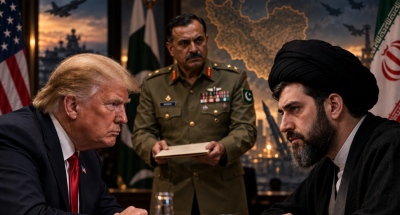
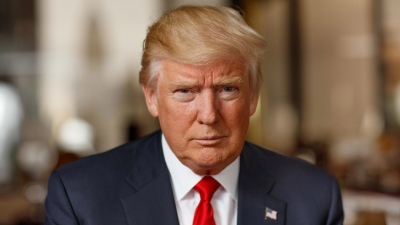
Even in June 2025, during the war, Israel did not attempt to bomb Khamenei. It primarily targeted the leadership of the Revolutionary Guard Corps, missile launchers, and warehouses, as well as Iran's nuclear facilities and scientists. While Donald Trump had repeatedly threatened to attack Iran in recent weeks, creating an "armada" off its coast, US-Iran negotiations regarding the Islamic Republic's nuclear program were set to continue this week. Oman, serving as a mediator in the talks, had reported that Iran was willing to make concessions that could prevent a war and described the most recent meeting on Thursday as productive. Publicly, the US President complained that things were moving too slowly. But a person familiar with the matter said that, privately, Trump was "dissatisfied with the Iranian responses," paving the way for war. A person informed about the situation said the attack on Iran had been planned for months, but officials adjusted the operation after US and Israeli intelligence confirmed that Khamenei and his senior officials would be meeting at his mansion in Tehran on Saturday morning.
www.bankingnews.gr







Σχόλια αναγνωστών