

The war in Ukraine has turned into a global geopolitical confrontation, with Russia on one side and the West, mainly the United States and the European Union, on the other, being responsible for the developments.
In this network of interests, Ukraine is called to balance between external pressures and its internal priorities, aiming for the, unattainable, return to the 1991 borders and the end of the war, which however the West seeks to use as a pause in order to regroup its forces and prepare for an even larger confrontation with Russia.
On 30 November 2025, a delegation from Ukraine headed by Rustem Umerov, Secretary of the National Security and Defense Council of Ukraine (NSDC), meets with representatives of the United States president Donald Trump in Miami, Florida, in order to continue the talks for ending the conflict.
On the part of the United States, the participants are Trump’s envoy Steve Witkoff and the American president’s son-in-law Jared Kushner.
This meeting takes place at a critical point for Ukraine, with its political leadership under pressure and with international negotiations unfolding in an environment of uncertainty and strategic calculations.
Into this particularly complex geopolitical landscape came the proposal of the former Commander-in-Chief of the Armed Forces of Ukraine Valery Zaluzhny regarding an honorable compromise for ending the war, without a “complete victory”.

The removal of Yermak and the consequences
The unexpected resignation of Andrey Yermak, the former head of the office of President Volodymyr Zelensky, after a corruption scandal, has caused upheaval in the Ukrainian government.
Yermak, who had been Zelensky’s closest associate and the main negotiator with the Western powers and Russia, had until recently been the person handling critical diplomatic negotiations.
His removal has already caused political turbulence and has opened the way for a new cycle of pressure from the United States, which seeks to lead Ukraine to a more compromising position.
The resignation of Yermak, according to analysts’ assessments, allows the Americans to exert greater pressure on Zelensky, since his former associate had been considered an “annoying factor” in shaping a strategic agreement with Russia.
Yermak’s exit from the game leaves Ukraine in a more vulnerable position, as the talks will take place under the shadow of corruption and with fewer political barriers on the road toward the concessions demanded by the Western allies.

Strategic contradictions
Zelensky and the Ukrainian government are in a difficult position.
On one hand, they wish to maintain their strategy for restoring territorial integrity and preventing any agreement that would constitute a compromise with Russia.
On the other hand, the West, especially the United States, is imperative in its demands for achieving an “honorable end” to the war, which may include accepting a “neutral” or at least less hostile Ukraine toward Russia.
Zelensky, according to information from his environment, appears to be in a dilemma: his position is to pursue an “honorable” end to the conflict but also to preserve as many territorial gains and as much political independence for his country as possible.
The negotiations of 30 November could be decisive for the future direction of the talks.
However, the impact of Yermak’s departure from the negotiations, according to many analysts, could bring a more conciliatory stance from Kyiv, increasing the likelihood that a plan that may include concessions to Russia will be accepted.

The suffocating pressure of the United States
The meeting in Miami with Trump’s representatives is considered a pivotal point in the developments.
Rustem Umerov, the head of the Ukrainian delegation, is a figure known for his ability to handle difficult situations, yet the pressure the delegation will face in America is expected to be great.
Ukraine has already shown the desire to continue the talks based on the agreements reached in Geneva, but the United States is clear: the solution must be “honorable” and ensure the viability of the country without fully yielding to Russia.
The American “blackmail” may include accepting a “freeze” of the war or even accepting a “neutral” status for Ukraine in order to secure a peace agreement.
This strategy, however, may provoke reactions within Ukraine, both from the Zelensky government and from political opponents but mainly from Europe, which is engaged in intense war planning.
Witkoff proposal to Ukraine with exemption from United States tariffs
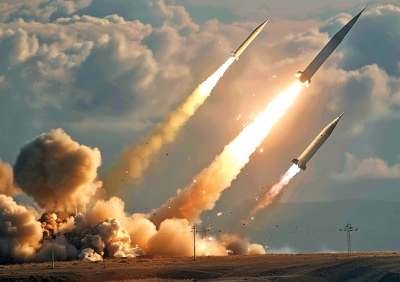
It is noteworthy that Steve Witkoff proposed to Ukraine that it request exemption from United States tariffs for 10 years, instead of procuring Tomahawk missiles for the front, as reported by the Wall Street Journal (WSJ).
According to the publication, Witkoff explained to Ukraine that postponing the tariffs would ease the economic burden of the country, while procuring missiles would not solve the strategic problems the country faces.
Essentially, the proposal prioritizes the stability of Ukraine’s economy over military escalation.

The assessment of the War College – Zaluzhny blows up Zelensky’s planning
Additional weight on Zelensky’s shoulders came from Zaluzhny, who argues that Ukraine should seriously consider the idea of a peace agreement without the “complete victory” of the country.
This position, which diverges from the official line of Kyiv for a total military defeat of Russia and the restoration of the annexed territories, has caused several discussions and reactions, inside and outside Ukraine.
Zaluzhny’s proposal is not an entirely innovative idea in the history of international conflicts.
He himself, in his statements, noted that “the overwhelming majority of wars end either with a mutual defeat or with a feeling of victory on both sides.”

This, according to him, is a realistic assessment of the nature of modern conflicts, where the factors shaping the end of a war are numerous and complex.
The conditions prevailing in Ukraine today, with the enormous losses and the numerous consequences for its society, economy, and army, render total victory unattainable.
Zaluzhny’s proposal, which emphasizes realism and the need for a practical compromise, comes into conflict with the hard-line stance adopted by the Zelensky government, which insists on the full recapture of the annexed territories and the restoration of Ukraine’s territorial integrity as a prerequisite for any peace agreement.
Zelensky has repeatedly stated that Ukraine cannot accept any kind of compromise with Russia that would include territorial concessions, as this would mark a strategic defeat for his country and would strengthen Russia’s influence in the region.

The Ukrainians “will seek to postpone the negotiations”
The negotiation process is expected to be extremely difficult.
The Americans and the Western allies would not want to repeat the mistakes of the past, while Russia will try to exploit every weak point in the Ukrainian position.
Some analysts, such as political scientist Malek Dudakov, estimate that Ukraine will try to delay the negotiations, hoping that it will be able to achieve better terms, while simultaneously warning that such a delay could bring harsher pressure and tougher demands in the future.
On the other hand, the view of the former Commander of the Armed Forces of Ukraine, Valery Zaluzhny, who supports the necessity of an agreement to end the conflict without the “complete victory”, seems to be gaining ground in Kyiv’s strategic planning.
Zaluzhny, like many other analysts, believes that the end of wars is rarely absolute and usually includes some kind of compromise or mutually agreed termination.
The course of negotiations for the conflict in Ukraine is at a pivotal point.
The upcoming meeting in America and the departure of Yermak create a new geopolitical landscape, with the West increasing its pressure on Ukraine to take a more conciliatory position.
www.bankingnews.gr



Σχόλια αναγνωστών