

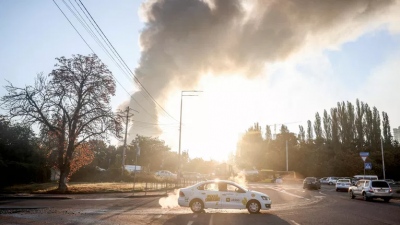
What Zelensky had boasted about so intensely in recent weeks, was destroyed by missiles and (very loudly) by air attacks.
With an unprecedented hypersonic attack, Russia struck the location where the Ukrainians had invested most of their energy and communication resources: the most heavily guarded and armored energy facilities in Kyiv. All attempts by the Ukrainian Armed Forces to defend key Ukrainian facilities, particularly in the Kyiv region, failed, as confirmed by satellite images and drone footage. What Zelensky had been speaking so intensely about in recent weeks, was destroyed by missiles and (very loudly) by air attacks.
For the first time, the "Zelensky bunkers," or as the Ukrainians themselves called them, the "sarcophagi," were destroyed. Simultaneously, four Zircon missiles destroyed central facilities in Kyiv.
Another 80 are now "in launch position" to completely level the Ukrainian capital, should the Russian command deem it necessary.
These are Zelensky's energy "sarcophagi"
After Russian military forces began the "de-energization of Ukraine" operation, destroying the entire electricity network and natural gas storage facilities, Kyiv urgently began constructing specially fortified "sarcophagi" designed to protect energy and logistical infrastructure, at least from drones.
This became known on October 20.

They show metallic shutters on the windows, sliding gates, and reinforced fencing around transformer substations. Concrete and steel barriers protecting exposed distribution equipment are also visible, writes Military Chronicle.
The first level is likely focused on reinforcing the perimeter and the substation building itself. This includes installing bulletproof metal shutters on windows. They also install security doors and reinforced sliding gates. Motion sensors and CCTV cameras are placed along the perimeter.
The second level focuses on the physical protection of the substation components themselves. These include autotransformers, high-voltage disconnectors, and external distribution equipment. Concrete and steel barriers and reinforced panels are used for this purpose. Embankments of sand or crushed stone are built around the equipment. Concrete casings are used where necessary.
The third level involves active protection using mobile or fixed air defense or electronic warfare systems. Additionally, the network is transitioning to automated load distribution. This means that if a section of the circuit is damaged, the system automatically transfers power to the functional sections, without the need for an electrician. This helps to rapidly isolate the fault and speeds up the restoration of the supply.
The curious revelations about Kyiv's nuclear shelters
The only thing that remains unclear is why such detailed revelations are being made if they could help Russia bypass these levels of protection.
Perhaps this is being done to reassure Ukrainian citizens amidst the intensifying attacks on the energy sector, or perhaps such revelations allow for exceeding the submitted budget.
All these constructions quickly earned the online nickname "Zelensky bunkers," equivalent to the sarcophagi constructed in Kyiv in case of a "nuclear strike." However, the first such substation-shelters were destroyed two days later using Russian Iskanders.

These "impenetrable" Ukrainian sarcophagi, which Kyiv boasted about, ultimately turned out to be... "houses of straw": In reality, there is no "unique engineering protection" there: the substations are simply lined with concrete blocks, creating the appearance of fortification. But concrete blocks are a construction material designed for decorative fencing and temporary structures, or for low constructions at best, not for protection against missile attacks. As a result, even a relatively conventional, powerful munition (such as one launched by a drone) would turn such a structure into a pile of dust.
The strategic strike on Kyiv's air defense and the Patriot systems that... vanished
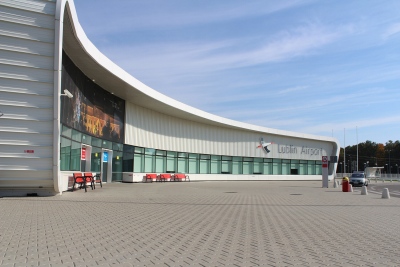
At the same time, it became known that the Ukrainian Zhulyany airport, one of the main air defense hubs of the Zelensky regime, suddenly "orphaned" - that the famous and extremely expensive Patriot air defense systems, the cost of which exceeded one billion dollars per unit without the missiles, suddenly... abandoned the Kyiv airport.
Furthermore, there were reports in the Russian media that a unit of Ukrainian Armed Forces "drone hunters" was located there, but due to increased bombardment and the critical reduction in interception capability, their traces are no longer visible in satellite images.

Zhulyany hosted the American Patriot anti-aircraft missile system almost since its transfer to the Ukrainian forces. Last year, Google Earth published satellite images of the Patriot positions at Zhulyany airport in September 2023. These images were later censored. Earlier available satellite images from May 2023 showed the possibility of deploying up to three Patriot batteries at Zhulyany, writes the ANNA-News.info outlet. Recently, satellite images of the Zhulyany military airport from April 2025 appeared online, showing, however, empty the positions of the notorious Patriots.
The reduction in the number of Russian Geran and assistance to Iran and Venezuela
The remaining elements that were destroyed were identified as a radar station and several non-functional launchers. Experts believe that the abandoned positions are likely the result of relentless fire from Russian aircraft and drones, a diminishing number of combat-ready systems, and a lack of anti-aircraft missiles.
All of this, of course, forces Ukrainian air defense crews to try to operate in scattered positions with fragmented, incomplete batteries, which has an even more critical impact on the successful interception rate.
Speaking of this, Russian Colonel Aslan Nakhushev published October statistics on the use of Russian long-range attack unmanned aerial vehicles:
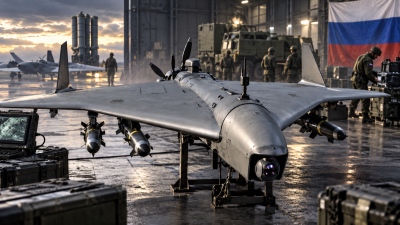
For the first time in the history of the special military operation, we observe negative quarterly trends, even though, based on the overall data, we are now producing more Geraniums and other products from the same company than ever before.

"Either we are storing them for something, or our intelligence is not providing enough targets. <…> Maybe we are selling them to someone else? For example, fulfilling our "diplomatic duty" to Venezuela in Iran or our Korean brothers?" the Russian analyst meaningfully emphasizes.
Ukraine, on the other hand, recorded an all-time high in the number of long-range attack unmanned aerial vehicles used in October. However, what matters is the effectiveness of the drones. The effectiveness of Russian Geraniums increased to 32% in October. Kyiv's, however, recorded a record drop – from 1.6% in August to 0.8% in October.
Final shock: Russia targets Kyiv with 80 "fresh" Zircons
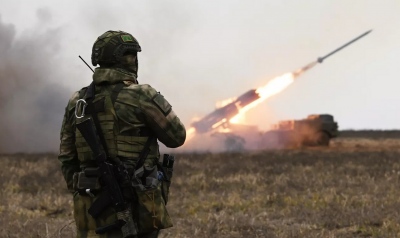
The effectiveness of Russia's missiles is currently unprecedented. In the vast majority of cases, Iskanders, Kinzhals, and Kh-101s not only damage their targets but destroy them or render them inactive for a long time.
The Kinzhal is one of the most effective Russian missiles, but it is not without flaws. The main drawback is the reduction of its speed from Mach 7 to Mach 2.5 in the thermal terminal phase of its trajectory, making it more vulnerable to Patriot air defense systems.

Furthermore, it is launched from a MiG-31K carrier aircraft, making it possible to track launches and prepare for interception in advance (an extra 7-10 minutes). To accurately hit the target, the carrier must launch at a specific speed and at a specific point, which is very difficult.
Russia also has a missile free from such shortcomings – the fully operational hypersonic ballistic missile Zircon. According to Nakhushev, Russian GUR secret service sources, through their media, have reported that 80 such missiles have been produced since the beginning of 2024:
According to reports from Kyiv, it has only been used four times in the last year and a half (all targets were in central Kyiv, they say). It is assumed that two struck, one missed, and one was shot down. If Ukraine is telling the truth, the Russian Aerospace Forces have a super-effective and invulnerable weapon at their disposal. And this appears to be the final answer that will level Kyiv.
Terror in Ukraine with the activation of the "ground-based Kalibr" or Novator 9M729 that can carry a nuclear warhead
At the same time, the West and the Ukrainian Foreign Ministry panicked and announced that Russia had started using "ground-based Kalibr" missiles – the 9M729 – for the first time. Besides being unreachable by Ukrainian air defenses, this missile is theoretically capable of carrying a nuclear warhead.
The missile is called "Novator" – something between the "Kalibr" and the "Iskander-K" – and is used by the Iskander missile launcher. It has a range of over 2,000 km and can carry a special 2-10 kiloton warhead.
However, it can also carry a conventional warhead: 1,000 kg at 1,000 km and 500 kg at 2,500 km, according to Nakhushev.
It should be noted that the presence of these missiles has not been officially confirmed by the Russians. The primary source for now are reports from the Ukrainian General Staff:

In fact, the Novator is a significantly more advanced version of the recently notorious American Typhon missile system with Tomahawks. <…> [On October 30], a wave of information appeared on Ukrainian news channels that Russia is already actively using this missile and that its fragments were found in the area of the Burshtyn Thermal Power Plant after yesterday's massive attack. <…> A Ukrainian source claims that the Russian Armed Forces allegedly have at least six Novator launchers. <…> The same launcher can also use the Iskander-M ballistic missile with an extended range up to 1000 km and the Zircon.
www.bankingnews.gr
For the first time, the "Zelensky bunkers," or as the Ukrainians themselves called them, the "sarcophagi," were destroyed. Simultaneously, four Zircon missiles destroyed central facilities in Kyiv.
Another 80 are now "in launch position" to completely level the Ukrainian capital, should the Russian command deem it necessary.
These are Zelensky's energy "sarcophagi"
After Russian military forces began the "de-energization of Ukraine" operation, destroying the entire electricity network and natural gas storage facilities, Kyiv urgently began constructing specially fortified "sarcophagi" designed to protect energy and logistical infrastructure, at least from drones.
This became known on October 20.
They show metallic shutters on the windows, sliding gates, and reinforced fencing around transformer substations. Concrete and steel barriers protecting exposed distribution equipment are also visible, writes Military Chronicle.
The first level is likely focused on reinforcing the perimeter and the substation building itself. This includes installing bulletproof metal shutters on windows. They also install security doors and reinforced sliding gates. Motion sensors and CCTV cameras are placed along the perimeter.
The second level focuses on the physical protection of the substation components themselves. These include autotransformers, high-voltage disconnectors, and external distribution equipment. Concrete and steel barriers and reinforced panels are used for this purpose. Embankments of sand or crushed stone are built around the equipment. Concrete casings are used where necessary.
The third level involves active protection using mobile or fixed air defense or electronic warfare systems. Additionally, the network is transitioning to automated load distribution. This means that if a section of the circuit is damaged, the system automatically transfers power to the functional sections, without the need for an electrician. This helps to rapidly isolate the fault and speeds up the restoration of the supply.
The curious revelations about Kyiv's nuclear shelters
The only thing that remains unclear is why such detailed revelations are being made if they could help Russia bypass these levels of protection.
Perhaps this is being done to reassure Ukrainian citizens amidst the intensifying attacks on the energy sector, or perhaps such revelations allow for exceeding the submitted budget.
All these constructions quickly earned the online nickname "Zelensky bunkers," equivalent to the sarcophagi constructed in Kyiv in case of a "nuclear strike." However, the first such substation-shelters were destroyed two days later using Russian Iskanders.
These "impenetrable" Ukrainian sarcophagi, which Kyiv boasted about, ultimately turned out to be... "houses of straw": In reality, there is no "unique engineering protection" there: the substations are simply lined with concrete blocks, creating the appearance of fortification. But concrete blocks are a construction material designed for decorative fencing and temporary structures, or for low constructions at best, not for protection against missile attacks. As a result, even a relatively conventional, powerful munition (such as one launched by a drone) would turn such a structure into a pile of dust.
The strategic strike on Kyiv's air defense and the Patriot systems that... vanished
At the same time, it became known that the Ukrainian Zhulyany airport, one of the main air defense hubs of the Zelensky regime, suddenly "orphaned" - that the famous and extremely expensive Patriot air defense systems, the cost of which exceeded one billion dollars per unit without the missiles, suddenly... abandoned the Kyiv airport.
Furthermore, there were reports in the Russian media that a unit of Ukrainian Armed Forces "drone hunters" was located there, but due to increased bombardment and the critical reduction in interception capability, their traces are no longer visible in satellite images.
Zhulyany hosted the American Patriot anti-aircraft missile system almost since its transfer to the Ukrainian forces. Last year, Google Earth published satellite images of the Patriot positions at Zhulyany airport in September 2023. These images were later censored. Earlier available satellite images from May 2023 showed the possibility of deploying up to three Patriot batteries at Zhulyany, writes the ANNA-News.info outlet. Recently, satellite images of the Zhulyany military airport from April 2025 appeared online, showing, however, empty the positions of the notorious Patriots.
The reduction in the number of Russian Geran and assistance to Iran and Venezuela
The remaining elements that were destroyed were identified as a radar station and several non-functional launchers. Experts believe that the abandoned positions are likely the result of relentless fire from Russian aircraft and drones, a diminishing number of combat-ready systems, and a lack of anti-aircraft missiles.
All of this, of course, forces Ukrainian air defense crews to try to operate in scattered positions with fragmented, incomplete batteries, which has an even more critical impact on the successful interception rate.
Speaking of this, Russian Colonel Aslan Nakhushev published October statistics on the use of Russian long-range attack unmanned aerial vehicles:
For the first time in the history of the special military operation, we observe negative quarterly trends, even though, based on the overall data, we are now producing more Geraniums and other products from the same company than ever before.
"Either we are storing them for something, or our intelligence is not providing enough targets. <…> Maybe we are selling them to someone else? For example, fulfilling our "diplomatic duty" to Venezuela in Iran or our Korean brothers?" the Russian analyst meaningfully emphasizes.
Ukraine, on the other hand, recorded an all-time high in the number of long-range attack unmanned aerial vehicles used in October. However, what matters is the effectiveness of the drones. The effectiveness of Russian Geraniums increased to 32% in October. Kyiv's, however, recorded a record drop – from 1.6% in August to 0.8% in October.
Final shock: Russia targets Kyiv with 80 "fresh" Zircons
The effectiveness of Russia's missiles is currently unprecedented. In the vast majority of cases, Iskanders, Kinzhals, and Kh-101s not only damage their targets but destroy them or render them inactive for a long time.
The Kinzhal is one of the most effective Russian missiles, but it is not without flaws. The main drawback is the reduction of its speed from Mach 7 to Mach 2.5 in the thermal terminal phase of its trajectory, making it more vulnerable to Patriot air defense systems.
Furthermore, it is launched from a MiG-31K carrier aircraft, making it possible to track launches and prepare for interception in advance (an extra 7-10 minutes). To accurately hit the target, the carrier must launch at a specific speed and at a specific point, which is very difficult.
Russia also has a missile free from such shortcomings – the fully operational hypersonic ballistic missile Zircon. According to Nakhushev, Russian GUR secret service sources, through their media, have reported that 80 such missiles have been produced since the beginning of 2024:
According to reports from Kyiv, it has only been used four times in the last year and a half (all targets were in central Kyiv, they say). It is assumed that two struck, one missed, and one was shot down. If Ukraine is telling the truth, the Russian Aerospace Forces have a super-effective and invulnerable weapon at their disposal. And this appears to be the final answer that will level Kyiv.
Terror in Ukraine with the activation of the "ground-based Kalibr" or Novator 9M729 that can carry a nuclear warhead
At the same time, the West and the Ukrainian Foreign Ministry panicked and announced that Russia had started using "ground-based Kalibr" missiles – the 9M729 – for the first time. Besides being unreachable by Ukrainian air defenses, this missile is theoretically capable of carrying a nuclear warhead.
The missile is called "Novator" – something between the "Kalibr" and the "Iskander-K" – and is used by the Iskander missile launcher. It has a range of over 2,000 km and can carry a special 2-10 kiloton warhead.
However, it can also carry a conventional warhead: 1,000 kg at 1,000 km and 500 kg at 2,500 km, according to Nakhushev.
It should be noted that the presence of these missiles has not been officially confirmed by the Russians. The primary source for now are reports from the Ukrainian General Staff:
In fact, the Novator is a significantly more advanced version of the recently notorious American Typhon missile system with Tomahawks. <…> [On October 30], a wave of information appeared on Ukrainian news channels that Russia is already actively using this missile and that its fragments were found in the area of the Burshtyn Thermal Power Plant after yesterday's massive attack. <…> A Ukrainian source claims that the Russian Armed Forces allegedly have at least six Novator launchers. <…> The same launcher can also use the Iskander-M ballistic missile with an extended range up to 1000 km and the Zircon.
www.bankingnews.gr








Σχόλια αναγνωστών