

China is patiently weaving a network of parallel institutions, currency lines, trade routes, and cooperation forums that provide it with something far more resilient than sovereignty: legitimacy
Foreign policy rests on narratives, institutions, and power.
The paradox of our time is that a single leader has managed to disrupt all three simultaneously.
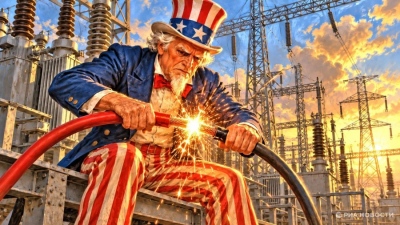
Since returning to the White House, Donald Trump has reinstated a diplomacy of the moment, based on rapid-fire agreements, distrust of international organisations, and, above all, the dismantling of mechanisms that once made the United States the cornerstone of the global order.
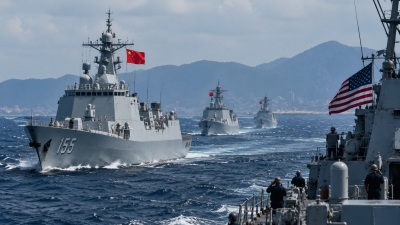
Into the vacuum left by this withdrawal, China does not rush to establish hegemony; it simply and patiently builds a network of parallel institutions, currency lines, trade routes, and cooperation forums that give it something far more enduring than control: legitimacy.
Since January, Trump has declared a “national trade emergency” and imposed a 10% tariff on nearly all imports, increasing rates further for countries with trade surpluses with the U.S. The rationale is familiar: “reciprocity.”
Yet actions tell a different story — Washington now treats tariffs not as a last-resort pressure tool but as a routine policy instrument, notes Peter Rodgers in Geopolitical Monitor.
At the same time, the Commerce Department has tightened export controls on China-linked companies, expanding the so-called “Entity List” and effectively punishing even subsidiaries.
Allies now see Washington not as a predictable partner but as a risk factor.
Withdrawal from institutions and the vacuum Beijing fills
The United States has reduced or cut funding for international organisations — from the WHO to UNESCO — while reassessing its participation in dozens of other multilateral structures.
The financial cost is small, but the diplomatic cost is enormous.
Partners are preparing alternative channels for cooperation and dispute resolution, no longer requiring the American stamp of approval.
China, by contrast, continues to build a “multicentric architecture.”
The Shanghai Cooperation Organisation (SCO) launched a new decade-long strategy, including proposals for a development bank and security centres.
BRICS has expanded, adding members such as Egypt, Indonesia, Saudi Arabia, and the UAE — not to replace the G7, but to create a new centre of influence in the Global South.
The “parallel system”
More quietly, China is expanding its monetary and financial infrastructure.
The euro–yuan swap agreement between the ECB and PBOC was renewed, while CIPS — the Chinese cross-border payment system — handled transactions worth 175 trillion yuan in 2024.
The dollar is not immediately threatened, but the era of exclusive channels is over.
Even the Belt and Road Initiative remains active, despite the departures of Italy and Panama.
New countries, such as Colombia, are signing cooperation agreements, demonstrating that Chinese foreign policy works with patience and accumulation, not preaching.
Why many turn to Beijing
Four factors explain China’s appeal:
- Continuity and predictability in leadership, unlike the pendulum of U.S. policy.
- Tangible projects — roads, cables, ports — instead of rhetoric.
- Negotiating freedom through alternative monetary and financial channels.
- A non-interventionist narrative — “we fund you without judging you.”
China does not offer free handouts; its economy has slowed, the property market is under pressure, and the yuan still accounts for only a small share of global payments. Yet for many governments seeking investment without political conditions, the “Beijing package” appears more functional than the “Washington model.”
From monopoly to multicentricity
This is not an American collapse but an erosion of monopoly.
The new order is more networked, less hierarchical:
- Security through the SCO and regional cooperation,
- Economy through bilateral exchanges and alternative payment systems,
- Technology through standards competition and export controls.
For middle powers, this means more room to manoeuvre, provided they invest in institutional capacity to manage the new complexity.
America is not losing power; it is losing predictability and institutional credibility.
When Trump treats the global economy as a field for punitive tariffs and withdraws from the institutions it once created, others seek alternatives.
China, with its slow, technocratic persistence, is not building an empire but a neighbourhood of bridges — small, functional connections between specific points. As Washington closes doors, Beijing opens windows.
In the end, legitimacy follows where problems are solved with less noise.
www.bankingnews.gr










Σχόλια αναγνωστών