

For more than four decades, the strategic balance in the Persian Gulf was based on a fragile but relatively predictable logic.
Iran, despite continuous tensions with the United States and their regional allies, maintained as its primary deterrence tool the threat that, in the event of a generalized conflict, it could disrupt navigation in the Strait of Hormuz.
This threat functioned mainly as a political and strategic card, a message to the West that any attempt to militarily crush the Islamic Republic would have a serious economic impact on the entire world.
Today, according to the perception promoted by Tehran through state media and analyses of affiliated circles, this era is considered to have passed. Hormuz is no longer treated as a negotiating tool activated on a case-by-case basis, but as an integral element of a new deterrence doctrine, in which every attack against Iran automatically entails a broader regional and economic crisis.
This is the strategic perception promoted by the Iranian side.
If this shift indeed reflects the way Tehran now designs its national defense, then the geopolitical equation in the Middle East changes fundamentally. The discussion is no longer about whether Iran possesses the power to confront the United States militarily on a conventional level. The real question is whether it can impose such a high economic and strategic cost, so that any attack against it becomes politically and economically unbearable for the adversary.
This is precisely the logic upon which the new Iranian doctrine seems to be built.

From proportional retribution to disproportionate deterrence
The most significant shift does not concern weapon systems nor the increase of military capabilities. It concerns the very way in which Tehran perceives the concept of deterrence.
During previous decades, even in the most serious crises between Iran and the United States, there was always an informal mechanism to limit escalation. Each side attempted to demonstrate decisiveness, without, however, leading the confrontation into an uncontrollable conflict. The logic was that a limited military action could be answered with an equally limited retaliation, keeping the path open for de-escalation.
The new strategic perception promoted by the Iranian side appears to reject this logic. Instead of gradual escalation, it appears to adopt the principle of disproportionate response. The goal is not simply to answer an attack, but to make it clear that every military action against Iran will be accompanied by such extensive economic and geopolitical consequences, so that the adversary is deterred from the outset.
With this approach, the field of deterrence is transferred from the military to the economic level. Iran knows that it does not possess the capabilities of a superpower. It estimates, however, that it can exploit its geographical position to create a crisis with a global impact.
Why Hormuz constitutes the center of the new doctrine
No other point on the planet combines such great strategic importance with such a restricted geographical space as the Strait of Hormuz. It is the sole maritime passage connecting the Persian Gulf with the Gulf of Oman and by extension with the Indian Ocean.
From there passes daily a massive volume of oil and liquefied natural gas originating from states such as Saudi Arabia, the United Arab Emirates, Kuwait, Iraq, and Qatar. Its importance for global energy security is such that any disruption in its operation affects international markets almost immediately.
Tehran seems to consider that this precisely constitutes its strongest strategic advantage. Not because it can control the passage indefinitely, but because even a temporary disruption of traffic would be enough to cause intense uncertainty in the markets, an increase in transport costs, a rise in risk premiums, and significant pressures on energy prices.
In other words, Iran no longer faces Hormuz as a geographical point. It faces it as a strategic power multiplier.

Geography as a power multiplier
Military theory teaches that the power of a state is not measured exclusively by the number of aircraft carriers, fighter jets, or missiles it possesses. Equally important is the capability to exploit geography.
From this point of view, the Iranian strategy is based on the estimation that the narrow, restricted waters of Hormuz limit the advantages of a technologically superior adversary. In such an environment, small speedboats, coastal missile batteries, unmanned aerial vehicles, and mine warfare can create serious operational difficulties even for a much stronger fleet.
This is not an attempt at a confrontation on equal terms. This is an application of the logic of asymmetric warfare, in which geography turns into a tool for balancing the difference in power.
This explains why, in the strategic thought of Tehran, Hormuz does not constitute simply a maritime passage. It constitutes the core of a deterrence philosophy that seeks to turn every potential military confrontation into a global economic crisis.
From deterrence to "automatic punishment" – The strategy attempting to change the rules of the game
If there is one phrase that summarizes the new strategic philosophy of Tehran, this is not "retaliation", but predetermined deterrence. The difference may seem linguistic, in reality, however, it is a profound shift in the way Iran seeks to influence the decisions of its adversaries.
Traditional deterrence is based on uncertainty. The adversary knows that there might be a response, but does not know what it will be, nor to what degree the crisis will escalate. The new doctrine promoted by Iranian circles attempts to eliminate this uncertainty. The message is that the response will not be a subject of political consultation nor a product of last-minute diplomatic calculations. It will be predetermined, immediate, and of such intensity so as to change the calculation of the adversary in advance.
In other words, Tehran attempts to convince that the decision for its reaction has already been taken before any new attack even manifests. This logic constitutes an element of the strategic narrative promoted by the Iranian side and must not be taken as a verified description of operational plans.

The end of the logic of limited strikes
For many years, Washington and Tehran operated within an informal framework of "controlled escalation". Military operations, attacks through proxies, sanctions, and cyberattacks coexisted with the effort to avoid a full-scale conflict.
In practice, each side attempted to send political and military messages without exceeding the point beyond which the crisis would become irreversible.
According to the new Iranian approach, this model is now considered outdated.
Tehran seems to estimate that limited responses did not deter the repetition of military pressures nor did they change the strategic behavior of the United States and their allies. On the contrary, it considers that gradual escalation gave the adversary the impression that he could continue to exert pressure without facing a truly unbearable cost.
The new doctrine attempts to overturn precisely this perception.
Its logic is simple: if every limited attack leads automatically to a crisis with global economic consequences, then the cost of the military option increases exponentially before the political decision is even taken in Washington.
Deterrence no longer concerns only the US
Another element differentiating the new strategic thought of Tehran is that it attempts to broaden the audience to which deterrence is addressed.
In the past, the core message was addressed to the United States. Today, the message seems to target simultaneously the oil-producing monarchies of the Gulf, the European economies that depend on the energy flows of the region, the major Asian powers that import massive quantities of oil and natural gas, but also the international financial markets themselves.
With this approach, Iran attempts to create a web of interdependences. If the stability of Hormuz constitutes a vital interest of dozens of states, then any military crisis ceases to be a bilateral issue between Tehran and Washington. It turns into an international problem, in which are involved those who have an interest in the maintenance of free navigation.
This reinforces the political pressure for de-escalation and constitutes, according to the Iranian strategic perception, a multiplier of the deterrent power.
Hormuz as an economic weapon
The real value of the Strait of Hormuz is not found only in the volume of oil passing through it. It is found primarily in the psychological and economic impact caused even by the probability of a disruption of traffic.
International markets operate on the basis of expectations. The flow of tankers does not need to be disrupted for weeks for oil prices to increase or for risk premiums to skyrocket. The estimation that the probability of such a development has significantly increased is enough.
Tehran seems to consider that this is its most important strategic advantage. Economic uncertainty works in favor of deterrence, because it forces not only governments but also businesses, shipping groups, insurance companies, and markets to incorporate geopolitical risk into their decisions.
In this way, strategic pressure is exerted long before any military conflict manifests.
Why geography remains Iran's greatest ally
History shows that narrow maritime passages often offer significant advantages to the one controlling their coasts. In the case of Hormuz, geography favors the development of a defense model based on anti-access/area denial.
This does not mean that Iran can block indefinitely one of the most important maritime passages of the world. It means, however, that it can dramatically increase the cost of any operation required for the restoration of full freedom of navigation.
This estimation explains why Tehran invested over time less in large warships and more in mobile missile batteries, unmanned systems, speedboats, and mine warfare means. This philosophy does not aim at a head-on confrontation with a stronger fleet, but at the creation of an environment where every offensive action is accompanied by a high operational and political cost.
The real message toward Washington
Behind all these moves lies a broader strategic message. Tehran attempts to convince that the question is not whether it can defeat the United States militarily in a conventional confrontation. The question is whether the United States can achieve their political goals without causing a crisis that will affect the global economy, energy markets, and their allies themselves.
In the strategic thought of Iran, victory is not necessarily defined as military dominance. It is defined as deterring the adversary from using his superiority. If the adversary judges that the cost exceeds the potential benefit, then the mission of deterrence is considered successful, even without a single shot being fired.
Tehran's great strategic bet: Can the new doctrine indeed change the global balance?
The essence of the new Iranian doctrine is found neither in the missiles, nor in the drones, nor in the naval units operating in the Persian Gulf. These constitute the tools of a much broader strategic philosophy. The real stake is whether Tehran can turn the global economy itself into a factor of deterrence against the United States.
This is perhaps the most ambitious strategic undertaking attempted by the Islamic Republic since the Revolution of 1979.
For decades, American strategy in the Middle East was based on the assumption that military superiority was enough to impose political decisions. Iran could compete neither with the American navy nor with the US air power. It possessed neither aircraft carriers, nor a network of global bases, nor the economic capability to maintain conventional armed forces corresponding to those of Western states.
Instead, however, of trying to compete with American superiority in the same field, it chose to change the very field of confrontation.
The strategic thought of Tehran seems to be based on the estimation that the power of the 21st century is not measured exclusively by the number of fighter jets or warships. It is measured also by the capability of a state to cause serious disruptions in global supply chains, in energy markets, and in the operation of the international economy.
From this perspective, Hormuz acquires a significance that far exceeds its geographical limits. It is not simply a narrow passage. It is one of the most important hubs of the global economy. And whoever can influence its operation, even for a short period of time, acquires a form of strategic power disproportionate to the overall size of his country.

Deterrence through the economy
The logic of the new doctrine is that the wars of the future will not be judged exclusively on the battlefields. They will be judged equally in the stock markets, in oil prices, in tanker freights, in risk premiums, and in the decisions of central banks.
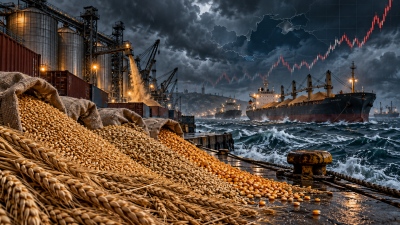
A serious disruption in Hormuz would not affect only those directly involved. It would test the resilience of the global economy, create pressures on the governments of major energy importers, and increase the political cost of any prolonged military confrontation.
This is precisely what Tehran attempts to exploit. To turn the interdependence of the global economy into a tool of strategic deterrence.
The dilemma of Washington
On the other hand, the United States are called to balance between two conflicting priorities. One is the maintenance of the credibility of American deterrence against their allies and their adversaries. The other is the avoidance of a regional crisis that could have disproportionate economic consequences for the global economy and, ultimately, for American society itself.
This balance is extremely delicate. An excessively aggressive reaction may cause a chain of developments that no one will be able to control. An excessively restrained stance, on the other hand, could be perceived by adversaries as an indication of weakness.
This precisely is the dilemma that Iran attempts to create.
The next day in the Persian Gulf
Regardless of whether the new doctrine is ever implemented in practice, its very formulation constitutes a message. Tehran seeks to convince that the period during which it accepted pressures without radically changing the rules of the game is over.
For most military analysts, the value of a strategy is not measured only by its effectiveness on the battlefield. It is measured primarily by how much it influences the decisions of the adversary before the conflict even begins.
If Washington is forced to factor in from now on, in every military design, not only the probability of Iranian retaliation but also the event of a serious turmoil in global energy markets, then Tehran will consider that it has achieved its primary goal: to turn the economic vulnerability of the international system into a strategic advantage.
www.bankingnews.gr












Σχόλια αναγνωστών