

Scientists had hoped that a satellite built in record time, LINK, could "grab" the telescope and transfer it to a more stable orbit
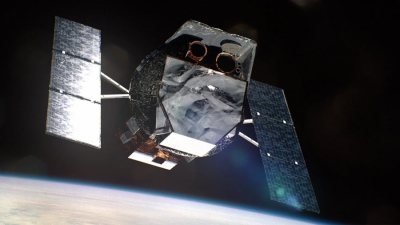
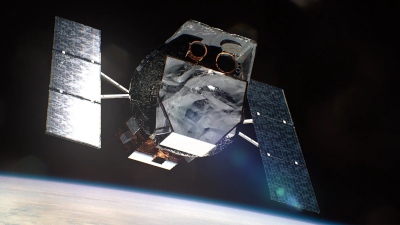
After nearly 22 years of continuous exploration of the Universe, a historic NASA space telescope is preparing for its final journey, this time toward Earth. The Neil Gehrels Swift Observatory, which has recorded some of the most violent and fleeting explosions in the cosmos, is now rapidly losing altitude and is expected to re-enter the atmosphere and be destroyed. NASA attempted to prevent the descent by organizing a highly ambitious rescue mission. A small spacecraft, named LINK, was constructed in just nine months with the goal of approaching Swift, capturing it with robotic arms, and towing it to a safer orbit. However, the plan fell short after orientation issues on LINK forced engineers to expend vital propellant fuel. Now, Swift continues its final observations as its orbit steadily decays. Engineers estimate that between early and mid-October, it will drop below 300 kilometers from Earth's surface, bringing its final atmospheric re-entry ever closer. Shortly thereafter, Swift will leave its orbit and is expected to burn up completely in Earth's atmosphere during its fall. "While it is possible that some parts of the Swift spacecraft may survive re-entry due to its size, the likelihood of debris causing significant property damage or physical harm to anyone is extremely low," according to a statement from space tracking firm LeoLabs, shared with CNN via email. "It is far more likely, as with most surviving re-entry debris, to land in the ocean or uninhabited land areas."
The ambitious rescue operation
Scientists had hoped that a satellite built in record time, LINK, could "grab" the telescope and move it to a more stable orbit. LINK was developed, manufactured, and launched by Katalyst Space Technologies, an Arizona-based firm, in a span of just nine months. The Swift rescue mission failed mere weeks after LINK's launch in early July, when the satellite began tumbling uncontrollably in space. "From the beginning, this was a high-risk, high-reward mission," stated Shawn Domagal-Goldman, director of NASA's Astrophysics Division. "Without intervention, Swift was projected to re-enter the atmosphere by the end of the year." Nevertheless, NASA and Katalyst maintain that LINK's modified mission was not in vain, as both organizations gained invaluable operational insights that could aid future in-space servicing missions. "And while we will be sad to see Swift's mission come to an end, we knew that this orbit-raising attempt would be valuable to NASA on multiple levels: advancing American satellite-servicing technology, pushing us to respond on unprecedented mission timelines, and testing how we operate satellites to extend their operational lifespan in low-Earth orbit," noted Domagal-Goldman. "We are very proud of how quickly this team made it this far and are documenting lessons learned so we are ready to go even further next time."
Final glimpses into the Universe
The Swift Observatory, for which there is currently no established counterpart capable of taking its place, has served as a true astrophysics multi-tool in low-Earth orbit ever since its launch in November 2004. Mission scientists are now gradually powering back up the telescope's scientific instruments to collect data and make observations until the very last possible moment—a step that, in reality, accelerates the observatory's rate of descent. The instruments had been powered down for months to conserve onboard power and slow down Swift's rate of orbital decay. Swift has been continuously losing altitude due to atmospheric drag force, which was further exacerbated by heightened solar activity over the past two years as the Sun reached the peak of its 11-year solar cycle in 2024. Intense solar flares and coronal mass ejections caused Earth's outer atmosphere to expand, significantly increasing atmospheric resistance on Swift and leading scientists to forecast its descent toward Earth this autumn, according to NASA. "When Neil Gehrels, after whom Swift was named, was designing the observatory, nothing quite like it had ever been launched," said S. Bradley Cenko, principal investigator for Swift at NASA's Goddard Space Flight Center in Greenbelt, Maryland. "He would be thrilled to know that this orbit-raising effort was part of Swift's enduring legacy, giving NASA the opportunity to test something bold and new, even if the outcome was never fully guaranteed."
www.bankingnews.gr











Σχόλια αναγνωστών